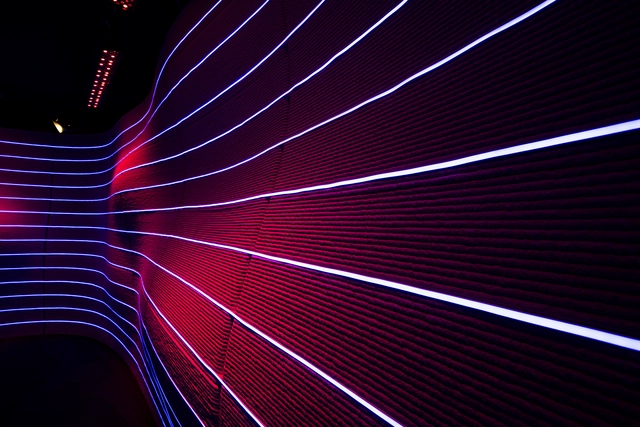
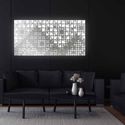
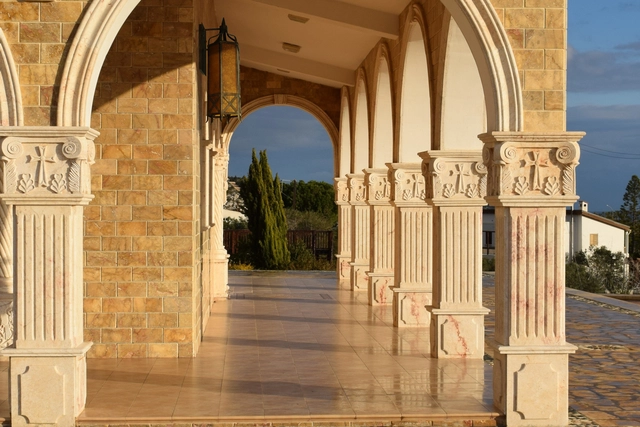
Qbiss Notch, a new design edition developed by Pininfarina for Trimo's Qbiss façade system, has received the Red Dot Design Award. Based on Trimo's Qbiss façade technology, the project introduces vertically installed modular Qbiss panels, an alphabet of engraved Glyphs, and Notches with integrated lighting. Together, these elements allow designers to create distinctive façade compositions. Despite its visual flexibility, the system is designed around the efficiency and precision of prefabricated construction.
Walking into an electrical store can be intimidating. At first glance, all the lights are on, and the thousands of chandeliers and lamps are blinding. When you walk toward the shelves, you see dozens of options, shapes, colors, prices, and uses. On each package, informational tables display numbers that can seem confusing at first. Lumens, color temperature, wattage—there are many unfamiliar terms. Before defaulting to the cheapest option, only to find that it creates an uncomfortable or poorly balanced atmosphere, understanding a few key concepts can make a significant difference.
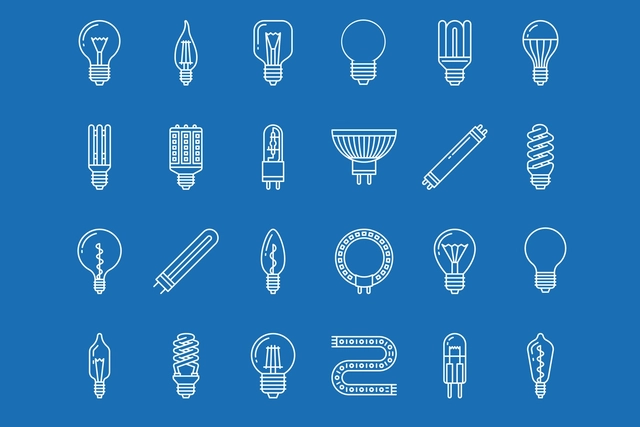
Lighting design plays a fundamental role in shaping how spaces are perceived and used, influencing comfort, atmosphere, and even productivity. Poorly designed lighting, on the other hand, can compromise these qualities. Rather than approaching lighting as a purely technical decision, it can be understood as an integral part of architectural design. To help clarify these choices, the following overview introduces the most common types of light sources and key concepts associated with them.
In South China, there is occasionally an urban myth—especially across Hong Kong, Shenzhen, and Guangzhou—about choosing a home that avoids western light. Over decades, the west-facing sun has proven to be a particularly difficult condition to live with: its low angle in the afternoon, its aggressive heat gain (especially in summer), and the way it penetrates deep into interiors. With global warming and longer, hotter seasons, that much-romanticized "afternoon glow" is increasingly experienced less as romance and more as glare, heat, and fatigue. Although this wisdom circulates as a community-driven rule of thumb, it carries an undeniable architectural clarity about building orientations: avoiding western light is not only about thermal comfort, but also about avoiding the sharpest, most intrusive form of direct illumination—light that strikes at the most unforgiving angle, washing surfaces, flattening depth, and turning rooms into high-contrast fields of discomfort.
In the Water Lilies rooms at the Musée de l'Orangerie in Paris, Claude Monet conceived a 360-degree gallery where visitors are enveloped by continuous landscapes, dissolving the boundaries between painting and environment. There, he sought not merely to represent nature through his distinctive style, but to construct an atmosphere, a perceptual state that the visitor literally inhabits. Architecture, traditionally associated with materiality and permanence, thus gains a new dimension of time, movement, and sensory experience.
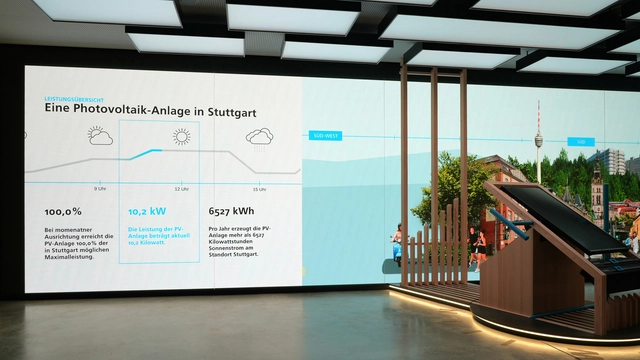
Similarly, when contemporary architecture transforms its planes into active surfaces, it extends this pursuit of immersion and presence, now amplified by technology. At the entrance of SOPREMA's new Mammut Tower in Oberroßbach, Germany, architecture and digital narrative converge. Designed and executed by ASB GlassFloor, the newly completed lobby is an immersive environment combining glass, light, and sound into a complete spatial and sensorial experience, demonstrating how interactive technologies can become architectural materials in their own right.
The likelihood that your next favorite basketball game unfolds atop a customizable and interactive glass flooris relatively high. Even more so, the chances that this glass marvel is crafted by ASB GlassFloor are markedly greater. In the ever-evolving world of sports and corporate architecture, innovative design elements are increasingly capturing the spotlight. One such marvel making waves is the glass floor—a feature that, while seemingly a novelty, has become a staple in high-profile arenas across the globe. Beyond illuminating sports arenas, ASB GlassFloor has plenty of tricks up its sleeves to dazzle the world. Venturing into the corporate world is just one of those clever moves.
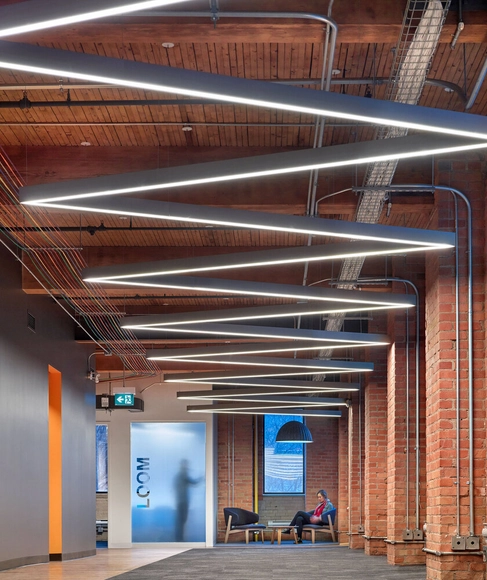
Slack Toronto Office / Dubbeldam Architecture + Design. Image Courtesy of Alcon Lighting
Lighting has evolved remarkably throughout architectural history, driven by significant technological advances. Despite these changes, its central purpose of enhancing aesthetics, functionality, and safety has remained consistent. In this evolution process, a milestone can be traced with the transition from fluorescent lighting to LED lighting, marking a turning point that has reduced costs and energy consumption. Furthermore, it has fueled creativity, thanks to the versatility of LED lighting. These new design possibilities are evident in organic lighting layouts, which mimic linear patterns of lighting arrangements on walls and ceilings, whether suspended or recessed.
In this context, as architects and designers have moved away from symmetrical, rigid, and parallel mirror patterns, Alcon Lighting has detected a trend where linear lighting highlights asymmetrical architectural features and lines. In this way, layouts that do not appear to follow a rigid design pattern are being adopted.
https://www.archdaily.com/1015184/exploring-linear-lighting-design-for-creating-luminous-pathsEnrique Tovar
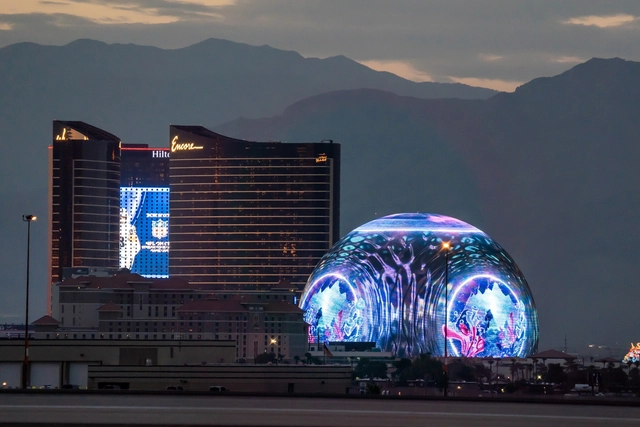
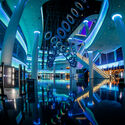
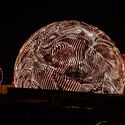
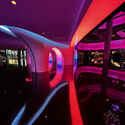
The Sphere at the Venetian Resort, previously known as the MSG Sphere, opened to the public with a series of concerts headlined by Irish rock band U2 on September 29, 2023, in Las Vegas. Designed by stadium specialist architecture office Populous, the project was first announced in 2018. Measuring 34 meters in height and 157 meters in width, the venue, whose building costs rose to $2.3 billion, is labeled the world's largest spherical structure, with its exterior clad in a high-resolution LED screen. The project, located east of the Las Vegas Strip and connected to the Venetian resort complex, is designed to host various events, including music, film events, and even some sports. To reveal the complete experience of this venue, new interior images showcase the intricate details and immersive atmosphere within.
By emulating manual manufacturing techniques, 3D printing utilizes digital models to create customized three-dimensional objects through an additive production process. This tool enables architecture to explore innovative forms, structures, and materialities, providing new paths for creative thinking. Progressively expanding its limits, 3D printing is integrating other existing technologies to unlock new uses and typologies. Such is the case with the work of Philipp Aduatz, which combines 3D printed textured structures with LED lighting, adding a new layer of complexity to enable the creation of the world's first 3D printed film studio.
We are all experienced and we have all done it! I am referring to one's reaction to less than good lighting of course. Think about it.
We have all experienced architectural spaces wherein something about the lighting is not quite right. It could be any of the following issues, to name a few: appearance, color quality, controllability, emphasis or lack thereof, flicker, harshness of shadows, lack of shadows, illumination levels on horizontal and/or vertical surfaces, luminaire placement, proportions, and/or scale. Any of these issues can be perceived as bad lighting.
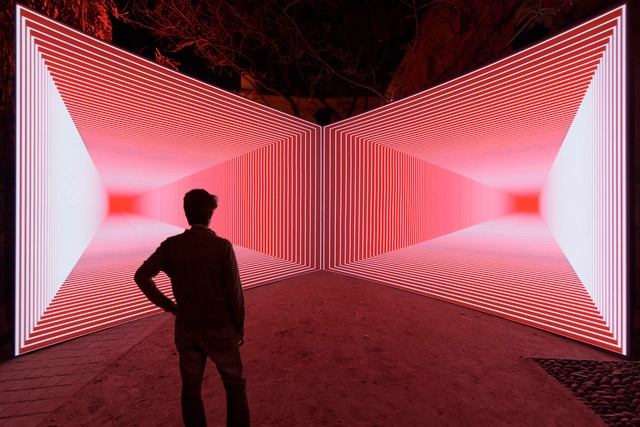
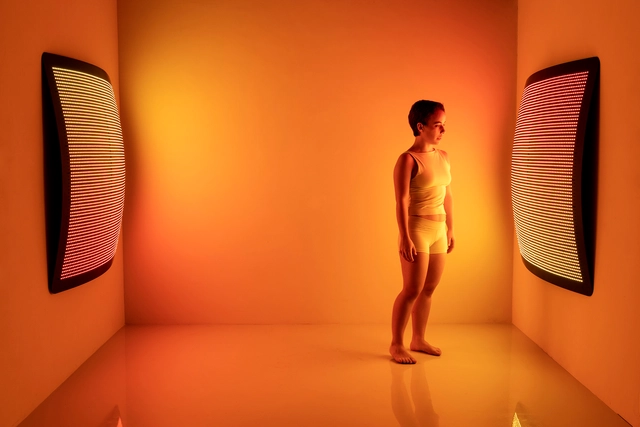
Using and controlling light can change the perception of a place; users perceive and feel the space differently depending on factors such as the type of light switch, color variations, and combinations. When used in temporary installations, light can break the boundaries between art and architecture, and also between tangible and intangible, transforming the elements of the project and creating new shapes and patterns.
With the aim of creating immersive environmental experiences in interior spaces, the design studio Aqua Creations has developed Manta Ray Light, a lighting installation built with responsive RGB LED technology that mixes the colors red, green, and blue to generate more than 16 million light tones. By presetting its color spectrum, offering a range of brightness settings on a scale of 0.1 to 100%, and even loading images and videos into its internal memory, the system allows its user to add color and movement to expressive spaces, or deliver a feeling of warmth and concentration to intimate and private rooms.
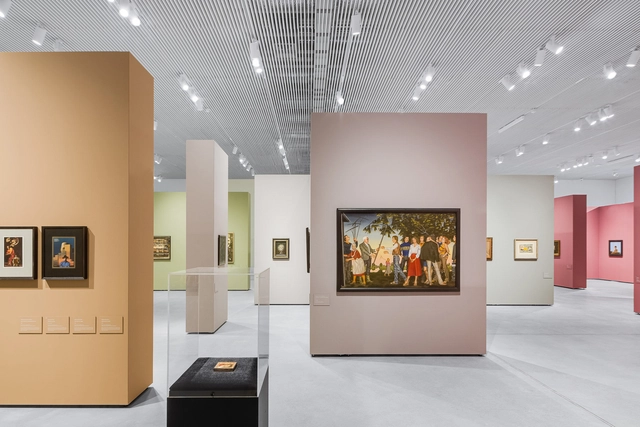
Choosing the right lighting for any space can be a complex decision. Considerations need to be made with respect to the purpose, form and function of the lighting application. Design and aesthetics also play a role in the equation. With so many options for lighting on the market, it takes specialized knowledge and understanding to determine the best fit for your space. Even more challenging than finding lighting for a generic space, an art gallery or museum application can be difficult and even overwhelming to light properly. LED lighting has simplified a large chunk of lighting for art display.
https://www.archdaily.com/927023/the-art-of-lighting-artDavid Hakimi
Carefully designed or relegated to its mere functionality, lighting can be a determining factor in the quality of a space, influencing the way it is perceived and inhabited by the user.
Although it has been considered an object independent of most architectural elements, lighting often interpenetrates walls, ceilings, and floors, disappearing almost entirely to make its radiance appear only when the user needs it. How do you subtly illuminate a structure, while simultaneously creating an impressive atmosphere?
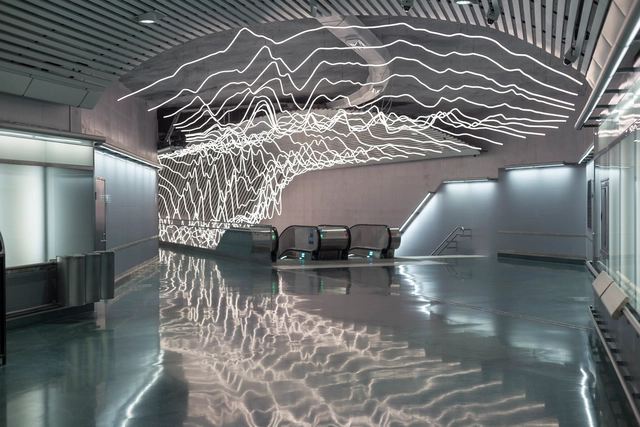
Designed by David Svensson, a total of 400 meters of a neon resembled warm white LED from GE is a work of art representing the pulse of city life in busy Stockholm station.
The project, a piece of suspended light, is built by metal profiles and a ceiling where the warm and white light of a series of LED strips is projected, in the quest to represent the basic visual language of the line.
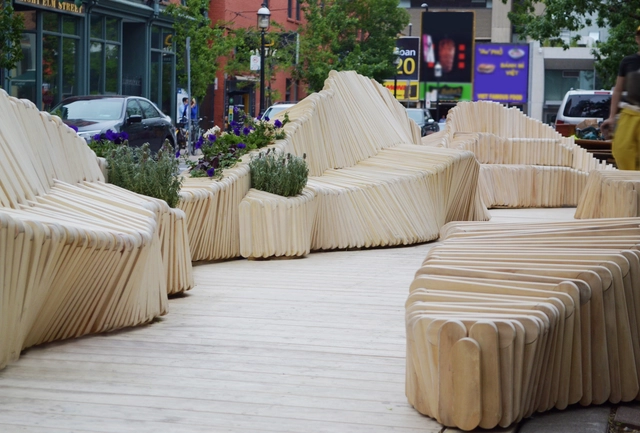
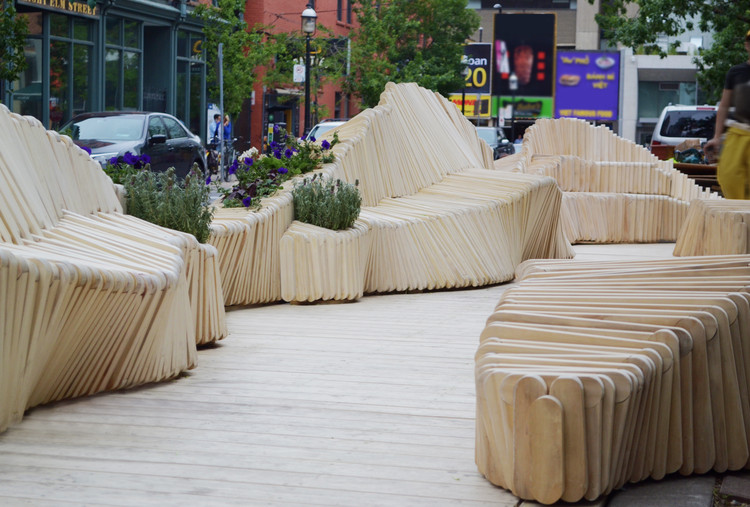
This modular design developed by the students of the Department of Architecture Sciences at Ryerson University proposes a public space to sit and relax that works as an extension of the walkway, appropriating and giving a new meaning to the parking spaces in the streets of Toronto.
The project, with a natural wave form, is built by a series of Accoya wood modules, which allow easy storage, reuse, and reconfiguration.
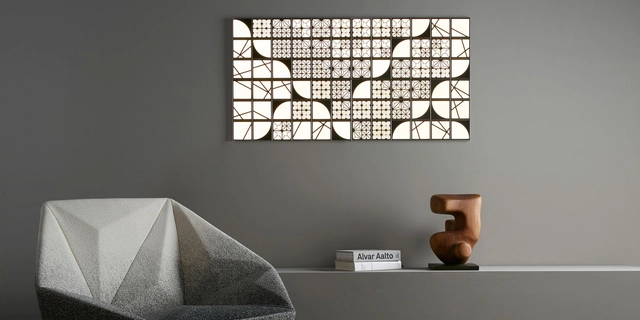
Japanese designer Michiru Tanaka has released a new product partnering with lighting manufacturer Kaneka to create a stainless steel tile that doubles as both an OLED and a mirror. A graduate of Tokyo’s Musashino Art University, Tanaka pursued a career in architectural lighting and her projects range from commercial installations, lighting at museums as well as product design. Coined “Kumiko,” the tiles come from a fusion of inspirations, ranging from traditional Japanese architecture and woodworking techniques to Manhattan’s gridded cityscape.
In this video, members of the engineering team behind the the world’s largest LED screen explain the process behind its installation on the facade of the Burj Khalifa last year. The massive screen required 72 kilometers of cabling and 10,000 connectors to cover a total area of 33,000 square meters.
“We faced sandstorms, we faced rain, we faced heavy wind, so quite often we had to wait until we had a good slot in terms of wind to go out and do the installation,” says Senior Project Manager Kris Vloemans.
The screen has been utilized for a range of different shows since it was first used to ring in the New Year in 2015. Earlier this year, the Burj Khalifasent out an open call to artists to submit their own dynamic designs to be displayed on the building facade.
Also check out some videos of the screen in action, below.