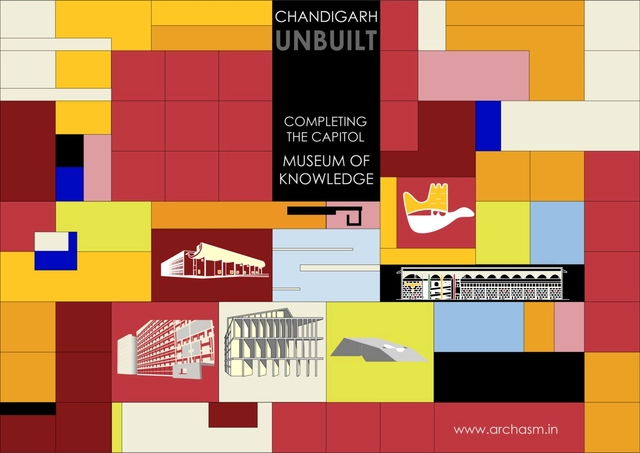
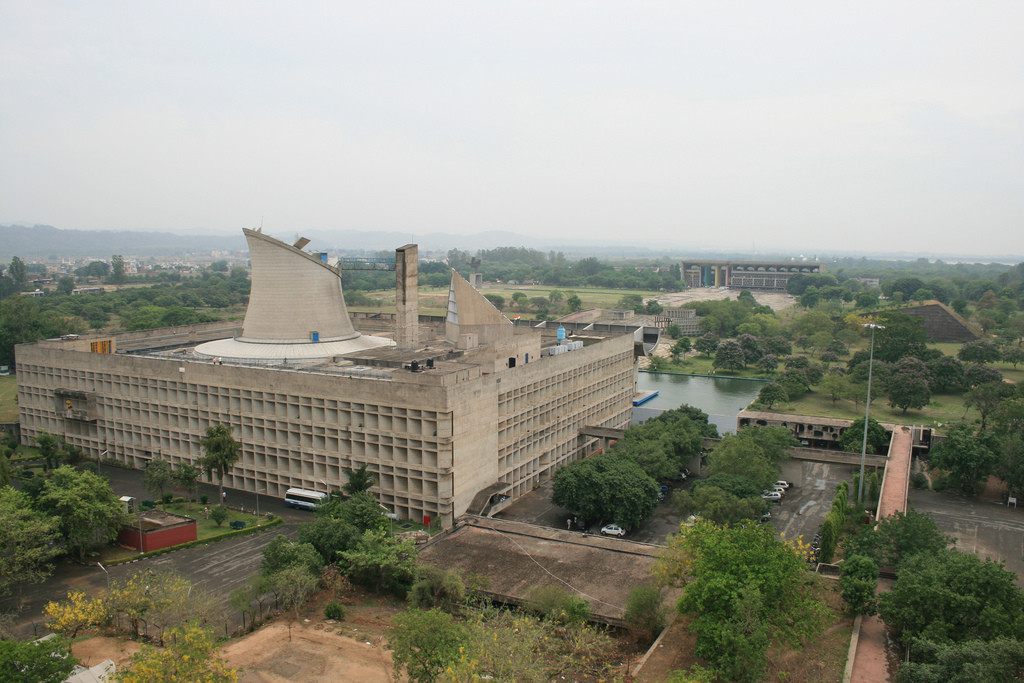
Online international competition organizer archasm has launched its “Chandigarh Unbuilt: Completing the Capitol” ideas competition, which seeks designs to finalize and complement Le Corbusier’s Capitol Complex in Chandigarh, India.
Three buildings at the complex have been built according to Le Corbusier’s plans—the Secretariat, Assembly Hall, and High Court—but the fourth and final building, called the Museum of Knowledge, has yet to be conceptualized.
Archasm is looking for designs that will serve the purpose of a knowledge and connaissance museum in the context of the 21st century, while also considering the “importance of Le Corbusier’s version of modern architecture,” as well as the use of surrounding public space and its affect on the community.
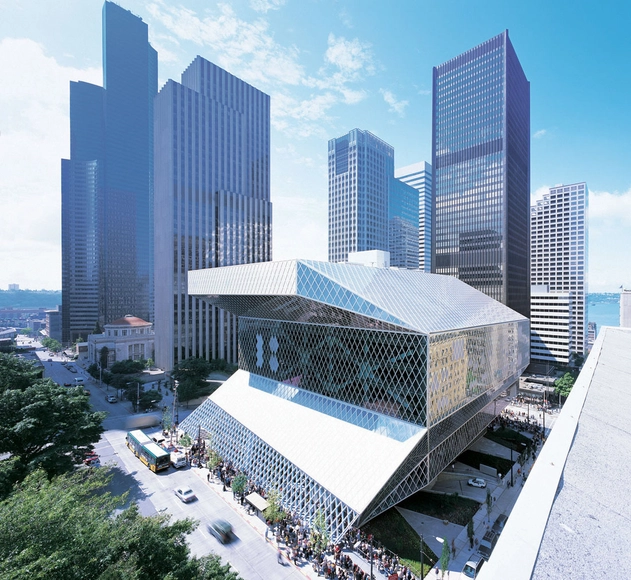
Bjarke Ingels worked on the Seattle Central Library during his time at OMA. Image Courtesy OMA
The world of architecture is small. So small in fact, that Rem Koolhaas has been credited with the creation of over forty practices worldwide, led by the likes of Zaha Hadid and Bjarke Ingels. Dubbed “Baby Rems” by Metropolis Magazine, this Koolhaas effect is hardly an isolated pattern, with manifestations far beyond the walls of OMA. The phenomenon has dominated the world of architecture, assisted by the prevalence and increasing necessity of internships for burgeoning architects.
In a recent article for Curbed, Patrick Sisson dug into the storied history of internships to uncover some unexpected connections between the world's most prolific architects. With the help of Sisson's list, we've compiled a record of the humble beginnings of the household names of architecture. Where did Frank Gehry get his start? Find out after the break.
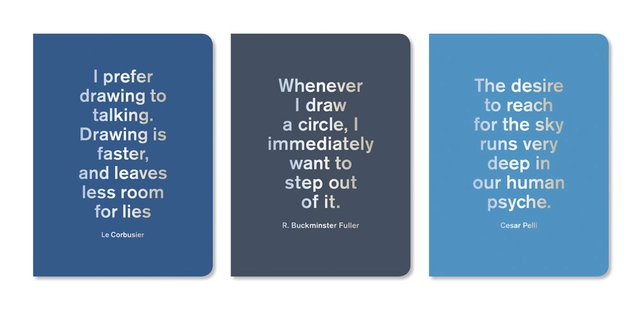
"Form ever follows function." "Less is more." Architects have long been providing us with inspirational quips and reflections on our profession. And now, thanks to our friends at Princeton Architectural Press, you can win a set a notebooks that feature the compelling words of Le Corbusier, R. Buckminster Fuller, and Cesar Pelli. The gold-stamped, gridded notebooks are a companion to Laura Dushkes' best-selling book The Architect Says.
Read on to find out how you can win a set of The Architect Says Notebooks!
https://www.archdaily.com/769835/giveaway-the-architect-says-notebooksAD Editorial Team
To commemorate the architect 50 years after his death, from April 29 through August 3 the Pompidou center is hosting a retrospective on the life and works of Le Corbusier. The exhibition highlights Le Corbusier’s architecture and artwork, which is curated to trace his evolving understanding of the human body, and includes texts, paintings, drawings, sculptures, and models.
Despite being largely invented and developed by Western technology companies such as IBM and Cisco, the concept of the Smart City has been exported all over the world, with some of the most advanced implementations of smart city ideals being found from Rio de Janeiro in Brazil to Songdo in South Korea. In this interview, originally published by Indian Architect & Builder as "Perceptions of a Smart City," Morgan Campbell talks with B V Doshi and Rajeev Kathpalia about Le Corbusier, urbanization, and what it might mean to establish a smart city in India.
Shortly after coming to office in 2014, Prime Minister of India, Narendra Modi announced an urban agenda in the form of 100 new Smart Cities for the country. The idea has captured attention at home and abroad, provoking intense discourse and debate regarding the form and context into which these cities should be developed. In January of this year, the city of Jaipur hosted the first annual Architecture Festival. Crafting Future Cities is just one of many platforms for this discussion.
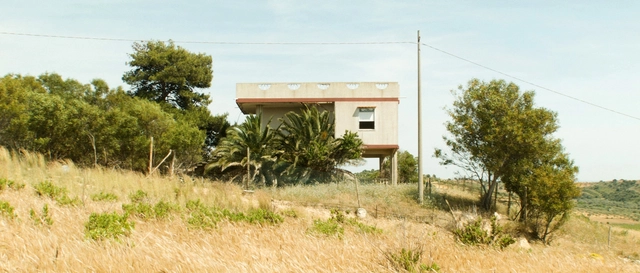
Last year, for the centennial of the publication of Le Corbusier's design for the Maison Dom-Ino, Space Caviartraveled the length of the Italian peninsular in pursuit of ninety-nine reinforced concrete houses. Along the way they created ninety-nine short films. Their research, a survey of Italian domesticity and its relationship to the surrounding landscape over the past century, demonstrated that "few inventions have been as transformative of Italy as the concrete frame": simultaneously a symbol of wealth "generated by a building industry that rebuilt Italy from the rubble of the Second World War" and "the primary instrument of abusivismo," or the unregulated construction on the landscape. It is, as the team describe it, "the ultimate symbol of the architect’s extraordinary power — and enduring helplessness."
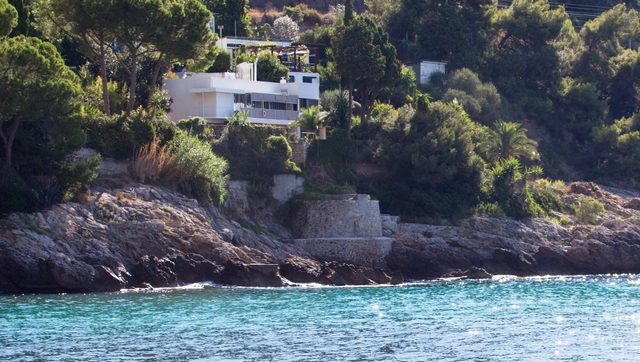
The controversial renovation of Eileen Gray's E1027 on the Côte d’Azur is complete. Once a "lost legend of 20th-century architecture," the quaint holiday home has been brought back to life and is now open to the public. Announcing the news, The Guardian author Rowan Moore has recounted the cliffside project's turbulent past, reciting its significance as Gray's first architectural project.
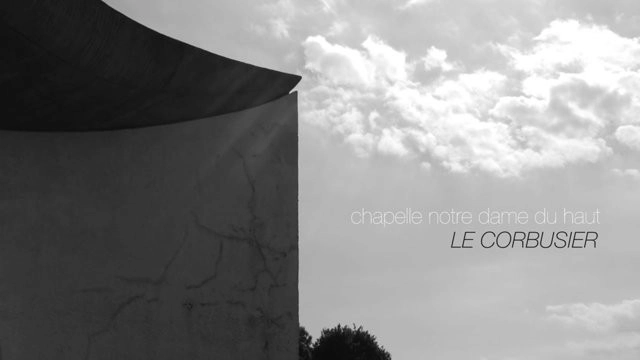
Fernando Schapochnik’s 1 minute series – a set of four videos of iconic buildings in Europe – aims to create a sensory interaction with the spaces. Filmed using only a cellphone, the videos rely on textures, sounds, rhythms and varying speeds to narrate the viewer's relationship with the spaces, letting the senses guide the experience. Journey through Le Corbusier’s Ronchamp, Antoni Gaudí’s Park Guell, SANAA’s Rolex Learning Center and OMA’s Kunsthal after the break.
Shocking allegations have surfaced in two new books that claim Le Corbusier was a “militant fascist.” Although the architect’s connections with a collaborationist regime in France have been known for some time, the authors claim new evidence reveals the depths of his sympathy toward Nazi activity.
Marking the 50th anniversary of Le Corbusier's death, Phaidon recently released a second edition of William J R Curtis' seminal book, "Le Corbusier: Ideas and Forms." Following in the footsteps of the first edition published in 1986, the book reveals Le Corbusier's works through over 500 images and incisive analysis. The context within which the book will be received is of course very different compared to that of 1986; in the following text, the author explains how Le Corbusier's legacy has changed in the intervening years, but also why the book is needed just as much now as it was back then.
From the Preface to the Second Edition of Le Corbusier: Ideas and Forms:
When the first edition of this book was written Le Corbusier had been dead only twenty years. His reputation was in temporary eclipse. Demonized by post-modernist foes and over-simplified by neo-modernist friends, he risked becoming a caricature. At the time it was necessary to rescue him from transient perceptions and to place him in a longer and broader historical perspective. While focusing upon individual works I attempted to reveal Le Corbusier’s recurrent themes, basic types and guiding principles. His architecture was placed in the context of his larger social and cultural projects and related to his general conceptions of society, history and nature. The first edition closed with the declaration: ‘Le Corbusier is himself part of tradition and has even altered the perspective on the distant past. As he slips further into history, his modernity matters less and less: it is the timeless levels in his art which have most to give to the future.’
https://www.archdaily.com/617466/le-corbusier-ideas-and-formsWilliam J R Curtis
Dr. Vikramāditya Prakāsh is a professor at the University of Washington and the founder of the Chandigarh Urban Lab. In the following article he discusses the past, present and future of Le Corbusier's vision for Chandigarh, explaining the reasons behind the petition he started against a new residential development to the North of the city.
Le Corbusier’s famous Capitol Complex in Chandigarh, India is about to be ruined by the construction of a gaggle of towers to its immediate north. The new project, called ‘TATA Camelot’, is being developed by TATA Housing, the real estate wing of TATA Group, a major multinational and one of India's largest industrial companies. TATA Camelot’s 27 proposed towers, each between 13 and 36 storys tall, will not only destroy the architectural and urban design integrity of the Capitol, they will also disrupt the fragile Himalayan ecology of the area. In the contest between development and preservation, it is the larger public good and the long term perspective of the ecological that must be prioritized.
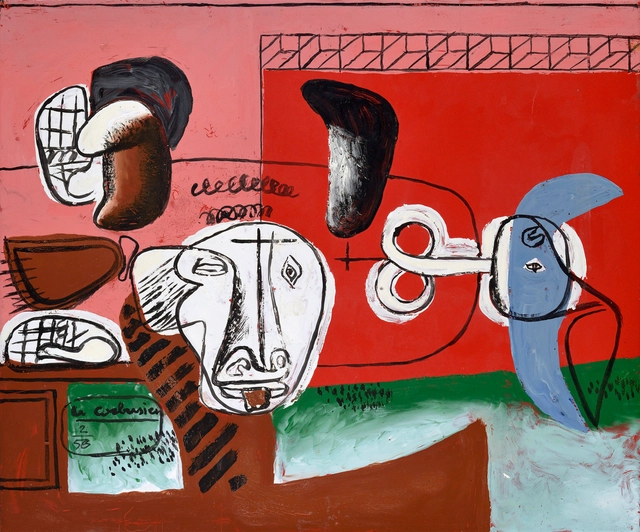
Marking the fiftieth anniversary of Le Corbusier’s death, Galerie Eric Mouchet is collaborating with Galerie Zlotowski to showcase Le Corbusier: Panorama of a Lifetime’s Work in Paris. The exhibition, opening April 23 and on view through July 25, will provide a comprehensive overview of paintings, drawings and engravings of the legendary Le Corbusier.
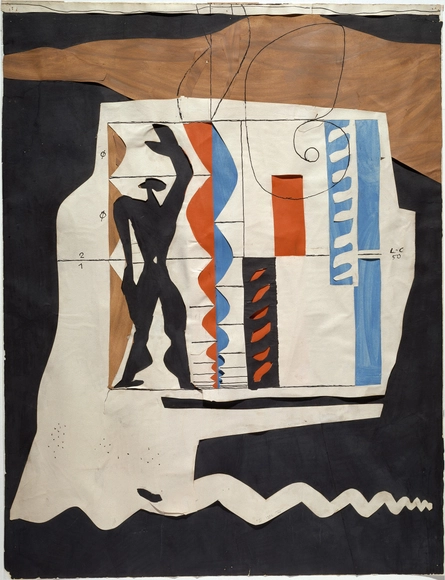
“Le Corbusier, who was never without a sketchbook in his pocket, devoted half of every day over a 45 year period to writing, painting and drawing - what he called his ‘Atelier de la recherché patiente,’” says the galleries. “His visual arts output was both highly original and prolific, stretching from 1917 to 1965. Up to the Second World War, this work was largely for his own personal research. Later, however, it helped drive the design and promotion of the Modulor, a ‘harmonious’ scale of proportions he devised in 1946.”
Take a look inside Le Corbusier’s mind and preview five of the prolific paintings that will be exhibited, after the break.
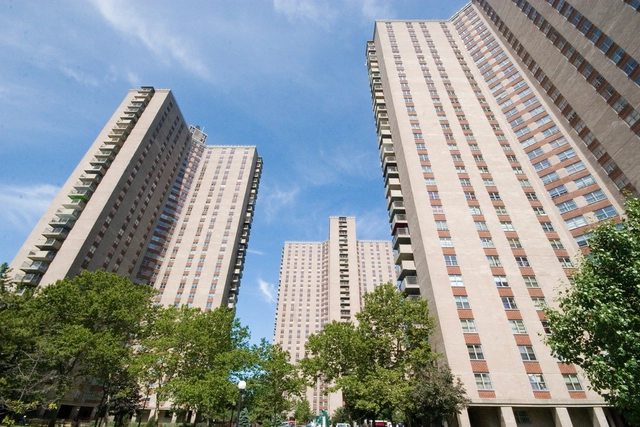
Despite his status, Le Corbusier never had the opportunity to build in New York - in fact he only had one chance to build in the United States at all, completing Harvard's Carpenter Center for the Visual Arts in Cambridge in 1963. But this doesn't mean his influence isn't visible all over the Big Apple. Originally published on 6sqft as "Towers in the Park: Le Corbusier's Influence in NYC," this article takes a look at three examples where Le Corbusier's "Radiant City" ideals were transplanted to New York.
Even before taking his first trip to New York in 1935, Le Corbusier described the city as “utterly devoid of harmony.” After seeing it in person, his feelings didn’t soften. He wasn’t impressed by the tall towers, rather stating that they were the product of an inferiority complex, and he thought the city’s leaders were too timid to hire him. He wrote an opinion piece in the New York Times saying that “American skyscrapers have not attained the rank of architecture; rather, they are merely small objects such as statuettes or knick-knacks, magnified to titanic proportions.” He thought the city would benefit from buildings that “don’t try to outdo each other but are all identical.”
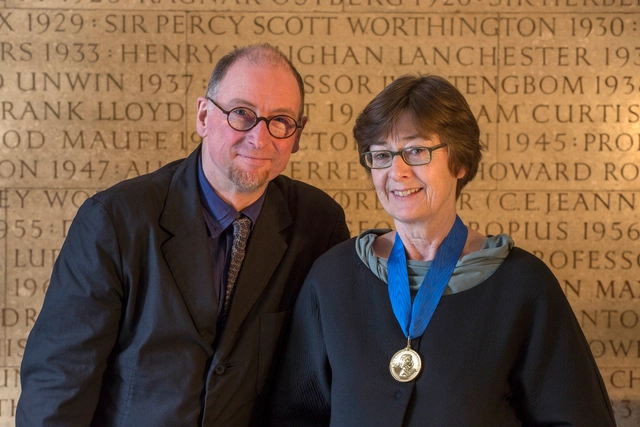
John Tuomey and Sheila O'Donnell - recipients of the 2015 Royal Gold Medal. Image Courtesy of RIBA
When Sheila O'Donnell and John Tuomey, who practice in partnership as O'Donnell + Tuomey, were named as this year's recipients of the RIBA Royal Gold Medal, a palpable collective satisfaction appeared to spread throughout the profession. No one could find criticism in Joseph Rykwert and Níall McLaughlin's nomination, nor the ultimate choice of the RIBA Honours Committee, to bestow the award upon the Irish team. Their astonishingly rigourous body of work, compiled and constructed over the last twenty five years, has an appeal which extends beyond Irish and British shores. A robust stock of cultural, community and educational projects, alongside family homes and social housing projects, leaves little doubt about the quality, depth and breadth of their mutual capabilities and the skill of those that they choose to collaborate with.
Read the conversation with the Gold Medallists after the break.
We all know that in architecture, few things are truly original. Architects take inspiration from all around them, often taking ideas from the designs of others to reinterpret them in their own work. However, it's more rare that a single architectural element can be borrowed to define the style of an entire region. As uncovered in this article, originally published by Curbed as "Le Corbusier's Forgotten Design: SoCal's Iconic Butterfly Roof," this is exactly what happened to Le Corbusier, who - despite only completing one building in the US - still had a significant impact on the appearance of the West Coast.
Atop thousands of homes in the warm western regions of the United States are roofs that turn the traditional housetop silhouette on its head. Two panels meet in the middle of the roofline and slope upward and outward, like butterfly wings in mid-flap. This similarity gave the "butterfly roof" its name, and it is a distinct feature of post-war American residential and commercial architecture. In Hawaii, Southern California, and other sun-drenched places, the butterfly roofs made way for high windows that let in natural light. Homes topped with butterfly roofs seemed larger and more inviting.
Credit for the butterfly roof design often goes to architect William Krisel. He began building single-family homes with butterfly rooflines for the Alexander Construction Company, a father-son development team, in Palm Springs, California, in 1957. The Alexander Construction Company, mostly using Krisel's designs, built over 2,500 tract homes in the desert. These homes, and their roofs, shaped the desert community, and soon other architects and developers began building them, too—the popularity of Krisel's Palm Springs work led to commissions building over 30,000 homes in the Southland from San Diego to the San Fernando Valley.
To celebrate the first anniversary of our US Materials Catalog, this week ArchDaily is presenting a three-part series on "Material Masters," showing how certain materials have helped to inspire some of the world's greatest architects.
Le Corbusier's love affair with concrete, evident in a number of his nearly 75 projects, began early. Having already designed his first house, the Villa Fallet, at the age of just 17, in 1907 the young architect embarked on a series of travels throughout central Europe on a mission of artistic education. In Paris, he apprenticed at the office of Auguste Perret, a structural rationalist and pioneer of reinforced concrete, followed in 1910 by a short stint at Peter Behrens' practice in Berlin. These formative experiences initiated a life-long exploration of concrete in Le Corbusier’s work.
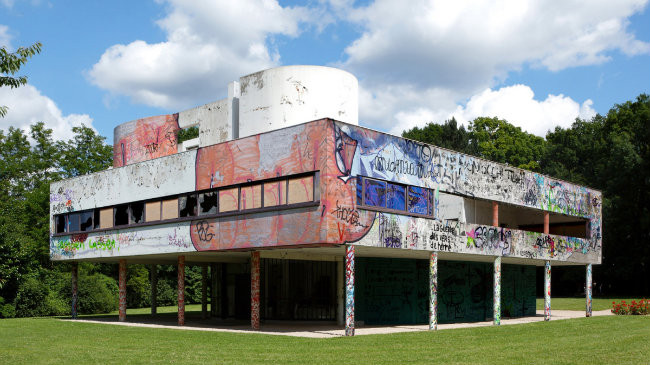
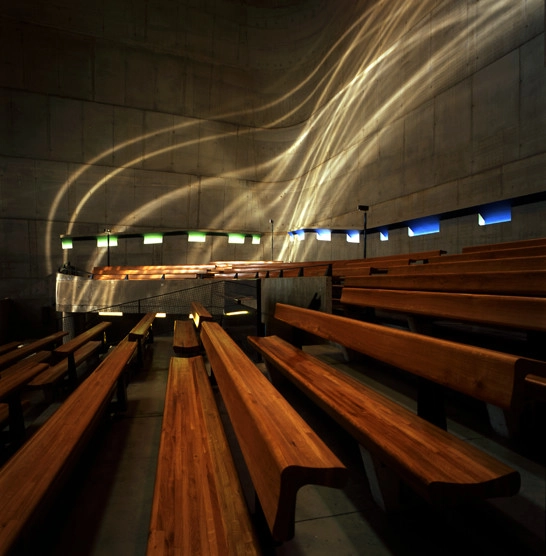
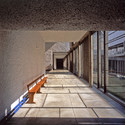
These images from artist Xavier Delory show Le Corbusier's celebrated Villa Sovoye in a shocking state of disrepair. With stones and spray paint, vandals have tragically defaced its pristine walls and windows. Don't panic: the images shown here are photoshopped. But what if they weren't? In this article originally published by Metropolis Magazine as "Modernism in Ruins: Artist "Vandalizes" a Le Corbusier Masterpiece," AJ Artemel explores how our shock and dismay at such images exposes an underlying hypocrisy in our reverence for famous modernist works, and proposes that perhaps Modernism and vandalism are more closely related than we thought.













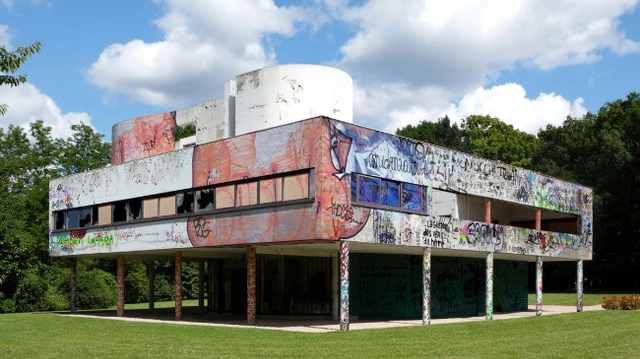


.jpg?1413464890 "© Xavier Delory")