Howl's Moving Castle. Image Courtesy of Studio Ghibli
Every evening when we get home, without ceremony, we perform a small rite. We arrive at a door, we open it, and we step through into a space that belongs to us in a way no other space does. It is such a mundane act that we rarely notice it has a structure at all, and yet philosophers and anthropologists have written entire books describing these psychological structures. Interestingly, visual works such as the animated worlds of Studio Ghibli seem to reflect this dynamic to create worlds which contain architecture and layouts that provide a path to escape by tapping into our memories in a legible yet enchanted form.
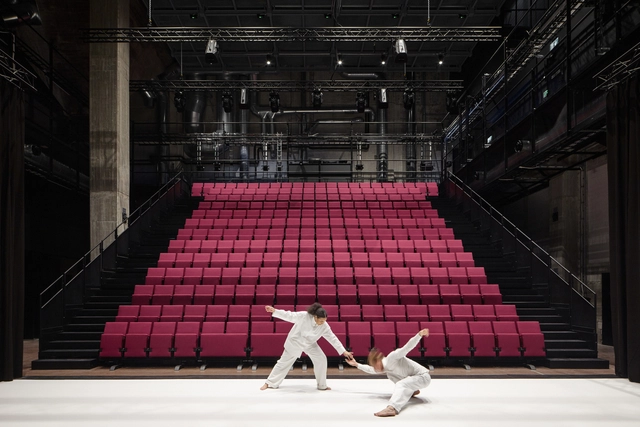
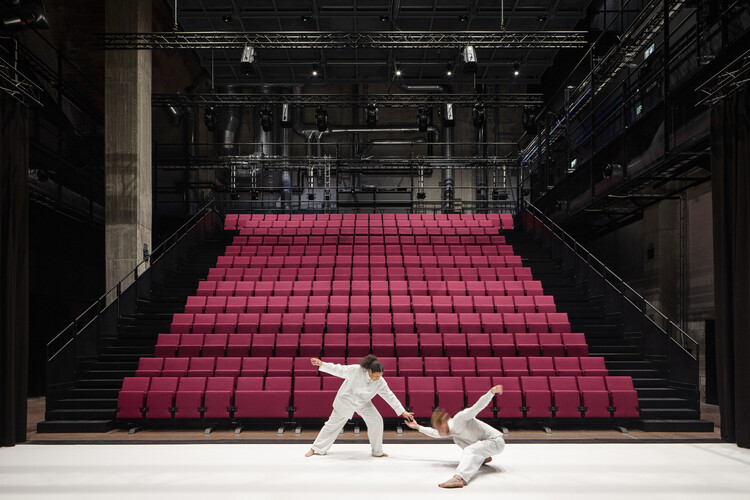
"Dance, dance… otherwise we are lost." This oft-cited phrase by Pina Bausch encapsulates not only the urgency of movement, but its capacity to reveal space itself. In her choreographies, space is never a neutral backdrop, it becomes a partner, an obstacle, a memory. Floors tilt, chairs accumulate, walls oppress or liberate. These are architectural conditions, staged and contested through the body. What Bausch exposes — and what architecture often forgets — is that space is not simply built, it is performed. Her work invites architects to think not only in terms of materials and forms, but of gestures, relations, and rhythms. It suggests that architecture, like dance, is ultimately about how we inhabit, structure, and emotionally charge the spaces we move through.
Historically, architecture and dance have operated in parallel, shaping human experience through the body's orientation in space and time. From the choreographed rituals of classical temples to the axial logics of Baroque palaces, built space has always implied movement. The Bauhaus took this further, as Oskar Schlemmer's Triadic Ballet visualized space as a geometric extension of the body. This was not scenery, but spatial thinking made kinetic. In the 20th century, choreographers like William Forsythe and Anne Teresa De Keersmaeker integrated architectural constraints into their scores, while architects such as Steven Holl, Diller Scofidio + Renfro, and Toyo Ito designed buildings that unfold as spatial sequences, inviting movement, drift, and delay.
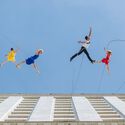
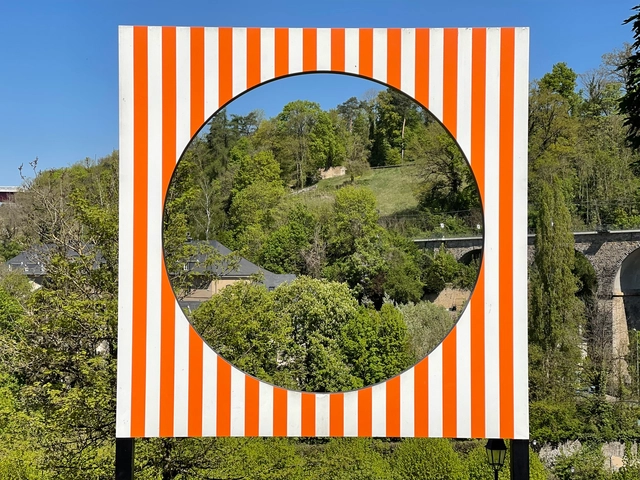
Public space has long been central to architectural thought, often framed in terms of planning, infrastructure, and regulation. From Haussmann's Paris to contemporary masterplans, architects have worked to define and formalise collective life through spatial tools. Yet, outside of these frameworks, artists have continuously offered alternative ways of understanding and inhabiting public space—ways that rely not on construction or permanence, but on presence, perception, and participation. Through actions, objects, or atmospheres, artists engage the city as a site of friction and imagination. These gestures challenge architectural conventions and invite artists to reconsider public space not as a solved form, but as a contingent and open process.
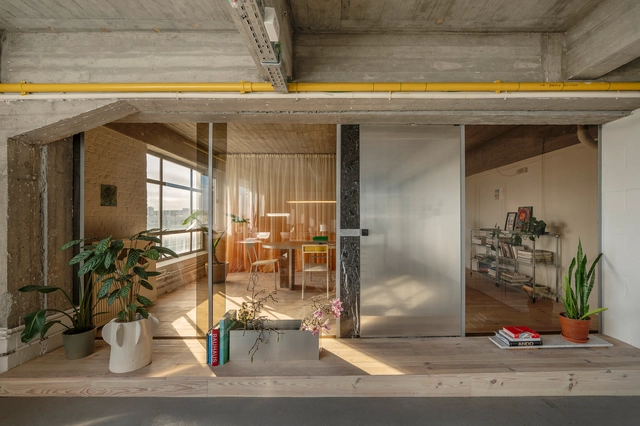
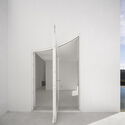
The choice of door types plays a crucial role in defining the spatial experience and atmosphere of architecture. Beyond material or style, the way a door is detailed—its movement, weight, and method of operation—can drastically influence how a space is perceived and navigated. However, what truly enables the functionality of different door types is the often-overlooked element of door hardware. Even within the same door type, the selection of hinges, tracks, pivots, and handles can significantly affect how users interact with and interpret the space.
For centuries, models have been central to architectural design, providing architects with a tangible way to explore ideas, test concepts, and communicate their vision. From the Renaissance to Modernism, models have been instrumental in the construction and reflection processes, offering insights into form, proportion, and spatial relationships. However, in today's digital age, where 3D modelsand Virtual Reality(VR) have become powerful and efficient tools, the question arises: Are physical models still relevant in contemporary architecture?
Architecture has deep wells of research, thought, and theory that are unseen on the surface of a structure. For practitioners, citizens interested, and students alike, books on architecture offer invaluable context to the profession, be it practical, inspirational, academic, or otherwise. So, for those of you looking to expand your bookshelf (or confirm your own tastes), ArchDaily has gathered a broad list of architectural books that we consider of interest to those in the field.
In compiling this list, we sought out titles from different backgrounds with the aim of revealing divergent cultural contexts. From essays to monographs, urban theory to graphic novels, each of the following either engage directly with or flirt on the edges of architecture.
The books on this list were chosen by our editors, and are categorized loosely by type. Read on to see the books we consider valuable to anyone interested in architecture.
https://www.archdaily.com/901525/116-best-architecture-books-for-architects-and-studentsArchDaily Team
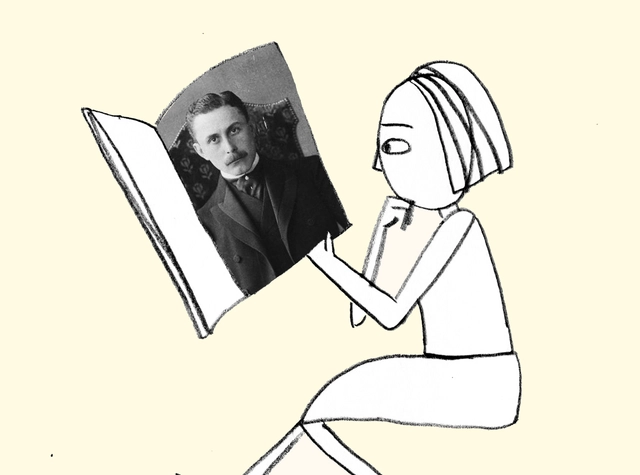
When asked about his memories of the house where he spent part of his childhood, Finnish architect Juhani Pallasmaa says that more than sight, his memories are based on the smell of the house. According to him, each house has its own smell, which we do not always perceive when we are in it, but immediately recognize upon returning.
"The taste of the apple lies in the contact of the fruit with the palate, not in the fruit itself," Jorge Luis Borges once said. The taste is not something inherent in itself; its experience is the result of an encounter. Similarly, emotions are not contained within architecture, but are only felt through the encounter of the body with the space, when it becomes a place. How does the environment affect how we feel? This is the question that drives the duo of artists and filmmakers Ila Bêka and Louise Lemoine in their latest endeavor, the book "The Emotional Power of Space," which will be released on May 17th in an event preceding the opening of the Venice Architecture Biennale 2023.
In this video from the Louisiana Channel, Finnish architect Juhani Pallasmaa expounds on his view of the importance of art and architecture. In order to begin to understand this relationship, Pallasmaa stresses the importance of literature and self-construction, along with understanding the history and culture of a place.
Today marks what would have been the 100th birthday of the leading Danish architect, Jørn Utzon. Notably responsible for what could be argued to be the most prominent building in the world, the Sydney Opera House, Utzon accomplished what many architects can only dream of: a global icon. To celebrate this special occasion, Louisiana Channel has collaborated with the Utzon Center in Aalborg, Denmark to put together a video series to hear prominent architects and designers talk, including Bjarke Ingels and Renzo Piano, about their experiences with Utzon and his work—from his unrivalled visual awareness of the world, to his uncompromising attitude that led him to create such strong architectural statements.
Unlike many architects around at the time of Jørn Utzon, who as modernists rejected tradition in favour of new technologies and orthogonal plans, Utzon combined these usually contradictory qualities in an exceptional manner. As the architects recount, he was a globalist with a Nordic base, that has inspired the next generation to travel the world and challenge their concepts. Many of them compare his work to Alvar Aalto’s, as both shared an organic approach to architecture, looking at growth patterns in nature for inspiration. Utzon even coined this approach "Additive Architecture," whereby both natural and cultural forms are united to form buildings that are designed more freely.
There’s no doubt that one of the best things about architecture is its universality. Wherever you come from, whatever you do, however you speak, architecture has somehow touched your life. However, when one unexpectedly has to pronounce a foreign architect’s name... things can get a little tricky. This is especially the case when mispronunciation could end up making you look less knowledgeable than you really are. (If you're really unlucky, it could end up making you look stupid in front of your children and the whole world.)
To help you out, we’ve compiled a list of 22 architects with names that are a little difficult to pronounce, and paired them with a recording in which their names are said impeccably. Listen and repeat as many times as it takes to get it right, and you’ll be prepared for any intellectual architectural conversation that comes your way.
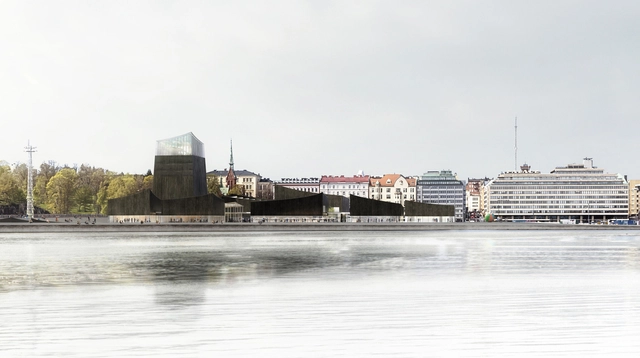
The project emphasises a consumerist and touristic view of art at the expense of the cultural and humane task of art. instead of strengthening local artistic traditions and practices, the project strengthens the already doubtful globalisation and commercialisation of art. The public funds could clearly be used in a more innovative and efficient manner to support Finnish artistic culture.
https://www.archdaily.com/800188/finnish-architect-juhani-pallasmaa-refuses-to-support-guggenheim-helsinki-projectAD Editorial Team
Update: We've added links to help you find these books for purchase and, in 5 of 8 cases, tracked down a way you can read them online for free!
Quality over quantity, so the saying goes. With so many concepts floating around the architectural profession, it can be difficult to keep up with all the ideas which you're expected to know. But in architecture and elsewhere, the most memorable ideas are often the ones that can be condensed textually: “form follows function,” “less is more,” “less is a bore.” Though slightly longer than three words, the following lists a selection of texts that don’t take too long to read, but impart long-lasting lessons, offering you the opportunity to fill gaps in your knowledge quickly and efficiently. Covering everything from loos to Adolf Loos, the public to the domestic, and color to phenomenology, read on for eight texts to place on your reading list:
Few people in the architectural world have done more than Juhani Pallasmaa to make the complex ideas of phenomenology accessible to the uninitiated; his book "The Eyes of the Skin," for example, is recommended reading for students in countries the world over. In this interview, originally published in the October issue of Indian Architect & Builder which featured the theme of "the power of the hand," Pallasmaa talks about his similar approaches to designing and writing, and the early childhood experiences that led him to become a phenomenologist.
Indian Architect & Builder: Your practice is widely multidisciplinary; can you tell us a little about your academic journey towards the establishment of your practice?
Juhani Pallasmaa: In my country, Finland, it has been customary for students of architecture to work in architecture offices during their studies, usually from the second year onwards. I entered the Helsinki University of Technology (currently the Aalto University) in the fall of 1957. A year later, I was fortunate enough to be invited to work at the Museum of Finnish Architecture, established a year earlier, as an exhibition assistant. The Museum eventually became my real university, and also gave me the opportunity to travel the world designing exhibitions of Finnish architecture in thirty cities around the world.
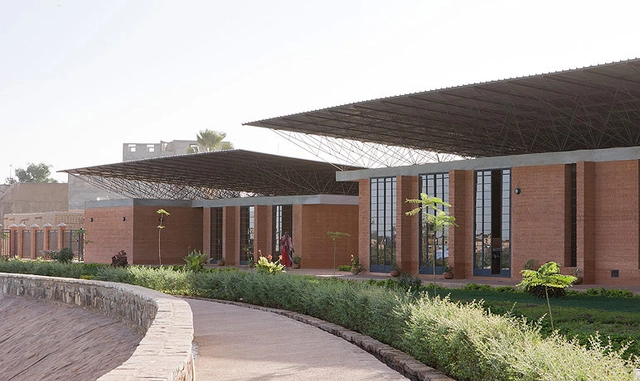
This year, the Schelling Prize's "indigenous ingenuity" theme was inspired by the 2012 Theory winner Kenneth Frampton's theory of Critical Regionalism, with the prize asking "how can inventive and directly comprehensible architecture satisfy human needs in an appealing way?"
Three Love Problems from George Eliot's Middlemarch, by Stephen Doyle. Photo: Stephen Doyle
Architects often don’t make time to read. Students and professionals alike will admit that the unread books on their shelves outnumber the ones they've read - which is unfortunate because literary contributions to the field of architecture, from Vitruvius to Le Corbusier, have shaped the way we build and use buildings for centuries. With this in mind, ArchitectureBoston polled their readers, asking them to share their favorite architecture and design titles, to compile a list of important architecture books you should set aside some time for. The list covers a wide range of subjects, from historical theory to the practicalities of starting a firm. See all thirty-three titles, after the break.
Last week, while the ArchDaily team was in Mexico City for the Mextrópoli Conference, we caught up with Pritzker Jury member Juhani Pallasmaa and asked him to shed some light onto the recent winners of one of architecture's highest honors. Watch Pallasmaa, a renowned Finnish architect and professor, explain what motivates his approach for recognizing architects in a world with "so much publicity."
"The Pritzker jury has now, for at least 5 years, tried to select architects who are not the most obvious names because there is so much publicity in the architectural world and we'd rather try to find architects who have not been published everywhere else..."