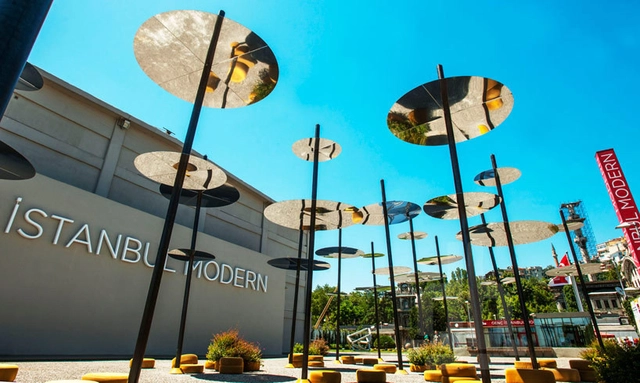
Istanbul Modern has announced five finalists to compete in the 2015 Young Architects Program (YAP). Now in it’s 2nd edition, the competition will challenge a group of emerging architects to design a temporary installation within the confines of Istanbul Modern's courtyard that will host a series of events and visitors throughout the summer of 2015.
As the culmination of a 14-month initiative to examine new architectural possibilities for rapid growth in six megalopolises - Hong Kong, Istanbul, Lagos, Mumbai, New York, and Rio de Janeiro - the Museum of Modern Art is preparing to open Uneven Growth: Tactical Urbanisms for Expanding Megacities on November 22. The exhibition will present mappings of emergent modes of tactical urbanism from around the globe alongside proposals for a bottom-up approach to urban growth in the highlighted cities by six interdisciplinary teams made up of local practitioners and international architecture and urbanism experts.
Curator Pedro Gadanho, in collaboration with the Austrian Museum of Applied Arts (MAK), states:
“The exhibition features design scenarios for future developments that simultaneously raise awareness of the prevailing inequalities in specific urban areas and confront the changing roles of architects vis-à-vis ever-increasing urbanization. Each team in the exhibition was asked to consider how emergent forms of tactical urbanism can respond to alterations in the nature of public space, housing, mobility, spatial justice, environmental conditions, and other major issues in near-future urban contexts.”
Earlier this year, Emre Arolat Architects completed their Sancaklar Mosque, "a simple cave like space" in Istanbul which through its humble exterior forms and emphasis on connection to nature, offers a "dramatic and awe inspiring place to pray and be alone with God." Over a period of 24 months, SGMStudio (Sarraf | Galeyan | Mekanik) documented this work, as the elements of the mosque gradually emerged from its steel rebar framework. "While recording the progress of the construction throughout passing seasons, the film aims to portray the building's existence within nature and its percept of space with the sensibility of the structure it purposes to narrate," say SGMStudio. Set to dramatic backing music, "the film dwells on the tension between the technical and engineering-centric implementation and humble and tranquil art of building with its pacing."
As part of CNN's Leading Women series, Sheena McKenzie explores the work of Turkish architect Zeynep Fadillioglu - perhaps the first female architect to design a mosque, now on her third. In buildings where men and women are traditionally separated for worship, and women are often given a smaller space, Fadillioglu "purposely placed the women's section in one of the most beautiful parts of the light-flooded dome" in Istanbul'sSakirin Mosque. McKenzie concludes that although "Fadillioglu might have made a name for herself designing mosques, you don't needn't be religious to admire their beauty."
Speaking from the newly-opened Istanbul practice of Copenhagen-based Henning Larsen Architects, Anne Marie Galmstrup describes her scandinavian design process in the context of her role as Principal-in-Charge of projects in Turkey. "Architecture is about space and about interaction between people," Galmstrup says, asking "How does it work here? How is it different in this cultural environment or in that climate?" Galmstrup discusses the atmosphere in Turkey, and how to engage young architects. Henning Larsen has hosted a series of "Imagination Schools," two-week workshops set in the middle east charged with overcoming regional design challenges, and Galmstrup has been instrumental in the orchestration of these and many more projects over her ten year tenure at Henning Larsen.
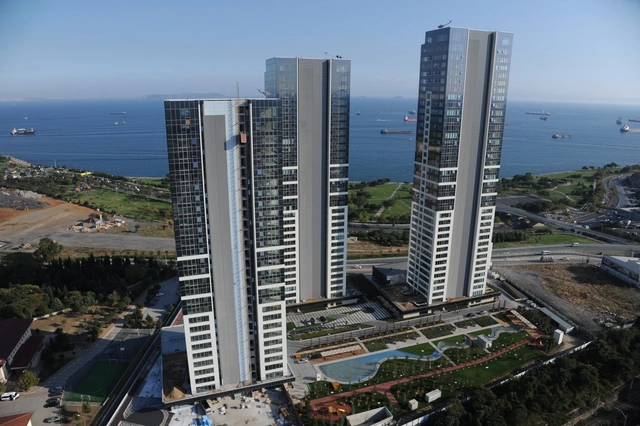
The Turkish Council of State has ruled that the OnaltiDokuz Residence, a trio of towers between 27 and 37 stories tall in Istanbul's Zeytinburnu district, must be demolished in a landmark ruling that could have major ramifications for the country's planning system.
With no casualties, last week's fire at the Glasgow School of Art, which caused significant damage to parts of the building and gutted Charles Rennie Mackintosh's canonical library room, will be remembered as a tragic event that robbed us of one of the best examples of Art Nouveau of its time. The intention of the Glasgow School of Art is to restore the building in the hope that in generations to come, the fire will be all but forgotten, a strategy which has been largely well received by the profession.
However, in the case of other fires things have not gone so smoothly: for millennia, fire has played a big role in determining the course of architectural history - by destroying precious artifacts, but often also by allowing something new to rise from the ashes. Read on after the break as we count down the top 10 fires that changed the course of architectural history.
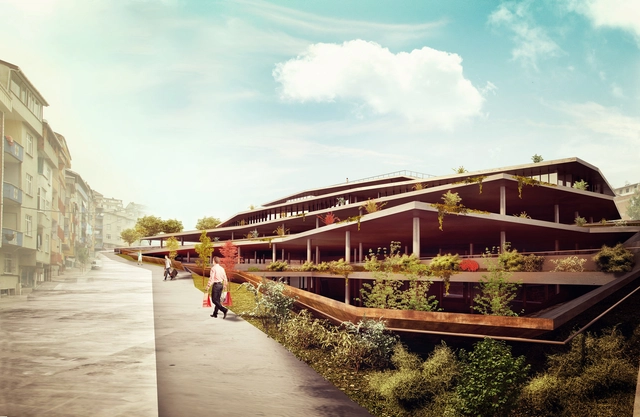
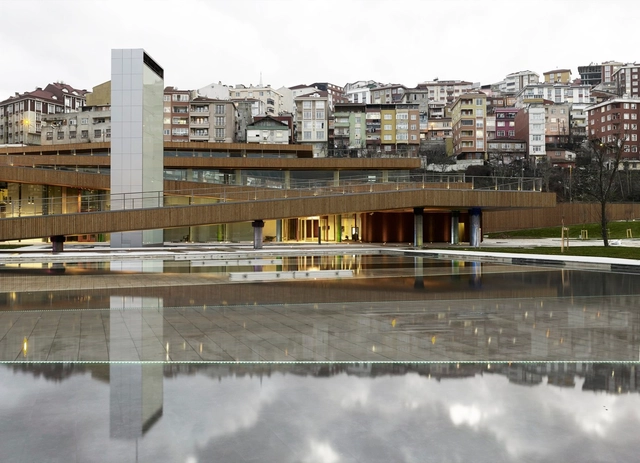
A marketplace is typical for most Turkish city districts. They provide a point of cohesion for the community, acting as an economic hub, a landmark, and an impromptu park. In the rapidly developing Sultangazi district of Istanbul, however, such a public place has yet to be seen. To remedy this, Suyabatmaz Demirel Architects have recently proposed a combination market hall and car park for the middle of this populous residential area.
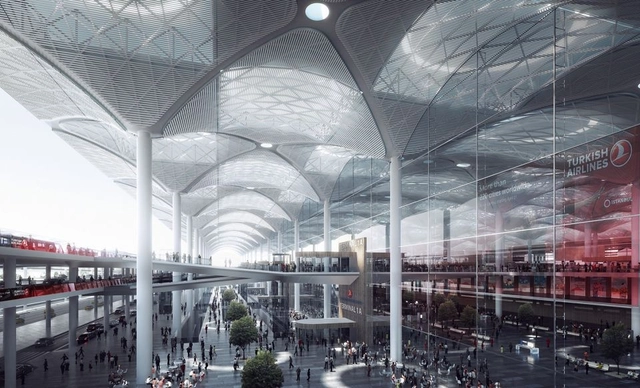
The first of the project’s four phases is slated for completion in 2018 and will serve 90 million passengers per year. Once all phases are complete, the airport’s capacity will expand to over 150 million annual passengers, making it the world’s largest airport terminal under a single roof.
“The Istanbul Grand Airport will be a modern, highly functional airport, with a unique sense of space,” described Nordic. “The airport is inspired by what makes Istanbul great: a large-scale, heaving metropolis with millennia of history, stunning architecture, both new and old, and a richness in color, patterns and quality of light.”