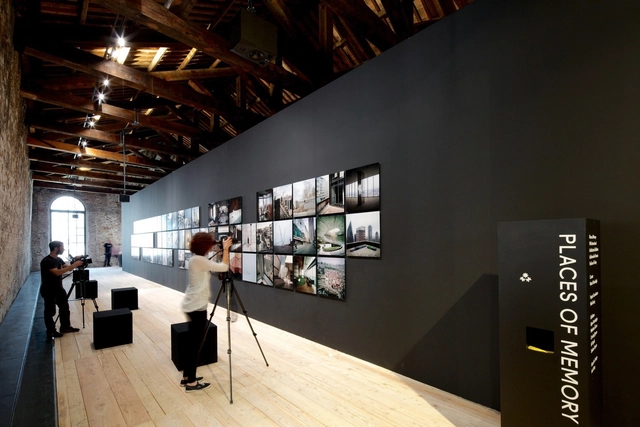
The Istanbul Foundation for Culture and Arts (IKSV) is hosting an open call for proposals for the Pavilion of Turkey's exhibition at the 2016 Venice Biennale. The call is open to all people and institutions of relevant fields, including architects, designers, artists, historians, curators, theoreticians and critics.
Melike Altınışık and Gül Ertekin have shared with us their proposal for the İstanbul Gülsuyu Cemevi and Cultural Center Competition. Hosted by Maltepe Municipality of Istanbul, Turkey, the competition asked participants to design a religious and cultural complex for the Alevi population (a religious minority group practicing Islam) that can serve modern society’s needs and honor past culture.
Out of 138 entries, 10 finalists were selected, three of which went on to win first, second, and third prizes, reflecting the best displays of the jury’s qualifications: communication efficiency, technical quality, aesthetic quality, functionality, and relation to context. See the three winning designs, after the break.
This edition of Section D, Monocle 24's weekly review of design, architecture and craft, dives into Beirut Design Week exploring "what Lebanese designers can show the world." In this show Josh Fehnert examines why Domus have decided to start an academy in Milan, speaks to Dutch typographer Joep Pohlen about his ultimate type reference guide, and assesses some of the architectural similarities between Istanbul and London. While the likenesses are not immediately obvious, both cities are currently undergoing an unprecedented property boom. Istanbul, a city with no strategic masterplan, is growing fast and there are lessons to be learnt from London's comparatively porous urban realm.
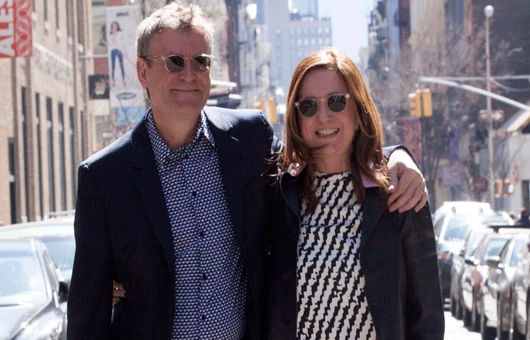
Mark Wigley and Beatriz Colomina. Image Courtesy of Istanbul Foundation for Culture and Arts
The Istanbul Foundation for Culture and Arts have announced that internationally renowned architectural historian and theorist Beatriz Colomina and architectural historian, theorist, and critic Mark Wigley will curate the 3rd Istanbul Design Biennial to be held in the summer of 2016. Colomina, a Professor of Architecture at Princeton University and curator of the recent Radical Pedagogies: Architectural Education in a Time of Disciplinary Instability exhibition (Lisbon Triennale, 2013; Venice Biennale 2014) will join Wigley, Professor and Dean Emeritus of Columbia University's GSAPP and renowned writer and curator, in helping to cement the biennial's international reputation.
EAA- Emre Arolat Architects, a leading international architectural practice based in İstanbul and London, presents an exhibition exploring the urban histories of both cities. Through a two way, dual city approach the practice will reveal “situations” that unite and differentiate these two great cities at the east and west ends of Europe in their development. The exhibition covers a timeline beginning with the mid 19th century that shows key events or turning-points in the course of their stories respectively. The exhibition is curated by EAA - Emre Arolat Architects, in collaboration with Prof. Dr. Murat Güvenç from Istanbul City University and London-based Urban Planning & Development Consultant Ömer Çavuşoğlu.
Dresden's Baroque Frauenkirche was destroyed by Allied bombing in 1945, only to be revived in the same form in 2005
Is there a growing nostalgia pervading attitudes to civic architecture in Europe? From Berlin's new Royal Palace on the River Spree to Turkey's rekindled fascination with their Ottoman heritage, architecture is becoming the medium of choice for exploring a city's roots and a people's past. In this post originally published by TheLong+Short, Feargus O'Sullivan investigates how many governments and developers have decided that the way to future lies in looking backwards.
Reading about Dubai’s Burj Khalifa in the German press, you’d be forgiven for thinking the building was in Leipzig, not the Middle East. “The tallest building in the world is so German,” saidDer Spiegelwhen the tower opened in 2010. “The Burj Khalifa is an Ossi!" shouted Bild, using the common nickname for East Germans. The headlines were partly right: when East Germany’s old parliament building, the Palace of the Republic in Berlin, was demolished in 2006, several thousand tonnes of steel girders were stripped from its carcass and shipped to the Gulf for use in the construction of Burj Khalifa.
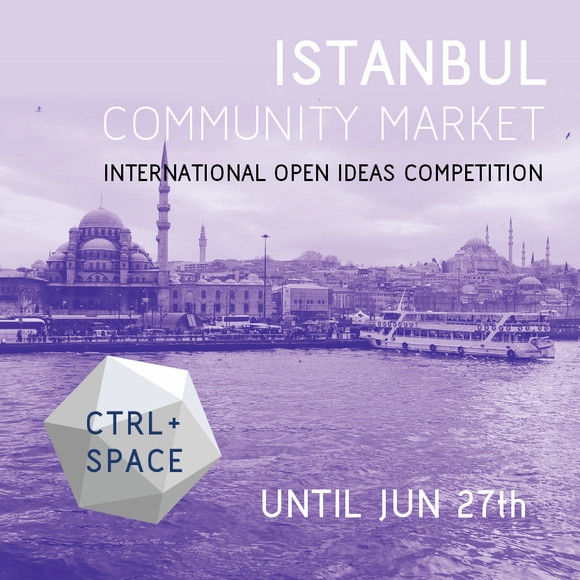
CTRL+SPACE has launched its Istanbul Community Market Ideas Competition. Seeking designs from students and professionals (developed individually or in teams of four or less), the competition challenges participants to create a site-specific, multi-functional market with a strong public element. Submissions are welcomed now until June 27 and winners will be announced on July 17, 2015. Three winning designs will receive monetary prizes from 500€ to 3500€, and five merit award recipients will also be selected. For more details or to register, visit ctrl-space.net.
AA Istanbul Visiting School is beginning an exciting collaboration with Istanbul Bilgi University in 2015. Continuing its expertise on generative design methodologies and large-scale prototyping techniques, the programme will investigate patterns of emergence, differentiation and complexity in natural formation processes, which will then be transformed into digital simulation platforms for design purposes. In contemporary architectural processes, a significant diversion from linear parametric tools towards generative design simulations is taking place. The design and analysis processes will reflect this shift by focusing on simulations, whereby attention will be focused on the process of design generation as opposed to the final form itself. The design agenda of the programme will revolve around the design and fabrication of a one-to-one scale pavilion.
https://www.archdaily.com/602695/aa-visiting-school-istanbul-cellular-re-visionsSponsored Post
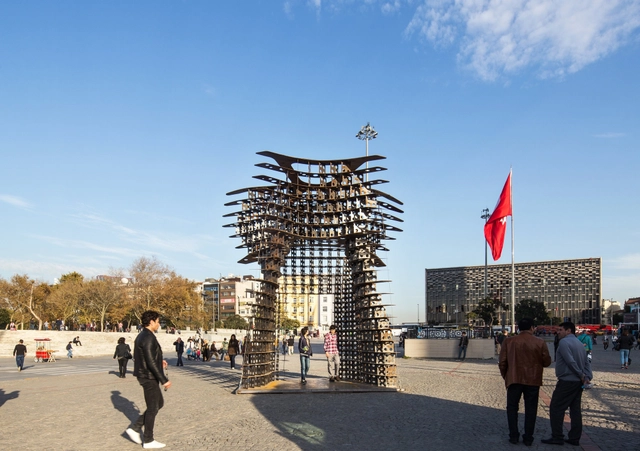
GAD Architecture has installed their latest sculptural design, Serra Gate, in Istanbul’s Taksim Square, just in time for Istanbul Design Week. Named after the minimalist sculptor whose work inspired the design, the Serra gate’s steel form was created using cutting edge technology. The sinuous curvature was conceived through the software “Mathematica,” and was modeled using the latest 3D printing technologies.
GAD Principal, Gokhan Avcioglu, had this to say: “We are delighted that Serra Gate has been featured in Taksim, one of the most important squares of Istanbul. Being a ground-breaking structure, Serra Gate will make the residents of Istanbul question how public spaces have been defined by urban interventions.” Serra Gate will be displayed in a variety of venues throughout the year 2015. See pictures of this amazing structure, after the break.
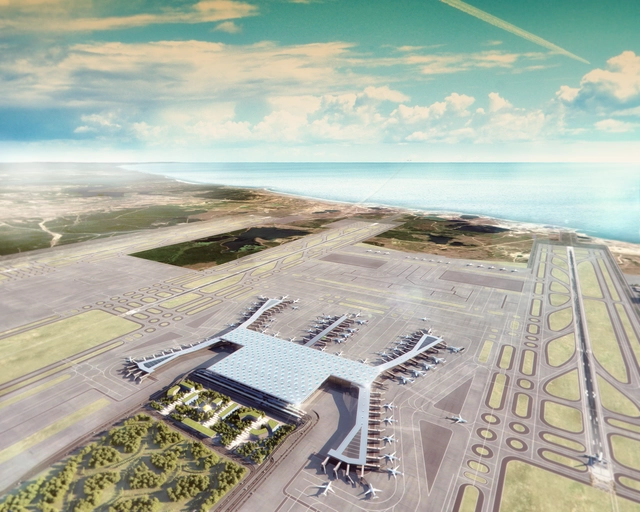
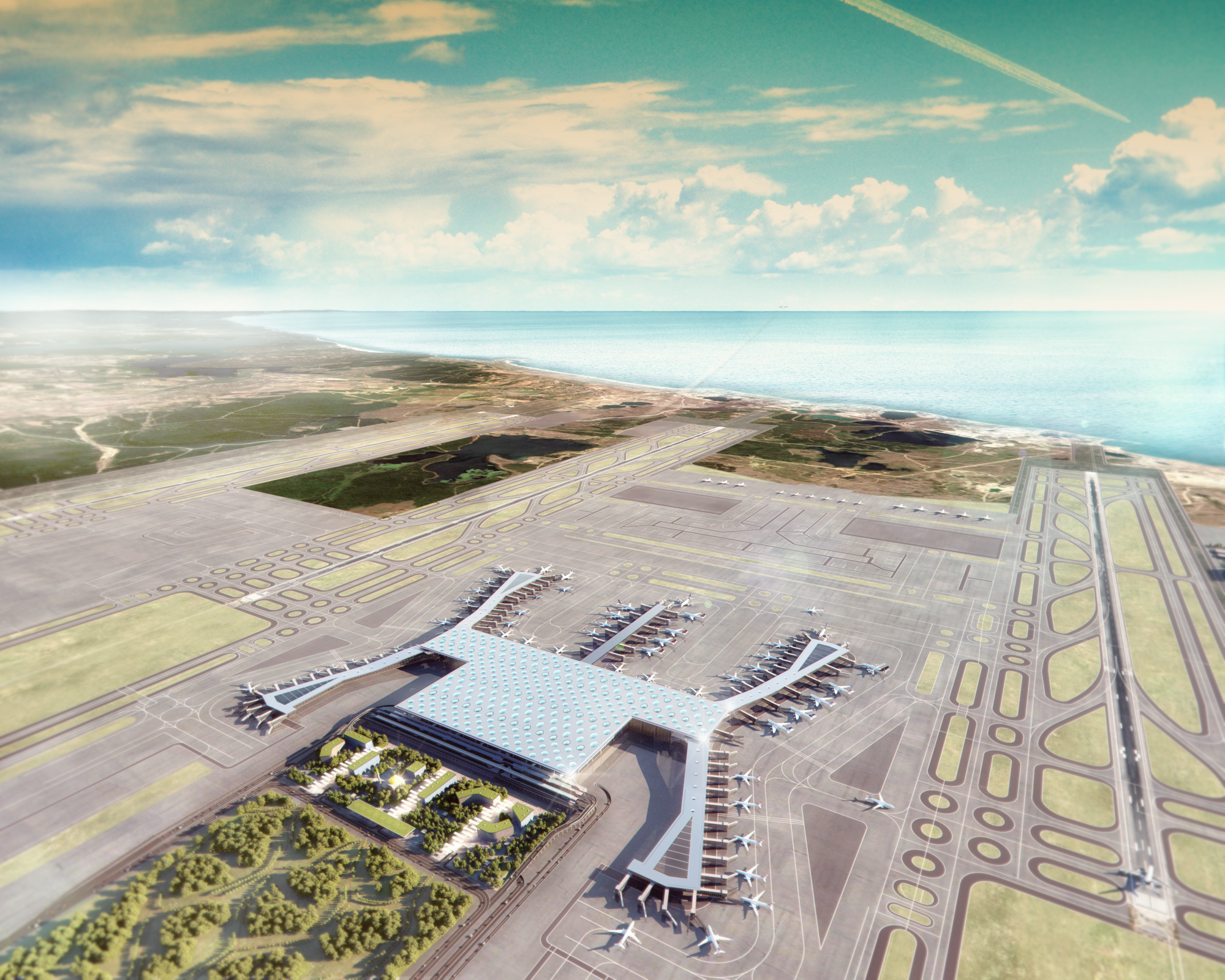
New images have been released of Istanbul's new airport, designed by Grimshaw, Nordic Office of Architecture and Haptic Architects, assisted by local Turkish Partners GMW Mimarlik and Tekeli Sisa. Projected to be the world's largest airport terminal under a single roof at almost one million square metres, the new airport is expected to serve 90 million passengers a year on the opening of the first phase, rising to 150 million a year after completion in 2018.



.jpg?1438700603&format=webp&width=640&height=580)













.jpg?1423522312 "© Sergio Ghetti")
.jpg?1423522311 "© Sergio Ghetti")

.jpg?1422590016&format=webp&width=640&height=580)
.jpg?1422589546 "© Cemal Emden")
.jpg?1422589405 "© Cemal Emden")
.jpg?1422589543 "© Cemal Emden")
.jpg?1422590016)