1. ArchDaily
  2. Invisible Cities

Invisible Cities: The Latest Architecture and News

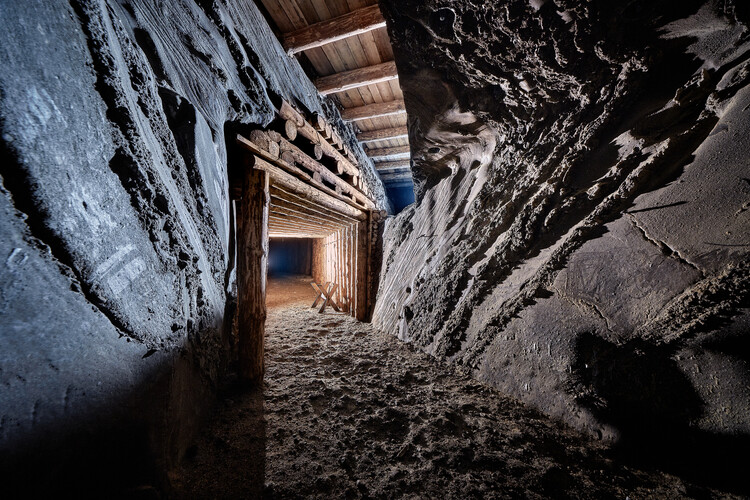
Unearthing the Ground: Architecture and the Politics of the Subterranean

Subscriber Access | 

Beneath the visible surface of cities lies an invisible architecture. Subways, tunnels, water systems, data cables, and bunkers form a dense network that sustains urban life while remaining largely unseen. The ground beneath our feet is not a void but a complex territory that holds the infrastructures, memories, and anxieties of our age. In recent years, as land becomes scarce and climate pressures intensify, architects and urbanists have turned their gaze downward, rediscovering the subterranean as both a physical and conceptual frontier. To design underground is to engage with the unseen mechanisms that shape the world above.

The subterranean has long been a site where architecture intersects with politics, technology, and belief. From the catacombs of Rome to the industrial subways of modernity, descent has symbolized both protection and exposure. Twentieth-century urbanism transformed this gesture into a system: metros, shelters, and utilities redefined the city section as an instrument of governance. Beneath the promise of efficiency and progress, the underground absorbed the anxieties of an era of war, surveillance, and collapse. Its evolution reveals not only how societies build, but also how they fear.

Today, the ground has become the new frontier of urban expansion and ecological adaptation. As digital infrastructures, energy systems, and climatic buffers migrate below grade, architecture confronts a space both technical and metaphysical — essential yet marginal, invisible yet decisive. To think in sections rather than in plan is to recognise that contemporary cities no longer exist solely in their skylines but also in their depths. The challenge for architecture is not only to occupy that space, but to render it legible, to turn the unseen into knowledge, and the hidden into a new terrain of design.
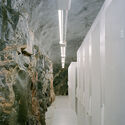
Unearthing the Ground: Architecture and the Politics of the Subterranean - Image 1 of 4Unearthing the Ground: Architecture and the Politics of the Subterranean - Image 2 of 4Unearthing the Ground: Architecture and the Politics of the Subterranean - Image 3 of 4Unearthing the Ground: Architecture and the Politics of the Subterranean - Image 4 of 4Unearthing the Ground: Architecture and the Politics of the Subterranean - More Images+ 36

What Can Metaverse Planners Learn from Italo Calvino’s Invisible Cities

Subscriber Access | 

We are still at the dawn of the Metaverse, the next wave of the Internet. The current “mainstream” Metaverse platforms serve as experimental containers to host the wildest dreams of virtual worlds where we are supposed to unleash the imagination. However, from a spatial design perspective, they have so far been lame and ordinary. Without the constraints in the physical world, how do we draft the urban blueprints in the metaverse? I believe metaverse planners can find inspiration from Italo Calvino’s Invisible Cities, in which he revealed a poetic and mathematical approach to “urban planning” in the imaginary worlds.

What Can Metaverse Planners Learn from Italo Calvino’s Invisible Cities - Image 1 of 4What Can Metaverse Planners Learn from Italo Calvino’s Invisible Cities - Image 2 of 4What Can Metaverse Planners Learn from Italo Calvino’s Invisible Cities - Image 3 of 4What Can Metaverse Planners Learn from Italo Calvino’s Invisible Cities - Image 4 of 4What Can Metaverse Planners Learn from Italo Calvino’s Invisible Cities - More Images+ 8

Three Principles of Architecture as Revealed by Italo Calvino's 'Invisible Cities'

Subscriber Access | 

Ah, Invisible Cities. For many of us, Italo Calvino’s 1972 novel reserves a dear place in our libraries, architectural or otherwise, for its vivid recollections of cities and their curiosities, courtesy of a certain Marco Polo as he narrates to Kublai Khan. And while the book doesn’t specifically fit the bill in terms of conventional architectural writing, it resists an overall categorisation at all, instead superseding the distillation of the cities it contains into distinct boundaries and purposes.

For though there is a certain kind of sensory appeal that is captured in the details of places, the real beauty of Invisible Cities lies in the masking of underlying notions of time, identity and language within these details – a feat that is skillfully accomplished by both Marco and Calvino. With this in mind, here are three of many such principles, as revealed by the layered narrative of Invisible Cities.

Italo Calvino's 'Invisible Cities', Illustrated (Again)

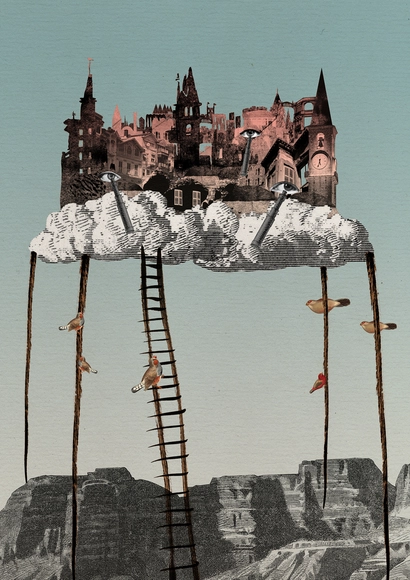
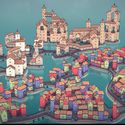
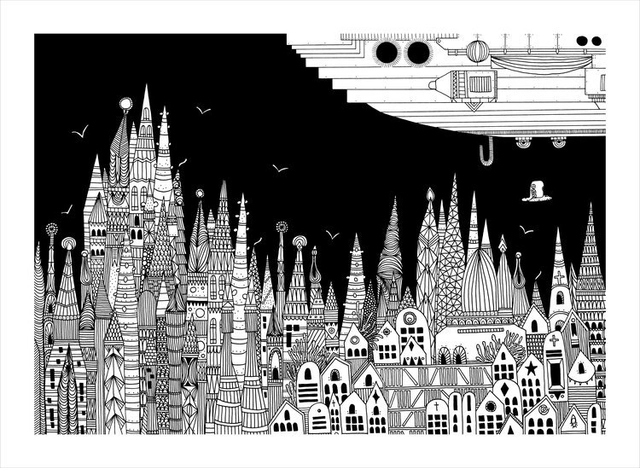
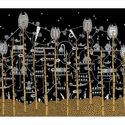
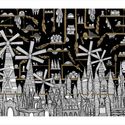
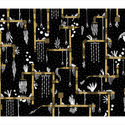
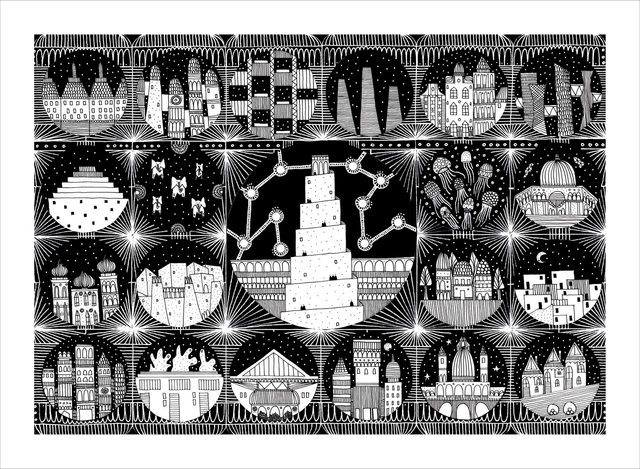
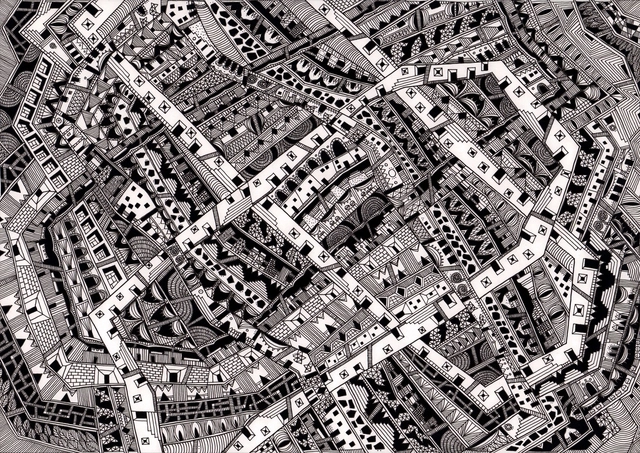
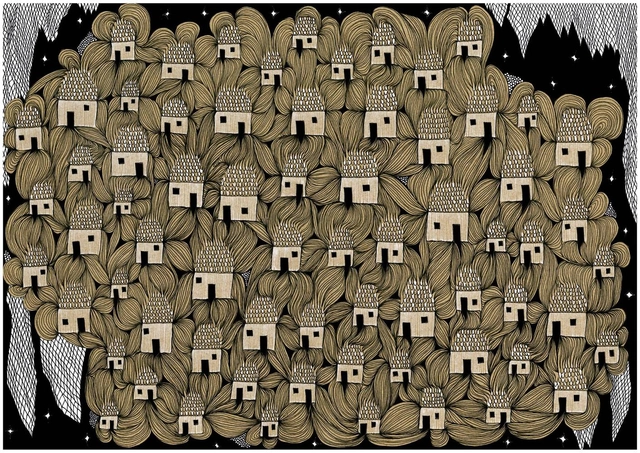
Lima-based architect Karina Puente has a personal project: to illustrate each and every "invisible" city from Italo Calvino's 1972 novel. Her initial collection, which ArchDaily published in 2016, traced Cities and Memories. This latest series of mixed media collages, drawn mainly using ink on paper, brings together another sequence of imagined places – each referencing a city imagined in the book.

Invisible Cities, which imagines fictional conversations between the (real-life) Venetian explorer Marco Polo and the aged Mongol ruler Kublai Khan, has been instrumental in framing approaches to urban discourse and the form of the city. According to Puente, "each illustration has a conceptual process, some of which take more time than others." Usually "I research, think, and ideate over each city for three weeks before making sketches." The final drawings and cut-outs take around a week to produce.

Italo Calvino's 'Invisible Cities', Illustrated (Again) - Image 1 of 4Italo Calvino's 'Invisible Cities', Illustrated (Again) - Image 2 of 4Italo Calvino's 'Invisible Cities', Illustrated (Again) - Image 3 of 4Italo Calvino's 'Invisible Cities', Illustrated (Again) - Image 4 of 4Italo Calvino's 'Invisible Cities', Illustrated (Again) - More Images+ 11