1. ArchDaily
  2. Illustration

Illustration: The Latest Architecture and News

Setting the Table: From the Ordinary Table to the Extraordinary Table

Subscriber Access | 

Setting the Table is an illustrated reflection by architects Florencia Köncke and Paula Olea Fonti. In the following paragraphs, the authors develop a first approach to the study of the table as "the centre of our notion of domesticity"(1). In the relationship between space, objects and people and as a social catalyst for gathering and exchange.

Nvard Yerkanian Brings Armenia's Modernist Architecture to Life

Armenian graphic designer and illustrator Nvard Yerkanian has created a new series exploring modernist architecture in Armenia. The illustration series aims to reveal the beauty and value of modernism to the public through the power of colors that accentuate the simple yet fantastic forms of these monuments. The series is an ode to the architectural heritage that has been lost and undervalued.

Nvard Yerkanian Brings Armenia's Modernist Architecture to Life - Image 1 of 4Nvard Yerkanian Brings Armenia's Modernist Architecture to Life - Image 2 of 4Nvard Yerkanian Brings Armenia's Modernist Architecture to Life - Image 3 of 4Nvard Yerkanian Brings Armenia's Modernist Architecture to Life - Image 4 of 4Nvard Yerkanian Brings Armenia's Modernist Architecture to Life - More Images+ 10

PlayHouse Competition - Call for Entries

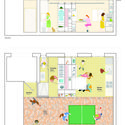
Play is an essential part of all our lives, whether child or adult. Be it playing sports, a board game or simply sharing jokes with friends, play is just as important to adults as building a den or playing dress-up is to a child.

Illustrated Dictionary of Architecture Helps Visualize Design Concepts

Drawing as an architectural tool serves not only as a means of communication, but through drawing we can also gain a deeper understanding of the subject. To this purpose, Alessandro Luporino has created the Illustrated Dictionary of Architecture. The series of beautiful and evocative illustrations serve as companions for the book “Dictionary of Architecture,” by Nikolaus Pevsner, John Fleming, and Hugh Honor.

Illustrated Dictionary of Architecture Helps Visualize Design Concepts - Image 6 of 4Illustrated Dictionary of Architecture Helps Visualize Design Concepts - Featured ImageIllustrated Dictionary of Architecture Helps Visualize Design Concepts - Image 7 of 4Illustrated Dictionary of Architecture Helps Visualize Design Concepts - Image 1 of 4Illustrated Dictionary of Architecture Helps Visualize Design Concepts - More Images+ 38

re:design Celebrates Bauhaus 100 with Illustrated Posters

Subscriber Access | 

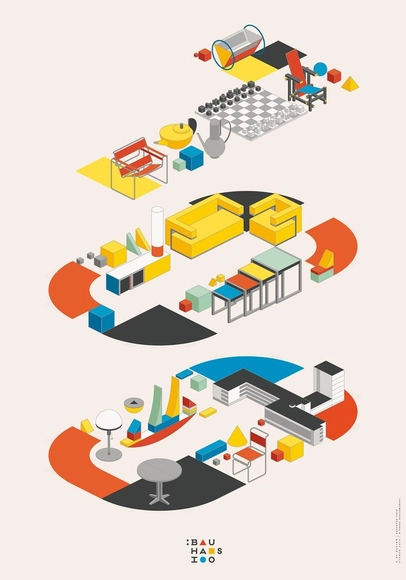
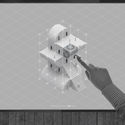
Graphic designers Eurydyka Kata & Rafał Szczawiński from re:design have shared with us some of their most recent designs celebrating Bauhaus' 100th Anniversary. Inspiration for these posters was taken directly from Bauhaus' most iconic designs. "For this poster, we researched some of the most famous designs from the Bauhaus school: furniture, toys, appliances, and recreated them isometrically. Both the drawing style and colors are inspired by Bauhaus art and style. This was great fun to work on and we're glad we could pay tribute to one of the most important institutions in the history of design."

The Many Faces of Hudson Yards' Vessel

Subscriber Access | 

Hudson Yards’ Large Honeycomb… Hudson Yards’ New Shawarma Sculpture…”
Call it what you want, but the Vessel has created quite a buzz over the past couple of weeks, and it is not just because of its impressive architecture, or the panoramic view at the top (to which some claimed that getting there was an uncalled for work-out).

After coming across different nicknames of Hudson Yards’ now-famous point of attraction, architectural designer and illustrator Chanel Dehond selected some of the most amusing ones and transformed them into sketches.

Tell us, ArchDaily readers, what do you call the Vessel?

The Many Faces of Hudson Yards' Vessel - Image 1 of 4The Many Faces of Hudson Yards' Vessel - Image 2 of 4The Many Faces of Hudson Yards' Vessel - Image 3 of 4The Many Faces of Hudson Yards' Vessel - Image 4 of 4The Many Faces of Hudson Yards' Vessel - More Images+ 6

Explore the Potential of the Human Figure in Architectural Representation

Explore the Potential of the Human Figure in Architectural Representation - Featured Image
© Frances Edith Cooper

Explore the Potential of the Human Figure in Architectural Representation - Image 1 of 4Explore the Potential of the Human Figure in Architectural Representation - Image 2 of 4Explore the Potential of the Human Figure in Architectural Representation - Image 3 of 4Explore the Potential of the Human Figure in Architectural Representation - Image 4 of 4Explore the Potential of the Human Figure in Architectural Representation - More Images+ 19

The human figure is fundamental in order to understand scale in illustrations, hyper-realistic renders, collages and three-dimensional representations. However, it often seems to be one of the last elements to be incorporated, when it should be a thoughtful decision, intrinsically related to the project. What do human figures transmit beyond the scale of a project?

These Delicate Illustrations Turn Images of Urban Density into Art

Subscriber Access | 
These Delicate Illustrations Turn Images of Urban Density into Art - Image 5 of 4
The Layered City. Image Courtesy of Alina Sonea

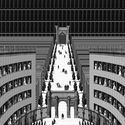
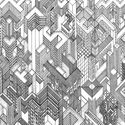
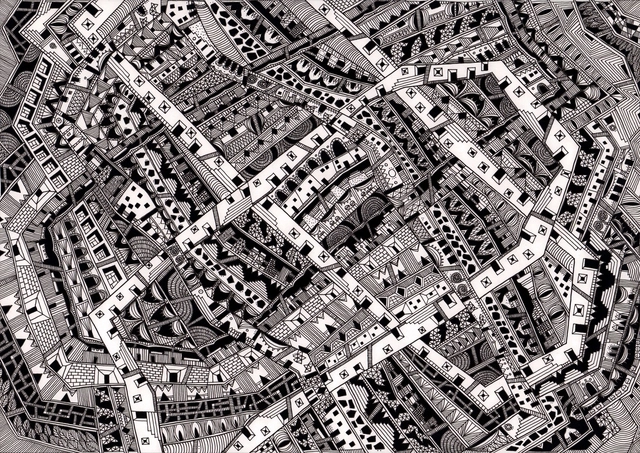
Trained in Architecture, Urban Design, and Theory, Alina Sonea illustrates the complex and often paradoxical nature of the cities we inhabit. The Feldkirch-based artist and architect has, since 2013, completed a series of detailed illustrations that employ graphic yet delicate black lines to render dense images of fantastical metropolises.

These Delicate Illustrations Turn Images of Urban Density into Art - Image 1 of 4These Delicate Illustrations Turn Images of Urban Density into Art - Image 2 of 4These Delicate Illustrations Turn Images of Urban Density into Art - Image 3 of 4These Delicate Illustrations Turn Images of Urban Density into Art - Image 4 of 4These Delicate Illustrations Turn Images of Urban Density into Art - More Images+ 4

The Arc de Triomphe as an Elephant?! These Illustrations Reveal What Famous Monuments Could Have Been

Subscriber Access | 

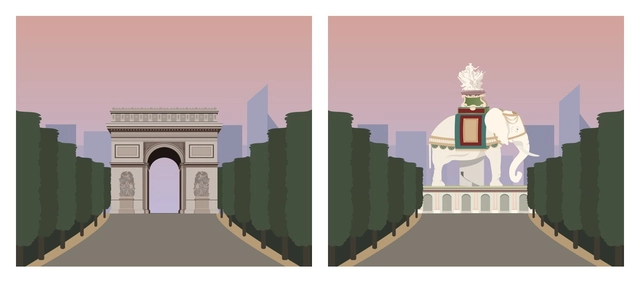
A city’s monuments are integral parts of its metropolitan identity. They stand proud and tall and are often the subject of a few of your vacation photos. It is their form and design which makes them instantly recognizable, but what if their design had turned out differently?

Paris’ iconic and stunning Arc de Triomphe could have been a giant elephant, large enough to hold banquets and balls, and the Lincoln Memorial in Washington D.C. could have featured an impressive pyramid.

GoCompare has compiled and illustrated a series of rejected designs for monuments and placed them in a modern context to commemorate what could have been. Here are a few of our favorites:

Cities Intricately Captured in Thin Line Illustrations

Subscriber Access | 

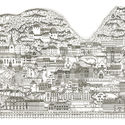
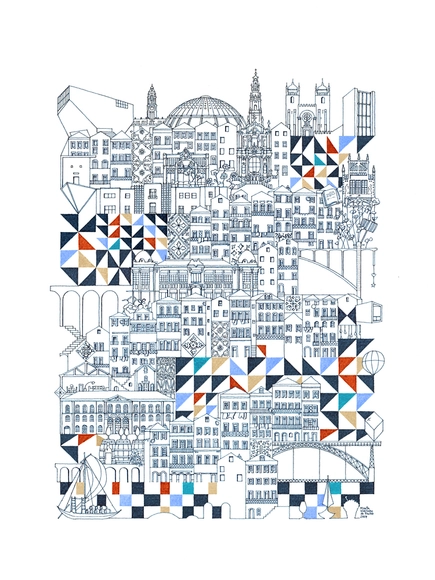
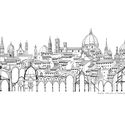
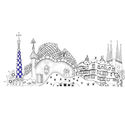
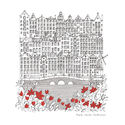
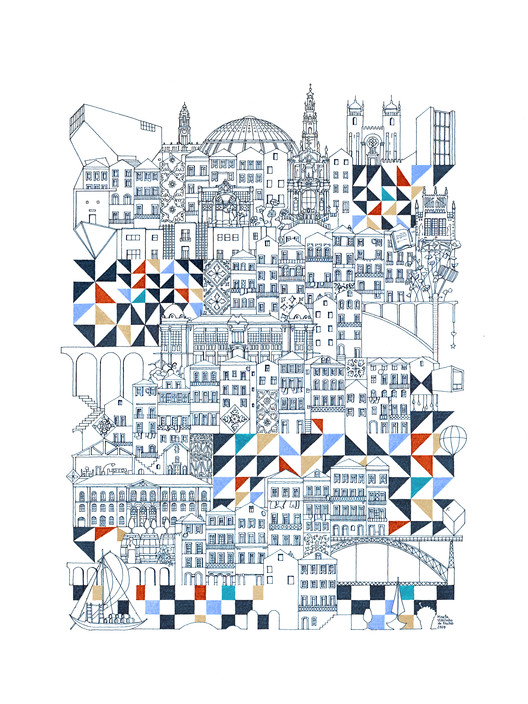
Architect and illustrator, Marta Vilarinho de Freitas has yet again enchanted us with her intricate drawings of cities in thin-line-pen on paper. The Portuguese architect has been exercising her passion in drawing through a series of drawings entitled, Cities and Memory - the Architecture and the City.

Fascinated by cities, Marta’s illustrations express her connection with architecture while still capturing the romantic and qualitative aspects of each city, its patterns, colors, atmosphere, and light.

Marta Vilarinho de Freitas combines fantasy with detailed accuracy in her compositions of stacked building facades, roof pitches, plans and sections along with elements distinct to the city depicted such as Dutch windmills, boats, books, and instruments.The process of creating these drawings is cyclical in that they continue to inform Marta of the spirit of each city as she draws each art piece.

Cities Intricately Captured in Thin Line Illustrations - Image 1 of 4Cities Intricately Captured in Thin Line Illustrations - Image 2 of 4Cities Intricately Captured in Thin Line Illustrations - Image 3 of 4Cities Intricately Captured in Thin Line Illustrations - Image 4 of 4Cities Intricately Captured in Thin Line Illustrations - More Images+ 7

Monumental Minds: Illustrations of Scandinavia’s Design Legacy

Subscriber Access | 

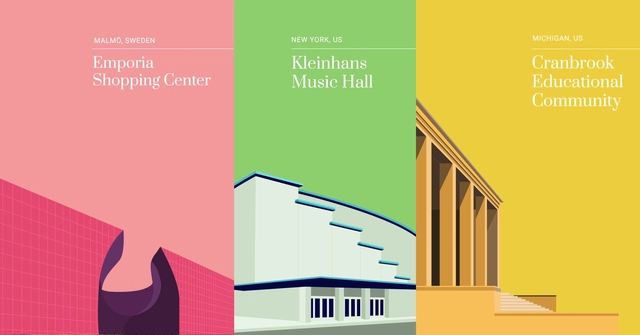
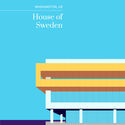
Not just meatballs and Vikings; Scandinavia has always been the epicentre of design across the world - just look at the growing impact of Bjarke Ingels and Ikea's future living lab SPACE10. To showcase their significant influence, Expedia has illustrated the works of four famous architects from Denmark, Finland, Norway and Sweden and how they shaped international architectural movements of the 20th and 21st centuries in a collection of posters called Monumental Minds.

Monumental Minds: Illustrations of Scandinavia’s Design Legacy - Films & ArchitectureMonumental Minds: Illustrations of Scandinavia’s Design Legacy - Films & ArchitectureMonumental Minds: Illustrations of Scandinavia’s Design Legacy - Films & ArchitectureMonumental Minds: Illustrations of Scandinavia’s Design Legacy - Films & ArchitectureMonumental Minds: Illustrations of Scandinavia’s Design Legacy - More Images+ 16

Explore These Digitally-Created Abandoned Islands by Brazilian Designer Fabio Araujo

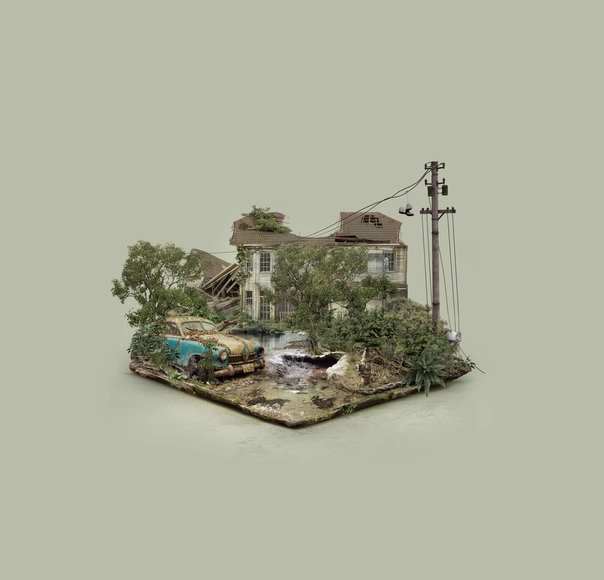
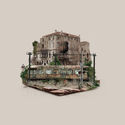
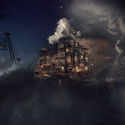
Abu Dhabi-based Brazilian designer and artist Fábio Araujo has a fascination with abandoned places – the mystery of where the man made clashes with the natural to create unique colors, textures and compositions.

These places are the subject of his series, aptly titled “Abandoned Places,” in which he uses a series of digital manipulations to create small islands floating within and contrasting with their clean, solid backgrounds.

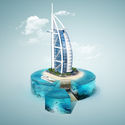
Other works by Araujo include “Favela,” where the Brazilian housing typology has been reimagined as located within the sky, and miniature models of scenes and buildings including the Burj al Arab hotel in Dubai.

Explore These Digitally-Created Abandoned Islands by Brazilian Designer Fabio Araujo - Image 1 of 4Explore These Digitally-Created Abandoned Islands by Brazilian Designer Fabio Araujo - Image 2 of 4Explore These Digitally-Created Abandoned Islands by Brazilian Designer Fabio Araujo - Image 3 of 4Explore These Digitally-Created Abandoned Islands by Brazilian Designer Fabio Araujo - Image 4 of 4Explore These Digitally-Created Abandoned Islands by Brazilian Designer Fabio Araujo - More Images+ 1

12 Offices that Use Collage to Create Architectural Atmospheres

Subscriber Access | 

“An image is a sight which has been recreated or reproduced. It is an appearance, or a set of appearances, which has been detached from the place and time in which it first made its appearance and preserved – for a few moments or a few centuries. Every image embodies a way of seeing.” - John Berger / 1972 / Ways of seeing

Digital tools have given architecture the ability to manipulate information, allowing architects to interact with existing information and reshape it in a different way according to the author’s ideals or thoughts about architecture.

Representation becomes a project itself; it is a graphic manifesto of what the author wants to deliver, a critical vision of a design intervention in a particular context.

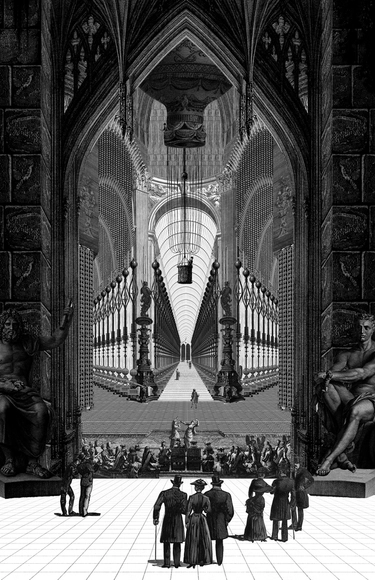
In this path, collage has become an active tool to facilitate the reproduction of multi-layered atmospheres made by the curated assemblage of different forms to create a complex stage for an architectural idea.

A collage engages all senses to define the experience of a space. The symbolic and tactical associations between fragments of images provide a way to understand all the stories behind a space, transgressing the limits of perception to reach an intuitive process that exhibits the atmosphere of a project. 

Here we introduce 12 architecture offices that describe atmospheres by using complex collage compositions to express social, cultural and political environments for their designs.

"Architecture of the Portrait": Illustrations by Francisca Álvarez Ainzúa

Subscriber Access | 

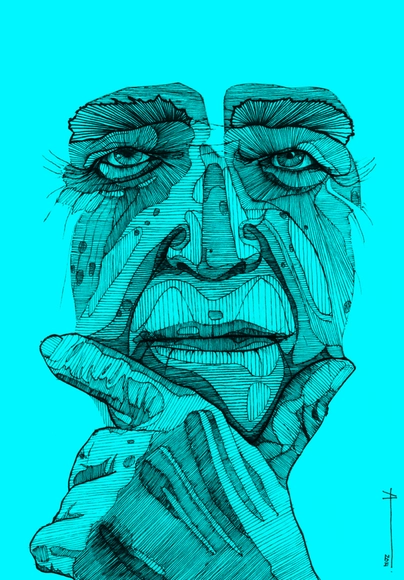
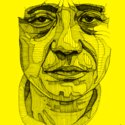
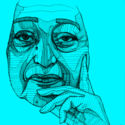
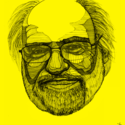
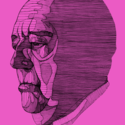
Chilean architect and illustrator Francisca Álvarez Ainzúa created "Architecture of the Portrait": a series of illustrations of renowned architects drawn with the precision and accuracy of a fineliner. In order to choose the protagonists of her geometrical analyses, the architect states a preference for strong character and the presence of imperfections, which imparts a certain richness to the representation.

The architectural construction of the face is done using lines to create a hatch effect. Next, she adds color that pays tribute to the traditional default CAD shades: yellow, cyan and magenta.

"Architecture of the Portrait": Illustrations by Francisca Álvarez Ainzúa - Arts & Architecture"Architecture of the Portrait": Illustrations by Francisca Álvarez Ainzúa - Arts & Architecture"Architecture of the Portrait": Illustrations by Francisca Álvarez Ainzúa - Arts & Architecture"Architecture of the Portrait": Illustrations by Francisca Álvarez Ainzúa - Arts & ArchitectureArchitecture of the Portrait: Illustrations by Francisca Álvarez Ainzúa - More Images+ 1

The Humble Vernacular of the Undecorated Shed

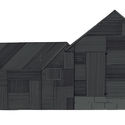
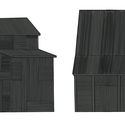
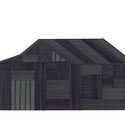
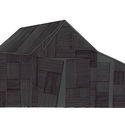
John Redington, a Texas-based illustrator, documents abandoned rural sheds and their modest architectural impact. In this visual essay he reveals this unseen, underrepresented vernacular arguing that the "shaky charm of the abandoned shed could offer a look into a more humble form of inspiration for architects."

The car rattles on a loose road as thick white dust rises from the back of its tires. On either side seas of sunburned grass just barely keep themselves from breaking onto the path. The sky sits heavily on the horizon, as the fragrance of both wild and cultivated plants fill the air.

The Humble Vernacular of the Undecorated Shed - Image 1 of 4The Humble Vernacular of the Undecorated Shed - Image 2 of 4The Humble Vernacular of the Undecorated Shed - Image 3 of 4The Humble Vernacular of the Undecorated Shed - Image 4 of 4The Humble Vernacular of the Undecorated Shed - More Images+ 10

Italo Calvino's 'Invisible Cities', Illustrated (Again)

Lima-based architect Karina Puente has a personal project: to illustrate each and every "invisible" city from Italo Calvino's 1972 novel. Her initial collection, which ArchDaily published in 2016, traced Cities and Memories. This latest series of mixed media collages, drawn mainly using ink on paper, brings together another sequence of imagined places – each referencing a city imagined in the book.

Invisible Cities, which imagines fictional conversations between the (real-life) Venetian explorer Marco Polo and the aged Mongol ruler Kublai Khan, has been instrumental in framing approaches to urban discourse and the form of the city. According to Puente, "each illustration has a conceptual process, some of which take more time than others." Usually "I research, think, and ideate over each city for three weeks before making sketches." The final drawings and cut-outs take around a week to produce.

Italo Calvino's 'Invisible Cities', Illustrated (Again) - Image 1 of 4Italo Calvino's 'Invisible Cities', Illustrated (Again) - Image 2 of 4Italo Calvino's 'Invisible Cities', Illustrated (Again) - Image 3 of 4Italo Calvino's 'Invisible Cities', Illustrated (Again) - Image 4 of 4Italo Calvino's 'Invisible Cities', Illustrated (Again) - More Images+ 11

These Watercolors Capture the Unsung Architecture of Tokyo's Eclectic Storefronts

Subscriber Access | 
These Watercolors Capture the Unsung Architecture of Tokyo's Eclectic Storefronts - Image 6 of 4
© Mateusz Urbanowicz

A renowned symbol of the modern world, Tokyo is a city commonly associated with bright lights, innovative technology and sleek buildings. So when Polish artist Mateusz Urbanowicz first moved to Tokyo, he was taken aback by the number of old, architecturally eclectic storefronts that continued to flourish within the city.

“When I moved to Tokyo, more than 3 years ago I was really surprised that upon my walks I encountered so many shops still in business in really old buildings,” Urbanowicz explains. “Differently to Kobe, where the earthquake wiped out a lot of these old downtown houses and shops, in Tokyo they still survive.”
Inspired by the buildings’ resilience and their unique architectural features, Urbanowicz set out to document the storefronts in a series of watercolor illustrations, capturing the process through making-of videos.

These Watercolors Capture the Unsung Architecture of Tokyo's Eclectic Storefronts - Image 1 of 4These Watercolors Capture the Unsung Architecture of Tokyo's Eclectic Storefronts - Image 2 of 4These Watercolors Capture the Unsung Architecture of Tokyo's Eclectic Storefronts - Image 3 of 4These Watercolors Capture the Unsung Architecture of Tokyo's Eclectic Storefronts - Image 4 of 4These Watercolors Capture the Unsung Architecture of Tokyo's Eclectic Storefronts - More Images+ 2

Chicago Architecture Club Announces 2015 Burnham Prize Competition: Currencies of Architecture

UPDATE: The deadline for submissions for the Burnham Prize has been extended to September 7th, 2015 with the announcement of the winning entries to occur on September 30th, 2015. In addition, student entry fees have been reduced to $25.00.
Affiliated with this year’s Chicago Architecture Biennial, the Chicago Architectural Club has announced the 2015 Burnham Prize Competition: Currencies of Architecture. This year’s Burnham Prize was inspired by the Chicago Architecture Biennial’s title, “The State of the Art of Architecture,” and explores the question: what is the state of the art of architecture today? Entrants are challenged to create a single image that exemplifies a point of view on the current state of architecture – whether it is a celebration, a challenge, a statement or anything else.