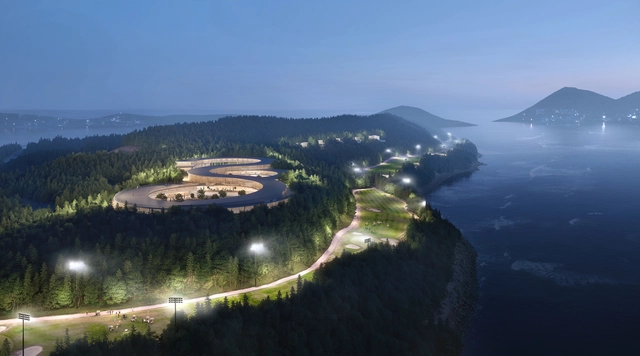
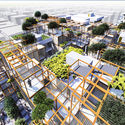
UNStudio has recently designed the masterplan for Gyeongdo Island, a new sustainable leisure destination in South Korea. Driven by nature, the 470,000 m2 buildings and public spaces are centered on the qualities of a green environment.


UNStudio has recently designed the masterplan for Gyeongdo Island, a new sustainable leisure destination in South Korea. Driven by nature, the 470,000 m2 buildings and public spaces are centered on the qualities of a green environment.
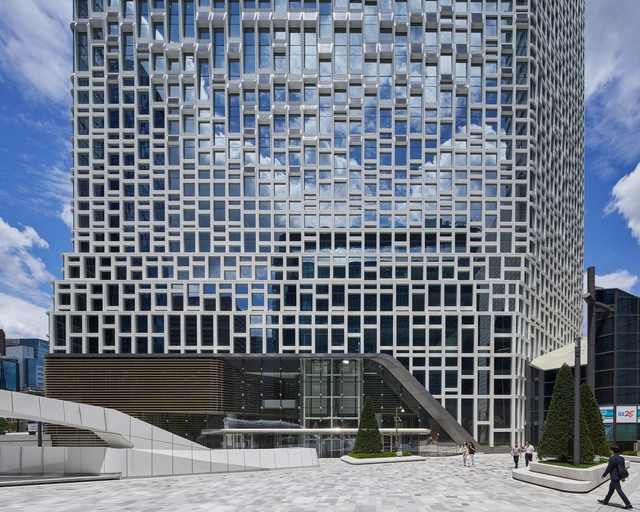
UNStudio has just completed the remodeling works of the Hanwha headquarters building in Seoul, while the building remained fully occupied. The refurbishment operations have created a modern establishment that meets the current sustainability requirements.
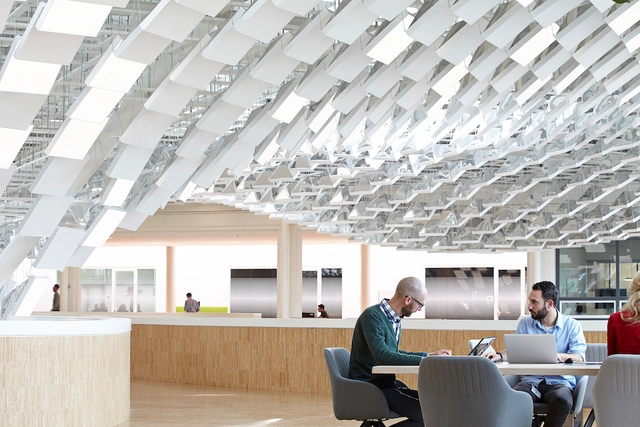
The incorporation of new technologies into architectural designs has been expanding design possibilities over the last few years. Automation in construction processes can be used both in large scale city strategies, and smaller-scale demands like in the construction of residences. One of the more recent ways that technology has been integrated into the design of workplaces is through the incorporation of artificial intelligence, which uses data that can “teach” the machines how to work in several levels of autonomy.
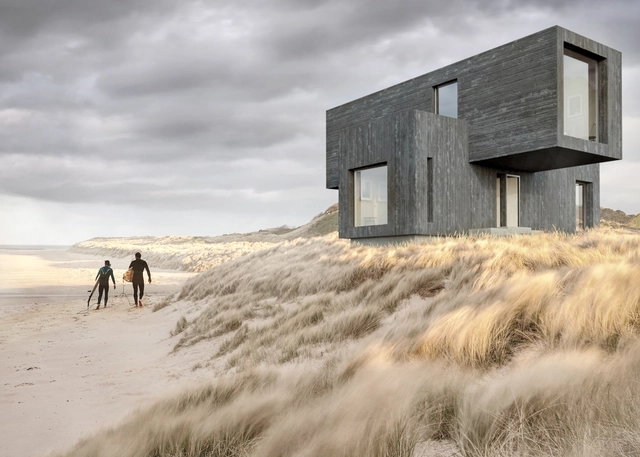
Dedicated to sustainability, Plant Prefab has partnered up with Koto Design to create 2 new Net-Zero LivingHomes. The prefabricated modular homes inspired by Scandinavian architecture, embrace biophilic and sustainable living.
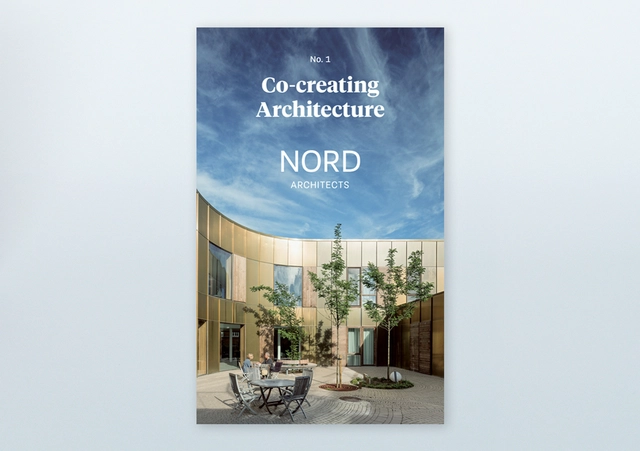
Co-creating Architecture is a bookseries project that takes a look at the vast potential and use of co-creation within Danish architecture.
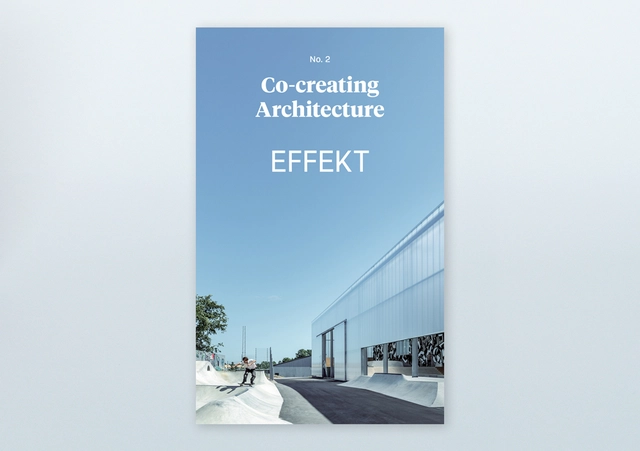
Co-creating Architecture is a bookseries project that takes a look at the vast potential and use of co-creation within Danish architecture.
Liam Young was once described by the BBC as "the man designing our futures". The Australian-born architect and director has carved a vibrant path through architectural discourse, standing at the intersection of design, technology, and media. A self-described "speculative architect", Young is the co-founder of thinktank Tomorrow's Thoughts Today, using vivid imagery and films to spark conversations about the future of the built environment, and the relationships between humans and machines, bits and atoms, artificial and natural. He also co-runs the Unknown Fields Division, a nomadic research studio that travels the world in search of landscapes that speak to his focus on global flows of materials, technologies, and ideas.
_2605.jpg?1587110718&format=webp&width=640&height=580)
In this short video by Louisiana Channel, Junya Ishigami talks about Tokyo and what he sees as the defining traits of the vibrant and diverse metropole. Discussing what he likes about the city, the renowned Japanese architect underlines Tokyo’s polycentrism and explains how being made up of different small town allows the city to preserve its very local characteristics.
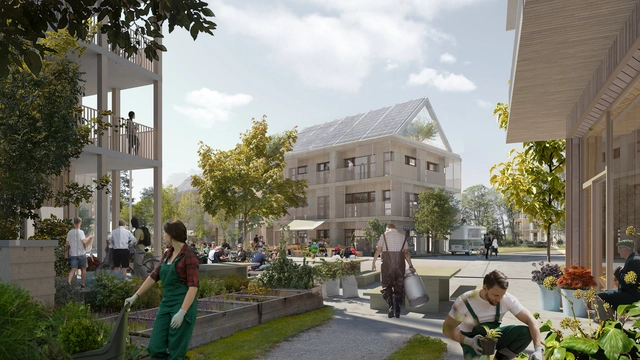
White Arkitekter, in collaboration with Silicon Valley-based ReGen Villages, have joined forces to create fully circular, self-sufficient and resilient communities in Sweden. Inspired by computer games, the project puts in place organic food production, locally produced and stored energy, comprehensive recycling, and climate positive buildings.
.jpg?1585773323&format=webp&width=640&height=580)
“Time is a resource we are not spending properly. People are eager to save other resources, but they don’t mind spending their time carelessly,” says Anupama Kundoo in this Louisiana Channel Interview, where she talks about time as a general concept, sharing some of her philosophy of life on the matter. Turning to architecture, Kundoo reflects on the sense of urgency governing the current design process, obstructing any long term thinking about the collective body of work left as a legacy to future generations; therefore she urges architects to take time to rethink their work and refine their designs.
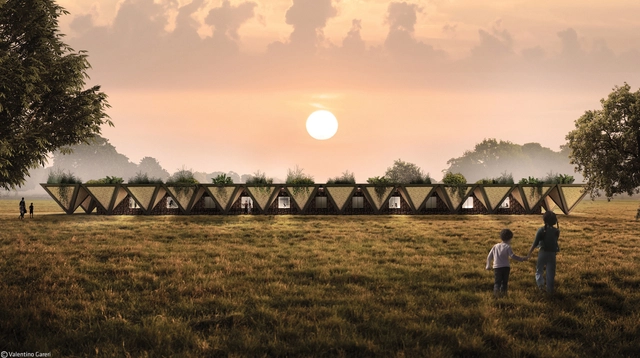
The World Bank believes that urbanization will be “the single most important transformation that the African continent will undergo this century”, with over half of the population set to live in cities by 2040. This will manifest as 40,000 people moving to cities every day for the next 20 years. While much of the architectural discourse around Africa's future focuses on cities, rural areas are often ignored. This has however been the preoccupation of Italian architect Valentino Gareri, founder of Valentino Gareri Architectural Atelier and Senior Designer at Bjarke Ingels Group.

On 17 November 2019, a COVID-19 case was first reported in Wuhan, Hubei, China. On March 11, 2020, the World Health Organization declared the outbreak a pandemic, as over 138,000 cases have been confirmed in more than 130 countries and territories and at least 3,300 people have died from the disease.
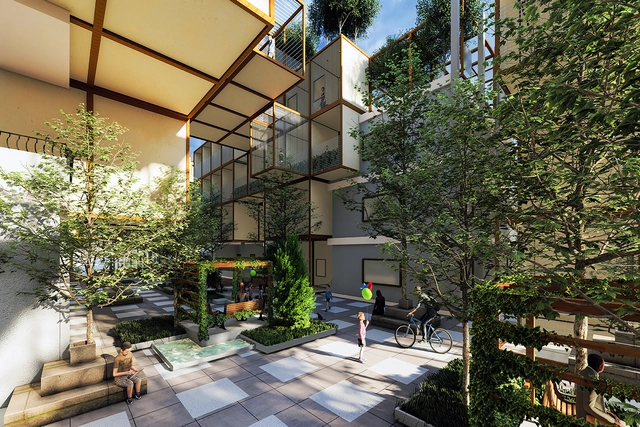
Reparametrize Studio has followed up their ongoing research “Re-Coding Post-War Syria”, with a project that focuses on analyzing the damaged fabric of post-war cities through 3D scanning technologies. Taking a Street in Zamalka Town in Damascus, Syria as a case study, the investigation can distinguish the areas in need of reconstruction from the areas in useful conditions.
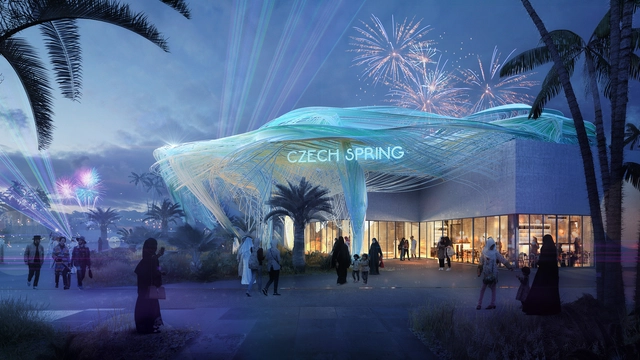
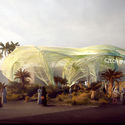
Located in the sustainability zone of EXPO 2020 Dubai, the Czech pavilion, designed by Formosa AA and R/FRM, is an invitation for discovery. Raising questions concerning desert cultivation, it integrates and exposes the S.A.W.E.R. system cultivation plant. Visible technologies form the main formal and visual components of the pavilion.
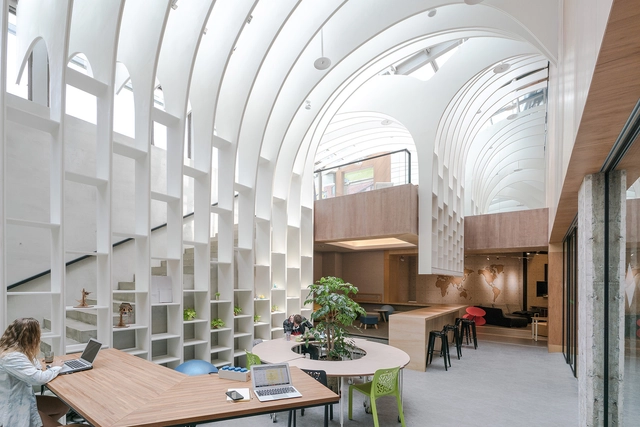
Humans can survive for 30 days without eating, 3 days without drinking, yet only 3 minutes without breathing. Of course our need for air is also constant, we rely on it at all times indoors and outdoors although can often be less clean than we would hope. Unpleasant odors make us aware of bad air, but many irritants and unhealthy gases are not easily detectable by smell while still affecting our health. Smells are the most obvious signal, as they are consciously perceived by the brain and nervous system, allowing us to make judgements about our environment.
Learn more about where poor indoor air quality comes from, why it's important to address within the built environment, and how to design for good indoor air quality and comfort.
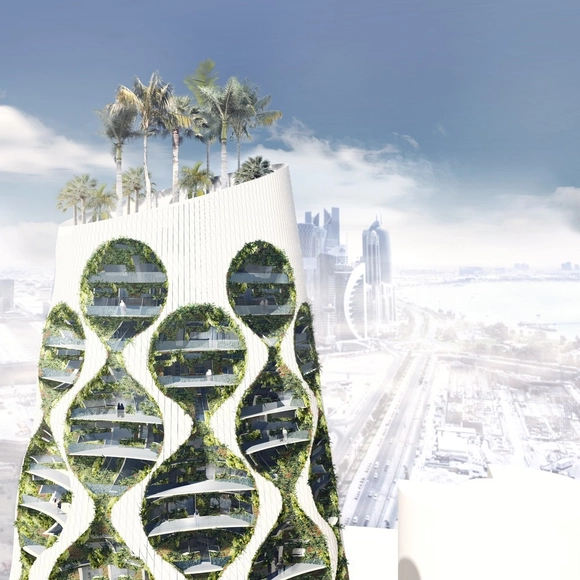
Warsaw-based FAAB studio envisioned a mixed-use development that enhances its own environment, while involving its inhabitants in the process. In fact, the prototype architectural intervention aims to give tools for people to control and manage the changing climate.
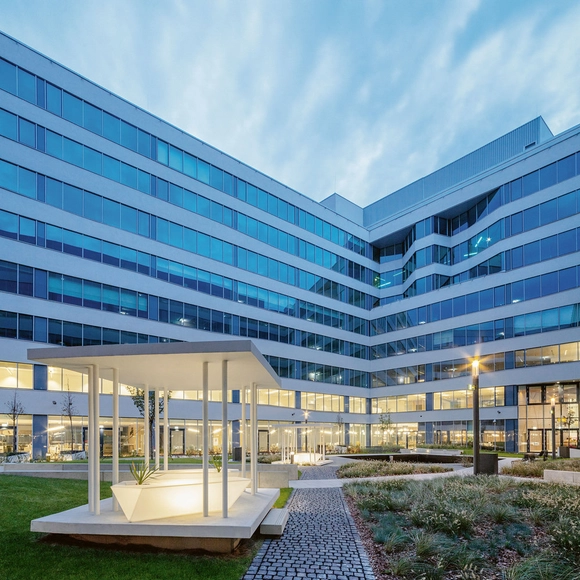
One of our responsibilities as architects is to understand how to implement strategies into our designs that consider the people who inhabit the spaces, our natural resource consumption, and ensuring these projects are profitable. All of this can be achieved through three main goals: Reducing our carbon footprint, creating healthy workplaces, and the design of efficient and profitable buildings.
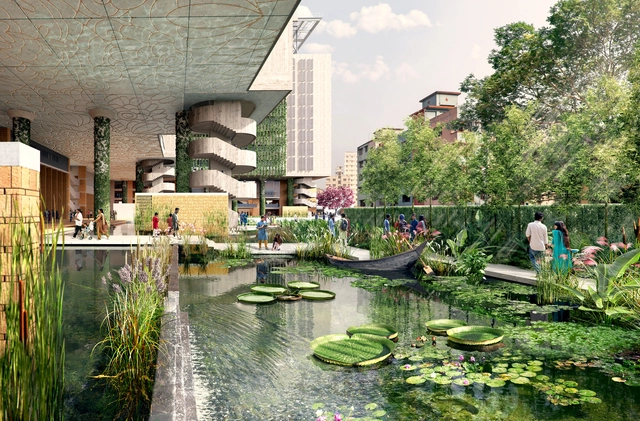
WOHA and BRAC University have unveiled the latest images from the 5.3-acre university campus, scheduled for completion in 2021. Located in Dhaka, Bangladesh, the intervention will transform a polluted and flooded wasteland into a sustainable inner-city campus and public park.


.jpg?1587722437 "Courtesy of UNStudio")







.jpg?1556896868 "© Ishita Sitwala. ImageDesign Work Group")