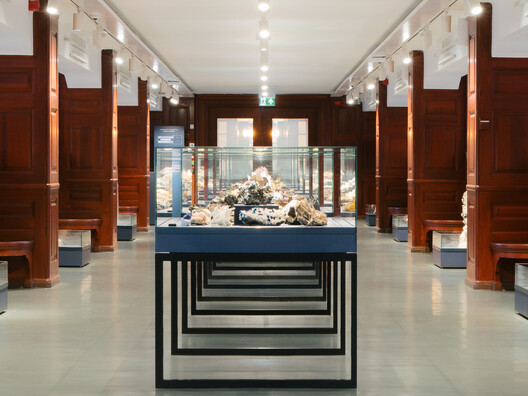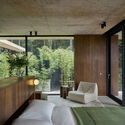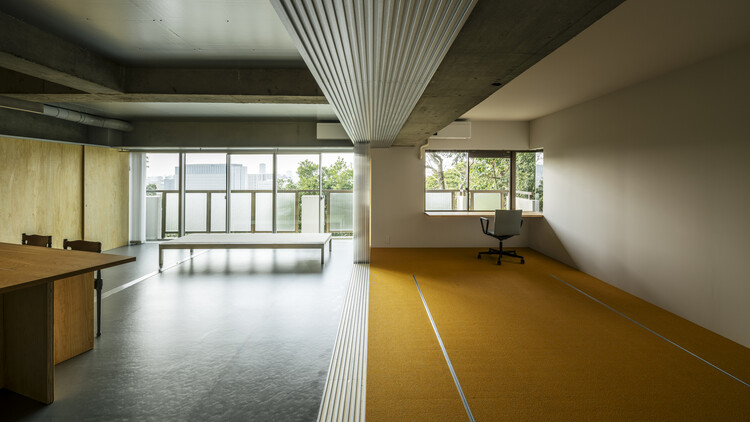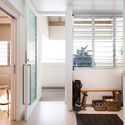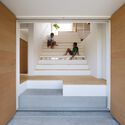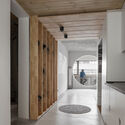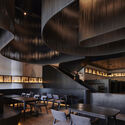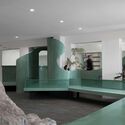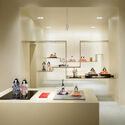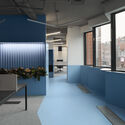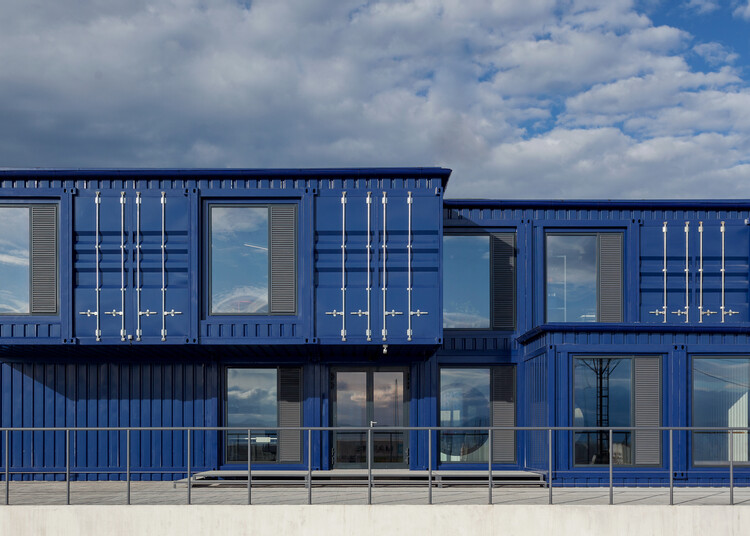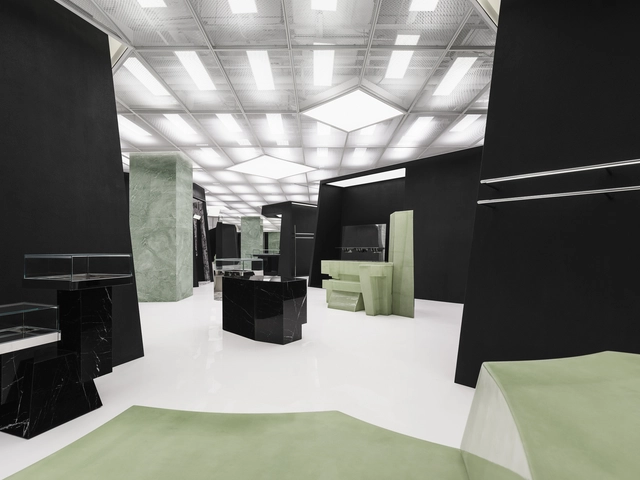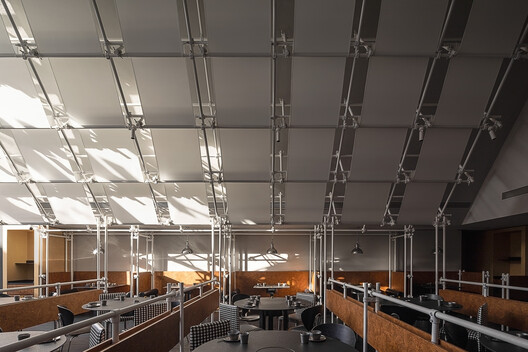
Culinary Health Fund . Image Courtesy of Longboard
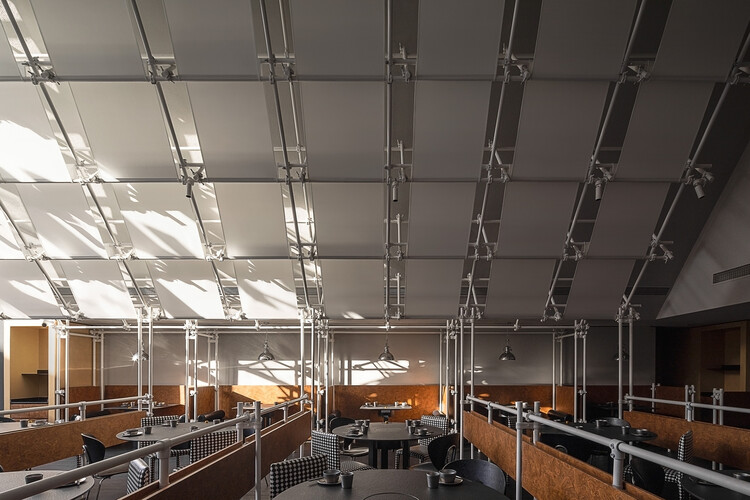
Before we rationally understand a space, we perceive it sensorially. Light, proportion, texture, color, and materiality all influence how the body interprets an environment, shaping whether it feels welcoming, cold, intimate, or impersonal. Visual and chromatic elements can directly affect the perception of depth, atmosphere, and scale within interiors, particularly in contemporary buildings characterized by large spans and continuous surfaces. Among the architectural elements that shape this experience, the ceiling may be one of the most underestimated, despite its profound influence on how space is perceived and inhabited.
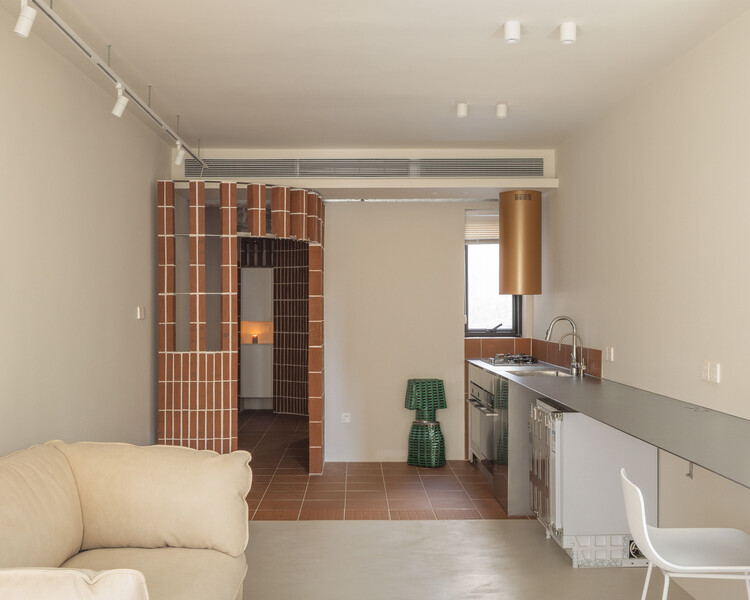
Interpreting the contemporary habitat is a priority for architects and designers worldwide. Amid shifting trends, stylistic blends, and the revival of different techniques, contemporary interior design brings together materials, textures, and colors to transform the user experience. Within the domestic realm, a series of realities, tensions, and activities unfold, with design serving as a strong foundation and support system to meet the needs of its inhabitants. During Milan Design Week 2026, ICEX and Elle Decor Italia presented the fourth edition of Appartamento Spagnolo—a spatial framework created to showcase contemporary Spanish interior design within a historic context.
Heritage, in interiors, is increasingly rarer to be only a matter of preservation alone. More often it arrives as friction: the encounter between what a building already is—its plan logic, its scars, its structural inconsistencies—and what contemporary life demands of it.
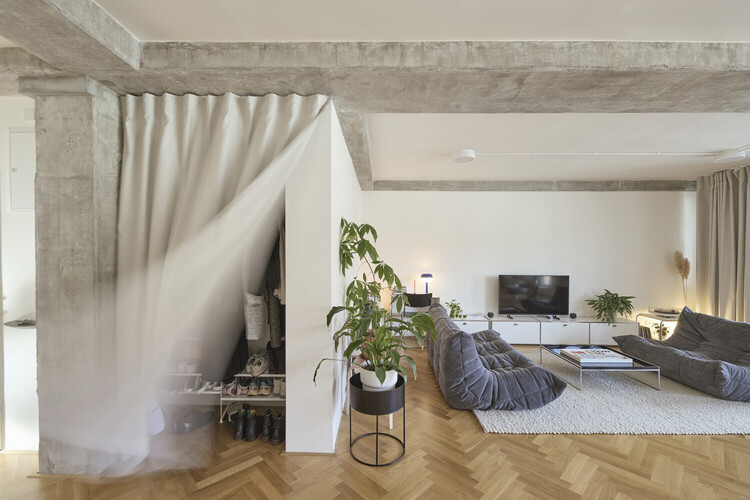
Some of the most convincing projects today are not those that "restore" an interior back to a single moment, nor those that erase the past under a seamless new skin. They are the ones that stage a relationship between old and new—allowing contrast to do more than tell a story, and letting the clash become a pragmatic tool for construction, budget, and speed.
Walking into an electrical store can be intimidating. At first glance, all the lights are on, and the thousands of chandeliers and lamps are blinding. When you walk toward the shelves, you see dozens of options, shapes, colors, prices, and uses. On each package, informational tables display numbers that can seem confusing at first. Lumens, color temperature, wattage—there are many unfamiliar terms. Before defaulting to the cheapest option, only to find that it creates an uncomfortable or poorly balanced atmosphere, understanding a few key concepts can make a significant difference.
Lighting design plays a fundamental role in shaping how spaces are perceived and used, influencing comfort, atmosphere, and even productivity. Poorly designed lighting, on the other hand, can compromise these qualities. Rather than approaching lighting as a purely technical decision, it can be understood as an integral part of architectural design. To help clarify these choices, the following overview introduces the most common types of light sources and key concepts associated with them.
Bolete Lounge BIO® by Andreu World x Patricia Urquiola. Image Courtesy of Andreu World
When walking into a large living space, a hotel lobby, or an open-plan workplace, the first thing that can be noticed is not what divides the space, but what holds it together. There are rarely clear boundaries, no obvious rooms, no strict partitions, yet the space still feels organized. Some areas invite a pause; others dictate movement; others foster community. The transitions are subtle, but legible.
At the same time, these interiors are expected to do more. They must accommodate constant change, withstand intensive use, and respond to environmental pressures by reducing waste, extending lifespans, and avoiding frequent replacement. The question is not only how a space looks, but how it performs over time. What is actually doing the heavy lifting?
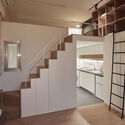
In many high-density cities across Asia, the staircase is often treated as a necessary evil. Whether in apartment buildings, private homes, or retail interiors, it is frequently hidden, tucked away, or pushed to the margins—an element to be minimized so more area can be given to "usable" space. Yet as density intensifies and square footage becomes increasingly scarce, architects and designers are forced to rethink this vertical puzzle.
The question shifts from how to conceal the staircase to how to make it work harder: can it become a productive addition to the interior—an architectural device that does more than connect levels, performing dual (or multiple) duties rather than simply consuming floor area?
"Feeling at home" is more than just an expression—it is the sense of warmth and comfort that transforms a space into a true refuge. To achieve this, elements like color, texture, lighting, and materials play a crucial role in shaping an environment that fosters relaxation and well-being. Backed by research in environmental psychology and neuroscience, the connection between physical spaces and human behavior highlights how architecture can directly influence the atmosphere, turning chaos into tranquility.
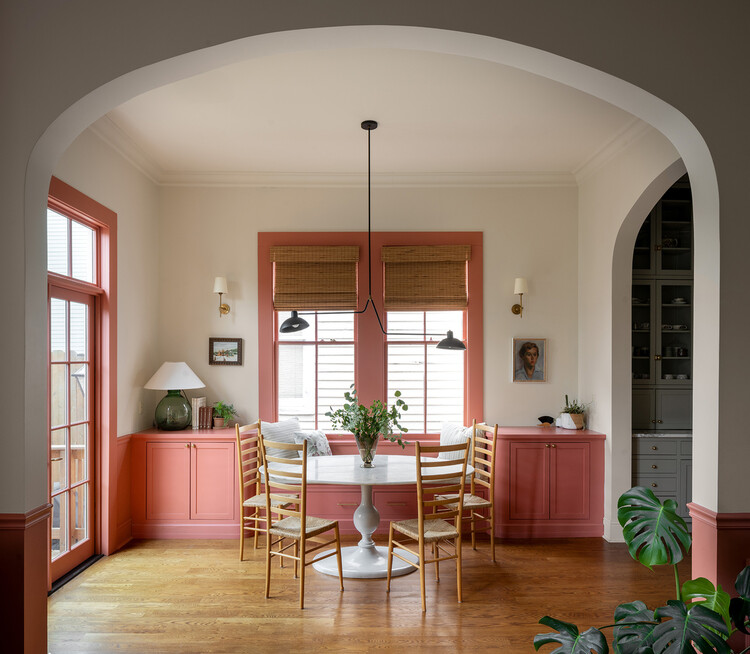
Breakfast nooks emerged in the early twentieth century in response to increasing domestic density and shifting ideas about everyday life. Rooted in the American Arts and Crafts movement and popularized through bungalow housing of the 1910s and 1920s, they evolved from the more formal Victorian breakfast room into compact, built-in spaces embedded within the kitchen. As houses grew smaller and more economical, architects and millwork companies used fixed benches and tables to occupy corners, alcoves, and bay windows that might otherwise be inefficient. These light-filled enclosures provided an affordable means of concentrating daily activities while preserving comfort and spatial clarity.
The 2026 Color of the Year selections show a shift toward nuanced, layered palettes and understated spatial calm, moving beyond the saturated earth tones of previous forecasts. Pantone's Cloud Dancer, a soft white, sets a foundation of clarity and simplicity, while Sherwin-Williams and C2 Paint highlight the versatility of mid-tone neutrals and soft ochres, emphasizing material authenticity and adaptability across different interior surfaces and lighting conditions. Benjamin Moore and Graham & Brown explore deeper, atmospheric hues that balance warm and cool undertones, and Behr, Valspar, and AkzoNobel introduce muted greens and blue-based tones aimed at creating restorative, composed, and visually engaging interiors.
In contemporary architecture, commercial spaces have become more than points of sale; they are stages where identity, image, and experience converge. Stores, showrooms, and branded interiors often operate as laboratories where architects experiment with form, material, and light, translating corporate narratives into spatial experiences. In this context, the architect emerges as a mediator of desire, shaping atmospheres that guide perception, evoke emotion, and subtly influence behavior. This role reveals a complex intersection between design and capitalism: the creation of spaces that sell not only products, but also aspirations, lifestyles, and cultural meaning. By transforming commerce into an architectural performance, these projects invite reflection on how the discipline negotiates its agency in a world where visibility and image have become as essential as function.
Meta fitting in Matte Black. Image Courtesy of Dornbracht
Are living spaces getting smaller? As cities densify and the global population continues its steady migration toward urban centers—projected to reach around 70% by 2050—domestic space is becoming increasingly compressed. Rising land prices, high construction costs, and a surge in single-person households push developers toward smaller units and tighter floor plans. At the same time, cultural shifts toward resource efficiency and minimal living support this move. Shrinking living spaces require fewer materials, consume less energy, and encourage people to live closer to their means.
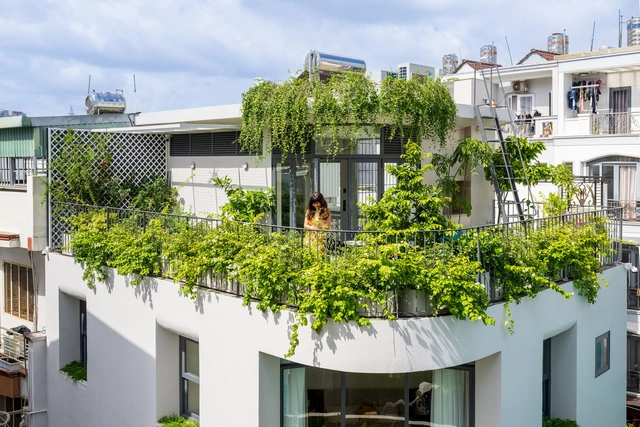
Balcony House / Ryo Matsui Architects. Image Courtesy of Ryo Matsui Architects Inc
We walk on "flat" ground every day and rarely think twice—but how flat is it, really? In the city, curbs are chamfered, sidewalks pitch toward grates, and roadways are crowned to shed water into shallow gutters. In suburbs and on unpaved paths, irregular terrain is the norm. Inside buildings, by contrast, we pursue near-perfect horizontality—structural frames, slabs, and finishes are all disciplined to create level walking surfaces in the name of safety and accessibility. Yet flatness is inherently at odds with water. A closer look reveals a quiet repertoire of accommodations: slight falls at entries, thresholds raised a few millimeters, wet areas with barely perceptible pitches. The floor is read as flat, but it is in fact carefully tuned—micro-topographies masquerading as plane—to manage water without calling attention to themselves.
What are the common ways architects "keep things flat" while actually managing water—the perennial enemy of buildings? A useful way to look at it is by zooming into three recurring conditions: exterior or roof decking, bathrooms and other wet rooms, and exterior ground planes. Each relies on a slightly different toolkit—pedestal systems over sloped waterproofing, micro-gradients to floor traps, hidden perimeter drains, split slopes—to maintain the illusion of a seamless, level surface. Studying these situations side by side reveals just how much design effort goes into reconciling perceptual flatness with the messy reality.
In the world of interior architecture, where creativity and culture intersect, Tola Ojuolape stands as a designer whose work is a testament to personal narrative. From her early studies in art and construction to her degree in interior architecture, Tola's career has been shaped by a deep connection to her Nigerian heritage, discovered during her travels back to the African continent. This journey has profoundly influenced her design philosophy, creating a process tightly woven with history, culture, and a sense of place.
In contemporary interior architecture, service provisions—mechanical, electrical, HVAC, plumbing—are almost always treated as elements to be concealed. Thickened wall cavities, extensive dropped ceilings, and, in regions where solid construction such as brick or concrete prevails, furred-out walls are routinely employed to hide these systems. This approach has become so normalized that it often forms the starting assumption for spatial planning, inherently constraining imagination and reducing the range of spatial possibilities. The priority shifts towards covering-up, rather than exploring how these systems might coexist visibly within a design language.
When designing a space—whether at the scale of interiors, architecture, or infrastructure—materiality is a central concern. Beyond aesthetics, materials determine how a project functions, ages, and endures. Some architects—such as Wang Shu and Kengo Kuma—have built their practices on a deep sensitivity to the potential and limits of materials. But even in the most pragmatic sense, the question arises: What lasts? What doesn't? And how do materials change over time? Naturally, materials shape atmosphere and appearance—qualities that often matter most to clients. Yet increasingly, the discourse around materiality has shifted from structural substance to surface treatment. When did we start focusing more on "decorating" our spaces by layering one material over another, rather than relying on the inherent beauty and performance of the building fabric itself?
Glass bricks have been widely used in architecture, eventually becoming a staple of the 1980s architectural styles. Some examples of construction with this material could be the classic "Maison de Verre" by Pierre Chareau and Bernard Bijvoet in Paris or the more modern take of Hiroshi Nakamura & NAP with the Optical Glasshouse in Japan. In recent years, glass bricks are becoming increasingly popular, no longer relegated to older aesthetics. Instead, they have evolved into versatile design elements that bring light, texture, and character into contemporary interiors. Their ability to diffuse natural and artificial light while maintaining privacy has reignited interest among designers seeking innovative ways to enhance indoor spaces while taking advantage of natural light.
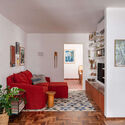
Between silence and chaos, we shape our world. Every space we inhabit tells a story, evokes emotions, and influences our thoughts. Minimalism, with its lightness and purpose, invites serenity. Maximalism, exuberant and vibrant, celebrates personality in every detail. But how do these philosophies affect our minds? Understanding their psychological impact can be key to creating environments that enhance well-being and bring harmony to life.