1. ArchDaily
  2. Innovation

Innovation: The Latest Architecture and News

Small-Scale Rainwater Harvesting Made Simpler by Studio Bas Van der Veer

Subscriber Access | 

Earlier this month, Studio Bas van der Veer, the Dutch product design studio, unveiled its design for a rain barrel at the three-day fair, spoga+gafa 2017, in Cologne. Van der Veer, a graduate of the Design Academy Eindhoven, initially designed the product – then titled ‘A Drop of Water’ – as part of his thesis in 2009, for which he not only won the prestigious René Smeets Award for best project at the school’s Graduate Galleries exhibition but was also shortlisted for the Melkweg Award. Over the years, the design won numerous accolades, including the Journées des Collections Jardin - Innovation Award, and the Tuinidee Award.

Small-Scale Rainwater Harvesting Made Simpler by Studio Bas Van der Veer - SustainabilitySmall-Scale Rainwater Harvesting Made Simpler by Studio Bas Van der Veer - SustainabilitySmall-Scale Rainwater Harvesting Made Simpler by Studio Bas Van der Veer - SustainabilitySmall-Scale Rainwater Harvesting Made Simpler by Studio Bas Van der Veer - SustainabilitySmall-Scale Rainwater Harvesting Made Simpler by Studio Bas Van der Veer - More Images+ 7

This Adjustable Tensegrity Structure is Constructed From Just Two Structural Elements

Subscriber Access | 

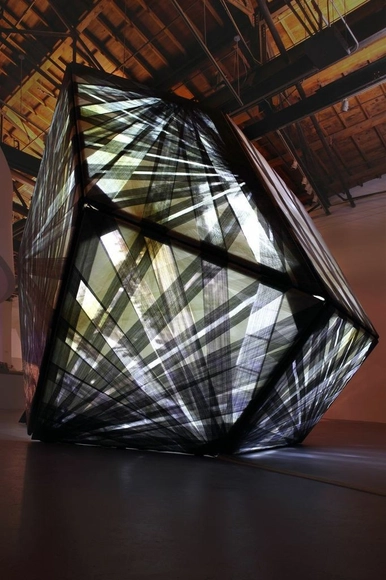
This investigation by Kuan-Ting Lai, developed as part of his thesis on Reconfigurable Systems of Tensegrity at the University of Stuttgart, is an exploration of the capabilities of structural principles in creating transformable architectural structures.

The project, a prototype made of pneumatic cylinders and polycarbonate panels, explores different methods of reconfiguration based on the basic rules of tensegrity, demonstrating the potential to rapidly adjust the lighting or ventilation conditions offered by the structure.

This Smart Glass Can Change From Opaque to Transparent in Just Seconds

A relative newcomer to the material world, smart glass (also known as switch glass or electrochromic glass) has the ability to change its properties and appearance, allowing the environmental conditions of a space to be optimized according to the use and needs of its users. 

Electrochromic glass technology works by changing the electrical polarization between some of its components. Its most widely used variant, known as PDCL, consists of a thin film of liquid crystal that sits between two conductive transparent plastic layers (usually laminated glass). By changing the current running through the liquid crystal, the glass can take on different appearences.

Custom Bamboo Skylight Illuminates the Interior of a Historic Building in China

Subscriber Access | 

In response to the overwhelming growth of cities and neighborhoods in China, architects from Atelier Archmixing’s Shanghai office, have developed a series of proposals that seek to return value to sensitive interior spaces and improve the user’s quality of life through design.

The project consists of an interesting light fixture; a bamboo structure similar in shape to an umbrella, that lets natural light and fresh air into the building.

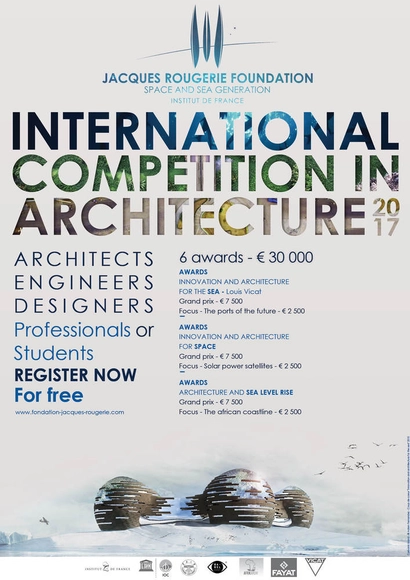
Call for Submissions: International Competition in Architecture 2017

The architect, the engineer, the designer, all of them participate to the development and the construction of an upcoming world at their own level. Together, by looking further, beyond preconceived ideas and well-established concepts, these entrepreneurs, these creators, have the power to make up new rules, propose new directions: innovative facilities and housing bringing new living conditions, making room for new ways of moving, of consuming energy, to counter major environmental challenges of our era and others to come. The prizes of the Jacques Rougerie Foundation support and accompany this approach.

Innovation, architectural disruption, sustainable development and resilience against climate changes are the keywords of this 7th edition of the international competition in architecture of the Jacques Rougerie Foundation – Institut de France.

This Magnetic Drill Screws Through Wood Leaving No Visible Holes

Subscriber Access | 

Invis Mx2 is a device that allows you to connect screws and bolts easily without leaving any holes. Its cordless screwdriver works through a MiniMag rotary magnetic field, which adapts to any conventional drill, allowing to generate detachable connections with a tensile force of 250 kg per connector.

The system is designed to be applied to wooden elements and ceramic materials, allowing the construction of furniture, railings, coatings, stairs, among others. 

This Magnetic Drill Screws Through Wood Leaving No Visible Holes - Image 1 of 4This Magnetic Drill Screws Through Wood Leaving No Visible Holes - Image 2 of 4This Magnetic Drill Screws Through Wood Leaving No Visible Holes - Image 3 of 4This Magnetic Drill Screws Through Wood Leaving No Visible Holes - Image 4 of 4This Magnetic Drill Screws Through Wood Leaving No Visible Holes - More Images

Granite - The Great Contemporary Unknown

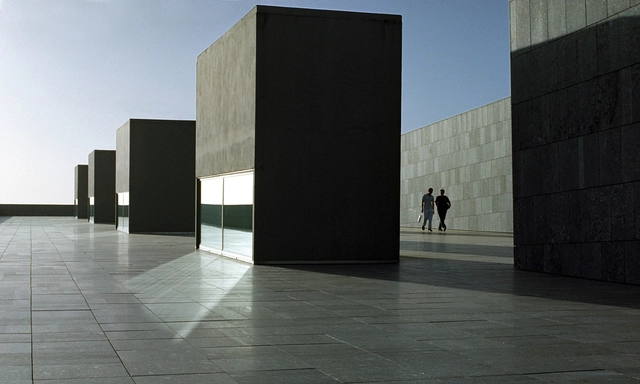
Rediscover a natural, unique and original material, with multiple applications for current architecture and design immovable over time, granite is a jewel of nature capable of providing exclusivity to any contemporary construction or finish. Its wide range of varieties and the incorporation of new cutting technologies and those giving a surface finish, provide us with infinite design possibilities.

Its character, beauty, high strength and excellent durability make it quite a unique material. It is undoubtedly the most advantageous architectural option in contrast to other types of products:

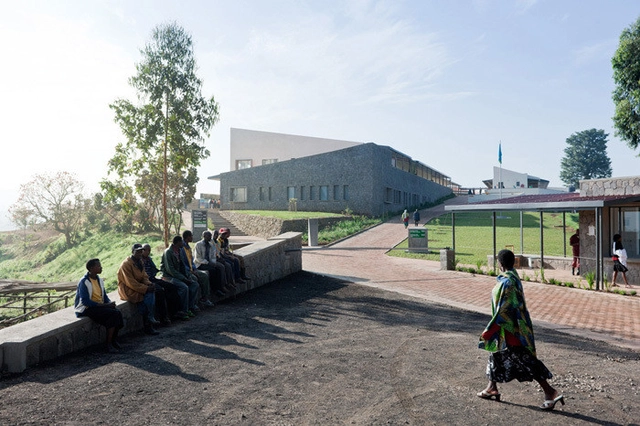
8 Excellent Examples of What Innovative 21st Century Schools Should Look Like

Subscriber Access | 

If we think about how the educational system worked in the past, we can quickly see that both the teaching style in schools as well as the school’s infrastructure were very different from the current system. The educational model of the twentieth century could be defined as being similar to the "spatial model of prisons, with no interest in stimulating a comprehensive, flexible and versatile education."

However, we are now at a time when social, economic and technological developments have created a more global society and where information and learning are becoming more affordable. This radical change has transformed the societies in which we live, leaving the current educational model based on a rigid and unidirectional teaching obsolete. 

As such, there are schools that have not only broken the mold of traditional teaching but have formed new educational standards, exploring new paradigms and opening up new possibilities within the design of educational spaces. Since architecture and educational models often reflect the ideology of a society, how is the school of 21st century defined? 

8 Excellent Examples of What Innovative 21st Century Schools Should Look Like - Image 1 of 48 Excellent Examples of What Innovative 21st Century Schools Should Look Like - Image 2 of 48 Excellent Examples of What Innovative 21st Century Schools Should Look Like - Image 3 of 48 Excellent Examples of What Innovative 21st Century Schools Should Look Like - Image 4 of 48 Excellent Examples of What Innovative 21st Century Schools Should Look Like - More Images+ 26

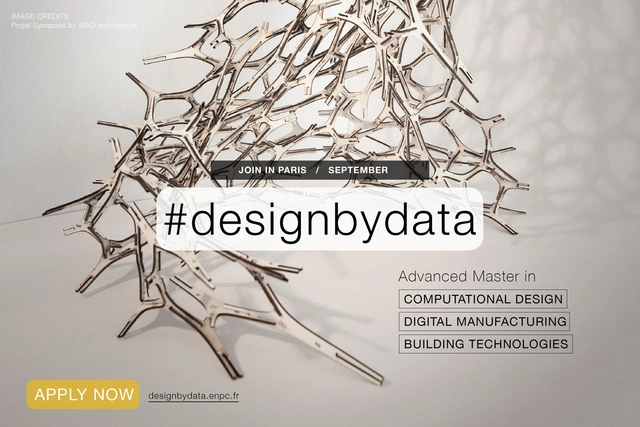
Design by Data Advanced Master in Paris is Breaking Boundaries Between Architecture and Engineering

The Design by Data Advanced Master® in Computational Design, Digital Manufacturing and Building Technologies provides attendees with a cross-disciplinary culture of computational design and a comprehensive knowledge of cutting-edge technologies in the fields of parametric architecture, robotics, digital manufacturing and 3D printing for the construction industry.

Applications are open for the second edition of the Design by Data Advanced Master® in Computational Design, Digital Manufacturing and Building Technologies opening in September 2017 in Paris. Design by Data provides attendees with a cross-disciplinary culture of computational design and a comprehensive knowledge of cutting-edge technologies in the fields of parametric architecture, robotics, digital manufacturing and 3D printing for the construction industry.

This Adaptive Micro-Apartment Concept Does it All in Half the Space

With the touch of a button on your smartphone, your furniture begins to reconfigure while new walls glide into place. In a matter of seconds, your bedroom can become the kitchen, dining room, or simply an empty room thanks to the ingenuity of architecture students at Delft University of Technology's Hyperbody design team. The Pop up Interactive Apartment occupies a mere 50 square metres of multi-use space optimized for specific real-time use, allowing the occupant to choose a configuration based on current needs.

Enter the hyper-efficient world of Pop up Interactive Apartment after the break.

The Steel Age Is Over. Has The Next Age Begun?

Subscriber Access | 

Andrew Carnegie once said, “Aim for the highest.” He followed his own advice. The powerful 19th century steel magnate had the foresight to build a bridge spanning the Mississippi river, a total of 6442 feet. In 1874, the primary structural material was iron — steel was the new kid on the block. People were wary of steel, scared of it even. It was an unproven alloy.

The Steel Age Is Over. Has The Next Age Begun? - Image 4 of 4

Nevertheless, after the completion of Eads Bridge in St. Louis, Andrew Carnegie generated a publicity stunt to prove steel was in fact a viable building material. A popular superstition of the day stated that an elephant would not cross an unstable bridge. On opening day, a confident Carnegie, the people of St. Louis and a four-ton elephant proceeded to cross the bridge. The elephant was met on the other side with pompous fanfare. What ensued was the greatest vertical building boom in American history, with Chicago and New York pioneering the cause. That’s right people; you can thank an adrenaline-junkie elephant for changing American opinion on the safety of steel construction.

So if steel replaced iron - as iron replaced bronze and bronze, copper -  what will replace steel? Carbon Fiber.

Who Will We Consider Today's Greatest Design Innovators, Tomorrow?

Often, it is only with hindsight that we can truly understand our world; looking back at how important certain events and people proved to be is much easier than predicting their importance at the time. Still, guessing who will be remembered in posterity is a fun game, so The Atlantic asked various industry leaders "Who Will Tomorrow's Historians Consider Today's Greatest Inventors?" The answers span across business, science, technology and design, and among the 9 nominations there are a few names that architects and urban designers may find interesting. Read on after the break to find out just who they are.

Finalists Create Next Generation of Sustainable Building Products

In attempts to better define what it really means to be green, the Cradle to Cradle Products Innovation Institute, in partnership with Make it Right, has selected products from ten companies as finalists in the Product Innovation Challenge. 144 applicants were screened by toxicologists and building professionals, proposing new alternatives from insulation grown from fungi and bricks from living organisms, to roofing made from waste limestone and recycled plastic. The ten finalists represent the shared values of practical sustainability and entrepreneurship, creating "a building product that is safe, healthy, affordable, effective and designed to be returned safely to nature or industry after use."

Three winners will ultimately be announced on November 15, 2013 at the Institute's Innovation Celebration in New York City, offering a $250,000 cash prize: $125,000 for first place, $75,000 for second and $50,000 for third. The jury members, who include executives from Google, US Green Building Council and the Schmidt Family Foundation, will judge each product based on five categories: material health, material reutilization, water stewardship, renewable energy and social fairness.

Without further ado, the 10 finalists are…

ArchDaily Innovation Challenge - Innovative Workplaces

Subscriber Access | 

A better workplace can foster better social dynamics, more creativity, an increase on production, and of course, improve the quality of life of the ones using it on a daily basis.

We have partnered with HP to recognize the projects that are pushing the boundaries in this area, creating remarkable spaces for work, and also to foster experimentation among students to think about the workplace of the future.

We have therefore divided the competition into two categories: for professionals and for students.

Professionals
Architects from around the world are invited to submit their recently completed workplace projects. The jury will award entries that are able to demonstrate innovations in this area in the form of sketches or diagrams.

Use your power of synthesis to show us why your project introduces innovation to the workplace!

Students
Students from around the world are invited to design an innovative workplace within a given generic floor of office space. This constrain will force students to operate on actual market conditions.

Unleash your imagination within a delimited space to show us how innovation can be made possible in today’s structures, to foster tomorrow’s ideas!

Schedule, eligibility, prizes, and general rules after the break.

Can Architecture Make Us More Creative?

Subscriber Access | 

What do MIT’s Building 20, the Ancient Greek Agora, 18th Century British teahouses, and early 20th century Parisian cafés have in common?

They were some of the most creative spaces in the world.

People who gathered there would interact. People, such as Socrates or Chomsky or Edison, exchanged ideas, argued about morals, and discussed technologies. They participated in an informal discourse driven by passionate involvement.

And these places, although for different reasons, fostered interaction by bringing people together and giving them a place to talk. As Jonah Lehrer put it, “the most creative spaces are those which hurl us together. It is the human friction that makes the sparks.”

The question, then, is how can contemporary architecture foster the same kind of creativity?

To learn more about architecture and its role in creativity and learning, keep reading after the break.