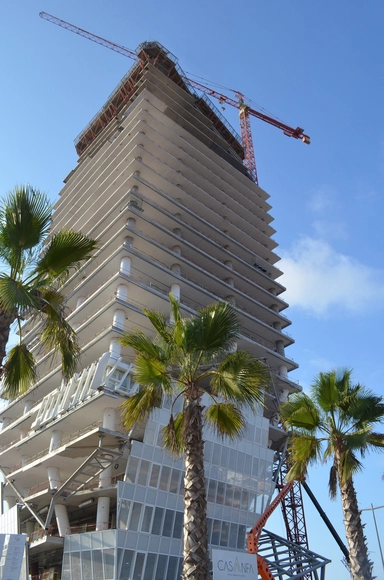
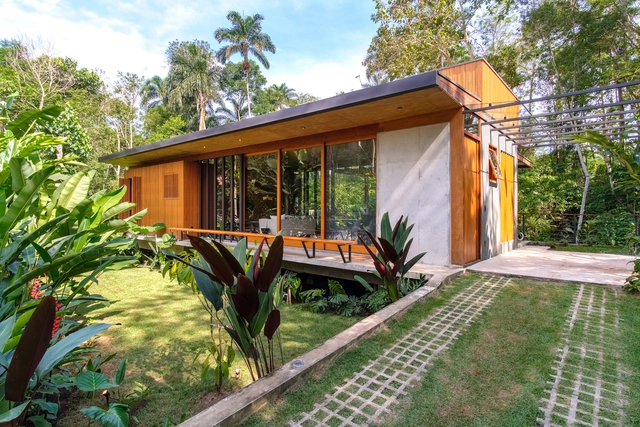
Sustainability in architecture is an issue that may bring to light too general proposals and there are a lot of possibilities concerning the application of their concepts in design process. Sustainable strategies are essential so that the project development reconcile the economic and ecologic pillars and, above all, consider the well-being impact for those who are going to use the built space. Thinking about this, we have gathered four projects of different typologies that applied innovative methods in the conception of the buildings that stand out for their sustainable practices. Read on for the projects:
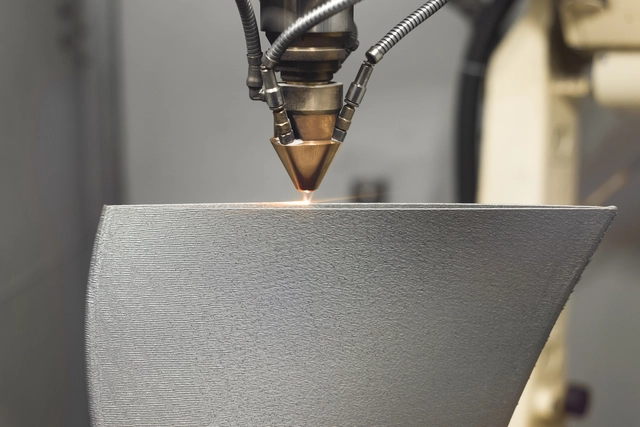
Additive Manufacturing (AM) is a term used to identify the manufacturing processes performed by 3D printing through layer-by-layer construction. In addition to avoiding the generation of waste through the use of precise geometries and exact quantities of material, these controlled processes can be much faster than traditional ones, since they don't require tools or other instruments.
Additive Manufacturing is done based on a digital model. The process begins with a CAD design or three-dimensional scan and then translates that shape into an object divided into sections, allowing it to be printed. Its use has extended from industrial design to the replica of archaeological objects to the manufacture of artificial human organs and tissues, among many others.
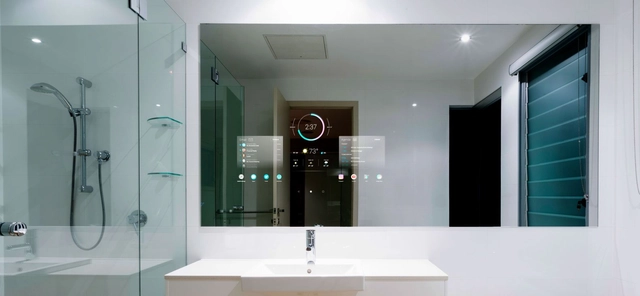
Home automation, from voice-controlled virtual assistants to app-controlled thermostats, has quickly and unexpectedly ushered the future into our own homes. As technology continues to progress, the way we interact with our environment will likely only grow more and more futuristic – even spaces as personal as our home bathrooms. While the prospect of such a highly digitized personal life may be daunting to some, others see this trend’s potential for improving not just comfort, but health and safety as well. Below, we outline some of the technologies that we hope to see in the bathrooms of the future.
https://www.archdaily.com/926022/what-will-bathrooms-look-like-in-the-futureLilly Cao
The digital revolution coupled with the unforeseen environmental, economical and social challenges our world face today, urge architecture to shake much of the traditions and basis upon which it operated for the last decades, if not centuries.
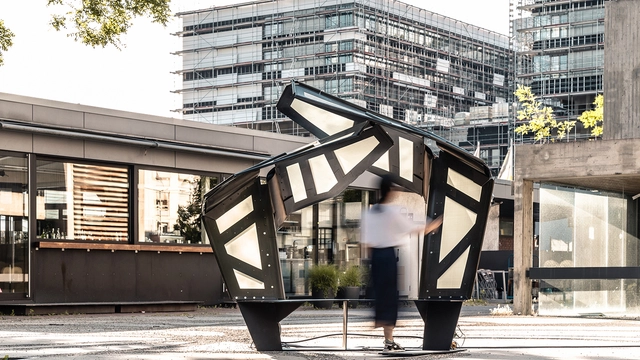
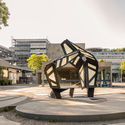
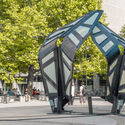
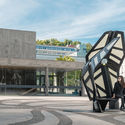
The Institute for Computational Design and Construction (ICD), the Institute of Building Structures and Structural Design (ITKE) and the Institute for Textile and Fiber Technologies (ITFT) at the University of Stuttgart have launched the ITECH Research Demonstrator 2018-19. The project aims to investigate large-scale compliant architecture.
reSITE 2019 REGENERATE, a game-changing event on cities' regeneration
reSITE’s game-changing event brings together a global community of 50 thought leaders, architects, urbanists, and the most innovative minds to share state-of-the-art trends in sustainable architecture as well as urban planning and living. REGENERATE is a call to action offering solutions to the pressing questions arising from climate change, redevelopment, and young generation’s demands and changing values.
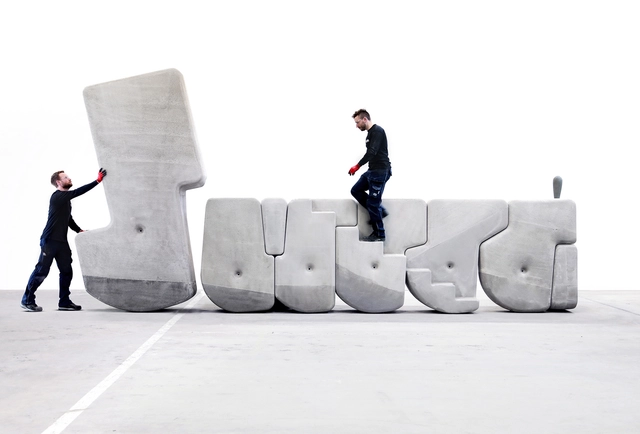
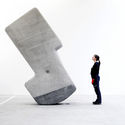
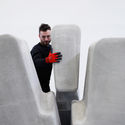
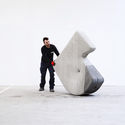
Matter Design Studio has partnered with CEMEX Global R&D to challenge the relationship between the mass of materials and the physical effort of contemporary construction practices, exploring the movement and assembly of heavy objects on a real scale, manufactured using advanced computing. The objective of Walking Assembly is to eliminate the crane from the constructive equation, transferring the effort from people to objects, freeing them to play with the mass.
Although James Blish’s “Cities in Flight” was not the first attempt to combine architecture and anti-gravity technology, it was in this book series that we can see it prevailing on an urban scale. Throughout its evolution, architecture has crawled out of caves, settled on grounds, climbed on pilotis, floated on water, stood high, and even danced. Now many argue that it is high time for it to move forward and assume some of its multi-directional and forthcoming probabilities.
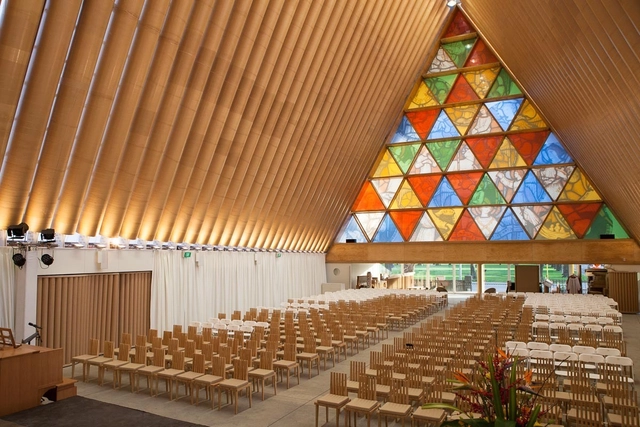
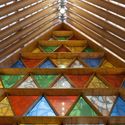
Cardboard tubes are so commonplace that we may no longer even notice them. Yet they are everywhere: in a roll of toilet paper, in the packaging of the college diploma, in fireworks, and in the tissue and paper industries. And now, more and more, they can be found in unusual places, such as on the walls of houses and buildings. The material is part of modern life and is being produced for a multitude of industrial applications and consumer products. The vast majority are used as structural cores in winding operations. Immediately after manufacturing, paper, film or textiles are rolled directly onto cardboard tubes resulting in a stable roll that is easily stored and transported.
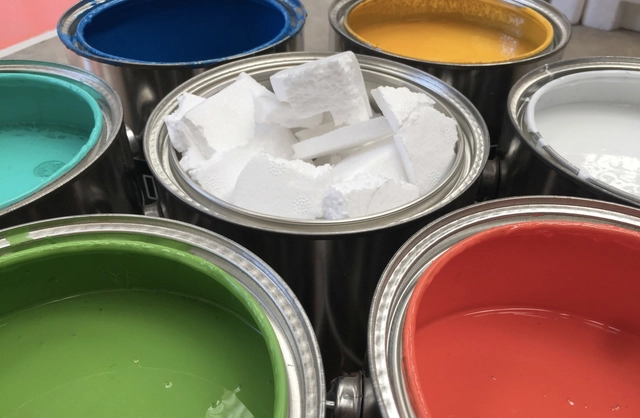
Expanded polystyrene (EPS) is a plastic material widely used for thermal insulation (and in some cases, acoustics) in building envelopes.
So is it possible to recycle it and apply it again in other construction processes? Yes, EPS can be crushed and compacted to be used in the manufacture of new plastic products. But it can also be recycled and live again in the construction of architectural and urban projects in the form of paints and coatings.
The increasing use of air conditioning is causing many cities to hit record energy consumption levels during brutally hot summer months. In populous countries like India, China, Indonesia, Brazil, and Mexico, large urban centers function like ovens: buildings absorb heat that is re-released back into the environment, further increasing the local temperature. More heat outside means more air conditioning inside, which not only raises energy consumption, but also increases the levels of carbon dioxide in the atmosphere.
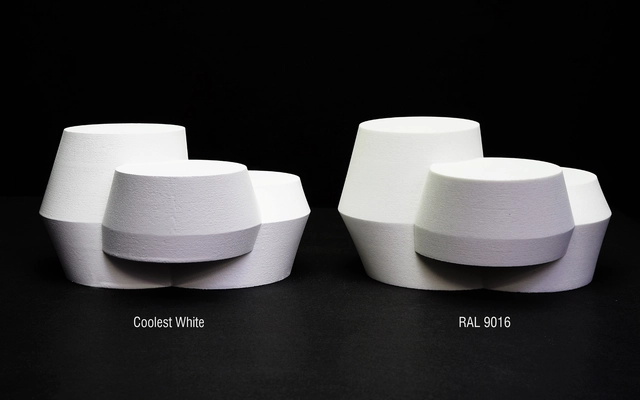
With this vicious cycle in mind, a paint was created to protect buildings and urban structures from excessive solar radiation, diminishing the effect of the urban heat island. The innovation came from the partnership of UNStudio, a Dutch architectural firm, and Monopol Color, a Swiss paint specialist. The dark-colored materials that are used to construct the buildings in our cities are one of the main causes of heat accumulation in urban areas. While darker materials absorb up to 95% of the sun’s rays and release them straight back into the atmosphere, this value can be reduced to 25% with a normal white surface. Now, with ‘The Coolest White’, it is possible to reduce absorption and emission to 12%.
When we think of energy from renewable sources, the first that probably come to mind are solar and wind. And decentralizing power generation is something that has inspired engineers and inventors from all over the world.
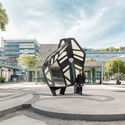
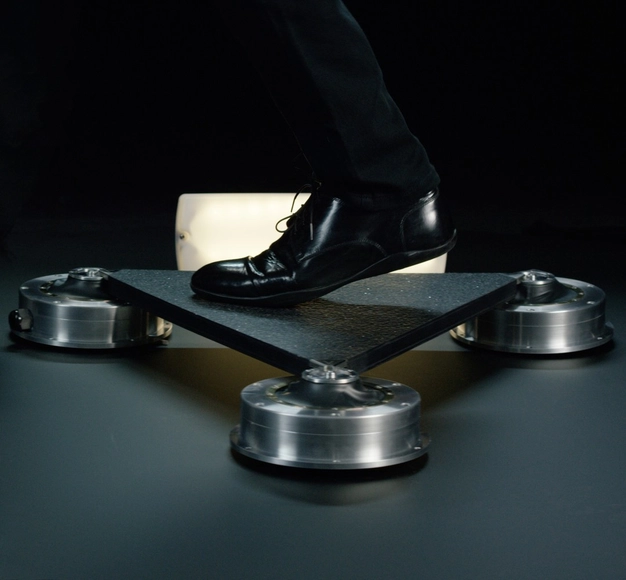
So what about turning the mechanical energy generated when people walk into electrical energy? It can be done thanks to technology developed by Laurence Kemball-Cook,founder of Pavegen. Using platforms inserted within sidewalks Pavegen converts steps into electric power (while also generating data and even rewards). But before you go out there feeling like Michael Jackson in Billie Jean, you should understand how this system works.
Most of the materials that we use in the construction of our projects have shapes and dimensions that seek to facilitate their storage, transfer, and installation, being constituted in its majority by orthogonal modulations. These straight angles don't always fit with the irregularity of our designs, nor do they coincide exactly when encountering more organic materials or other specific elements such as ducts, pillars, or furniture.
This simple tool allows you to copy, duplicate, and measure complex contours so that the materials adapt perfectly to other elements. Its mobile 'teeth' must be pressed against the profile to obtain a mold of its shape, generating templates that will allow cutting and adjusting the original material with precision. Thus, the tool could even be useful for replicating or repairing unique details in restorations or refurbishments.
This Fall, global architecture and design firm, Morphosis has their plate full as four of their projects reach significant construction milestones. From Africa to the Middle East, Europe and the U.S., Morphosis is creating international landmarks that display their values of sustainability and future development. Read on to learn more about what Thom Mayne's team is up to.
Designing Buildings Wiki have joined forces with BSRIA to launch a new competition looking for fresh and innovative ideas in response to the question: How can tomorrow's challenges be met by today's buildings?

















.jpg?1550747759 "Cortesia de Pavegen")