All over the globe, countries are facing a housing crisis. United Nations statistics put the number of people who live in sub-standard housing at 1.6 billion, and 100 million of the world’s population are without a home. As conflicts and climate change forces refugees to move to new countries, and as housing prices around the world continue to rise, cities are having to grapple more and more with how to provide safe and affordable housing for their residents.
The housing shortage has long been the catalyst for architectural speculation over adaptive resue scenarios or the valorisation of underused places in cities. At the same time, the health crisis and its work from home imperatives have brought into sharp focus the adaptive reuse potential of offices spaces into housing. The probability that some office buildings remain vacant post-pandemic opens up the possibility of bringing back housing to city centres, enabling the implementation of a 15-minute city vision. The following discusses the challenges and opportunities of transforming office spaces into housing, highlighting this limited phenomenon's long-term feasibility and impact.
Planning cities and the way that we comfortably live in them is often a pull between many things. From creating affordable housing for all, enhancing community facilities and amenities, and designing walkable neighborhoods, all aspects of urban design have trade-offs, or do they? While there are many reasons why cities are becoming increasingly more expensive, dense, and less pedestrian-friendly, one of the key drivers behind the increase in unaffordability has to do with the way that outdated zoning codes drive the lack of available housing that they regulate.
“We need a new spatial contract." This is the call of Hashim Sarkis, curator of the Venice Biennale 2021, as an invitation for architects to imagine new spaces in which we can live together. Between a move towards urban flight and global housing crises, the growth of more low-rise, dense developments may provide an answer in the countryside. Turning away from single family homes in rural areas and suburbs, modern housing projects are exploring new models of shared living in nature.
San Francisco is a city defined by its relationship to housing. Since the 90s it has faced an affordable housing shortage, and now, has some of the highest rents of any major US city. As planners and policy makers work to move beyond the city's past and find new paths forward, architects and designers are testing out diverse housing models. From dense residential towers to multi-unit developments, modern housing aims to strike a balance between economy and urbanity.
In this week's reprint, author Walter Jaegerhaus explores the U.S. housing challenge, drawing a timeline of the evolution of different architectural solutions, from around the world. Seeking to "inspire designers today to create new housing options", and hoping "that the U.S can again embrace its experimental origins and try out new ideas and methods", the article highlights examples from Europe and the Americas.
India is rethinking the future of housing through new typologies. Defined by historical and cultural influences, the country's contemporary architecture centers on discussions of how best to modernize. Built over millennia, India's housing projects are made to address diverse scales, programs and functions. Exploring a revitalized urban landscape, these modern housing projects have begun to set a new tone for the future.
It would be an understatement to say that architecture is a profession that closely mirrors economic conditions. In this practice, we’ve all heard the stories or felt the experiences of recessions that were quickly followed by projects put on hold, a decreased pipeline of new business, and the unfortunate impact of layoffs and furloughs. The cyclical nature of the design field, paired with the pressure to meet the spatial needs for a growing global population in a time where the value of land has continued to sky-rocket means that architecture is naturally subjected to economic impacts in a significant way. But some economic theories predict that instead of the economy dictating the ebbs and flows of the design profession, architecture might be one of the influences causing economic downturns.
Newly built houses, with their sizable carbon footprints, don’t just contribute to climate change. For many Americans, they’re also too expensive—a bitter irony in cities rife with vacant buildings and record evictions.
Given the urgency of both issues, projects that retrofit livable housing into existing low-carbon shells (the initial embodied carbon was spent long ago) might be worth a closer look. We searched for them and came across a handful that promise a cure for housing insecurity and excessive greenhouse gas emissions.
The City of Los Angeles has launched a $100,000 housing design challenge for low-rise developments. The competition asks architects and landscape architects to imagine "appealing and sustainable" models of low-rise, multi-unit housing. Organized by the Mayor’s Office and Chief Design Officer Christopher Hawthorne, the initiative aims to create new paths to home-ownership and housing affordability in Los Angeles.
While damage control and preparation is an ever increasing factor in how we plan our cities, certain extraordinary circumstances, like natural disasters, remain outside of our ability to plan and demand quick architectural responses that offer instant aid to the people affected, often being the difference between life and death. Natural, unpredictable events like earthquakes, tsunamis, hurricanes, floods, armed conflicts, territory disputes, or global crises--such as climate change or pandemics--require immediate action in order to mitigate ensuing damage and chaos. Emergency architecture is the immediate answer to the humanitarian side of a conflict, covering everything from housing to medical facilities for the affected.
It is an inevitable truth that the world population is growing exponentially. Higher numbers can only lead to a higher demand for resources, food, and housing. By the year 2100, the 7.6 billion people currently living on earth will reach, according to the UN, a whopping 11.2 billion.
This increase can only mean that the need to accommodate these people will become an urgent priority, innovating and shifting from the household system that is present nowadays. Soon enough this will be a global pressing issue.
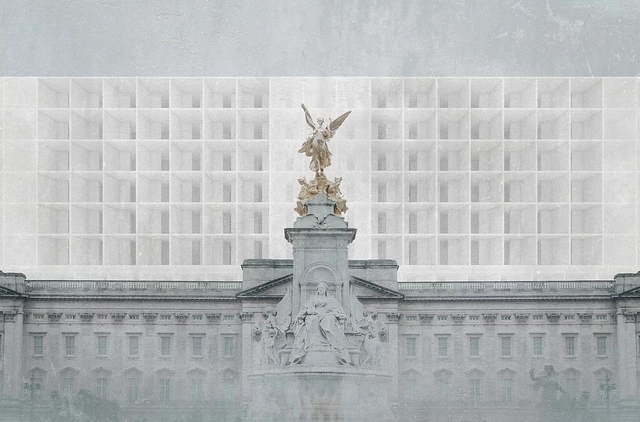
"The rooms are awash with sparkling candelabra, sumptuous carpets, marble columns, sculptures, and expensive artworks,” says Benedikt Hartl, co-founder of Opposite Office of Buckingham Palace. The 775-room, 79-bathroom, 828,821 square foot residence has been home to Britain’s royalty since the 1830s. And, if Opposite Office’s recent Affordable Palace proposal were to go through, could also be home to you.
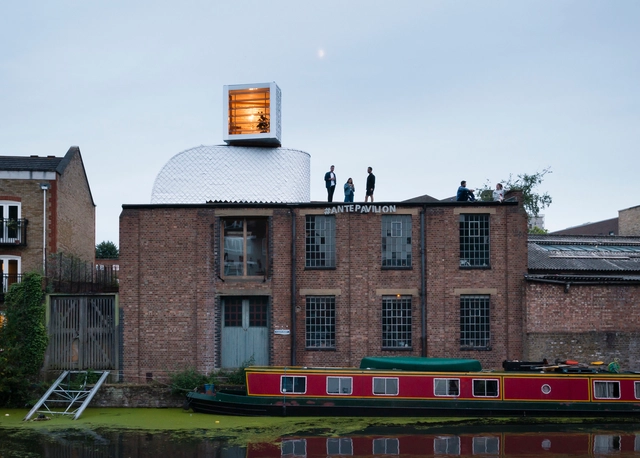
London’s first Antepavillion officially opened to the public last weekend, kicking off an annual series of experimental structures set to explore alternative ways of living in the city. Designed and built by emerging studio PUP Architects, the proposal beat out 128 other entries as the winner of a competition held by the Architecture Foundation. Calling for proposals that engaged with issues of sustainability and recycling, PUP's design, dubbed H-VAC is built using prefab elements made in-house by a team of volunteers. The pavilion's tongue-in-cheek appearance resembling an air duct is a playful subversion of planning legislation, exploiting loopholes for mechanical rooftop equipment to be built without planning permission.
As anyone who has recently attempted apartment-hunting in a major urban area will know, reasonably-priced housing can be difficult to come by for many and salaries don’t always seem to match the cost of living. This gap is contributing to housing crises in developed and developing countries worldwide. People are simply being priced out of cities, where housing has become a commodity instead of a basic human right. Financial speculation and states’ support of financial markets in a way that makes housing unaffordable has created an unsustainable global housing crisis.
Earlier this year the 13th Annual Demographia International Housing Affordability Survey was released for 2017, revealing that the number of “severely unaffordable” major housing markets rose from 26 to 29 this year; the problem is getting worse. The study evaluates 406 metropolitan housing markets in nine of the world's major economies and uses the “median multiple” approach to determine affordability. By dividing the median house price by the median household income of an area, this method is meant to be a summary of “middle-income housing affordability.”
Nestinbox takes inspiration from birdhouses to provide an innovative solution to tackle housing crises. Image Courtesy of Manofactory
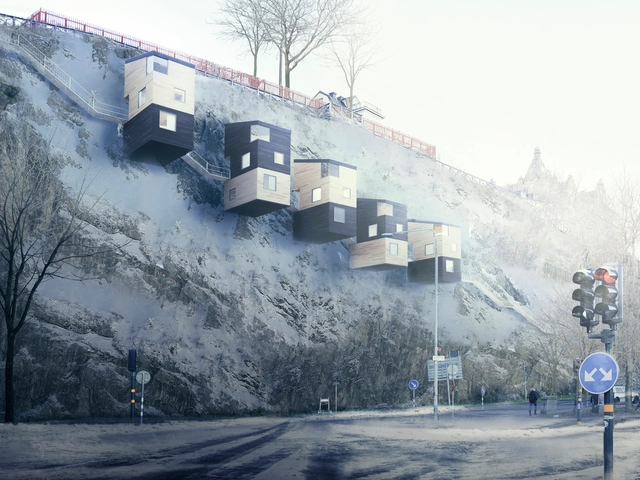
In major cities around the world, buildable land is at a premium. At the same time, a continued trend of urban migration has led to a shortage of houses, inspiring a wealth of innovative solutions from architects and designers. Swedish firm Manofactory have literally taken housing solutions to a new level, questioning why we need to build at ground level at all.
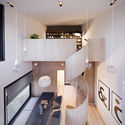
Many animals, including birds, build their nests in trees, under roof tiles or in rock crevices above the ground. Humans already build simple nesting boxes for birds to live in, causing Manofactory to question why we can’t build nesting boxes for ourselves – a simple house with several rooms, windows, and climate protection. Pointing to the numerous cliff walls in cities across northern Scandinavia and elsewhere, Manofactory have designed the Nestinbox – a small wooden house with a steel structure to be mounted on sheer cliff faces.
House Housing, "An Untimely History of Architecture and Real Estate in Nineteen Episodes", was recently exhibited at Columbia University'sCasa Muraro in Venice. Staged as an "open house" organised and funded by the Buell Center, the exhibition responded unsolicited to Rem Koolhaas's call to exhibitors at the 2014 Venice Biennale to focus on Fundamentals by exploring housing in nineteen "discrete episodes." In narrating these episodes, brought together from across the last one hundred years in a mixture of domestic media, the exhibition brought together a collection of excerpts from global processes.




















.jpg?1494766952 "The facade is clad in horizontal timber to reduce perceived building height. Image Courtesy of Manofactory")