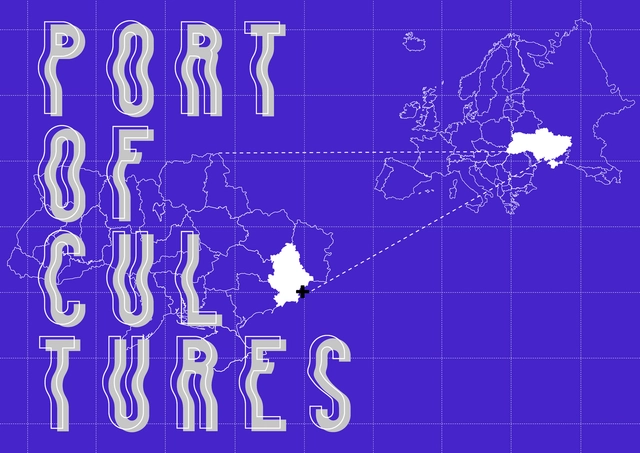
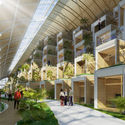
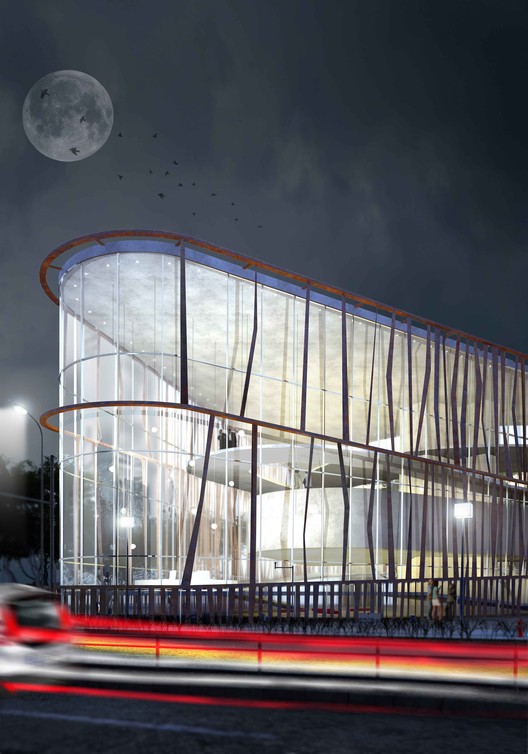
Municipality of Mariupol (UA) invites architects, designers and interdisciplinary teams to submit architectural ideas for a new multifunctional center that will be devoted to the subject of migration, a process that has shaped the city throughout the centuries, becoming an integral part of its identity. The Port of Culture will uncover and explore the less known traits of Mariupol city, and contextualize its local history within larger regional and global processes related to migration.
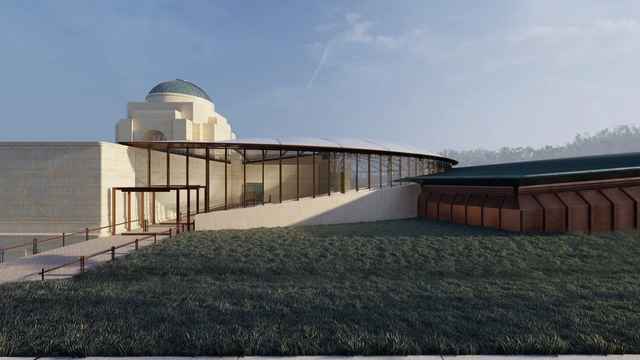
The AWM or the Australian War Memorial will undergo a series of development and refurbishments works, in order to renovate its galleries and its buildings. COX architecture will design the new Anzac Hall with its connection to the main structure, while Scott Carver will be in charge of the southern entrance.
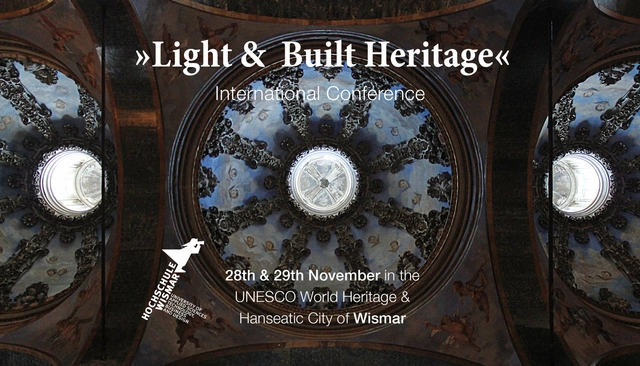
The two-day international conference »Built Heritage & Light« will take place on Thursday, 28th and Friday 29th November, 2019 at the Faculty of Architecture and Design, Wismar University of Applied Sciences, Technology, Business and Design. Experts from the fields of monument conservation, lighting design, architecture and architectural history will discuss the lighting of built heritage monuments and sites from different perspectives.
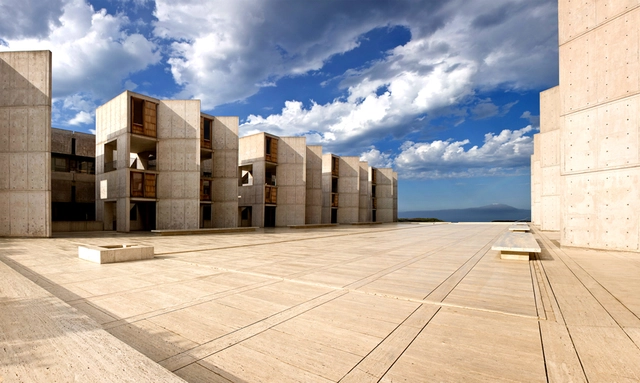
Courtesy Joe Belcovson for the Salk Institute for Biological Studies. ImageIn 2012, the Getty Conservation Institute founded its Conserving Modern Architecture Initiative (CMAI), with the Getty Foundation’s Keeping It Modern grant following two years later. Working synergistically, the two programs are dedicated to supporting new methods and technologies for the conservation of Modernist buildings. Louis Kahn’s Salk Institute for Biological Studies (1965) in La Jolla, California, has been the beneficiary of both CMAI and Keeping It Modern.
The Conserving Modern Architecture Initiative (CMAI) and Keeping It Modern grant are dedicated to supporting new methods and technologies for the conservation of Modernist buildings.
As technology moves forward, so does architecture and construction. Architects, designers, and planners around the world now have infinite tools and resources to design and build the cities of today and the future. As promising as this may sound, new construction is also consuming our world’s limited resources faster than we can replenish them.
This situation leaves architects with an important responsibility: the rehabilitation and reuse of the existing built environment. This means using creative thinking and design to save and incorporate old or historic buildings that currently exist, in the present and future of our cities, by adapting them through creative and sensitive treatments.
Born between the Tigris and the Euphrates, ancient Mesopotamia, "the land between two rivers," is considered the cradle of human civilization or, at least, one of its main birthplaces. Archaeological discoveries place in this fertile crescent the earliest origins of agriculture, the birth of writing and the first religions, governments and social orders.
This historical land corresponds to most of the current Iraq and Kuwait, as well as to smaller parts of Syria, Turkey and Iran. Not only these countries, but the whole Middle East in general, is home to invaluable ancient treasures. However, a great number of the cultural sites there are faced with major threats, as they have been caught up in the middle of ongoing conflicts that are ravaging the region. As a consequence, UNESCO included several sites in the List of World Heritage in Danger, in the hope that the international community could join in an effort to save these endangered properties.
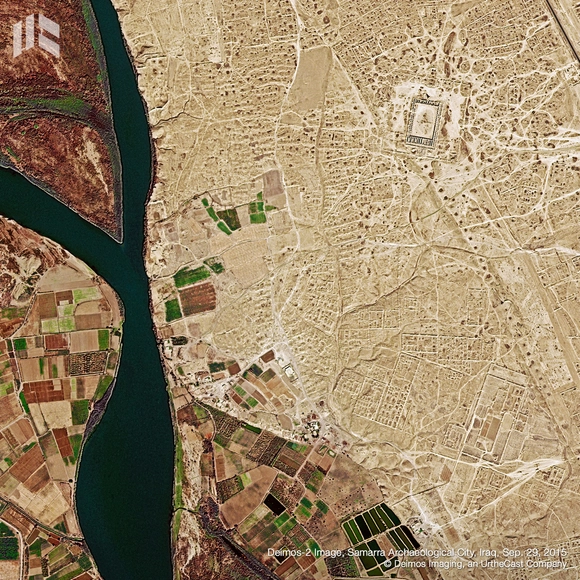
To reinforce this message, the Earth Observation company Deimos Imaging has released satellite images of six World Heritage sites in danger in Syria, Iraq and Yemen. The images were captured by the satellite Deimos-2, launched in 2014 and designed for cost-effective, dependable very-high-resolution Earth Observation applications, providing 75cm/pixel pan-sharpened images.
Vignola Archives of Architecture - Palazzo Contrari Boncompagni
From 15th to 23rd July 2017, a ten-day interfaculty summer school will take place in Vignola (province of Modena) Italy, in a Renaissance palace by Giacomo Barozzi. The workshop aims to connect architectural heritage with 21st-century manufacturing processes through experimental practices and invites international students of architecture, design, and engineering to take part.
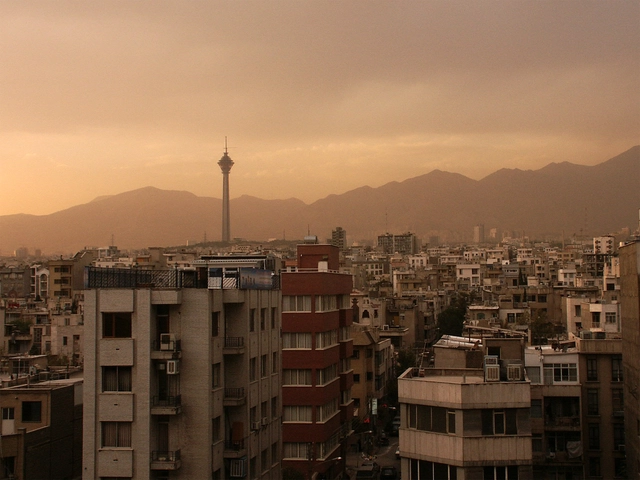
Taking a taxi from Tehran Imam Khomeini International Airport into the city, one cannot help but look at the seemingly random distribution of buildings along the road; an array of mismatched concrete blocks, worlds away from the images of Sheik Lotfollah Mosque that typically adorn the covers of Iran travel guides. “My observations about architecture in Iran are like that of many other countries that have changed in terms of architectural characteristics; Iran has changed too,” says Tehran-based architect, M. Reza Karfar. “Now we are in a time where everything is mass produced and we are just using and using, but not making memories with anything. That sense of belonging will, of course, go away. You see a 50 or 60, or 200-year-old house that just gets demolished and replaced by a 4 or 5-story building, and in 5 years they will demolish that 4 to 5-story building too.”
Not to say that Iran should be an exhibit for tourists, only consisting of beautiful tiled buildings, but this fear of memories fading in disappearing public spaces is one that, despite the numerous historical sites preserved around the country, is noticeable in Iran’s big cities. And while the subject is particularly pertinent in Iran, as Karfar points out this phenomenon is not unique to just one country. As a result, Iran might offer something of a case study for other countries around the world.
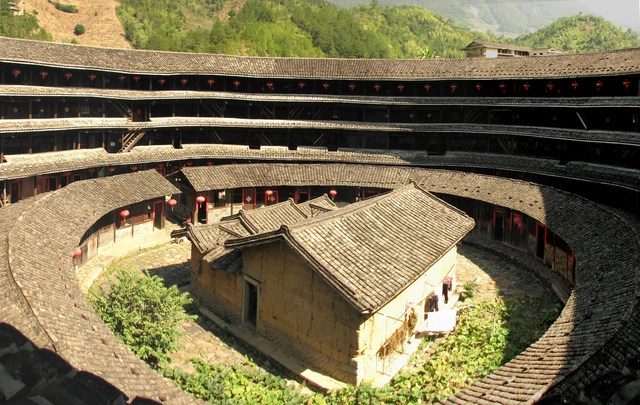
Vernacular architecture refers to designs which find their primary influence in local conditions: in climate, in materials, and in tradition. In a country as diverse as China, with 55 state-recognized ethnic minority groups and widely varying climates and topographies, many different vernacular dwelling styles have evolved as pragmatic solutions that accommodate the unique needs and limitations of their sites.
Rapid urbanization in China has favored high-rise apartment towers over traditional housing because of their ease of construction and the population density they enable, making vernacular dwellings increasingly rare throughout the country. Some firms, like MVRDV and Ben Wood’s Studio Shanghai, have taken note of the many benefits that vernacular dwellings provide, and have created projects that attempt to reconcile tradition with urbanization. Even if you aren't planning on building in China any time soon, the following housing styles have much to teach about what it means to live in a particular time and place. This is by no means an exhaustive list, but it does encompass the main types of vernacular dwellings seen throughout China.
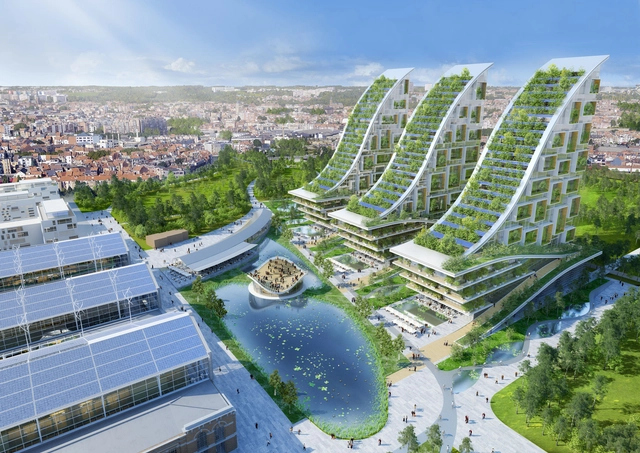
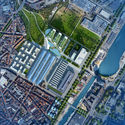
Vincent Callebaut Architectures has released plans for the development of a radical eco-neighborhood at Tour & Taxis, Brussels, Belgium. Covering an area of 135,000 square meters, the proposal will see the redevelopment of the early twentieth-century Gare Maritime, and the construction of three residential “vertical forests” reaching 100 meters in height. The architect’s ultimate vision is a neighborhood which embraces technological progress, sustainable building principles, and renewal of the built heritage.
Situated northwest of Brussels city center, and constructed in 1907, the industrial park at Tour & Taxis originally operated as a shipping and customs complex. Whilst the lifting of European customs borders has rendered its original function obsolete, the Gare Maritime (Marine Terminal) still embodies the architecture of the industrial era.
The Aggregate Architectural History Collaborative has organized a collection of essays, entitled The Destruction of Cultural Heritage: From Napoléon to ISIS, which examines several centuries of the demolition of monuments in the Middle East. With world events like ISIS and the protection of architectural heritage growing to be more and more topical, this collection is a useful tool in considering the role of violence, how ancient architecture is perceived as a cultural entity, what role the media has to play, and beyond.
On the advice of English Heritage, architecture minister Ed Vaizey has listed Norman Foster’s first major public building: the 1977 Sainsbury Centre at the University of East Anglia, Norwich, in the United Kingdom. According to BDOnline, the popular public art museum, which houses the collection of Lord and Lady Sainsbury, was granted grade II* protection for its innovative engineering, fine design, historic association, flexibility and group value. Its revolutionary design features an innovative, prefabricated modular structure that is cleverly designed to allow for subsequent extension.
Vaizey described: “Norman Foster’s design for the Sainsbury Centre is recognized around the world as a high point of the British ‘high-tech’ movement and, by any standards, a modern classic.”
From the archeological areas of Stonehenge to the Hiroshima Peace Memorial, Google’s World Wonders Project is dedicated to digitally preserving and virtually sharing the World’s Heritage Sites. Users can explore some of the world’s greatest places through panoramic images, 3D laser scanned models, videos and informative text. Although Google World Wonders is a new and ongoing project, they already have more than 130 sites in 18 countries featured. The project is also an educational resource, allowing students and scholars to use the materials to discover some of the most famous sites on earth. A selection of free educational packages are available to download for classroom use.
Google World Wonders is made possible through the partnership of Google, UNESCO, the World Monuments Fund and Cyark, with a shared mission to preserve world heritage sites for future generations.
An outstanding group of buildings in Shropshire recently won development funding from the Heritage Lottery Fund (HLF) for the regeneration of a former flax mill and maltings. FCB (Feilden Clegg Bradley) Studios have been acting as strategic advisors and architects to English Heritage and Shropshire Council since 2003 and have advised them through all stages of the project to date. In November 2010, they gained full planning and listed building consent for a £20m phase of works which includes a heritage-led mixed-use development with the potential to create 120 new homes on the site. The total development value is estimated at £52m. More images and architects’ description after the break.
PBS has released their selections of the top ten buildings that have changed the way Americans live, work and play. From Thomas Jefferson’s 224-year-old Virginia State Capitol to Robert Ventui’s postmodern masterpiece the Vanna Venturi House, each building on the list will be featured in a new TV and web production coming to PBS in 2013. Continue after the break to view the top ten influential buildings and let us know your thoughts!
After many years spent fighting to preserve the famous Robin Hood Gardens social housing complex in East London, the architecture community mourns another loss. Tower Hamlets Council and the London Thames Gateway Development Corporations have approved the demolition of the 1960s Brutalist complex in an effort to make way for a new £500 million sustainable development comprised of energy efficient, mixed-tenure homes and an enlarged central park. The historic building was built by modernist architects Alison and Peter Smithson and remains an important piece to Great Britain’s architectural history. Continue reading for more.
Today, one of the leading exemplars of classic Modern architecture reopens after a two year hiatus. The freshly renovated Villa Tugendhat underwent a monumental restoration and rehabilitation, starting in January 2010, with the aim of preserving and conserving the original building substance and layout, including the construction details, materials and technical system. Renewal work also included the lavish interiors and lush garden. Continue after for the break to learn more about Mies van der Rohe’s renewed masterpiece.
Gdańsk Historic Heritage Center, designed by Mariusz Piesik and Kuba Szymański, is meant to be a multifunctional building and a part of targ sienny / targ rakowy complex – a new project in the very center of Gdańsk, Poland. The building’s main purpose is to host an exhibition of a large scale model of a pre-World War II center of the city and mark the starting point of tourist excursions around it’s streets. More images and architects’ description after the break.