1. ArchDaily
  2. Greg Lynn

Greg Lynn: The Latest Architecture and News

The Timeless Appeal of Modernism in Technology and Digital Architecture

Modernism, a movement that sought to break away from traditional forms and embrace the future, laid the groundwork for many technological and digital advancements in contemporary architecture. As the Industrial Revolution brought about mass production, new materials, and technological innovation, architects like Le Corbusier, Walter Gropius, and Mies van der Rohe championed the ethos of "form follows function" and a rational approach to design. Their principles resonate in the digital age, where computational design and high-tech materials redefine form and construction.

The 20th century's modernist ideals — efficiency, simplicity, and functionality — created a foundation for architects to experiment with structural clarity and material honesty. High-tech architecture, which emerged in the late 20th century, evolved from these principles, merging modernism's clean lines with advanced engineering and technology. This paved the way for parametricism and algorithm-driven design processes, revolutionizing architecture and enabling complex forms previously thought impossible.

The Timeless Appeal of Modernism in Technology and Digital Architecture - Image 1 of 4The Timeless Appeal of Modernism in Technology and Digital Architecture - Image 2 of 4The Timeless Appeal of Modernism in Technology and Digital Architecture - Image 3 of 4The Timeless Appeal of Modernism in Technology and Digital Architecture - Image 4 of 4The Timeless Appeal of Modernism in Technology and Digital Architecture - More Images+ 45

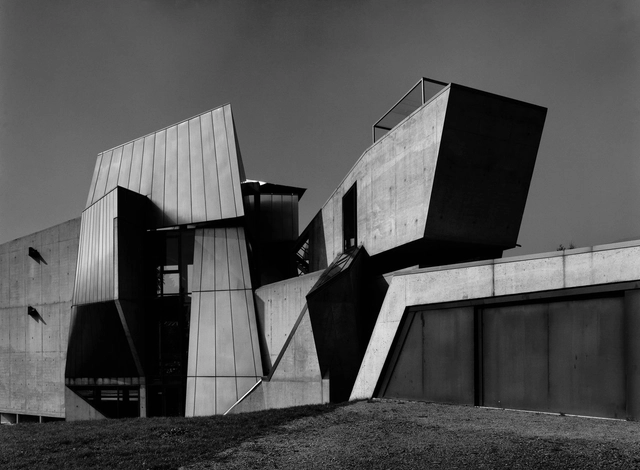
Who Was Günther Domenig, the Unknown Deconstructivist?

Subscriber Access | 

Domenig was one of Austria’s most radical architects and a major influence on many of architecture’s leading lights but remains widely unknown. A new exhibition aims to change that.

Who Was Günther Domenig, the Unknown Deconstructivist? - Image 1 of 4Who Was Günther Domenig, the Unknown Deconstructivist? - Image 2 of 4Who Was Günther Domenig, the Unknown Deconstructivist? - Image 3 of 4Who Was Günther Domenig, the Unknown Deconstructivist? - Image 4 of 4Who Was Günther Domenig, the Unknown Deconstructivist? - More Images+ 4

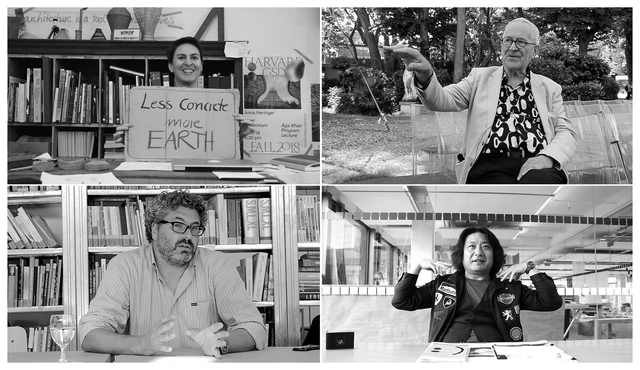
What is Architecture? Insights from Peter Cook, Anna Heringer, Moon Hoon, and Greg Lynn

Subscriber Access | 

Simple in form but complex in substance, “What is Architecture?” remains an existential question for a lot of architecture students and young professionals. In an attempt to define this ever-changing interrogation and expose the different visions out there, the interview series: WIA – What is architecture? asks four, straightforward, questions to world-leading architectural designers and thinkers. Seeking to uncover their opinion on what architecture is and what it can do, these short videos reveal responses to “What is architecture? What can architecture do? What is your architectural position? and What is your design method?”.

ArchDaily has collaborated with WIA to release every week, 4 of these conversations, and to invite you to take on the challenge and answer these questions. This first feature, shares insights into the thoughts and personality of Peter Cook, Anna Heringer, Moon Hoon, and Greg Lynn.

Trimble's SketchUp Viewer Allows You To Manipulate Hologram Models in the Real World

SketchUp developer Trimble has launched SketchUp Viewer, a new virtual and mixed reality app for the Microsoft HoloLens that will allow users to inhabit and experience their 3D designs in a completely new way. Using the holographic capabilities of the HoloLens, SketchUp Viewer creates hologram versions of models that can be placed in real-world environments –allowing architects to study and analyze how their buildings will react to their context while still in the design stage.

At today’s Trimble Dimensions keynote, architect Greg Lynn presented SketchUp Viewer for the first time, demonstrating the technology using his re-imagining of the Packard Plant in Detroit, commissioned as part of the “Architectural Imagination,” the U.S. Pavilion at the 2016 Venice Biennale exhibition.

"Trimble mixed-reality technology and Microsoft HoloLens bring the design to life and bridge the gap between the digital and physical. Using this technology I can make decisions at the moment of inception, shorten the design cycle and improve communication with my clients,” said Lynn.

Will Architecture's Future be Held Together with Glue?

Subscriber Access | 

The most revolutionary material in architecture may be one we’re already quite familiar with: glue. In a recent article for New Scientist’s New Urbanist column, futurist Geoff Manaugh of BLDG BLOG argues that the typical building’s structural system may soon see an overhaul. Instead of steel held together with bolts and welds, petroleum-based composite materials and carbon fiber panels fixed in place with glue could serve as both a building’s structure and skin.

4 Reasons to Come to Finland this August

Tommi Lindh, director of the Alvar Aalto Foundation, shares four exciting reasons to enjoy the architectural offerings of Finland this summer.

Architecture hasn't been this intensively represented in the Finnish summer events ever. The whole summer is full of nice places to visit, but what makes August so very special is what's happening in Helsinki and Jyväskylä in the beginning of the month. The Alvar Aalto Symposium kicks off with lectures by the Museum of Finnish Architecture in Helsinki on Wednesday, August 5 and continues to Jyväskylä where the main event starts on Friday, August 7 with the first thematic session and a keynote presentation by Liu Xiaodu of Urbanus.

DO! 13th International Alvar Aalto Symposium

The Alvar Aalto Symposium gathers together top names in contemporary architecture. This year’s international figures include American architect Greg Lynn, one of the Symposium’s keynote speakers. In line with the theme of the event – DO! – speakers will be rolling up their sleeves and personally opening up about what architects and urban planners really do. The symposium will be held on 7–9 August 2015 in Jyväskylä, Finland.

Hacking the Biennale: "Project Source Code" Uses Augmented Reality to Stage a Rebel Exhibition

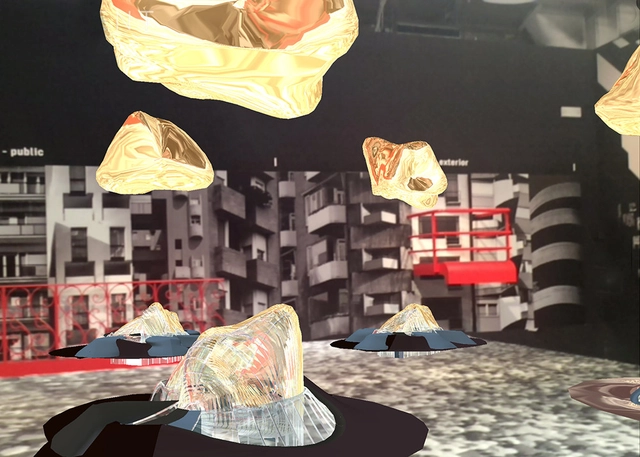
This year at the Venice Biennale, not all of the exhibitions are visible. Ozel Office of Los Angeles have "hacked" the Venice Biennale with the help of some major architecture firms: Asymptote Architecture, Greg Lynn Form, Neil M. Denari Architects, Murmur, and Oosterhuis Lenard. Together, these firms have created a rogue digital addition to the Biennale only accessible through a virtual portal revealing a world of levitating models, movable objects, and much more, activated by physical components of the Koolhaas-curated central pavilion.

Find out how you can hack the Biennale after the break.

Hacking the Biennale: "Project Source Code" Uses Augmented Reality to Stage a Rebel Exhibition - Image 1 of 4Hacking the Biennale: "Project Source Code" Uses Augmented Reality to Stage a Rebel Exhibition - Image 2 of 4Hacking the Biennale: "Project Source Code" Uses Augmented Reality to Stage a Rebel Exhibition - Image 3 of 4Hacking the Biennale: "Project Source Code" Uses Augmented Reality to Stage a Rebel Exhibition - Image 4 of 4Hacking the Biennale: Project Source Code Uses Augmented Reality to Stage a Rebel Exhibition - More Images+ 2