1. ArchDaily
  2. Green Roof

Green Roof: The Latest Architecture and News

Büro Ole Scheeren Wins Competition to Design a Winemakers Campus and Tourism Complex in Yibin, China

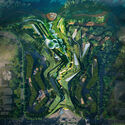
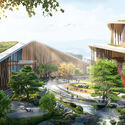
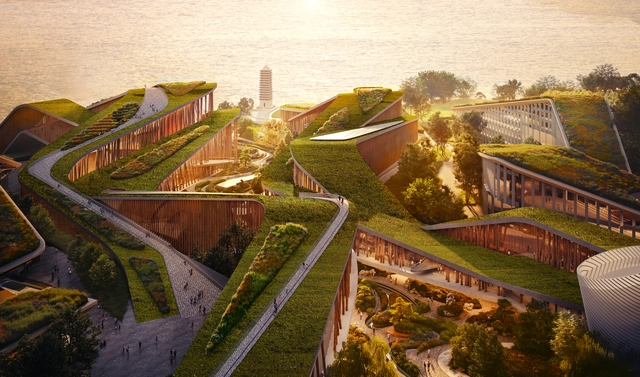
Büro Ole Scheeren has designed a new campus and experience center located in the historical city of Yibin, a region known for its rich cultural heritage and the geographical source of the Yangtze River. The campus was commissioned by Wuliangye, one of China’s leading winemakers. The project represents a large development inspired by the shape of a natural canyon, with two dynamic parallel structures defining a central space. On either side of this structure, called the Wuliang Interstice, are the Wuliangye World and the Wine Culture Exhibition Center respectively. Wuliangye World is an experience center where visitors can engage with the tradition of winemaking, while the exhibition center tells the story of wine culture through a series of themed exhibition halls.

Büro Ole Scheeren Wins Competition to Design a Winemakers Campus and Tourism Complex in Yibin, China - Image 1 of 4Büro Ole Scheeren Wins Competition to Design a Winemakers Campus and Tourism Complex in Yibin, China - Image 2 of 4Büro Ole Scheeren Wins Competition to Design a Winemakers Campus and Tourism Complex in Yibin, China - Image 3 of 4Büro Ole Scheeren Wins Competition to Design a Winemakers Campus and Tourism Complex in Yibin, China - Image 4 of 4Büro Ole Scheeren Wins Competition to Design a Winemakers Campus and Tourism Complex in Yibin, China - More Images+ 5

New Residential Complex in Amsterdam Creates Room for Wildlife

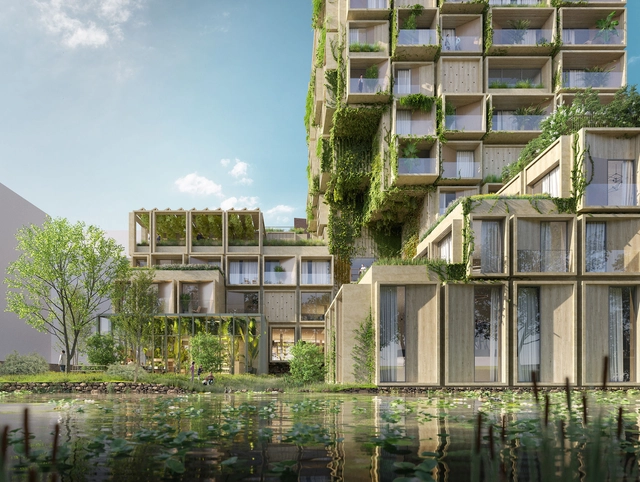
The new apartment complex designed by Venhoeven CS and DS Landschapsarchitecten is characterized by the intention to stimulate biodiversity. Located on a four-acre plot in the Sluisbuurt on the Zeeburgereiland in Amsterdam, the complex will include 82 homes, a parking garage, and spaces for shops and businesses. The nature-inclusive project pays special attention to the design of green roofs, terraces, and facades to create micro-environments for local flora and fauna and to optimize energy consumption.

New Residential Complex in Amsterdam Creates Room for Wildlife - Image 1 of 4New Residential Complex in Amsterdam Creates Room for Wildlife - Image 2 of 4New Residential Complex in Amsterdam Creates Room for Wildlife - Image 3 of 4New Residential Complex in Amsterdam Creates Room for Wildlife - Image 4 of 4New Residential Complex in Amsterdam Creates Room for Wildlife - More Images

A Green Undulating Roof Covers Sou Fujimoto’s Resort Project on Ishigaki Island, Japan

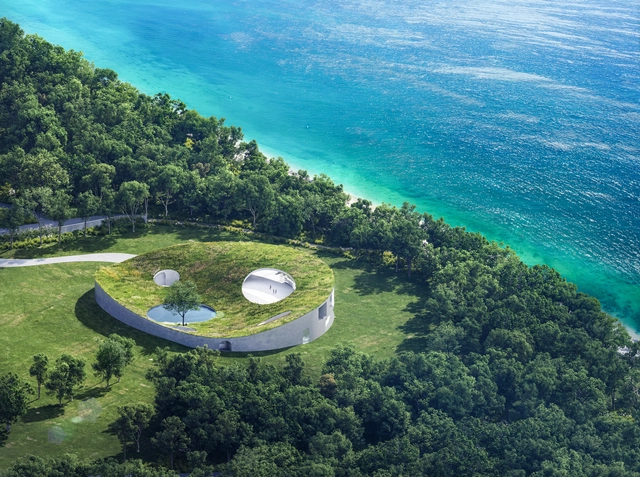
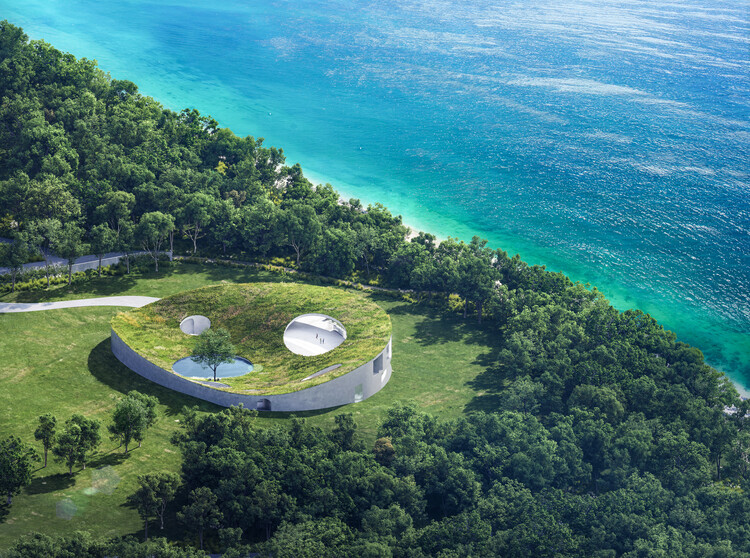
Sou Fujimoto has unveiled a “Not a Hotel Ishigaki”, a new project in the southwest of Ishigaki Island in Okinawa, Japan. The unique tropical resort hotel sits on a circular base open in all directions toward the surrounding natural landscape. The main feature of the building is the undulating roof covered in vegetation. Its shape allows access from the building terraces, creating an inner landscape, complete with meadows, relaxation areas, and a water mirror that reflects the sky and the singular tree in its vicinity.

A Green Undulating Roof Covers Sou Fujimoto’s Resort Project on Ishigaki Island, Japan - Image 1 of 4A Green Undulating Roof Covers Sou Fujimoto’s Resort Project on Ishigaki Island, Japan - Image 2 of 4A Green Undulating Roof Covers Sou Fujimoto’s Resort Project on Ishigaki Island, Japan - Image 3 of 4A Green Undulating Roof Covers Sou Fujimoto’s Resort Project on Ishigaki Island, Japan - Image 4 of 4A Green Undulating Roof Covers Sou Fujimoto’s Resort Project on Ishigaki Island, Japan - More Images

Palm and Straw Roofs: Examples in Mexico That Explore Their Possibilities

Subscriber Access | 

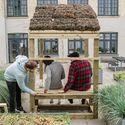
Palm and Straw Roofs: Examples in Mexico That Explore Their Possibilities - Image 1 of 4Palm and Straw Roofs: Examples in Mexico That Explore Their Possibilities - Image 2 of 4Palm and Straw Roofs: Examples in Mexico That Explore Their Possibilities - Image 3 of 4Palm and Straw Roofs: Examples in Mexico That Explore Their Possibilities - Image 4 of 4Palm and Straw Roofs: Examples in Mexico That Explore Their Possibilities - More Images+ 33

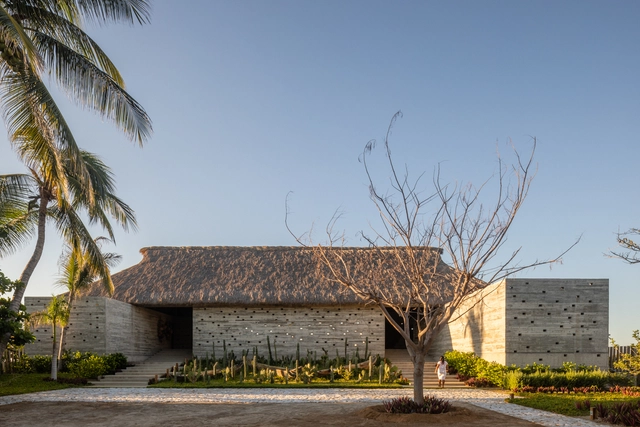
Architecture in Mexico has a vast history that is made up of various aspects that touch astrological, political, spiritual and economic issues. Although today there are only ruins of some of the most important pre-Hispanic complexes, thanks to the in-depth research that has been carried out, we can have some representations of what those buildings that laid the foundations of what makes us today were like. In these representations, it is possible to notice the presence of natural materials that were a response to their environment such as basalt stone, stucco and some vegetable paintings whose remains persist to this day.

Can Green Roofs Make Our Cities Better?

Subscriber Access | 

Researchers credit the Hanging Gardens of Babylon as the first examples of green roofs. Although there is no proof of its exact location and very little literature on the structure, the most accepted theory is that King Nebuchadnezzar II built a series of elevated, ascending terraces with varied species as a gift to his wife, who missed the forests and mountains of Persia, their local land. According to Wolf Schneider [1] the gardens were supported by brick vaults, and under them, there were shaded halls cooled by artificial irrigation of the gardens, with a much milder temperature than the outside, in the plains of Mesopotamia (present-day Iraq). Since then, examples of green roofs have appeared all over the world, from Rome to Scandinavia, in the most diverse climates and types.

Nevertheless, inserting plants on roofs is still viewed with suspicion by many, as they are thought to be costly and difficult to maintain. Others, however, argue that the high implementation costs are quickly offset with savings in air conditioning and especially that occupying the building's fifth façade with vegetation is, above all, a rational solution. In any case, the question remains as to how green roofs can really help with climate change.

The Diverse Scales of “Green” in Chinese Urbanism

When we were forced to be confined at home due to the self-quarantine policy of the COVID-19 global pandemic, everyone must have spent a tremendous amount of time looking out from their window. Sometimes when we are so exhausted with everyday work and life, we just wish to have a quick getaway to oceans and forests, somewhere close to the natural green.

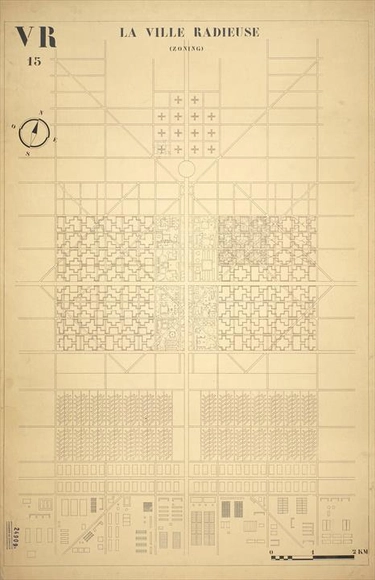
Future Cities: From Le Corbusier's Radiant City to the Dutch "Breathing City 2050"

Throughout history, religious reformers and visionary starchitects have attempted to envision the future of our cities: from the Venetian model city of Palmanova to the multi-story housing complex for 5,000 people drafted by Italian architect Paolo Soleri, from Frank Lloyd Wright’s Broadacre City to Le Corbusier’s Radiant City, numerous masterplans have been crafted to illustrate some of the most unprecedented ambitions.

Seaweed as Cladding: Combining Old Traditions With New Tech

Seaweed as Cladding: Combining Old Traditions With New Tech - Image 1 of 4Seaweed as Cladding: Combining Old Traditions With New Tech - Image 2 of 4Seaweed as Cladding: Combining Old Traditions With New Tech - Image 3 of 4Seaweed as Cladding: Combining Old Traditions With New Tech - Image 4 of 4Seaweed as Cladding: Combining Old Traditions With New Tech - More Images+ 14

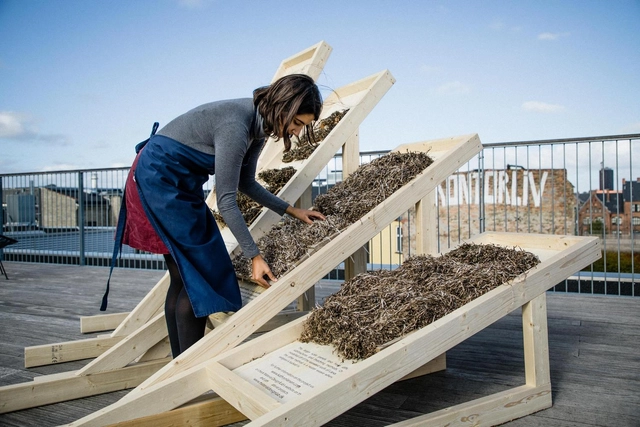
Inspired by vernacular architecture, Kathryn Larsen is a bio-based designer working with seaweed. Throughout her career, she has been doing an intensive investigation into eel-grass, a material that has been used for centuries around the world. Larsen wants to apply all the benefits of this material (rot resistance, fire resistance, non-toxic, insulation characteristics comparable to mineral wool, and its ability to create carbon negative buildings) into prefabrication development and other technologies that enable the creation of new cladding and other elements, such as insulation batt and acoustic panels.

During the latest Design Indaba Festival, we had the chance to interview Kathryn. Read the interview and learn more about her work below.

How to Incorporate Gardens in Home Design

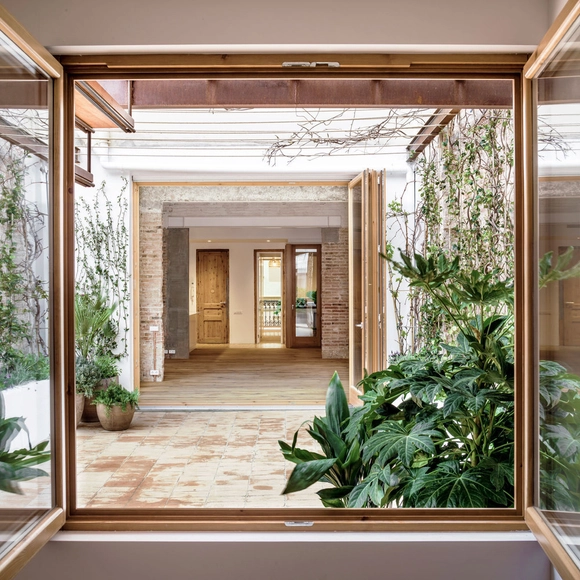
How to Incorporate Gardens in Home Design - SustainabilityHow to Incorporate Gardens in Home Design - SustainabilityHow to Incorporate Gardens in Home Design - SustainabilityHow to Incorporate Gardens in Home Design - SustainabilityHow to Incorporate Gardens in Home Design - More Images+ 37

Indoor gardens can contribute important benefits to home living, ranging from aesthetic beauty to improved health and productivity. Research has shown that indoor plants help eliminate indoor air pollutants called Volatile Organic Compounds (VOCs) that emanate from adhesives, furnishings, clothing, and solvents, and are known to cause illnesses. They also increase subjective perceptions of concentration and satisfaction, as well as objective measures of productivity. Indoor gardens may even reduce energy use and costs because of the reduced need for air circulation. These benefits complement the obvious aesthetic advantages of a well-designed garden, making the indoor garden an attractive residential feature on several fronts.
What Materials Keep Buildings Cool?

Air-conditioning isn’t just expensive; it’s also terrible for the environment. Accounting for 10% of global energy consumption today, space cooling in 2016 alone was responsible for 1045 metric tons of CO2 emissions. This number is only expected to increase, with the International Energy Agency estimating that cooling will reach 37% of the world’s total energy demand by 2050.

What Materials Keep Buildings Cool? - SustainabilityWhat Materials Keep Buildings Cool? - SustainabilityWhat Materials Keep Buildings Cool? - SustainabilityWhat Materials Keep Buildings Cool? - SustainabilityWhat Materials Keep Buildings Cool? - More Images+ 5

Roof Waterproofing with Water: A Solution by ‘Brasil Arquitetura’

Subscriber Access | 

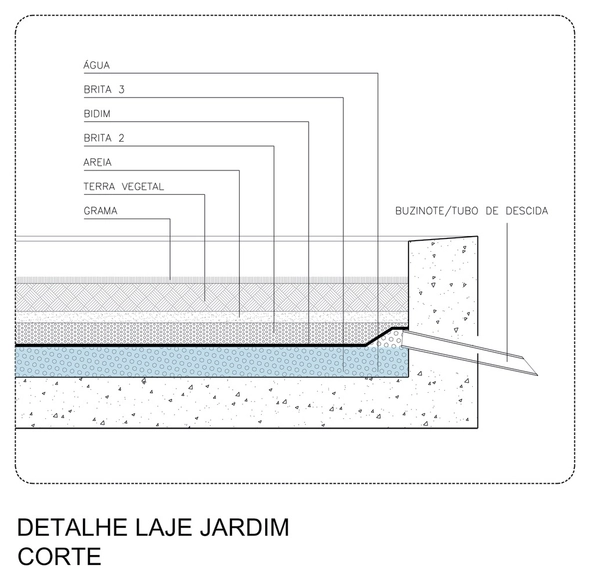
During the modern period, the buildings that used the traditional sloping roofs with tiles, draining the waters as quickly as possible, have begun to give way to the well-known 'waterproof flat roofs.' In spite of delivering a clean aesthetic to the project, allowing the use of the last slab as a space for living and contemplation, this solution can become a headache for its occupants if its execution and design are not careful. It is no accident that there have been infiltrations in famous modern buildings, such as the Vile Savoye or the Farnsworth House, designed by great masters of architecture. Currently, the civil construction industry has developed more sophisticated products and techniques that drastically reduce the chances of subsequent infiltration. However, we could say that waterproof flat slabs continue to be fragile points in buildings. The architects from Brasil Arquitetura have improved an inventive and very simple solution to avoid infiltrations in flat slabs, much used in the 70's by architects like Paulo Mendes da Rocha and Ruy Ohtake, filling them with vegetation.

Construction of MVRDV's Landscaped Food Market Begins in Taiwan

MVRDV has broken ground on a wholesale market for fruit and vegetables in Tainan, Taiwan. Defined by a terraced, accessible green roof, the open-air market will serve as both an important hub in Taiwan’s supply chain, and a destination for meeting, socializing, and taking in views of the surrounding landscape.

Named the “Tainan Xinhua Fruit and Vegetable Market,” the MVRDV scheme transforms an often-prosaic aspect of the food industry into a public experience of food and nature. Located in a strategic position between the city and mountains, with good public transport links, the scheme sits at a convenient node for traders, buyers, and visitors.

Construction of MVRDV's Landscaped Food Market Begins in Taiwan - Image 1 of 4Construction of MVRDV's Landscaped Food Market Begins in Taiwan - Image 2 of 4Construction of MVRDV's Landscaped Food Market Begins in Taiwan - Image 3 of 4Construction of MVRDV's Landscaped Food Market Begins in Taiwan - Featured ImageConstruction of MVRDV's Landscaped Food Market Begins in Taiwan - More Images

Stavenger's New Visitor Center and Brewery / Cobe

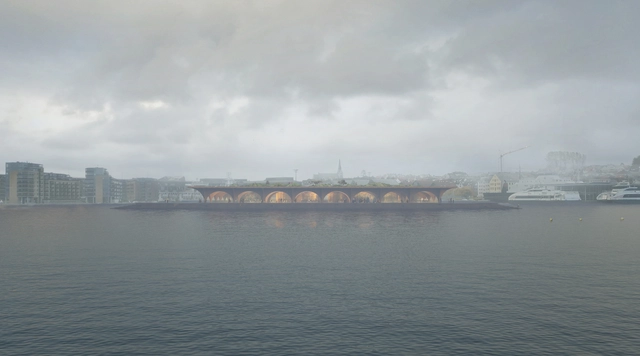
Soon the people of Stavanger, Norway will get to see the LERVIG beer brewing process at the new 11,000 square meter visitor center and brewery designed by Danish architects COBE. An iconic focal point on what was once an industrial pier, the building will offer many new amenities to central Stavanger. The brewery will be encircled by public spaces such as a harbour bath and Norway’s first west-coast ‘street-food’ market, complete with a green roof above. From these periphery spaces, guests will be able to view the brew tanks and fermentation process happening in the heart of the building.

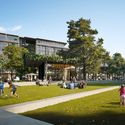
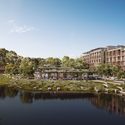
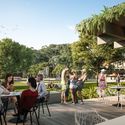
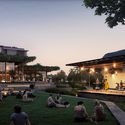
Australia's Sunshine Coast Plans for New $900 Million Mixed-Use Development

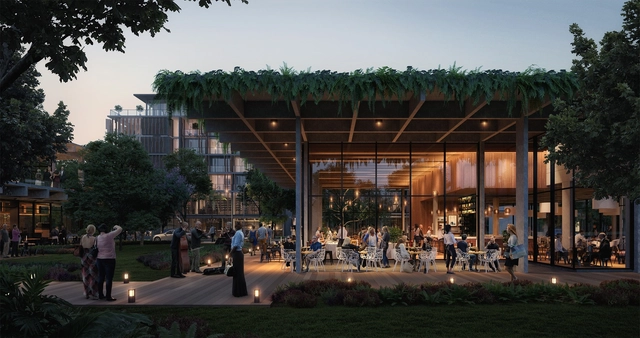
The Sunshine Coast of Australia’s Yaroomba Beach is about to get a $900 million upgrade. The integrated, mixed-use development will be the first 5-star resort developed on the Sunshine Coast in 30 years. HASSELL has been awarded the work as master planners, architects, and landscape architects for the massive project, focusing on sustainable and ecological goals to ‘touch the ground lightly.'

Australia's Sunshine Coast Plans for New $900 Million Mixed-Use Development - Image 1 of 4Australia's Sunshine Coast Plans for New $900 Million Mixed-Use Development - Image 2 of 4Australia's Sunshine Coast Plans for New $900 Million Mixed-Use Development - Image 3 of 4Australia's Sunshine Coast Plans for New $900 Million Mixed-Use Development - Image 4 of 4Australia's Sunshine Coast Plans for New $900 Million Mixed-Use Development - More Images+ 1

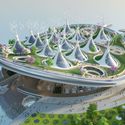
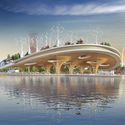
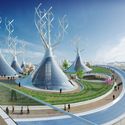
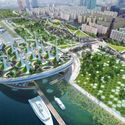
Vincent Callebaut Imagines Hyperbolic Shaped Forest Suspended Over River in Seoul

Vincent Callebaut Architectures have developed a design plan reimagining the riverbank of Yeouhido Park, Seoul. The park is envisioned as an experimental urban space dedicated to sustainable development through a series of interventions - including a floating ferry terminal. Named the “Manta Ray,” the ambition of the proposal is to transform the park into an ecological forest of trees, enhancing its natural irrigation and strengthening the banks from floods. The “permeable landscaping” seeks to reduce floods and rehabilitate urban ecosystems that have become fragmented through Seoul’s rapid built expansion. The vegetation-dominated strategy also seeks to reduce the urban “heat island” effect Seoul has been experiencing due to climate change over the past decades.

Vincent Callebaut Imagines Hyperbolic Shaped Forest Suspended Over River in Seoul  - Image 1 of 4Vincent Callebaut Imagines Hyperbolic Shaped Forest Suspended Over River in Seoul  - ArchVincent Callebaut Imagines Hyperbolic Shaped Forest Suspended Over River in Seoul  - FacadeVincent Callebaut Imagines Hyperbolic Shaped Forest Suspended Over River in Seoul  - CityscapeVincent Callebaut Imagines Hyperbolic Shaped Forest Suspended Over River in Seoul  - More Images+ 27

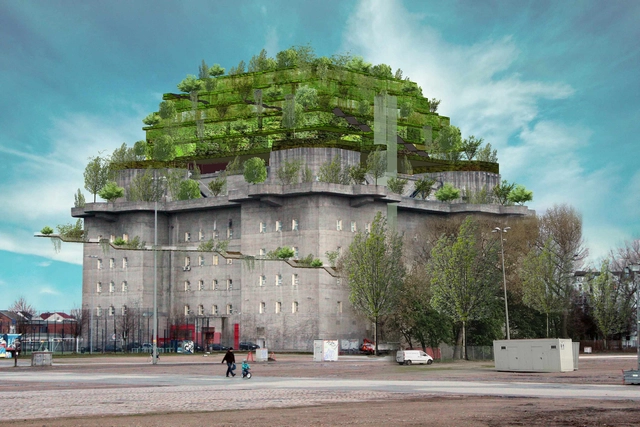
From War Relic to Mixed-Use: Plans to Build a “Green Mountain” Atop a Bunker in Hamburg

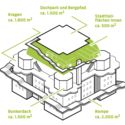
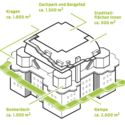
A team of local residents and architects in Hamburg’s neighborhood of St. Pauli have been granted planning permission for a proposal to repurpose a war bunker dating back from the 1940s. Coined Hilldegarden, the proposal seeks to create a “green mountain” garden atop the disused roof of the bunker along with a range of mixed-use projects that increase its height by several stories. “We are rebuilding what we inherit.” The project’s initiative states, “Adding something to history while dealing with it and thereby reshaping history itself.”

From War Relic to Mixed-Use: Plans to Build a “Green Mountain” Atop a Bunker in Hamburg - Image 1 of 4From War Relic to Mixed-Use: Plans to Build a “Green Mountain” Atop a Bunker in Hamburg - Image 2 of 4From War Relic to Mixed-Use: Plans to Build a “Green Mountain” Atop a Bunker in Hamburg - Image 4 of 4From War Relic to Mixed-Use: Plans to Build a “Green Mountain” Atop a Bunker in Hamburg - Image 3 of 4From War Relic to Mixed-Use: Plans to Build a “Green Mountain” Atop a Bunker in Hamburg - More Images+ 14

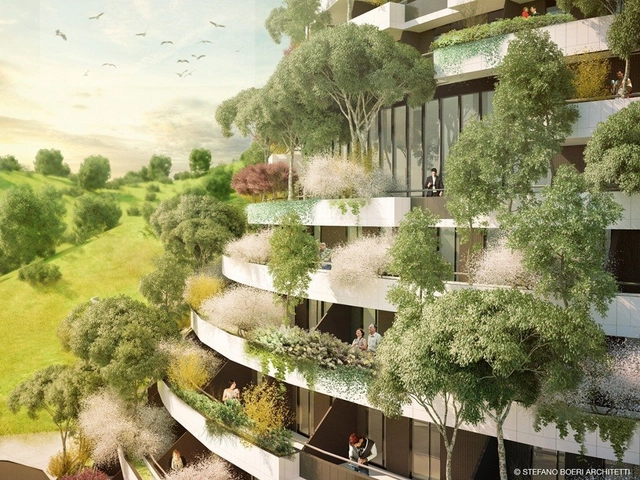
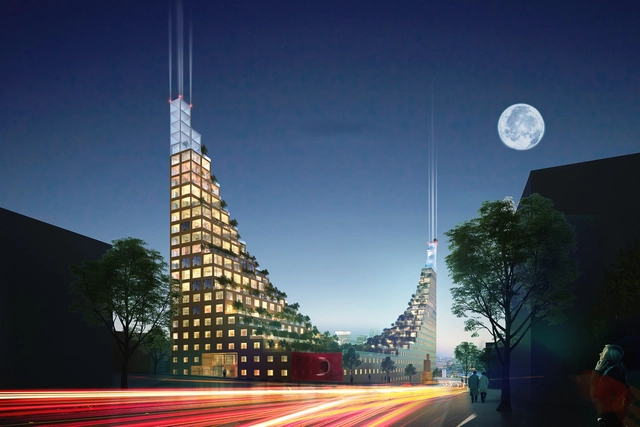
Hanging Gardens of Babylon-Inspired Residential Units Proposed for Birmingham

A new housing complex in the form of 500 terraced units has been proposed by London practice Architects of Invention for the city of Birmingham, in response to its growing multicultural population. Drawing inspiration from the ancient Hanging Gardens of Babylon, Garden Hill’s formal composition is that of two staggered 25-storey towers, with private and communal gardens on each level of terraces.

With the project's swooping mass, the residences aim to offer panoramic views of Birmingham, given its central location in the Digbeth area, a 10-minute walk from the city center. Additionally, the staggered towers capture ample daylighting over the course of the day, with the south end benefitting from the morning sun and the north end in the evening.

Hanging Gardens of Babylon-Inspired Residential Units Proposed for Birmingham - Sustainability & Green Design, Facade, Arch, CityscapeHanging Gardens of Babylon-Inspired Residential Units Proposed for Birmingham - Sustainability & Green Design, Facade, Arch, CityscapeHanging Gardens of Babylon-Inspired Residential Units Proposed for Birmingham - Sustainability & Green DesignHanging Gardens of Babylon-Inspired Residential Units Proposed for Birmingham - Sustainability & Green DesignHanging Gardens of Babylon-Inspired Residential Units Proposed for Birmingham - More Images+ 17

WE Architecture’s Winning Proposal Combines Green Space with Social Housing in Aarhus

A competition for a new social housing complex in Aarhus, Denmark, has been won by WE Architecture, in collaboration with local practice JWH Arkitekter and commissioned by Ringgaarden, a Danish housing organization.

Titled “Saltholmsgade”, the winning proposal is a reinterpretation of Aarhus’ historical housing typologies along Hjortensgade, creating modern and green communal spaces. The complex consists of 38 individual apartments, offering tenants views of the city through the inclusion of rooftop gardens.

WE Architecture’s Winning Proposal Combines Green Space with Social Housing in Aarhus - Image 1 of 4WE Architecture’s Winning Proposal Combines Green Space with Social Housing in Aarhus - Image 2 of 4WE Architecture’s Winning Proposal Combines Green Space with Social Housing in Aarhus - Garden, FenceWE Architecture’s Winning Proposal Combines Green Space with Social Housing in Aarhus - FacadeWE Architecture’s Winning Proposal Combines Green Space with Social Housing in Aarhus - More Images+ 9