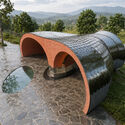
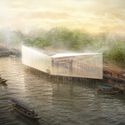
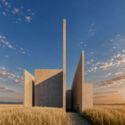
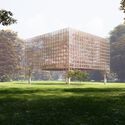
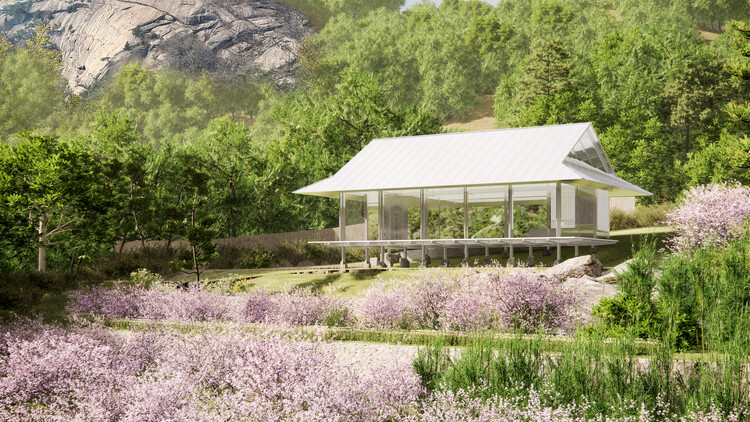
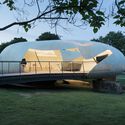
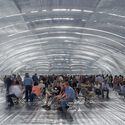
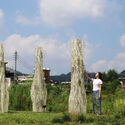
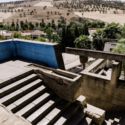
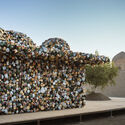
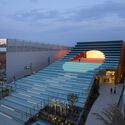
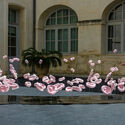
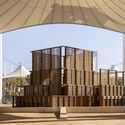
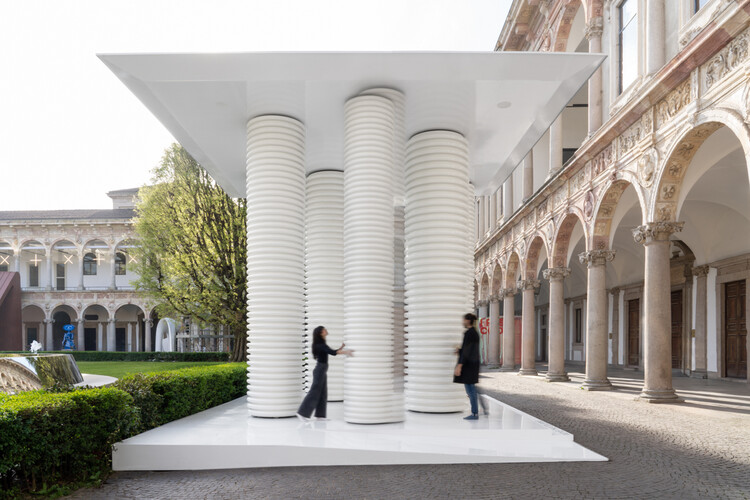
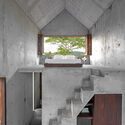
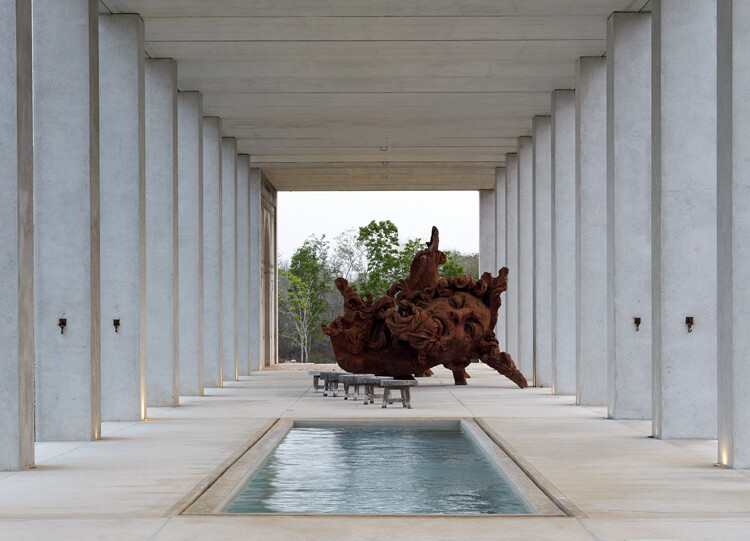
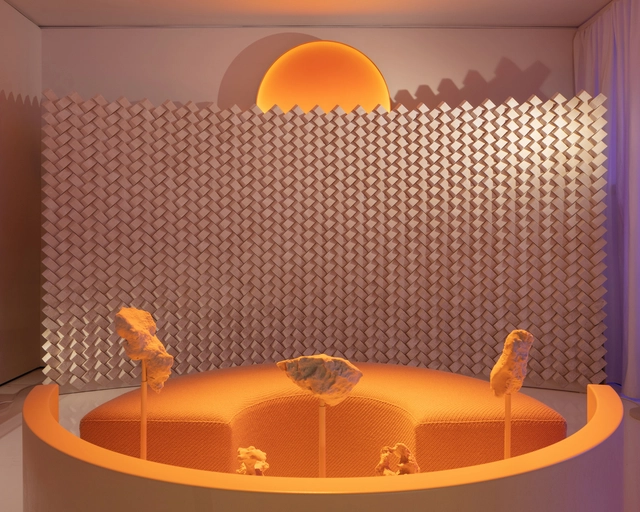
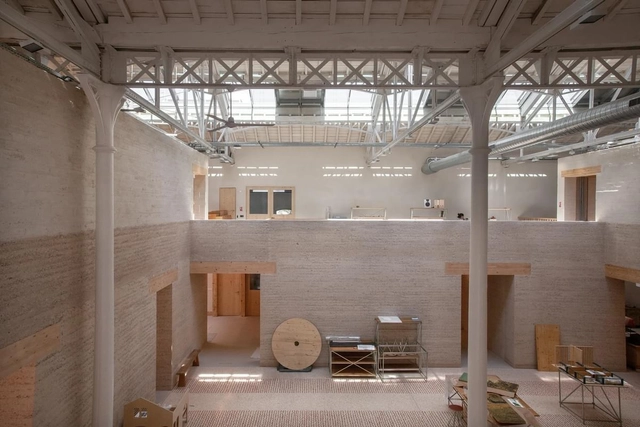
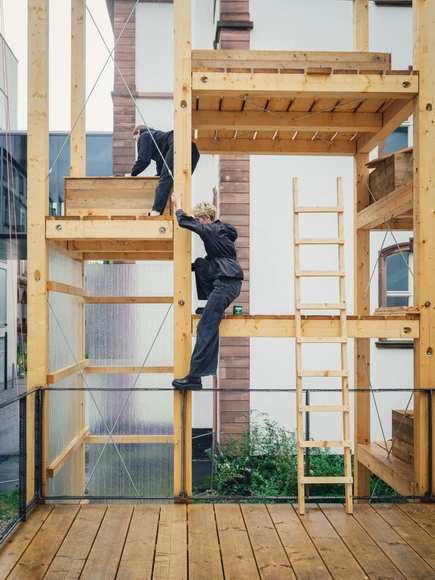
Dowonjeong modular pavilion project in Jongno-gu, Seoul, South Korea. Image Courtesy of Studio SMA
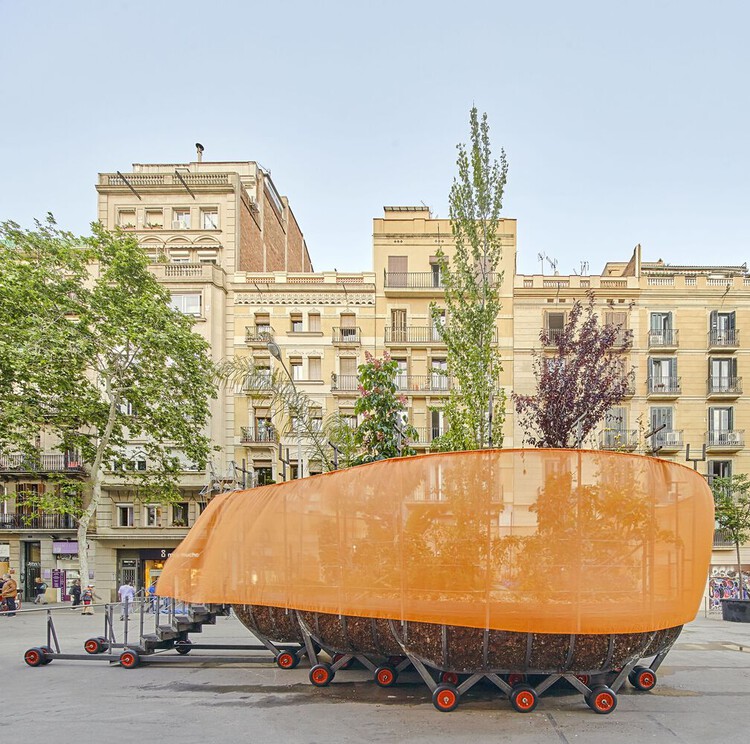
In architecture, the word "pavilion" can describe an endless variety of structures. It might be defined as a principle and a typology, a freestanding structure, a temporary intervention, a gathering place in the city, or a space for experimentation. This last quality is what unites the six unbuilt projects featured here, all designed and submitted by ArchDaily readers. Here, the definition lies in their sculptural qualities and formal exploration, while their permanence and location vary according to each structure's purpose. The proposals also demonstrate another quality inherent to the pavilion: the intention to symbolically represent a stance. Their exploration of form and material thus also reflects a search for a sense of boundary, wonder, or a shared future.
Architectural prototypes are often used to test decisions before construction begins. But in some practices, prototyping begins while those decisions are still taking shape. Moving an idea from drawing into matter introduces questions that depend on making itself: how a material can be cut or joined, how much a piece weighs, how an assembly comes together, whether parts can be reused, or even what form the project should take.
TAKK, salazarsequeromedina, and Ensamble Studio each make physical experimentation part of their design process, but they ask different things of it. For TAKK, prototypes help test how materials and components come together as a construction system. For salazarsequeromedina, models and built systems remain open to dismantling, recombination, and later uses. Ensamble Studio uses physical experiments to generate geometry and construction knowledge that can move into engineering and full-scale building. What distinguishes these approaches is not simply that they prototype, but what each practice expects to learn through the prototype.
As the technical requirements of building envelopes have evolved, fire performance has become a key criterion in the design of ventilated facades. Given this situation, analyses no longer focus solely on the individual reaction of materials, but also on the joint response of the entire building envelope under possible scenarios of external fire propagation.
Architectural visualization has long played a key role in communicating and shaping design ideas. Today, that role is expanding. With the rise of artificial intelligence, visualization is becoming more deeply embedded throughout the entire design workflow, supporting faster iteration and more informed decision making.
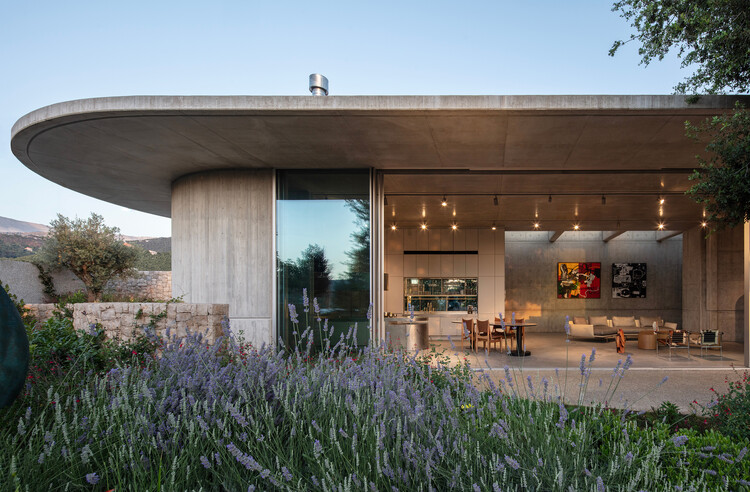
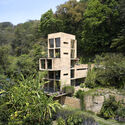
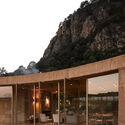
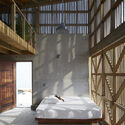
Set within the mountainous landscape of Zabbougha, Lebanon, Capsule Retreat by EAST Architecture Studio is shaped through the process of its making. The project unfolds through material decisions, on-site adjustments, and evolving conditions, allowing construction itself to guide its spatial logic.
The construction process played a central role in defining the project. Built during a period marked by economic collapse, material shortages, and ongoing disruption in Lebanon, the house developed through continuous adaptation. With no general contractor, the architects took on an expanded role, coordinating craftsmen, testing ideas directly on site, and responding to changing constraints. In this context, sociopolitical conditions became not only a challenge but a catalyst for rethinking design. "We were constantly testing ideas on site", say the architects and founders of EAST Architecture Studio, Charles Kettaneh and Nicolas Fayad, "tailoring these decisions economically while exploring what local craft could offer."
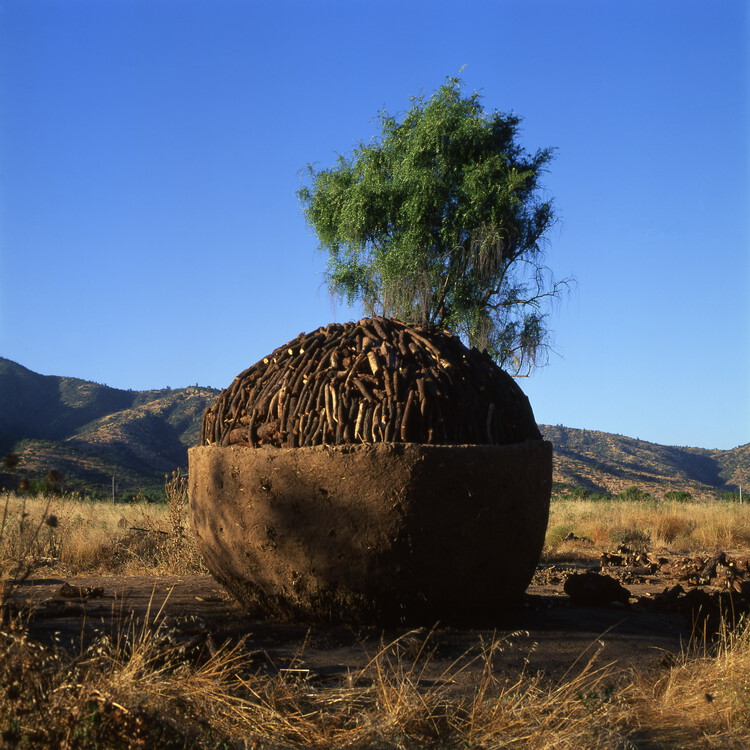
Carbonero House (1998). Melipilla, Chile. Image Courtesy of Smiljan Radić
Chilean architect Smiljan Radić Clarke has developed a body of work that resists easy categorization. His buildings often seem both ancient and provisional, carrying a monumental presence while retaining an unexpected sense of fragility. Stone, concrete, timber, fabric, and fiberglass are combined in unexpected ways, producing architectures that hover between permanence and ephemerality. Rather than pursuing a stable formal language, the 2026 Pritzker laureate approaches architecture as an open field of experimentation, where material behavior and structural perception are constantly tested.
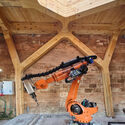
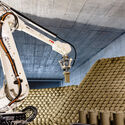
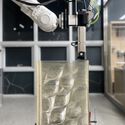
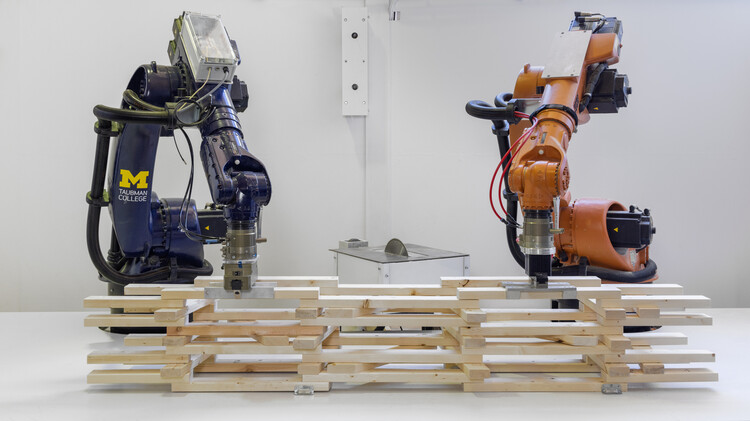
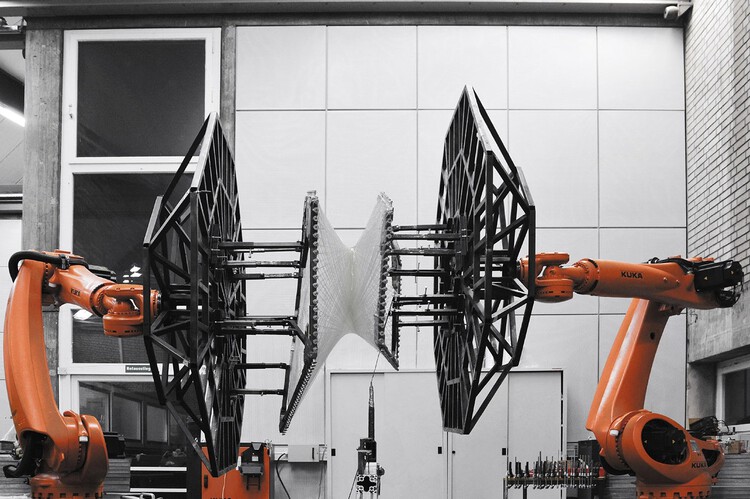
By exploring the art of robotics in construction, advances in architectural technologies are increasingly shaping multiple aspects of human life. From robotic arms and drones to robots that move across large surfaces and even 3D printing robots, their use in construction is accelerating research and the development of new working methods, as well as structural and material experimentation. In collaboration with multiple disciplines and spanning various facets of architecture, the role of robots in the contemporary landscape demonstrates a potential that extends beyond merely automating processes or reducing construction times and costs. This raises the question: Are we building architecture to serve technology, or technology to serve architecture?
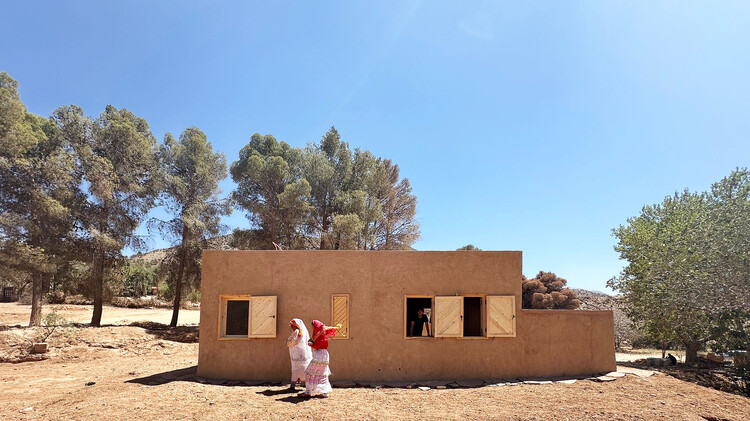
In an age so obsessed with skincare and appearances, few architects are truly interested in the intestines of our buildings. With a practice rooted in contextual awareness and technical pragmatism, sensitive to the needs of the people it serves and to resource limitations, Moroccan architect Aziza Chaouni focuses on the hidden systems that allow architecture to be. Over the past two decades, she has been working on projects across different geographies, particularly in the Saharan region, actively engaging with its communities and heritage.
Currently leading the South–North (SoNo) Lab for Sustainable Construction and Conservation at EPFL in Lausanne, Switzerland, Chaouni brings to the academic realm her architectural expertise in operating under pressing constraints, advocating for reciprocal collaboration between the Global South and the Global North. ArchDaily had the opportunity to speak with Aziza about her experience in Africa and how it can foster more sustainable ways of designing buildings for the future of our cities.
Architects can shape detailed buildings in minutes with Forma Building Design to easily test how different options work on their site.
For many architects, schematic design is defined by a familiar tension. It is the phase of open-ended exploration—where multiple ideas are tested, challenged, and refined for clients to define a project's direction. In essence, it's where the design magic happens. The challenge is rarely a lack of ideas, but the effort required to test and evaluate those ideas properly under time-, resource-, and budget constraints. It is an especially acute challenge for architects as early design work must balance creativity with client needs and commercial feasibility.
Which materials have taken center stage in the architectural discourse of 2025? Which projects have rediscovered new construction practices and methods through material innovation? While the future of building materials still appears uncertain, year after year, experimentation and research continue to reveal diverse practices, initiatives, and efforts dedicated to understanding their value and responsibility within the built environment. From agricultural waste that reduces carbon footprints to recycled plastics given new life, and living materials that engage with emerging technologies while reconnecting with nature, 2025 has highlighted and strengthened the role of architects as mediators between materials, disciplines, knowledge, and interests from diverse origins.
This past year marked a period of introspection for architecture. As 2025 unfolded, the discipline, confronted with evolving environmental and social realities, entered a broader turning point in how it understands its role and how users engage with it. Throughout the year, exhibitions shifted focus away from buildings as isolated objects toward a broader understanding of relationships between ecology, equity, everyday life, and collective imaginaries. Across institutions and cities, they operated less as showcases and more as discursive platforms: places where architecture was not only presented, but also imagined, questioned, and collectively redefined.
While exhibitions have long functioned as sites of discourse, politics, and community, this role became more explicit in 2025. As Carlo Ratti noted in an ArchDaily interview during the pre-opening of the Venice Architecture Biennale 2025, exhibitions today can "hybridize the way that people come together," an ambition that echoed across cities and institutions as exhibitions evolved into spaces for debate, experimentation, and collective reflection. Exhibitions are places where architects and designers meet, where conversations unfold openly with the public, and where ideas emerge through spontaneous exchanges among passersby. Exhibitions became spaces where architectural discourse extended beyond professional circles, opening conversations to broader publics through everyday encounters, shared experiences, and informal exchanges.
Blending vernacular techniques with contemporary experimentation, Mexico's architectural landscape is shaped by a continuous dialogue between tradition, materiality, and modernity. As the fifth most biodiverse country in the world, Mexican architecture seeks to respond to its vast range of natural environments, climates, and cultural traditions, all within a territory marked by striking contrasts. Reflecting a visible duality, it can embody both exclusivity and act as a catalyst for social transformation.
In response to today's environmental, political, economic, and social challenges, material experimentation in architecture invites us to recognize the importance of researching and analyzing the properties of construction elements, and to understand the role of spatial design and its immediate surroundings. While various textiles, plastics, and even waste from different sources are being recycled and given a new life, the debate around the use of salt as a building material encourages the development of more sustainable practices to reduce the industry’s impact on the environment, as well as to explore the renewed life of discarded minerals and mining waste for implementation in architecture.
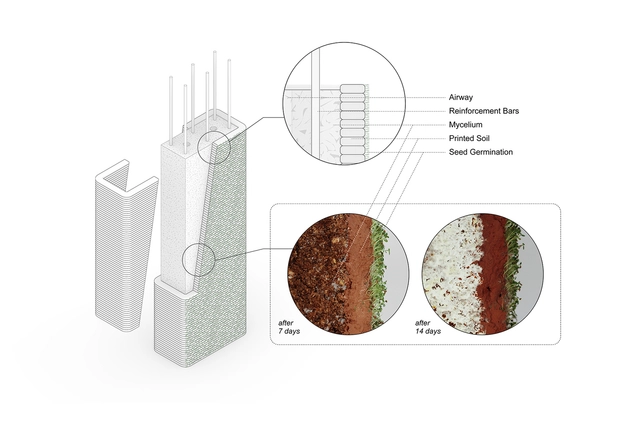
The schematic diagram to develop a wall section based on eco-resilient tectonics.
It is commonly accepted that the appearance of moss or vegetation on the surface of a building is a sign of neglect, deterioration, or poor maintenance. And this assumption is not entirely unfounded: small cracks in traditional materials can lead to water infiltration, thermal bridging, or even structural pathologies. But what if this organic presence were not a flaw, but the result of coevolution between architecture and the environment? This reversal of perspective was masterfully anticipated by Lina Bo Bardi in the Casa Cirell, in São Paulo, where mosses, orchids, and spontaneous vegetation were part of the architectural intent from the initial sketches. The use of raw stone cladding and exposed surfaces allowed the house to blend into the terrain. More recent projects have further deepened this relationship between built matter and plant life, such as Patrick Blanc's vertical gardens and Stefano Boeri's Bosco Verticale, which transform façades into vertical ecosystems, redefining the architectural envelope as a living infrastructure capable of filtering pollutants, absorbing heat, and fostering biodiversity.
Søren Pihlmann is the curator of the Danish Pavilion at the 2025 Venice Architecture Biennale. The exhibition, commissioned by the Danish Architecture Center, is titled Build of Site, and focuses on exploring sustainable architectural practices through the lens of reuse and resourcefulness. Pihlmann's proposal transforms the existing Danish Pavilion, located within a historic building complex in the Biennale's Giardini, into an active exhibition space for material experimentation. The installation highlights techniques that incorporate recycled and bio-based elements. The Pavilion offers visitors the opportunity to observe ongoing experimental processes, witnessing how building resources are creatively reimagined for new uses. In this on-site interview, ArchDaily editors spoke with the curator about the ideas behind the project and the challenges its execution represents.
Maria Lisogorskaya and Kaye Song of Assemble: Atelier LUMA 2023 Lot 8 Le Magasin Electrique Photo @ Joseph Halligan. Image Courtesy of Bauhaus Earth
Maria Lisogorskaya and Kaye Song from the London-based collective Assemble, along with Lviv-based architects Anna Pomazanna and Mykhailo Shevchenko, have been announced as the 2025 Experimental Fellows at Bauhaus Earth. Selected from 120 submissions, their projects are set to explore earth as a material in contemporary architecture. The annual Bauhaus Earth Fellowship program was established in 2022 by architect Prof. Regine Leibinger. It aims to support diverse projects that explore new modes of practice across various geographies, that can contribute to ecological and social resilience. Fellows receive financial support, mentorship, and access to a network encouraging collaboration among architects, manufacturers, and local stakeholders.
Prototyping is an essential element in sectors such as automotive design and technology, where iterative development enables testing, refining, and innovating. It involves creating initial models or early versions to validate concepts and fine-tune solutions before moving on to final production. This stage is crucial for identifying flaws, optimizing designs, and reducing risks, saving time and resources in the final implementation. In architecture, however, prototyping remains an underused tool. Despite the unique challenges inherent in architectural projects—whether programmatic, climatic, or related to site conditions—the benefits of prototyping can be profound. It offers architects the opportunity to experiment with new materials, validate construction methods, and test spatial configurations in a tangible, measurable way. As a result, it not only reduces uncertainties in the creative process but also drives bold and efficient solutions, fostering a more robust balance between aesthetics, functionality, and feasibility.