1. ArchDaily
  2. Engineering

Engineering: The Latest Architecture and News

Making a Characterful Entrance: The Architectural Impact of Wooden Bi-Folding Doors

 | Sponsored Content

Bi-folding doors flood a room with light, offering the spatial flexibility to establish a dialogue with the surroundings. The Woodline series by Solarlux integrates manufacturing quality and technical expertise with architectural freedom, providing transparent facade solutions for versatile, sustainable architecture. The natural surfaces further enhance the building envelope with a distinct tactile quality.

Mass Timber: Materials, Design, and Construction

The most comprehensive reference on building with mass timber, extensively covering its sustainability, materials, building conceptualization, structural design and construction processes

Architecture at Zero 2026

Architecture at Zero is a design competition for decarbonization, equity, and resilience, open to students and professionals worldwide. It serves to engage the fields of architecture, design, engineering and planning in the pursuit of sustainable design.

Bridging Disciplines, Connecting Cities: The Interdisciplinary Approach to Urban Mobility in Portugal

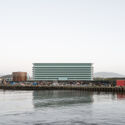
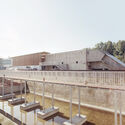
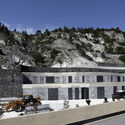
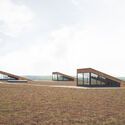
An architecture degree may provide a vast curriculum, but many of the skills needed for a project lie outside the discipline. This is especially true for urban-scale projects. They demand expertise in areas like traffic studies, structural calculations, landscape design, and technical installation forecasting. These are often seen as "complementary" but are, in fact, fundamental to the overall design.

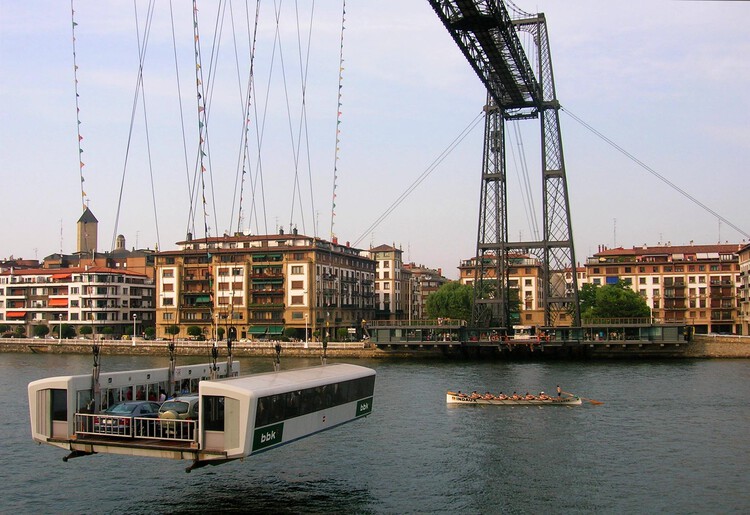
In a country like Portugal, with a relatively small but geographically diverse territory, the challenge of connecting different parts of the territory – whether to cross a river or link one level of a city to another – is a constant one. Its largest metropolitan areas, such as Lisbon and Porto, share a rugged geography of steep valleys and hills. These features led to the development of elevators and funiculars, like the Santa Justa Lift and the Bica Funicular in Lisbon, and the Guindais Funicular in Porto. Today, besides improving urban mobility, they have become tourist landmarks.

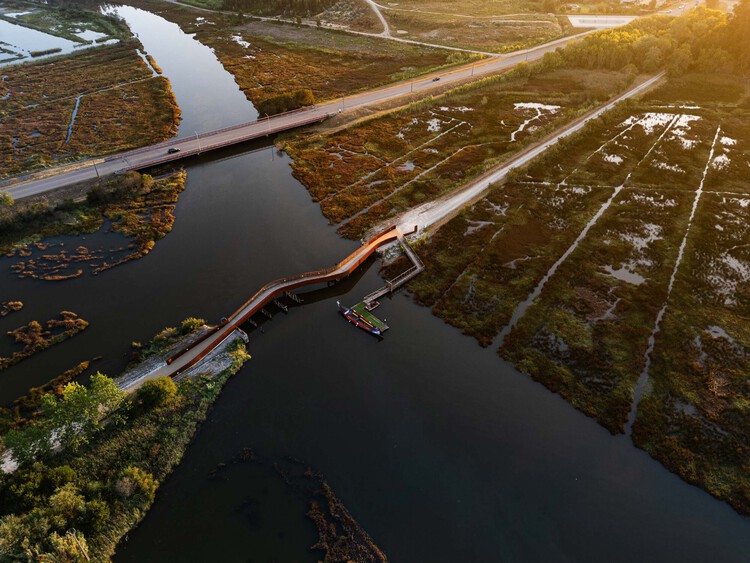
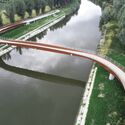
Bridging Disciplines, Connecting Cities: The Interdisciplinary Approach to Urban Mobility in Portugal - Image 1 of 4Bridging Disciplines, Connecting Cities: The Interdisciplinary Approach to Urban Mobility in Portugal - Image 2 of 4Bridging Disciplines, Connecting Cities: The Interdisciplinary Approach to Urban Mobility in Portugal - Image 3 of 4Bridging Disciplines, Connecting Cities: The Interdisciplinary Approach to Urban Mobility in Portugal - Image 4 of 4Bridging Disciplines, Connecting Cities: The Interdisciplinary Approach to Urban Mobility in Portugal - More Images+ 4

Where’s the Talent? Tackling the AEC Skills Shortage

 | Sponsored Content

Finding the right job—or the right candidate—within the Architecture, Engineering, and Construction (AEC) industry can be a real challenge. As the sector evolves, professionals and companies alike are looking for more effective ways to connect, collaborate, and grow. AECO Space is a job and networking platform tailored specifically for AEC professionals. It offers a space for both employers and talent to engage in a more efficient, industry-specific hiring and networking process.

Final Call: Seize the Opportunity to Join Sustainability's Leading Changemakers

 | Sponsored Content

The clock is ticking for architects, urban planners, and engineers to submit their groundbreaking projects to the Holcim Foundation Awards. With the entry deadline of February 11, 2025, at 14:00 hrs UTC, this is the final opportunity to gain global recognition and compete for a share of the USD 1 million prize pool. The awards ceremony will take place at the Venice Forum on November 20, 2025 and winners are invited to attend.

Heatherwick Studio Reveals Expansive Glass Canopy for Olympia's Regeneration Project in London

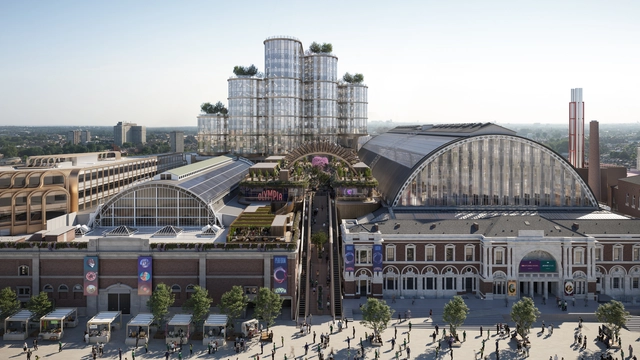
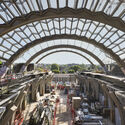
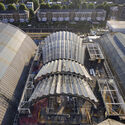
Heatherwick Studio has unveiled the design of a new large-scale glass canopy to become one of the main attractions of Olympia, an ambitious regeneration project aimed at transforming the 138-year-old exhibition halls in London into a global culture and entertainment destination. Originally designed by Sir Henry Edward Coe, Olympia is set to offer visitors a wide range of venues and activities, including two hotels, over 30 restaurants, bars and eateries, a 4,400-capacity live music hall, a theater, and spaces for the Wetherby Performing Arts School, in addition to over 2.5 acres of accessible public spaces. The revival project is co-designed by Heatherwick Studio and SPPARC.

Heatherwick Studio Reveals Expansive Glass Canopy for Olympia's Regeneration Project in London - Image 1 of 4Heatherwick Studio Reveals Expansive Glass Canopy for Olympia's Regeneration Project in London - Image 2 of 4Heatherwick Studio Reveals Expansive Glass Canopy for Olympia's Regeneration Project in London - Image 3 of 4Heatherwick Studio Reveals Expansive Glass Canopy for Olympia's Regeneration Project in London - Image 4 of 4Heatherwick Studio Reveals Expansive Glass Canopy for Olympia's Regeneration Project in London - More Images+ 1

Carlo Ratti Associati and Engineer Michel Virlogeux Propose a Replacement for the Collapsed Baltimore Bridge

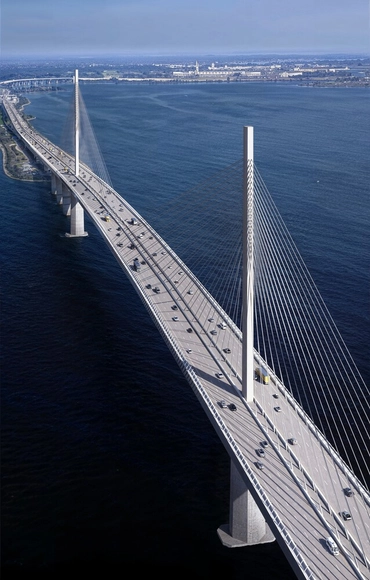
Following the collapse of the Francis Scott Key Bridge in Baltimore, Maryland, construction group WeBuild, in collaboration with design office CRA-Carlo Ratti Associati and engineer Michel Virlogeux, has revealed an updated design for a replacement bridge. The new cable-stayed design aims to redefine the entrance to the Baltimore Harbor and offer an improved version of this symbol of the city.

Carlo Ratti Associati and Engineer Michel Virlogeux Propose a Replacement for the Collapsed Baltimore Bridge - Image 1 of 4Carlo Ratti Associati and Engineer Michel Virlogeux Propose a Replacement for the Collapsed Baltimore Bridge - Image 2 of 4Carlo Ratti Associati and Engineer Michel Virlogeux Propose a Replacement for the Collapsed Baltimore Bridge - Image 3 of 4Carlo Ratti Associati and Engineer Michel Virlogeux Propose a Replacement for the Collapsed Baltimore Bridge - Image 4 of 4Carlo Ratti Associati and Engineer Michel Virlogeux Propose a Replacement for the Collapsed Baltimore Bridge - More Images+ 1

A Unique Approach to Creating Public Spaces: In Conversation with Alejandro Haiek

Subscriber Access | 

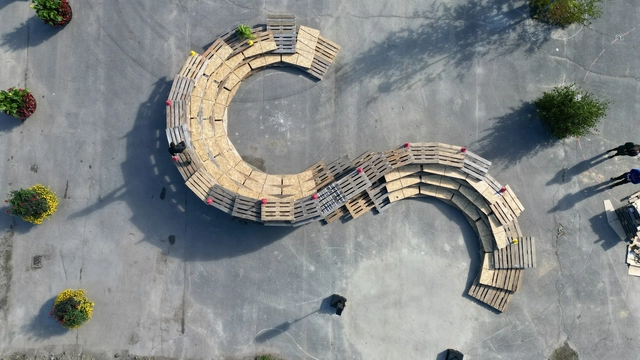
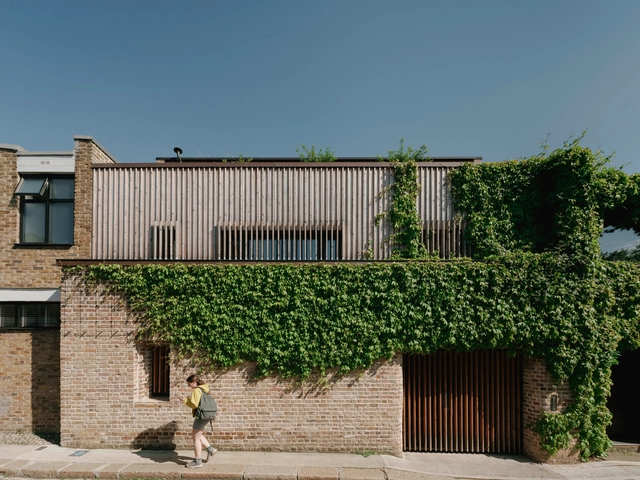
Architecture practices usually start their design process with a client, who provides a program and a site. Alejandro Haiek, founder of The Public Machinery, approaches things differently. The Public Machinery describes itself as a network of architects and designers working collectively, actively observing, imagining, and proposing public urban interventions themselves. Their proposals are at the intersection of art, architecture, and engineering and weave community engagement, ecology, and new technologies into innovative forms of social infrastructure. They secure funding through research and public grants, enabling them to create public spaces that defy expectations in both their design process and in the form their projects take.

A Unique Approach to Creating Public Spaces: In Conversation with Alejandro Haiek  - Image 1 of 4A Unique Approach to Creating Public Spaces: In Conversation with Alejandro Haiek  - Image 2 of 4A Unique Approach to Creating Public Spaces: In Conversation with Alejandro Haiek  - Image 3 of 4A Unique Approach to Creating Public Spaces: In Conversation with Alejandro Haiek  - Image 4 of 4A Unique Approach to Creating Public Spaces: In Conversation with Alejandro Haiek  - More Images+ 5

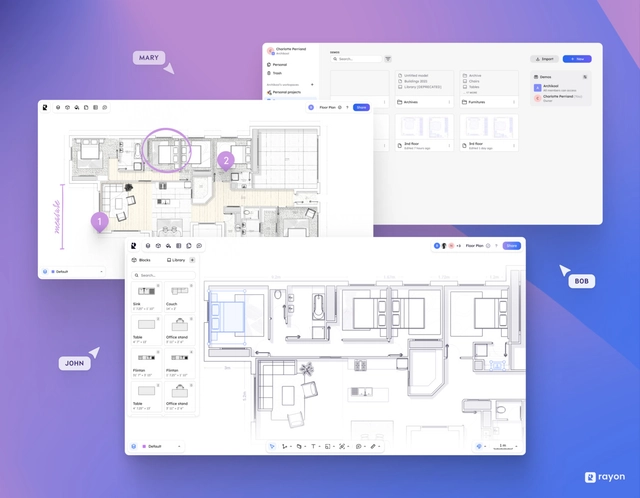
Rayon: A Design Software Revolutionizing Collaboration for Efficient Project Development

Rayon, an innovative online design tool that aims to create a new collaborative approach to developing "mundane buildings" within the city, has been selected as part of ArchDaily's 2023 Best New Practices. Founded in 2021 by Bastien Dolla and Stanislas Chaillou, it is a collaborative design software that brings together professionals in the architecture, engineering, and construction (AEC) industries. The software company believes that there is a “culture of the ordinary” in architecture. This culture represents an ecosystem of buildings that may seem unremarkable or aren't impressive landmarks in the city. However, these buildings and their construction professionals make up 90% of the urban fabric and contribute to the design culture that collectively gives identity to the city. The founders believe previous software generations have neglected this culture and propose Rayon as a novel tool to fill that gap by enhancing collaboration and user ergonomics.

Max Fordham: Engineering Ideas, Engineering Change

Max Fordham is pleased to announce a special exhibition celebrating the life and work of its founder, Max.

Will the Metaverse Be the End of Engineering?

Subscriber Access | 

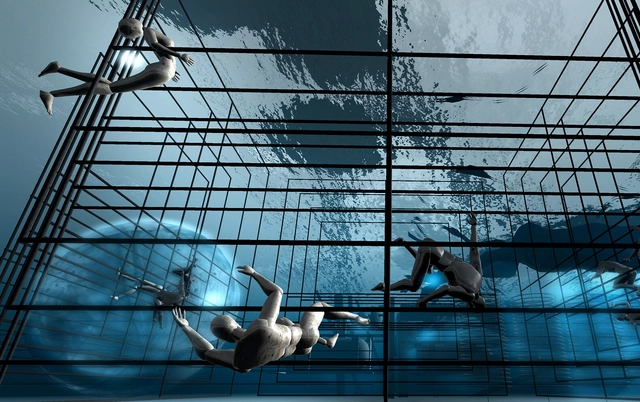
Imagine the daily life of an architect today. There is a demand for a new project, a blank canvas full of countless possibilities. The creative delight is about to be started. The main constraints are established: brief, analysis of the terrain and surroundings, solar orientation and prevailing winds. The first sketches are created, always combined with structural knowledge, even if basic, fundamentally determining for those who live in the gravitational acceleration of 9.807 m/s².

But what if only the brief remains among these basic premises?

Will the Metaverse Be the End of Engineering? - Image 1 of 4Will the Metaverse Be the End of Engineering? - Image 2 of 4Will the Metaverse Be the End of Engineering? - Image 3 of 4Will the Metaverse Be the End of Engineering? - Image 4 of 4Will the Metaverse Be the End of Engineering? - More Images+ 4

Overcoming Design Challenges with Technology: Museum of the Future in Dubai

Subscriber Access | 
Overcoming Design Challenges with Technology: Museum of the Future in Dubai  - Featured Image
Courtesy of Killa Design

Standing at 78 meters tall, the Museum of the Future (MOTF) is far from reaching Dubai’s famous skyline, which features skyscrapers like the unparalleled Burj Khalifa – the world’s tallest tower. However, with its bold shape and striking façade illuminated by more than 14,000 meters of Arabic calligraphy, it certainly succeeds in taking its place among the city’s most iconic buildings. The award-winning project by Killa Design and Buro Happold, described by many as ‘the most beautiful building in the world’, opened in February of 2022 in Dubai’s Financial District. In a total built up area of 30,000 sqm, it accommodates exhibition spaces for innovative ideologies, services, and products, as well as theater spaces, a laboratory, and a research center.

Cities of the Future: Julia Watson on Nature-based Technologies and Radical Materials

Subscriber Access | 
Cities of the Future: Julia Watson on Nature-based Technologies and Radical Materials - Featured Image
Las Islas Flotantes is a floating island system on Lake Titicaca in Peru inhabited by the Uros, who build their entire civilization from the locally grown totora reed. Image © Enrique Castro-Mendivil

Looking ahead to the future of our built environment, a one-size-fits-all approach simply won’t do. Issues like rising sea levels, temperatures, and water scarcity in urban communities need localized solutions that take into account questions of sustainability, culture, and public health. Having investigated vernacular infrastructure across indigenous communities for her book Lo-TEK. Design by Radical Indigenism, designer Julia Watson is an expert in local, nature-based technologies that are inherently adaptable and resilient. We talk to her about the future of our cities, building materials, and her latest project for Our Time on Earth – a five year, world-touring exhibition that just opened at London's Barbican Centre to investigate how radical, collaborative ideas for the way we live can get us to a much improved place by 2040.

Cities of the Future: Julia Watson on Nature-based Technologies and Radical Materials - Image 1 of 4Cities of the Future: Julia Watson on Nature-based Technologies and Radical Materials - Image 2 of 4Cities of the Future: Julia Watson on Nature-based Technologies and Radical Materials - Image 3 of 4Cities of the Future: Julia Watson on Nature-based Technologies and Radical Materials - Image 4 of 4Cities of the Future: Julia Watson on Nature-based Technologies and Radical Materials - More Images+ 8

Architecture and Engineering Side by Side: the Case of Urban Bridges

Subscriber Access | 
Architecture and Engineering Side by Side: the Case of Urban Bridges - Films & Architecture
Courtesy of Javier Haddad

The technical needs of the construction of bridges many times guide the development of the design itself. However, architecture is never put aside, rather the opposite. The aesthetics of bridges that we collect in this article are the result of an intense, demanding, and stimulating dialogue between architecture and engineering, where the search for solutions only ends when both disciplines are fully satisfied.

Architecture and Engineering Side by Side: the Case of Urban Bridges - Films & ArchitectureArchitecture and Engineering Side by Side: the Case of Urban Bridges - Films & ArchitectureArchitecture and Engineering Side by Side: the Case of Urban Bridges - Films & ArchitectureArchitecture and Engineering Side by Side: the Case of Urban Bridges - Films & ArchitectureArchitecture and Engineering Side by Side: the Case of Urban Bridges - More Images+ 21

"Nature and Structure Connect to Transform Our Landscapes and Even Our Climate": Marc Mimram on His New Bridge in Austria

Subscriber Access | 

Whether figuratively or in an urban context, bridges are a strong symbol and often become iconic projects in cities. Building bridges can mean creating connections, new opportunities. But they are also fundamental pieces of infrastructure that solve specific issues in an urban context. As these involve highly technical equipment, with complex constructions and overwhelming bold structural requirements, they require projects that do not need full integration between architecture and engineering and, in many contexts, is a type of projects that architects are not so involved with. Marc Mimram Architecture & Engineering is a Paris-based office comprised of an architecture agency and a structural design office. In its project portfolio, there are several bridges, as well as various other project typologies. We spoke with Marc Mimram about his latest project in Austria, the bridge at Linz, photographed by Erieta Attali.

Materialising a Vision: Structural Engineering and Architecture

Recent years have seen an increased acknowledgement of the collective endeavour that is architecture and a better valuing of the different professions that participate in the design process. Within every extraordinary building, structural engineering plays an essential role in delivering the architectural vision. The article highlights the past and present contributions of engineering to the built environment, personalities that have stood in the shadow of architects delivering their design intent, and the collaboration between engineers and architects today.

Materialising a Vision: Structural Engineering and Architecture - Image 1 of 4Materialising a Vision: Structural Engineering and Architecture - Image 2 of 4Materialising a Vision: Structural Engineering and Architecture - Image 3 of 4Materialising a Vision: Structural Engineering and Architecture - Image 4 of 4Materialising a Vision: Structural Engineering and Architecture - More Images+ 3

Winners of 2021 Solar Decathlon Design and Build Challenges Construct Houses for a Cleaner Future

The United States Secretary of Energy Jennifer M. Granholm announced the winners of the 2021 U.S. Department of Energy (DOE) Solar Decathlon, a competition that challenges architecture and engineering college students from around the world to design and construct high-performance buildings powered by renewable energy. 72 competing teams hailed from 12 countries and designed energy-efficient residential and commercial spaces, nine of which were constructed and presented in the Solar Decathlon Virtual Village on the National Mall, a first of its kind, in Washington, D.C.

Winners of 2021 Solar Decathlon Design and Build Challenges Construct Houses for a Cleaner Future  - Image 1 of 4Winners of 2021 Solar Decathlon Design and Build Challenges Construct Houses for a Cleaner Future  - Image 2 of 4Winners of 2021 Solar Decathlon Design and Build Challenges Construct Houses for a Cleaner Future  - Image 3 of 4Winners of 2021 Solar Decathlon Design and Build Challenges Construct Houses for a Cleaner Future  - Image 4 of 4Winners of 2021 Solar Decathlon Design and Build Challenges Construct Houses for a Cleaner Future  - More Images+ 66