1. ArchDaily
  2. Doshi

Doshi: The Latest Architecture and News

Paying Tribute to the Influential Architects We Have Lost in 2023

As we step into the new year, we take a moment to reflect on the lasting impact of celebrated architects, designers, and curators who passed away in 2023. This past year witnessed the departure of influential figures who, through their talent and dedication, left an indelible mark on the built environment. Some embarked on their careers with bold gestures that reshaped architectural paradigms, while others worked quietly, placing a profound focus on the human experience or the invisible figures of out profession.

This reflective pause allows us to acknowledge the enduring legacy of personalities such as India's first Pritzker Prize Laureate, Balkrishna Doshi, the tireless women’s rights advocate Beverly Willis, the first curator of the Venice Architecture Biennale, Paolo Portoghesi, writer, critic and curator Jean-Louis Cohen, and many more.


Paying Tribute to the Influential Architects We Have Lost in 2023 - Image 5 of 4Paying Tribute to the Influential Architects We Have Lost in 2023 - Image 18 of 4Paying Tribute to the Influential Architects We Have Lost in 2023 - Image 43 of 4Paying Tribute to the Influential Architects We Have Lost in 2023 - Image 23 of 4Paying Tribute to the Influential Architects We Have Lost in 2023 - More Images+ 49

The Modernist Laboratory of the Future: Exploring Le Corbusier and Louis Kahn’s Architecture in India

At the beginning of 2022, curator Lesley Lokko announced the title of the 18th International Architecture Exhibition – La Biennale di Venezia: “The Laboratory of the Future.” The theme’s intention is to highlight the African continent as the protagonist of the future, a place “where all these questions of equity, race, hope, and fear converge and coalesce,” in the words of the curator. As the fastest urbanizing continent, Africa is viewed as a land of potential, but also of challenges, where matters of racial equity and climate justice are played out with a significant impact on the world at large.

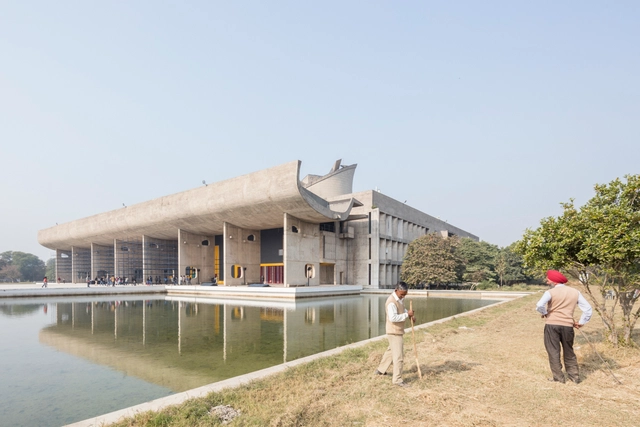
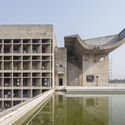
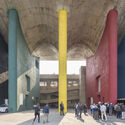
Yet in the late 1950s, another laboratory of the future was taking shape, one where the novel ideas of Modernism produced grand monumental designs and complete urban structures at an unprecedented scale: India. In the search for a modern and democratic image, the newly independent country welcomed Western architectural masters such as Le Corbusier and Louis I. Kahn and entrusted them with a wide range of commissions, from the urban layout of Chandigarh and its major governmental buildings to universities, museums, and smaller scale domestic projects. The result is a mixture of cultures, influencing one another to unexpected results.

The Modernist Laboratory of the Future: Exploring Le Corbusier and Louis Kahn’s Architecture in India - Image 1 of 4The Modernist Laboratory of the Future: Exploring Le Corbusier and Louis Kahn’s Architecture in India - Image 2 of 4The Modernist Laboratory of the Future: Exploring Le Corbusier and Louis Kahn’s Architecture in India - Image 3 of 4The Modernist Laboratory of the Future: Exploring Le Corbusier and Louis Kahn’s Architecture in India - Image 4 of 4The Modernist Laboratory of the Future: Exploring Le Corbusier and Louis Kahn’s Architecture in India - More Images+ 10

Architecture as Celebration: The Philosophies of B.V. Doshi

Subscriber Access | 

“I am not an architect,” he says with a sparkle in his eyes, “I am merely a person seeking out their destiny.” To the late pioneer of Indian modernism, Balkrishna Vithaldas Doshi, architecture was a practice of self-discovery. The veteran’s stellar works of poetic functionality resulted from a humanist philosophy bearing the influence of modernist principles, Mahatma Gandhi, and Indian spiritual texts. Doshi believed that architecture was synonymous with life - a vehicle for constant celebration; a medium for heightened experiences. His greatest contribution to the architecture community was his powerful words of wisdom that echo the timelessness of his structures.

Architecture as Celebration: The Philosophies of B.V. Doshi  - Image 8 of 4Architecture as Celebration: The Philosophies of B.V. Doshi  - Image 1 of 4Architecture as Celebration: The Philosophies of B.V. Doshi  - Image 6 of 4Architecture as Celebration: The Philosophies of B.V. Doshi  - Image 7 of 4Architecture as Celebration: The Philosophies of B.V. Doshi  - More Images+ 4

Balkrishna Doshi, 2018 Pritzker Prize Winner, Passes Away at 95

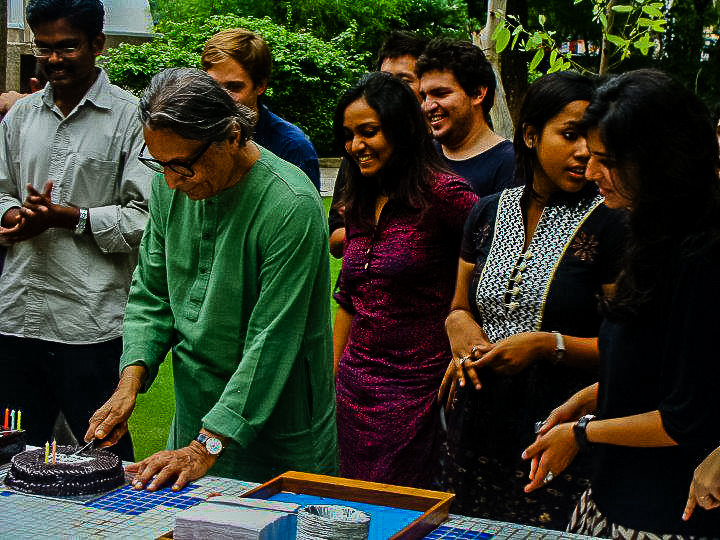
Balkrishna Vithaldas Doshi, master architect, urban planner, educator, 2018 Pritzker Prize Winner, and 2022 Riba’s Gold Medal has passed away at 95, in Ahmedabad, India on Tuesday the 24th of January 2023, as reported by several Indian outlets and Architectural Digest India on their Instagram page. One of the most renowned Indian architects that shaped the architecture of India and its adjacent regions, Doshi, who was inspired greatly by the works of Le Corbusier and Louis Kahn, has “combined pioneering modernism with vernacular”. Known especially for his urban planning and social housing projects, as well as his academic work as a visiting professor at various universities worldwide, Balkrishna Doshi has designed, over his 70-year career, some of the most iconic buildings in India.

Balkrishna Doshi, 2018 Pritzker Prize Winner, Passes Away at 95 - Image 1 of 4Balkrishna Doshi, 2018 Pritzker Prize Winner, Passes Away at 95 - Image 2 of 4Balkrishna Doshi, 2018 Pritzker Prize Winner, Passes Away at 95 - Image 3 of 4Balkrishna Doshi, 2018 Pritzker Prize Winner, Passes Away at 95 - Image 4 of 4Balkrishna Doshi, 2018 Pritzker Prize Winner, Passes Away at 95 - More Images+ 15

Mexican Architects Tell us Their Experience Working With 2018 Pritzker Prize Winner, B.V. Doshi

Earlier this year, the jury of the Pritzker Prize chose the Indian architect Balkrishna Doshi, also known as B.V. Doshi, or Doshi, as the winner of the 2018 Pritzker Prize. In recent weeks a lot of information has come to light about the winning architect's practice who, as you probably already know, was an apprentice and collaborator of Le Corbusier and Louis Kahn. Being the first Indian architect to receive Architecture's most prestigious award, Doshi has had an active career of more than 70 years, with a poetic architectural style that is based on oriental cultural influences, creating a production that "covers all socioeconomic classes, in a wide spectrum of typologies, since the 1950s," according to the jury's record.

But, can you imagine what it's like to work with Doshi in his firm? We talked with four alumni from the School of Architecture, Art and Design from Tecnológico de Monterrey, who some years ago had the opportunity to travel to India to work directly with Doshi through a professional internship program promoted by the same university. Arturo Acosta, Jeimi Cuendulain, Airam Moreno and Giovanni Llamas tell us about their experience working in the firm, as well as anecdotes that marked them both professionally and personally that helped them see and experience architecture beyond the obvious. Here are their testimonies below:

Mexican Architects Tell us Their Experience Working With 2018 Pritzker Prize Winner, B.V. Doshi - Image 1 of 4Mexican Architects Tell us Their Experience Working With 2018 Pritzker Prize Winner, B.V. Doshi - Image 2 of 4Mexican Architects Tell us Their Experience Working With 2018 Pritzker Prize Winner, B.V. Doshi - Image 3 of 4Mexican Architects Tell us Their Experience Working With 2018 Pritzker Prize Winner, B.V. Doshi - Image 4 of 4Mexican Architects Tell us Their Experience Working With 2018 Pritzker Prize Winner, B.V. Doshi - More Images+ 64

“Doshi”: Documentary Explores the Pritzker Prize-Winning Career of A Modern Indian Architect

Subscriber Access | 

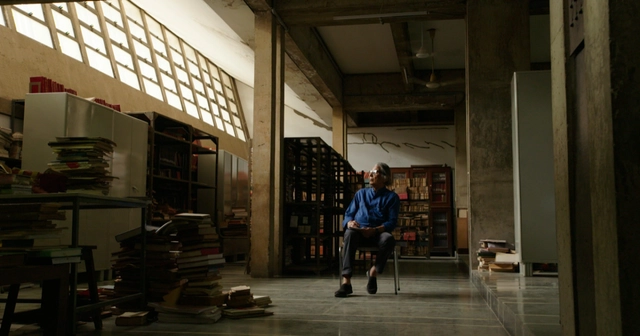
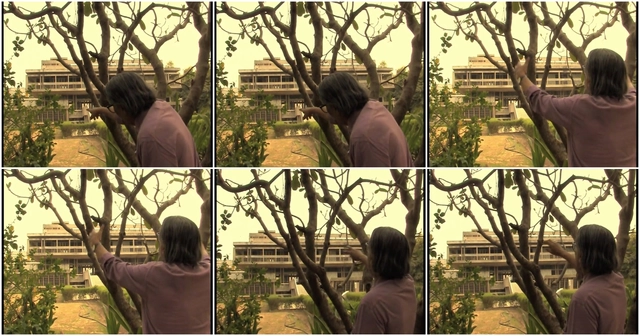
Balkrishna Doshi, despite his vast number of completed projects, is a little-known name in the Western world. Directed by Premjit Ramachandran, the documentary "Doshi" allows the viewer to appreciate the vision of this important Indian architect, probing his thoughts while getting to know a number of his projects. Filmed in a frank style of conversation, the documentary reveals an original and creative human being who, even in old age, remains passionate about architecture as well as life and learning.

The film becomes a roundtable with Doshi, his alumni, his contemporaries and even family members, all within the context of his architecture. The camera follows its protagonist through spaces designed by him, while he narrates, recalls and explains his processes of creation. It also reveals how he makes his philosophy an intrinsic part of his own life.