Christian Weber, a 20-plus year veteran of the Burning Man festival has learned a few tricks on the Playa. Shelter from the harsh Black Rock Desert winds, heat, dust and cold nights are attributes of an experienced camp. “Every year we unload our camp out of the container and use our container as our kitchen. It literally has fold-down tables [and] air conditioning… and when we’re all done, we throw it back in the container and it’s ready to go for next year.”
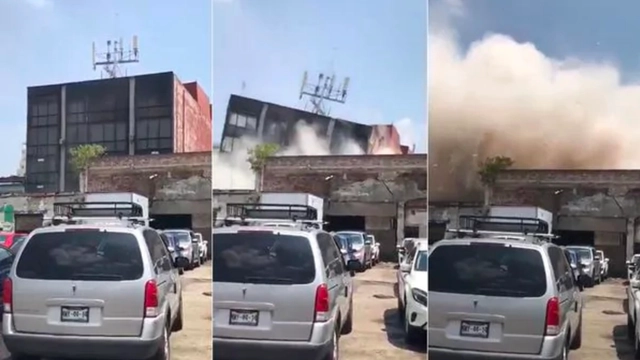
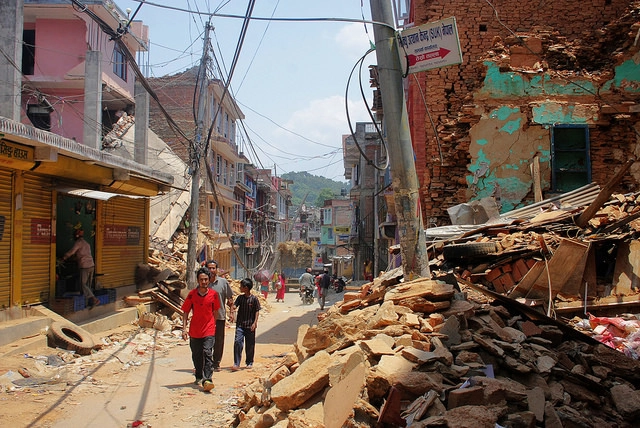
The destruction of a building in Mexico following the 2017 earthquake. Image via Infobae
Following the devastating earthquake measuring 7.1 in magnitude that struck Mexico yesterday at 13:14 local time, many—over 200 people at the time of writing—are feared either dead or trapped in collapsed buildings or unsafe structures. While rescue efforts continue and information surrounding the scope of devastation is preliminary, schools are closed indefinitely and major companies and organizations have requested their employees not to work.
The death toll continues to rise while ArchDaily México, which is located in Mexico City, reports wide-reaching destruction of the built fabric of the capital. Footage captured by terrified residents show the final moments of buildings—many taller than four stories—that were reduced to dust and debris in seconds.
https://www.archdaily.com/880010/many-feared-dead-or-trapped-after-earthquake-topples-buildings-throughout-mexicoAD Editorial Team
Costa Rican architect César Oreamuno has designed a modular capsule that accommodates to the basic needs of a community after a state of emergency or disaster. The units are adaptable and easily assembled in order to account for a variety of situations and respond to a series of unique functions, although the main theme of the project is focused on improving the quality of attention towards the basic needs of crisis victims, as well as encouraging the development of the community.
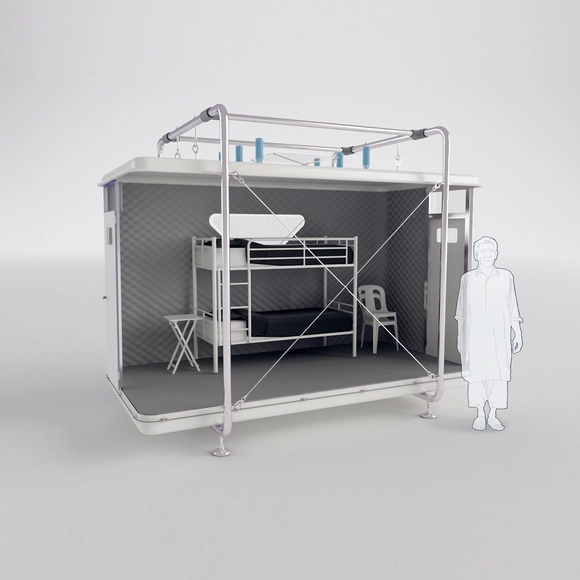
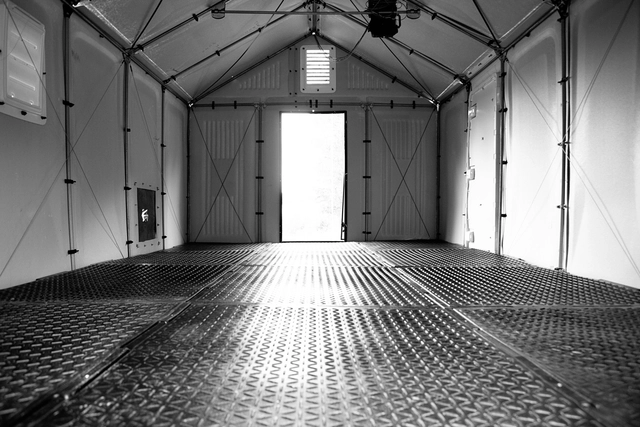
Exposed Interior View. Image Courtesy of Designnobis
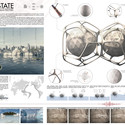
Addressing the displacement of people by natural disasters, Designnobis has created Tentative – a compact, all-in-one, deployable emergency shelter. Designed by Designnobis founder, Hakan Gürsu, Tentative was honored with a Silver Award in the Social Design category of the A' Design Award 2014-2015 and has been nominated for the 2015 Design Index and World Design Impact Prize 2015 by ICSID. Read more about this emergency shelter after the break.
LEGO enthusiast Arnon Rosan has created a full-scale, interlocking "LEGO" block that allows users to quickly assemble life-size structures. The LEGO-like "EverBlock" is a modular system of polypropylene blocks with raised lugs that can be stacked to form furniture, installations or even emergency shelters. As Wired reports, the blocks come in 14 colors, three sizes - full (one-foot-long), half (six-inches), and quarter (three-inches) - and vary in weight from a quarter to two pounds.
"Each module is designed to connect easily with the parts above and below, using a pressure fit which creates a strong link between blocks. Because of its unique lug system, you can stagger EverBlocks in 3" increments, to create all types of patterns," says EverBlock.
Designed and developed by Pilosio Building Peace, RE:BUILD is a construction system for building refugee camps and facilities for emergency assistance. The temporary modular structures can be used as houses, schools, clinics, dining areas or any other space that is urgently needed.
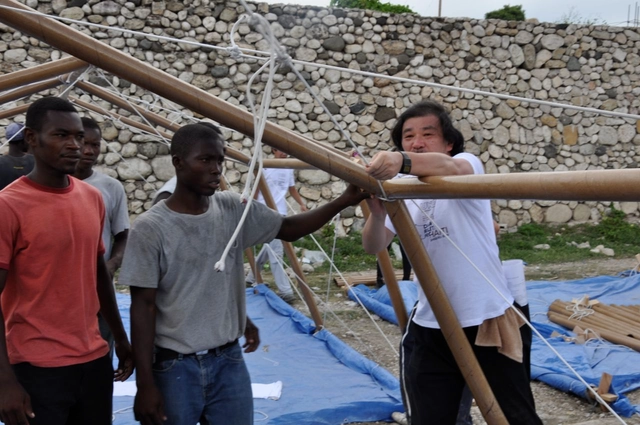
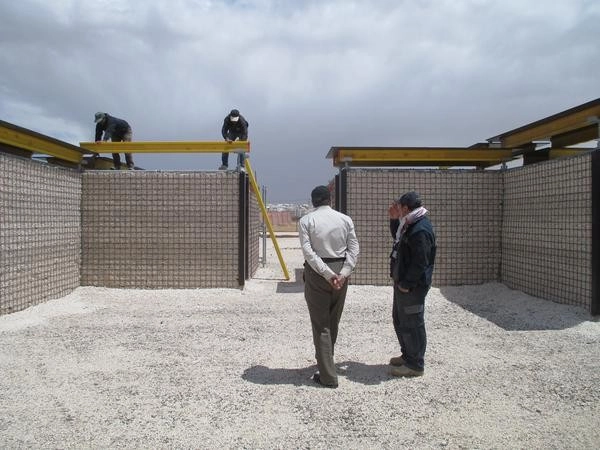
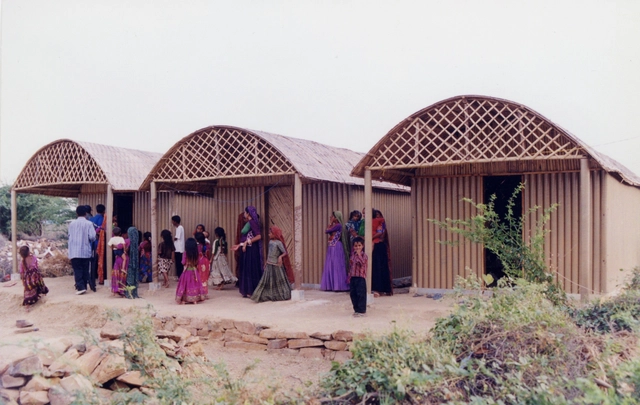
Shigeru Ban Architects has released images of their first emergency shelter prototype designed for Nepal. Planned to be built by the end of August, the simple shelter is designed to be easily assembled by almost anyone. Using connecting modular wooden frames (3ft x 7ft or 90cm x 210cm), salvaged rubble bricks are used to infill the wall's cavities while paper tube trussing supports the roof. This, as Shigeru Ban says, will allow for "quick erection and nearly immediate inhabitation."
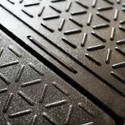
Floor Module in Shelter. Image Courtesy of Emergency Floor
Millions of refugees across the globe, due to global conflict or natural phenomena, are forced to leave their homes and live in low-quality, temporary housing. The majority of these shelters lack a fundamental component of safety and well-being: floors. Emergency Floor is an initiative developed by Sam Brisendine and Scott Key to solve this problem, and bring safety to refugee shelters and the people in them. With their new Indiegogo campaign, Emergency Floor is working to provide efficient, inexpensive flooring that is directly geared towards assisting relief agencies.
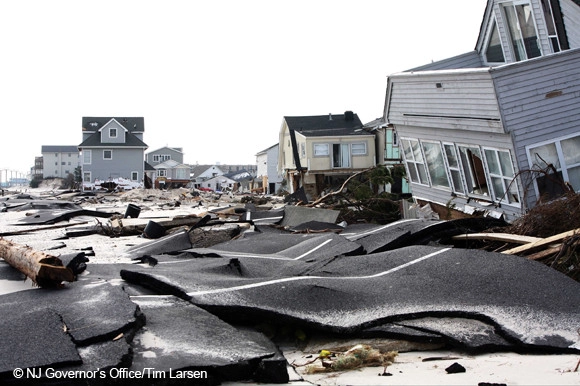
Rebuild By Design (NJ Governor's Office/Tim Larsen)
Spanning practice and theory in an innovative and integrative manner, “REBUILD BY DESIGN MUNICH” is oriented towards a broad audience including the interested public, practitioners, scholars and students alike from disciplines in planning and design for the built environment.
Disasters triggered by environmental hazards impact urbanized areas worldwide to increasing degrees. There is an urgent need to deal not only with disaster, but climate change as well. The challenge is to ensure the sustainability of the built environment and the communities that inhabit it. This comprises an emerging field of inquiry and research within the planning and design disciplines. A knowledge-based approach to planning and designing resilient cities and architecture is the key.
Shigeru Ban Architects, together with the Voluntary Architects' Network (VAN), has announced plans to send emergency shelter, housing and other community facilitates to the victims of Nepal's deadly April 25th earthquake. As part of a three-phase plan, Shigeru Ban will first delivery and assemble tents with plastic partitions acquired though donation to provide immediate shelter. A few months after, the Japanese practice will collaborate with local architects and students to build temporary housing with materials found prevalent in Nepal.
Permanent housing will also be provided in the architect-led recovery plan's third phase, although little details have been released. However, you canhelp make it happenby donating to Shigeru Ban's efforts (here).
Watch Shigeru Ban's TED Talk on paper emergency structures, after the break.
“An earthquake doesn’t kill people, the collapse of a building kills people.” In Arbuckle Industries’ latest interview released following their world premiere of Archiculture, architect humanitarian Shigeru Ban clearly delineates “natural” disasters as a product of mankind, rather than nature. Hear the Pritzker laureate’s thoughts on designing for minorities, disasters, and the importance of travel in the video interview above.
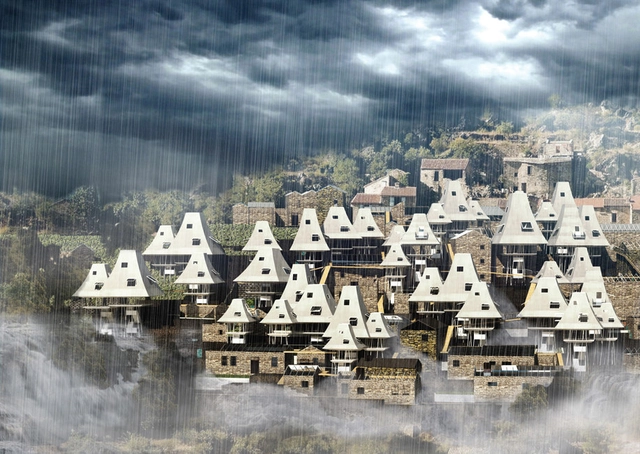
"Modular Landscapes" was designed in response to the 2011 Japanese earthquake. Image Courtesy of Architecture for Humanity Vancouver Chapter
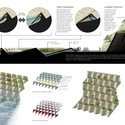
Architecture for HumanityVancouver Chapter has unveiled the winners of "NEXT BIG ONE," an open call for design solutions to high-magnitude earthquake and tsunami events that plague cities around the world. Project teams were challenged to propose a solution that "can mitigate natural disasters while simultaneously providing community permanence."
A jury comprised of leading architects and professionals from Architecture Research Office (Stephen Cassell), Perkins + Will (Susan Gushe), Bing Thom Architects (Eileen Keenan), Scott & Scott Architects (David Scott), and the City of Vancouver (Doug Smith) evaluated the projects. Entries were evaluated based on three key criteria: the exemplification of innovation in disaster design, promotion of community resiliency before and after disasters, and compliance with multi-hazard parameters for worst-case disaster scenarios.
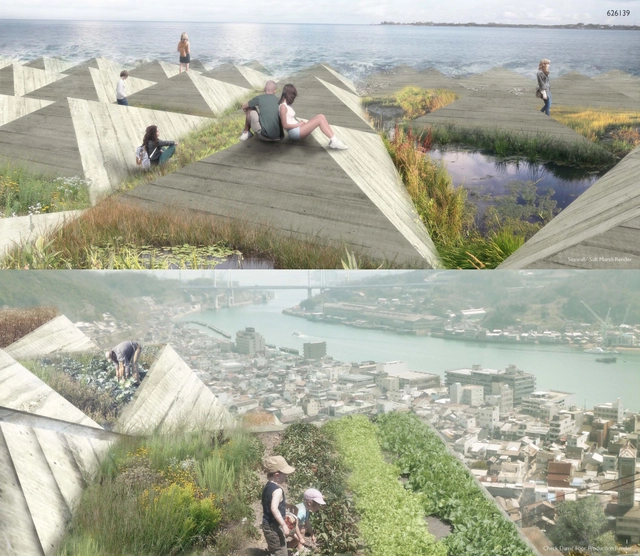
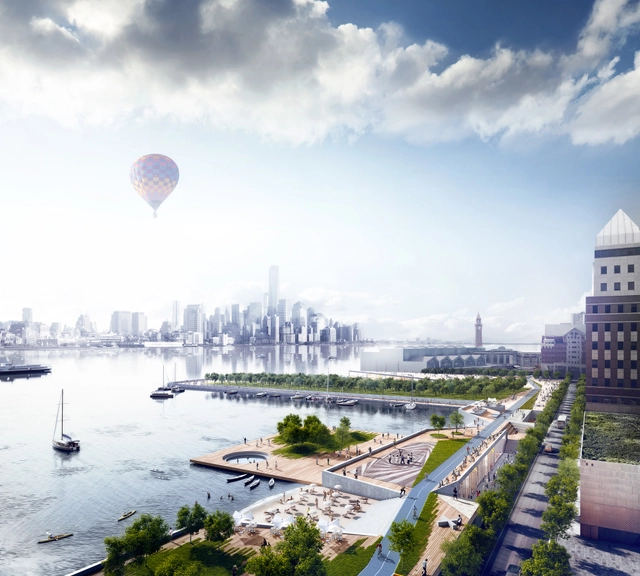
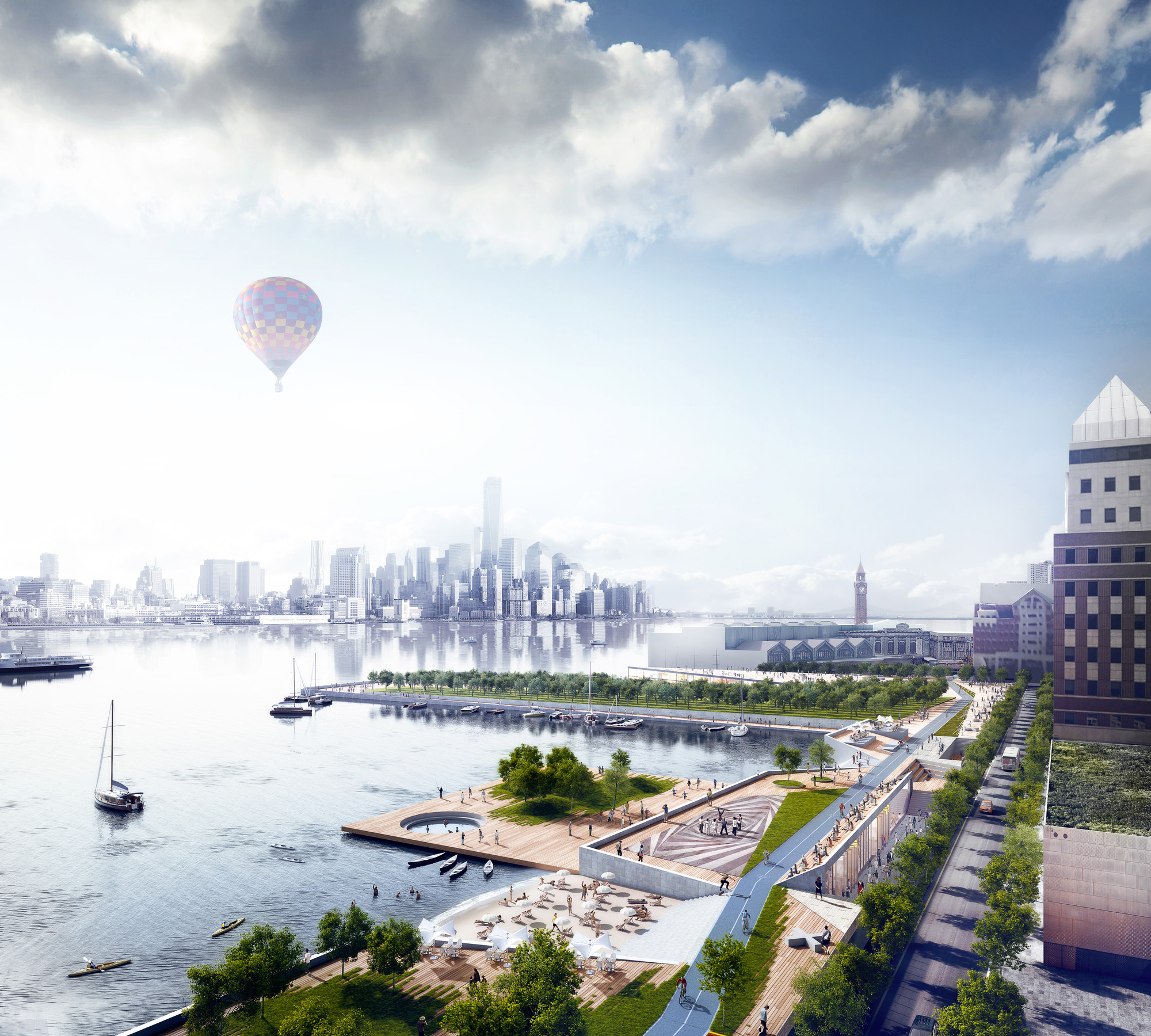
Yesterday, US Housing and Urban Development (HUD) Secretary Shaun Donovan announced OMA, BIG and four other teams as the winner of "Rebuild by Design", a competition aimed at rebuilding areas affected by Hurricane Sandy focusing on resilience, sustainability and and livability.
In total, HUD have allocated $920 million to the six projects in New York, New Jersey and Long Island to enable the completion of this vision.
Read more about the winning schemes after the break
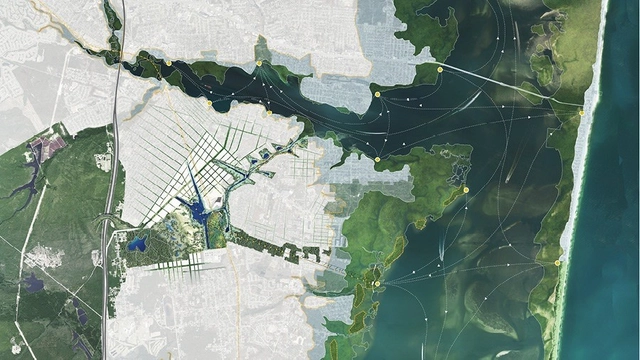
An aerial rendering from the Sasaki/Rutgers/Arup team shows Barnegat Bay, New Jersey. A threatened barrier island is visible on the right, and in the middle is a redeveloped area where people could, in theory, move. Image Courtesy of The Atlantic Cities
If you lived in a region repeatedly devastated by storms, would common sense be enough to make you leave your memories behind? Two of the ten proposals for the Rebuild by Design competition (which included proposals from OMA and BIG) tackle this issue, providing designs that compel communities to move to safety. To learn more about this sensitive and increasingly relevant social and political issue, known as "Managed Retreat," check out James Russell's article on The Atlantic Cities.
Winning Entry: Architecture Renovation Award. Image Courtesy of AIM
Architects in Mission(AIM) recently announced the winners for their 2013 competition with the topic, Post Earthquake Reconstruction, Ya’an Sichuan - Rebuild Panda’s Hometown from the Earthquake. The Ya'an Earthquake occurred at 08:02 Beijing Time on the 20th April 2013. The epicenter was located in Lushan County, Ya'an, Sichuan, about 116km (or 72 miles) from Chengdu (along the Longmenshan Fault) in the same province that was hit heavily by the 2008 Sichuan earthquake. For this year's competition, AIM asked participants to pay particular attention to the master planning of the Snow Mountain Village, whilst developing new business models to encourage economic growth for local villagers. See the four winning entries after the break.
In a symposium at the AIA New York Chapter, seismologists, earthquake engineers, seismic code experts, emergency response managers, and architects conversant in seismic design will assemble for a conversation on available technologies and testing capabilities that, surprisingly, are located in New York State. They will "clarify the evolving role of design professionals, the building industry, and municipal and federal agencies in safeguarding our local communities", as well as "educate the audience about the earthquakes, subsurface conditions, and construction approaches."
.jpg?1510247252)