1. ArchDaily
  2. Design Thinking

Design Thinking: The Latest Architecture and News

When Art Came First: Spatial Experiments That Shaped Architecture in Latin America

Subscriber Access | 

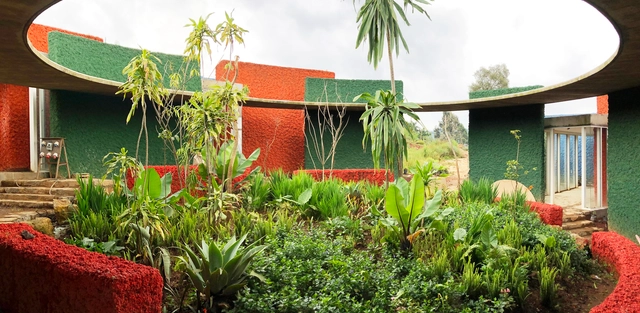
Many of the spatial ideas we now associate with contemporary architecture, collective use, and bodily experience did not originate in buildings alone. In Latin America, these ideas were often explored first through art, at a moment when artists were actively questioning how space could be occupied, shared, and experienced beyond traditional forms.
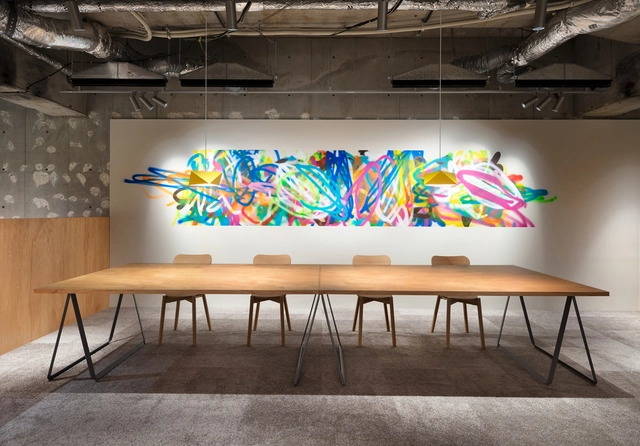
During the mid-20th century, the region underwent rapid urbanization and profound social change. Architecture was increasingly expected to respond to public life, collectivity, and new ways of inhabiting space. At the same time, art offered a more flexible ground for experimentation, one less constrained by function, regulation, or permanence. As a result, many spatial questions were tested through artistic practices before becoming part of architectural thinking.

When Art Came First: Spatial Experiments That Shaped Architecture in Latin America - Image 1 of 4When Art Came First: Spatial Experiments That Shaped Architecture in Latin America - Image 2 of 4When Art Came First: Spatial Experiments That Shaped Architecture in Latin America - Image 3 of 4When Art Came First: Spatial Experiments That Shaped Architecture in Latin America - Image 4 of 4When Art Came First: Spatial Experiments That Shaped Architecture in Latin America - More Images+ 11

The Project as Argument: What is Architectural Thinking?

Architecture is shaped not only by buildings, but by the ideas that make them possible. Before the constraints of capital, regulation, and procurement, there is a moment when architecture is allowed to think aloud. The first confrontation with this fertile moment usually takes place in academia, in the thesis. It is not merely a requirement for graduation, but a space of speculative freedom where architecture formulates hypotheses, builds arguments, and tests positions.

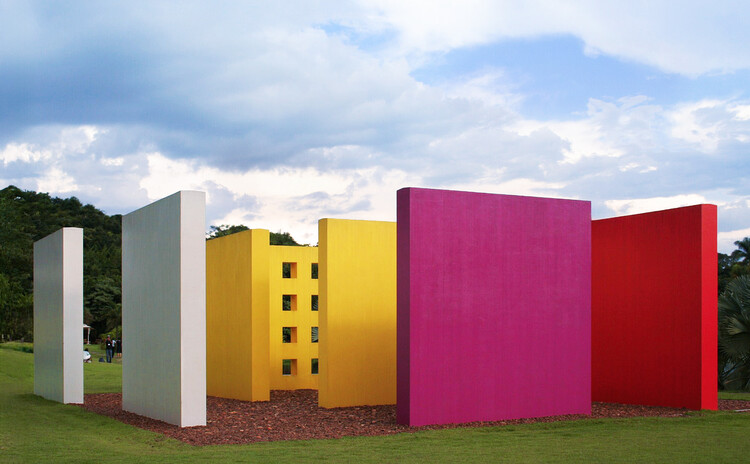
For many, it is also the first opportunity to think beyond the structure of academic programs — a first chance to explore something more personal, unresolved, or even unreasonable. While often seen as an endpoint, the thesis is better understood as a beginning: the first engagement with architecture as a form of reasoning, where the project is not yet a response, but a question.

The Project as Argument: What is Architectural Thinking? - Image 1 of 4The Project as Argument: What is Architectural Thinking? - Image 2 of 4The Project as Argument: What is Architectural Thinking? - Image 3 of 4The Project as Argument: What is Architectural Thinking? - Image 4 of 4The Project as Argument: What is Architectural Thinking? - More Images+ 27

The City as a Laboratory of Processes: A Decade of Urban Experimentation with Concéntrico

Subscriber Access | 

As cities continue to develop, we are seeing ever more well-planned, thoroughly executed, and tightly regulated approaches to shaping urban centres and their surrounding spaces—for better and for worse. As codes, restrictions, and guidelines improve and tighten, urban environments become safer, more balanced, and less prone to surprise. Yet the flip side is that highly managed districts can drift toward over-order and sanitisation, shedding the messy, accretive character that once produced alleyways, residual spaces, and unexpected sequences of movement—conditions often born from ongoing community improvisation in the grey zones of regulation.

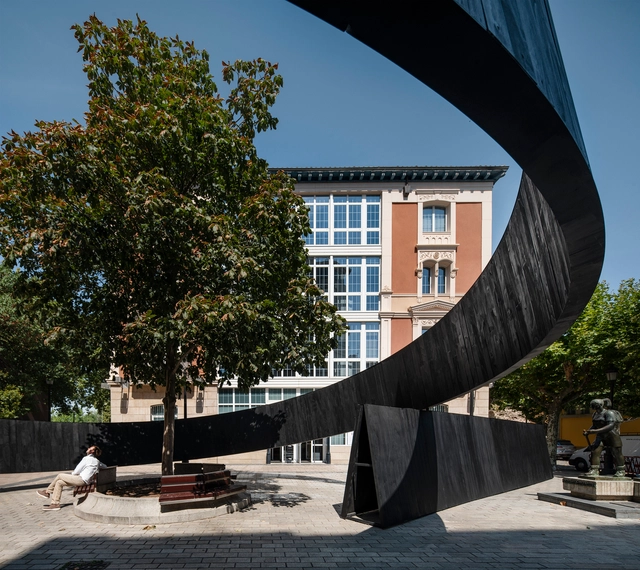
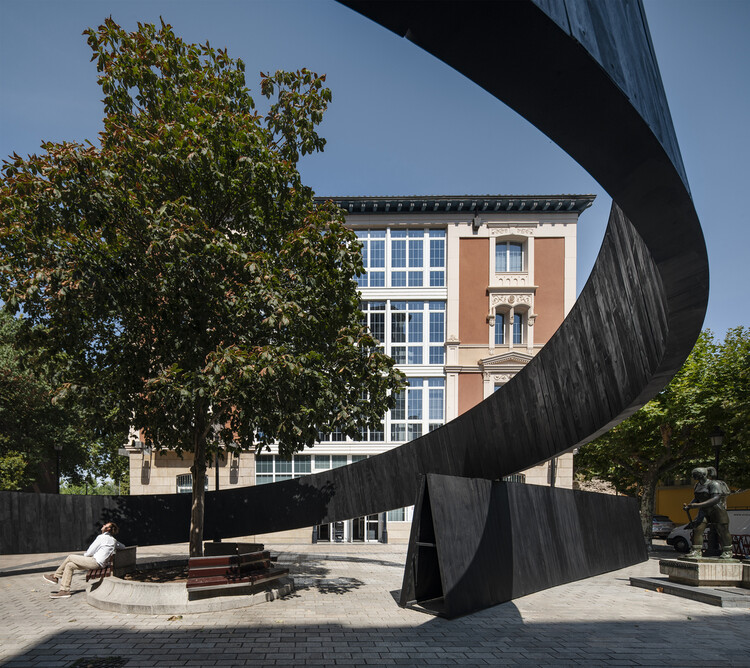
In response, a growing number of initiatives around the world are proposing short-term urban installations that test alternate futures for the city. These works aim to provoke dialogue between what the city is and what it could offer its communities through thoughtful, context-specific spatial practices. One notable example is Concéntrico, the international festival in Logroño, Spain, conceived as an urban innovation laboratory. Marking its tenth edition, the festival is about to publish Concéntrico: Urban Innovation Laboratory, a book that surveys a decade of urban design and collective transformation shaped through successive editions of the festival. Its launch is paired with an international tour designed to share a decade of insights on collective transformation and design.

The City as a Laboratory of Processes: A Decade of Urban Experimentation with Concéntrico - Image 1 of 4The City as a Laboratory of Processes: A Decade of Urban Experimentation with Concéntrico - Image 2 of 4The City as a Laboratory of Processes: A Decade of Urban Experimentation with Concéntrico - Image 3 of 4The City as a Laboratory of Processes: A Decade of Urban Experimentation with Concéntrico - Image 4 of 4The City as a Laboratory of Processes: A Decade of Urban Experimentation with Concéntrico - More Images+ 32

Towards an Architecture of Many Intelligences: How Collective Knowledge Shapes the Built Environment

As architecture navigates a rapidly changing world shaped by ecological urgency, social transformation, and technological acceleration, the notion of intelligence is shifting. No longer confined to individual cognition or artificial computation, intelligence can emerge from cultural memory, collective practices, and adaptive systems. In this broader sense, architecture becomes a field of convergence, where natural, artificial, and social intelligences intersect to offer new ways of designing and building.

Vernacular traditions embed generations of environmental knowledge, often transmitted through materials, construction techniques, and spatial logics finely tuned to local conditions; participatory platforms expand decision-making to wider communities to take part in shaping their environments, redistributing agency in the design process; and computational processes simulate and respond to complex data in real time bringing the capacity to analyse, simulate, and respond to complex variables — whether environmental, social, or behavioural — offering new forms of adaptability.

Towards an Architecture of Many Intelligences: How Collective Knowledge Shapes the Built Environment - Image 1 of 4Towards an Architecture of Many Intelligences: How Collective Knowledge Shapes the Built Environment - Image 2 of 4Towards an Architecture of Many Intelligences: How Collective Knowledge Shapes the Built Environment - Image 3 of 4Towards an Architecture of Many Intelligences: How Collective Knowledge Shapes the Built Environment - Image 4 of 4Towards an Architecture of Many Intelligences: How Collective Knowledge Shapes the Built Environment - More Images+ 25

Are Architecture Firms the Next Design Thinking and Innovation Giants?

As they recognize the growing significance of innovation in today’s business landscape, architecture firms are experiencing a transformation. Companies across diverse industries have also come to appreciate the impact of design on cracking challenges, thanks to the success of design-focused startups such as Airbnb. Traditionally confined to designing physical structures, architecture firms are broadening their scope and embracing research and innovation as integral elements of their design process. With the establishment of research and innovation divisions, these firms not only enhance their own practices but also offer their expertise to address the evolving needs of our era—ranging from human and technological advancements to strategic innovation. 

Are Architecture Firms the Next Design Thinking and Innovation Giants? - Image 1 of 4Are Architecture Firms the Next Design Thinking and Innovation Giants? - Image 2 of 4Are Architecture Firms the Next Design Thinking and Innovation Giants? - Image 3 of 4Are Architecture Firms the Next Design Thinking and Innovation Giants? - Image 4 of 4Are Architecture Firms the Next Design Thinking and Innovation Giants? - More Images+ 1

What Is Gen Z Looking for in the Workplace?

Subscriber Access | 

Every new generation enters the workplace with its own communication style. From viral TikToks to provocative statements like “We rarely use email,” Gen Z’s entrée into the workforce will certainly make its own waves. But what do we need to consider as we recruit, try to retain, and sell to this next generation of designers?

The Rise of the Design Thinking Movement and its Relation to Architecture

'Innovation' and 'design thinking' could possibly be two of the most extensively-used phrases both online and offline during the past decade. To respond to the global need of "changing the status quo", established companies, start-ups, and even universities have used this framework to generate novel ways of solving problems and create new products, taking into account their desirability, feasibility, and viability. And with that, a new archetype was conceived: the design thinker, someone who has the creative toolkit to generate something disruptive. So what is the meaning behind design thinking and what is its relationship with architecture?

The Rise of the Design Thinking Movement and its Relation to Architecture  - Image 1 of 4The Rise of the Design Thinking Movement and its Relation to Architecture  - Image 2 of 4The Rise of the Design Thinking Movement and its Relation to Architecture  - Image 3 of 4The Rise of the Design Thinking Movement and its Relation to Architecture  - Image 4 of 4The Rise of the Design Thinking Movement and its Relation to Architecture  - More Images+ 1