1. ArchDaily
  2. design research

design research: The Latest Architecture and News

Expanding Practice: Architecture Think Tanks at the Intersection of Research and Design

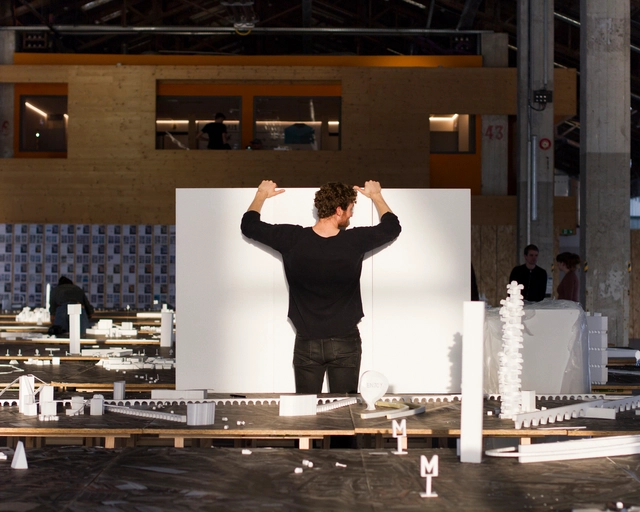
In architecture, most practices revolve around delivering projects to clients. Offices are shaped by deadlines, budgets, and clear briefs. While this structure produces buildings, it rarely leaves space for architects to question broader issues — about how we live, how cities are changing, or what the future demands of design. But alongside this production-focused system, a quieter movement has emerged: studios, collectives, and foundations that prioritize research, experimentation, and reflection. These are the architecture think tanks — spaces designed not to build immediately, but to think first.

The idea of a think tank is not new. Traditionally found in politics, economics, or science, think tanks bring together experts to study complex problems and propose solutions. In architecture, their rise reveals a tension at the heart of the discipline. If architecture is to remain socially and environmentally relevant, can it continue to rely only on client-driven practice? Or must it carve out space for slower, deeper inquiry?

Expanding Practice: Architecture Think Tanks at the Intersection of Research and Design - Image 1 of 4Expanding Practice: Architecture Think Tanks at the Intersection of Research and Design - Image 2 of 4Expanding Practice: Architecture Think Tanks at the Intersection of Research and Design - Image 3 of 4Expanding Practice: Architecture Think Tanks at the Intersection of Research and Design - Image 4 of 4Expanding Practice: Architecture Think Tanks at the Intersection of Research and Design - More Images+ 48

Salt as a Building Material: Rethinking the Life of Minerals and Waste in Architecture with Mále Uribe

In response to today's environmental, political, economic, and social challenges, material experimentation in architecture invites us to recognize the importance of researching and analyzing the properties of construction elements, and to understand the role of spatial design and its immediate surroundings. While various textiles, plastics, and even waste from different sources are being recycled and given a new life, the debate around the use of salt as a building material encourages the development of more sustainable practices to reduce the industry’s impact on the environment, as well as to explore the renewed life of discarded minerals and mining waste for implementation in architecture.

Architecture as a Tool for Social Innovation: Human-Centered Design to Combat Loneliness 

Subscriber Access | 

Architecture holds power beyond the creation of buildings - it is a practice that shapes how people live, interact, and thrive within their communities. Architecture can also be a tool for social innovation. Through an understanding of human-centered processes, participatory design, and social sciences, practitioners can address societal challenges such as loneliness, inequality, and public health to equip spaces as vehicles for social equity and engagement. Architecture's role in shaping the future of communities is a direct response to human needs and activated social change.

Architecture as a Tool for Social Innovation: Human-Centered Design to Combat Loneliness  - Image 1 of 4Architecture as a Tool for Social Innovation: Human-Centered Design to Combat Loneliness  - Image 2 of 4Architecture as a Tool for Social Innovation: Human-Centered Design to Combat Loneliness  - Image 3 of 4Architecture as a Tool for Social Innovation: Human-Centered Design to Combat Loneliness  - Image 4 of 4Architecture as a Tool for Social Innovation: Human-Centered Design to Combat Loneliness  - More Images+ 5

Jingru (Cyan) Cheng Wins 2023 Wheelwright Prize for her Study on the Impact of Sand on the Environment and Communities

Harvard University Graduate School of Design (GSD) has announced Jingru (Cyan) Cheng as the recipient of the 2023 Wheelwright Prize, a study grant created to support globally-minded research and investigative approaches to contemporary architecture. The winning research project, titled “Tracing Sand: Phantom Territories, Bodies Adrift,” delves into the multifaceted impacts of sand mining and reclamation, understood from cultural, economic, and ecological perspectives. The unassuming material has become an indispensable element for our built environment and human communities, serving as a vital component in the production of glass, concrete, asphalt roads, and artificial land. Yet the process of dredging underwater systems and sand mining leads to the disruption of habitats in a process that simultaneously shapes one habitat while devastating another.

Jingru (Cyan) Cheng Wins 2023 Wheelwright Prize for her Study on the Impact of Sand on the Environment and Communities - Image 1 of 4Jingru (Cyan) Cheng Wins 2023 Wheelwright Prize for her Study on the Impact of Sand on the Environment and Communities - Image 2 of 4Jingru (Cyan) Cheng Wins 2023 Wheelwright Prize for her Study on the Impact of Sand on the Environment and Communities - Image 3 of 4Jingru (Cyan) Cheng Wins 2023 Wheelwright Prize for her Study on the Impact of Sand on the Environment and Communities - Image 4 of 4Jingru (Cyan) Cheng Wins 2023 Wheelwright Prize for her Study on the Impact of Sand on the Environment and Communities - More Images

Study at Gropius' Bauhaus Dessau - Call for Submissions

Design research in cooperation with the Bauhaus Dessau Foundation, the Anhalt University of Applied Sciences and the Cluster of Excellence “Matters of Activity. Image Space Material” at Humboldt Universität zu Berlin.

Apply for 2017 Design Writing & Research Summer Intensive

From June 4–15, 2018, the Department of Design Research, Writing and Criticism at the School of Visual Arts will host its annual two-week intensive dedicated to researching and writing about design. This richly programmed course equips students with techniques for constructing compelling narratives about images, objects, cities, and spaces under the guidance of esteemed writers and editors, such as Magic and Loss: The Internet as Art author and media critic Virginia Heffernan; architecture writer and critic Karrie Jacobs; author, critic, and The Weeklings co-founder Jennifer Kabat; BBC interviewer and Design Observer contributor Adam Harrison Levy; The New York Times culture reporter Robin Pogrebin; author and playwright Craig Taylor; and design and business columnist Rob Walker.

Study Design Research, Writing & Criticism at the School of Visual Arts in New York City

 | Sponsored Content

Designers that rise to the top can write, articulate, weave a narrative, and communicate ideas in a compelling way - Khoi Vinh, Principal Designer, Adobe.

Do you have a research project you’d like to take to the next level? Are you challenged by communicating your ideas in multiple formats?