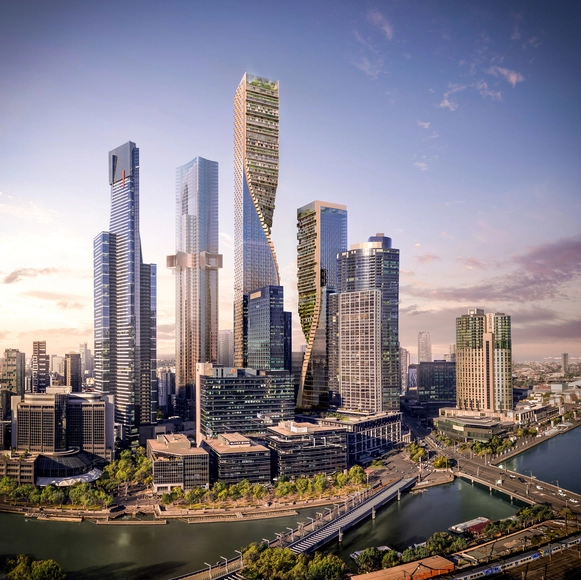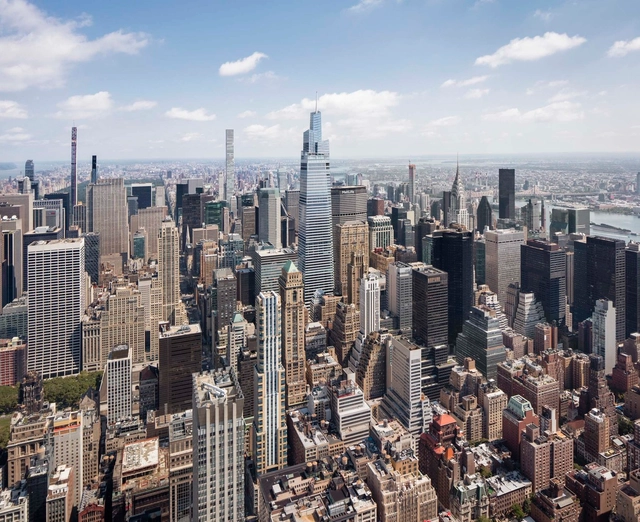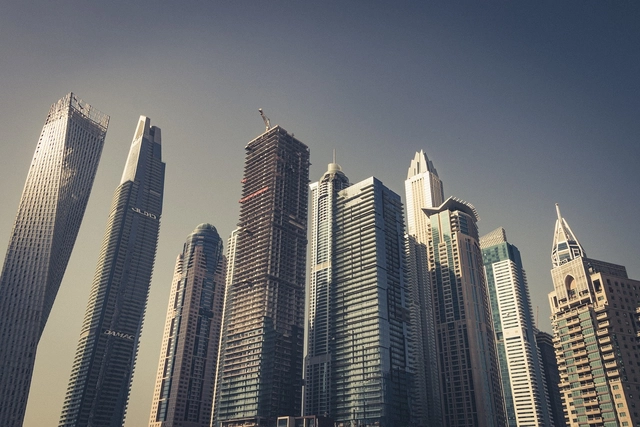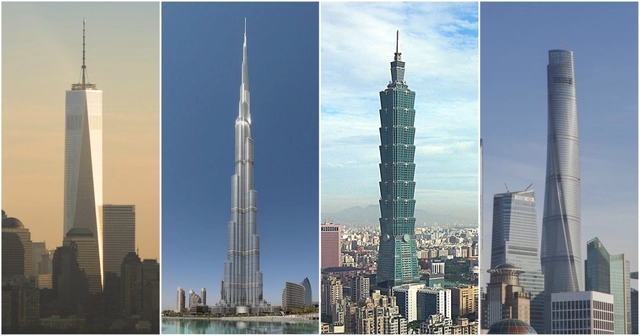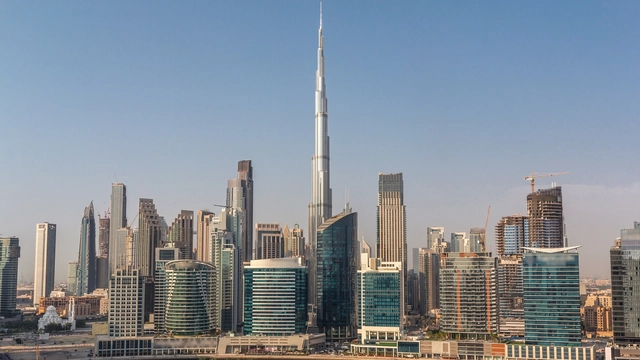
Many urban planners predict that by 2050, more than 6 billion people will live in cities, and in places where building outwards isn't an option, the only way to keep up with the growing density is to build up. Building taller always comes with numerous challenges and also a not-so-subtle competition for architecture firms to have their name tied to the biggest buildings. Almost as fast as a building is named one of the tallest in the world, another one makes its way to the drawing board, a few years later taking the title. While the sky’s the limit, how does this impact the constructability of projects, and what feats of construction methods and materials have enabled us to build into the clouds?
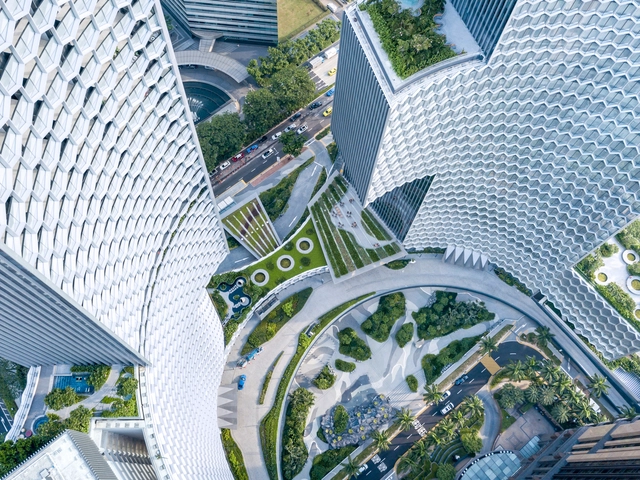
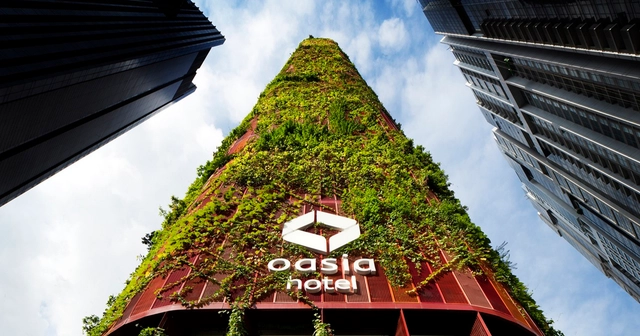
Büro Ole Scheeren'DUO Twin Towers project has been awarded CTBUH's 2021 Urban Habitat Award, which acknowledges the design's significant contribution to its urban context. Completed in 2018, the project restructures a previously disjointed and neglected part of Singapore, creating a dynamic place that enables social interaction. The award confirms the studio's socially and environmentally responsible approach to design. New footage by photographer Iwan Baan captures the DUO's silhouette and elevated landscape, hinting at the project's careful consideration of its urban and civic context.
It’s a given that the coronavirus pandemic has had wide-ranging impacts on construction projects large and small over the past 10 months. So, what about the construction of new buildings that share the defining characteristic of being superlatively tall?
As detailed in an annual report published earlier this month by the Chicago-headquartered Council on Tall Buildings and Urban Habitat (CTBUH), newly completed skyscrapers experienced a global decline of 20 percent in 2020 compared to the previous year due, both directly and indirectly, to the COVID-19 crisis.
In the modern era of design where advancements in technology and construction have enabled architects to build better, faster, and taller, the sky’s the limit. Every few months, another headline boasts the tallest residential tower or the newly constructed office building that breaks yet another record for its impressive height. But as time goes on and new projects are completed, trends show that the United States is falling out of the spotlight in terms of being able to claim the title of world’s tallest building, and the drawing boards show that no American city will be reclaiming this title any time soon.
Salesforce Tower, San Francisco / Pelli Clarke Pelli Architects. Image Jason O'Rear
The Council on Tall Building and Urban Habitat have announced the winners of the 17th edition of the CTBUH Tall Building Awards. From 65 finalists, winners were chosen from several height ranges including Best Tall Building under 100 meters, Best Tall Building 100-199 meters, Best Tall Building 200-299 meters, and Best Tall Building over 400 meters. From these finalists, the CTBUH has also awarded the Best Tall Building award to Salesforce Tower (San Francisco) by Pelli Clarke Pelli Architects.
https://www.archdaily.com/914913/the-best-tall-buildings-of-2019-according-to-the-ctbuhNiall Patrick Walsh
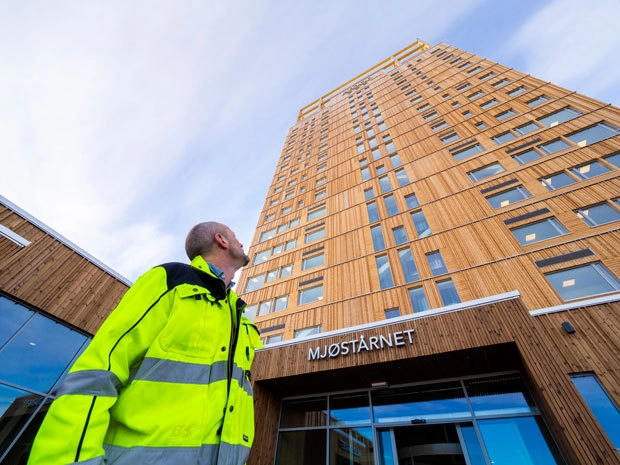
The Council for Tall Buildings and Urban Habitat has announced that Norway's Mjøstårnet tower is, at 85.4 meters, officially the world's tallest timber building. Beyond the unique distinction, the tower is also Norway's tallest mixed-use structure and third tallest building.
https://www.archdaily.com/913258/ctbuh-names-norways-mjostarnet-the-tallest-timber-building-in-the-worldKatherine Allen
For those in the northern hemisphere, the last full week in January last week kicks off with Blue Monday - the day claimed to be the most depressing of the year. Weather is bleak, sunsets are early, resolutions are broken, and there’s only the vaguest glimpse of a holiday on the horizon. It’s perhaps this miserable context that is making the field seem extra productive, with a spate of new projects, toppings out and, completions announced this week.
The week of 21 January 2019 in review, after the break:
2017 was another banner year for skyscraper construction.
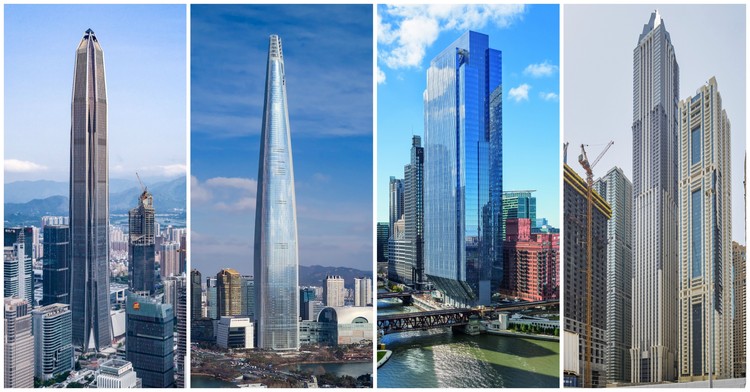
According to the 2017 Tall Building Year in Review, the annual web report from The Council on Tall Buildings and Urban Habitat (CTBUH), a record-breaking 144 buildings 200 meters tall (656 feet tall) or higher were completed in 2017, led by the 599-meter-tall Ping An Finance Center and 555-meter-tall Lotte World Tower.
In the report, CTBUH outlines this year’s trends in tall building design. Notably, 2017 proved to be the most geographically diverse year in history for tall buildings, with 69 cities across 23 countries completing new towers, an significant increase from 54 cities and 18 countries in 2016. Of those numbers, 28 cities and 8 countries completed their new tallest building.
How do we determine the actual height of a building? Where do we place the dimension line? The history of measuring skyscrapers dates back to 1885, way before AutoCAD or Revit dimensions, when the Home Insurance Building in Chicago was among the first to boast of being the world's tallest building, but the Council on Tall Buildings and Urban Habitat (CTBUH)—or the Joint Committee on Tall Buildings, as it was originally called—wasn’t formed until 1969. Recognized by many as the foremost authority on tall buildings, the CTBUH is often cited in determining the world’s (or country’s or city’s) tallest building. However, the CTBUH is not the only organization with a stake in measuring buildings; the global building information database Emporis is also a major player. Between them, these two organizations provide 10 different ways to determine a skyscraper's height, which we have summarized below.
KPF’s Lotte World Tower in Seoul, South Korea is officially complete, according to criteria established by the the Council on Tall Buildings and Urban Habitat (CTBUH). At 555 meters tall, the building becomes the tallest building in Korea (250 meters taller than the previous tallest building, Northeast Asia Trade Tower) and the world’s new 5th tallest building.
Courtesy of Flickr User Shashank Jain, licensed under CC BY 2.0
Have you been experiencing motion sickness, depression, sleepiness, and even fear, as you gaze out of your window from the 44th floor? If so, you may be prone to “Sick Building Syndrome” – the informal term for side effects caused by swaying skyscrapers, according to experts at the Universities of Bath and Exeter, who are launching a £7 million ($8.6 million) study into their causes and prevention through testing simulations.
“More and more people are living and working in high-rises and office blocks, but the true impact of vibrations on them is currently very poorly understood,” explained Alex Pavic, Professor of Vibration Engineering at the University of Exeter. “It will for the first time link structural motion, environmental conditions, and human body motion, psychology, and physiology in a fully controllable virtual environment.”
https://www.archdaily.com/868452/new-study-to-investigate-skyscraper-induced-depression-and-motion-sicknessesOsman Bari
Designed by Kohn Pedersen Fox Associates (KPF), the Ping An Finance Center is located in the heart of Shenzhen’s Fuitan District. The building contains over 100 floors of office space located above a large public podium, with a multi-story atrium providing retail, restaurants and transit options to the city and greater Pearl River delta region.
Guangzhou CTF Finance Centre. Image Courtesy of K11 New World Development
In its annual report, the 2016 Tall Building Year in Review, the Council on Tall Buildings and Urban Habitat (CTBUH) has announced that 2016 saw the completion of a record 128 buildings 200 meters or higher. This number surpasses the previous record of 114 completions set in 2015. Eighteen of these buildings became the tallest in their city, country, or region, and ten earned the designation of supertall, at 300 meters and above.
In this interview, conducted by the Council for Tall Buildings and Urban Habitat, Ole Scheeren discusses the ideal height for sustainable buildings. Drawing reference from two of his projects, MahaNakhon and The Interlace, he speaks to the difference between height and density, and how those two interplay when creating livable spaces in urban areas. He goes on to talk about how large buildings such as skyscrapers can be made more open to the surrounding city, both visually through programming. Watch the full clip above!
Deutsche Post Towers in Bonn Germany has received the 10 Year Award from the Council on Tall Buildings and Urban Habitat (CTBUH). Completed in 2002 and designed by Murphy/Jahn, Post Tower was a leader in introducing high performance design elements to create a more efficient and pleasant office environment, and has now been recognized by this unique award which rewards proven value and performance in a tall building over a period of 10 years since its completion, and offers a valuable look at the life of buildings long after the initial designs are realized. Read on after the break to learn more about the winning building.
Recently, ArchDaily editors received an interesting request from an anonymous Communications Director of an unnamed New York firm, asking us “In your reporting, please do not repeat as fact, or as "official," the opinion that One World Trade Center in New York will be the tallest building in the United States.” He or she goes on to explain that the decision maker who 'announced' the building as the tallest in the US, the Council on Tall Buildings and Urban Habitat (CTBUH), is not officially endorsed by the AIA or the US Government, and that while their work is beneficial for architecture and cities as a whole, their criteria for height evaluation are flawed and have been criticized by many in the industry.
The desire to have the tallest building in a city, country or even the world goes back to at least the medieval period, when competing noble families of Italian hill towns such as San Gimignano would try to out-do each other's best construction efforts (jokes about the Freudian nature of such contests are, I imagine, not much younger). Perhaps the greatest symbol of this desire is the decorative crown of the Chrysler Building, which was developed in secret and enabled the building to briefly take the prize as the world's tallest, much to the surprise and ire of its competitors at the time.
With this competitive spirit apparently still very much alive, I thought it might be worthwhile to address the issue raised by our anonymous friend.
The Council on Tall Buildings and Urban Habitat (CTBUH) has announced five finalists in their 2014 Student Design Competition, which asked entrants to respond to the theme of "sustainable verticle urbanism" in order to "shed new light on the meaning and value of tall buildings in modern society."
"There has been a major transition in the sense of the value of the tall building and what it can contribute to the urban realm, and society in general," said former Competition Jury Chair William Pedersen of Kohn Pedersen Fox. "This transition moves the tall building away from just an instrument of financial exploitation and toward a development highly concerned with its impact on the city, the environment, and the urban habitat."
The winner of the competition will be announced at a special judging session as part of the CTBUH's 2014 Shanghai Conference which begins on Tuesday. Read on after the break for all the finalists.
The Council on Tall Buildings and Urban Habitat (CTBUH) has official ruled Skidmore, Owings & Merrill’s One World Trade Center (1WTC) as the tallest building in the United States. The decision comes after a long debate questioned whether or not the tower’s 408 foot spire should count towards its overall height.
As CTBUH explained: “Due to design changes that resulted in the removal of the architectural cladding around the mast at the top of the structure, it became unclear whether the structure was in fact a ‘spire’ – a vertical element that completes the architectural expression of the building and is intended as permanent, or whether it was an antenna – a piece of functional-technical equipment that was subject to change.”