1. ArchDaily
  2. Contemporary Chinese Architecture

Contemporary Chinese Architecture: The Latest Architecture and News

Timber Tectonics: 10 Projects Rethinking Wood Construction in Contemporary China

Subscriber Access | 

In much of China, concrete remains the dominant construction material. Despite growing concerns over its environmental impact, concrete continues to align with the priorities of many developers and clients—it is fast, cost-effective, and highly durable. As a result, most building types in China still rely heavily on concrete. This reliance is further reinforced by China's position as the world's largest producer of Portland cement. A deeply entrenched supply chain, rooted in raw material manufacturing and economic infrastructure, ensures that concrete remains the default choice in the construction industry.

Yet historically, Chinese architecture was built upon a rich tradition of timber construction. The Forbidden City is a prime example: not only is it emblematic of China's architectural heritage, but it also remains one of the largest and best-preserved collections of ancient wooden structures in the world. This legacy prompts an important question: does timber construction have a meaningful future in China's contemporary building industry?
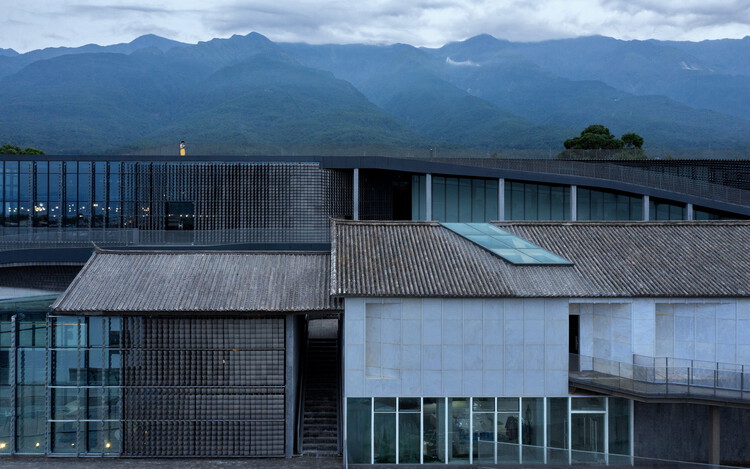
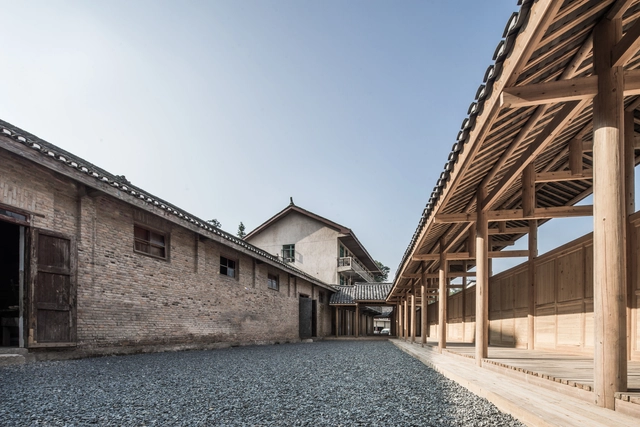
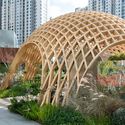
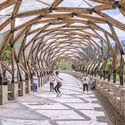
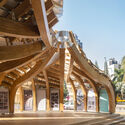
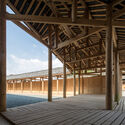
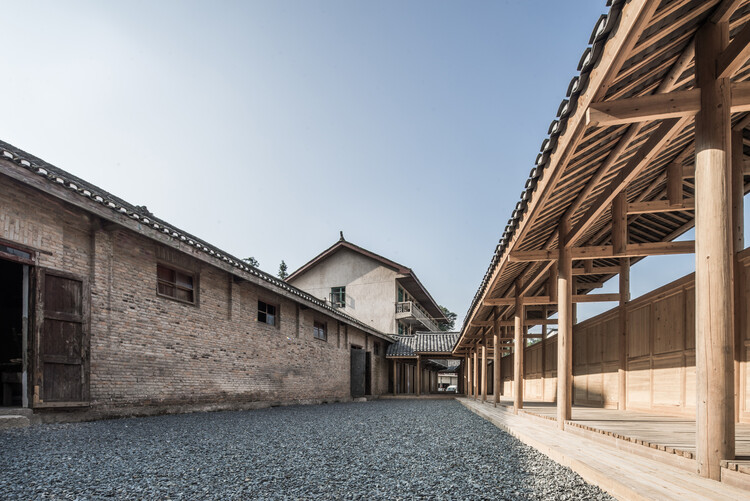
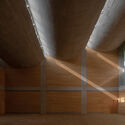
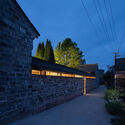
Timber Tectonics: 10 Projects Rethinking Wood Construction in Contemporary China - Image 1 of 4Timber Tectonics: 10 Projects Rethinking Wood Construction in Contemporary China - Image 2 of 4Timber Tectonics: 10 Projects Rethinking Wood Construction in Contemporary China - Image 3 of 4Timber Tectonics: 10 Projects Rethinking Wood Construction in Contemporary China - Image 4 of 4Timber Tectonics: 10 Projects Rethinking Wood Construction in Contemporary China - More Images+ 42

Chinese Architect Liu Jiakun Receives the 2025 Pritzker Architecture Prize

Subscriber Access | 

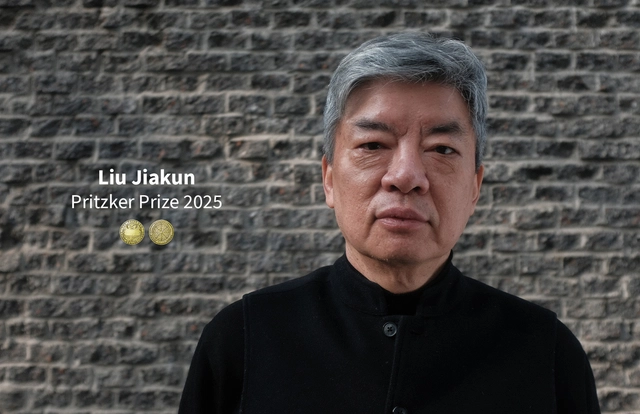
Chinese architect and educator Liu Jiakun has been announced as the laureate of the 2025 Pritzker Architecture Prize, the highest honor in the architecture field. This prestigious award recognizes Jiakun, founder of Jiakun Architects (established 1999), for his ability to blend traditional Chinese elements with contemporary design and for his commitment to social equity in the built environment. Born in Chengdu, China, where he continues to live and work, he becomes the second Chinese architect to receive the accolade, following Wang Shu (2012). Jiakun joins a distinguished list of previous laureates including Riken Yamamoto in 2024, David Chipperfield in 2023, and Francis Kéré in 2022. The award ceremony will be held this spring at the Jean Nouvel-designed Louvre Abu Dhabi, with a global video release of the presentation this fall, followed by the 2025 Laureates' Lecture and Symposium in May.

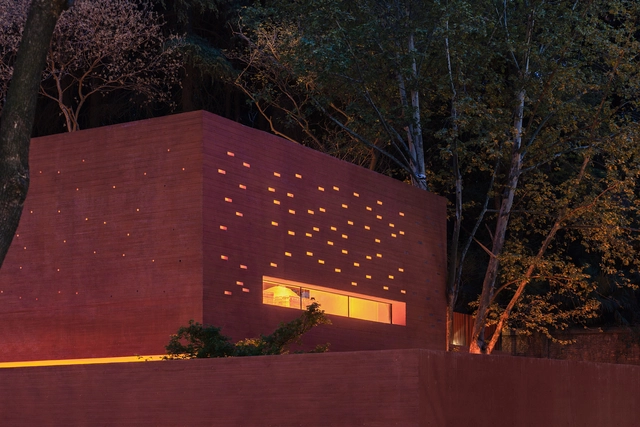
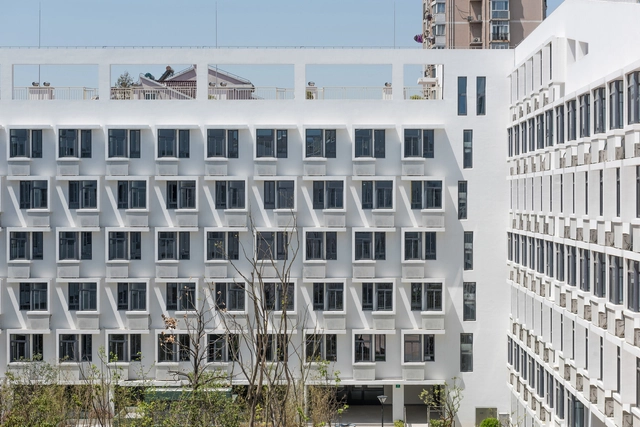
Chinese Architect Liu Jiakun Receives the 2025 Pritzker Architecture Prize - Image 1 of 4Chinese Architect Liu Jiakun Receives the 2025 Pritzker Architecture Prize - Image 2 of 4Chinese Architect Liu Jiakun Receives the 2025 Pritzker Architecture Prize - Image 3 of 4Chinese Architect Liu Jiakun Receives the 2025 Pritzker Architecture Prize - Image 4 of 4Chinese Architect Liu Jiakun Receives the 2025 Pritzker Architecture Prize - More Images+ 32

"You Have to Leave Some Space for the Future People to Interpret": In Conversation with Zhu Pei

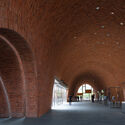
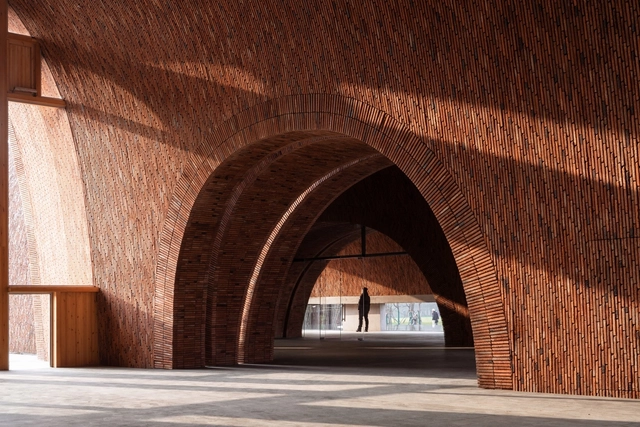
Over the last eight years, I have interviewed Beijing-based architect and educator Zhu Pei several times. His persistent quest to combine traditional planning and construction principles with innovative formal and spatial sensibilities intrigues me. His latest projects, including Zijing International Conference Camp (2022) and Jingdezhen Imperial Kiln Museum (2020), are widely published and represent his most mature works. Yet, he is convinced that his best building is in the making. "This is going to be amazing! I feel so excited!" the architect told me, referring to his now under-construction Majiayao Ruins Museum and Observatory in Gansu province in Northwestern China. "I hate column-beam solutions. I want column-free spaces for the public building," he continued. Our conversation took place earlier this year on a video call, complete with dozens of relevant illustrations.

"You Have to Leave Some Space for the Future People to Interpret": In Conversation with Zhu Pei - Image 1 of 4"You Have to Leave Some Space for the Future People to Interpret": In Conversation with Zhu Pei - Image 2 of 4"You Have to Leave Some Space for the Future People to Interpret": In Conversation with Zhu Pei - Image 3 of 4"You Have to Leave Some Space for the Future People to Interpret": In Conversation with Zhu Pei - Image 4 of 4You Have to Leave Some Space for the Future People to Interpret: In Conversation with Zhu Pei - More Images+ 10

The Evolution of Scenery: How MIX Architecture Redefines Contemporary Spaces in China

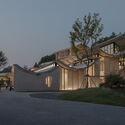
Selected as one of ArchDaily's Best New Practices for 2024, Mix Architecture bases in Nanjing, China, took their approaches honed from rural China to the city, dealing with projects across different scales that stay true to the identity of the communities they work in, but with a contemporary character that is dealing with projects across different scales that stay true to the identity of the communities they work in, but with a contemporary character that is setting the bar for Chinese architecture. They responded sincerely to the site, to the construction, to the functional needs, and to the expression of sociality. From the name of their studio, one can observe that they are an inclusive design studio.

In an interview with ArchDaily, they summarise their design practice as 'the evolution of scenery', each time drawing design information from the site, not just responding to nature or culture, but becoming part of the landscape. This allows even the casual viewer without a professional background in architecture to perceive the atmosphere created by the design. Treating architecture as a social event, each design maximizes the use of local resources under limited conditions to bring about a relatively good result, responding to the environment, the cultural heritage, the materials, the craftsmanship of the workers, the type of function of the space and the real needs of the owner.

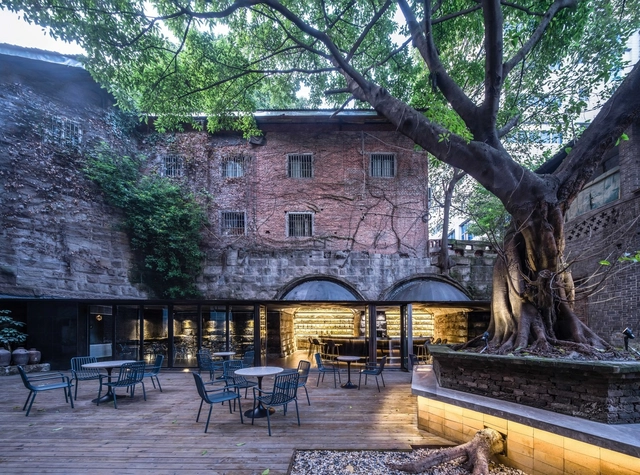
The Evolution of Scenery: How MIX Architecture Redefines Contemporary Spaces in China - Arch Daily InterviewsThe Evolution of Scenery: How MIX Architecture Redefines Contemporary Spaces in China - Arch Daily InterviewsThe Evolution of Scenery: How MIX Architecture Redefines Contemporary Spaces in China - Arch Daily InterviewsThe Evolution of Scenery: How MIX Architecture Redefines Contemporary Spaces in China - Arch Daily InterviewsThe Evolution of Scenery: How MIX Architecture Redefines Contemporary Spaces in China - More Images+ 25

Contemporary Social Housing in China: Playing with the Constraints

Saskia Sassen, the Robert S. Lynd Professor of Sociology at Columbia University, predicts in her co-authored book “The Quito Papers and the New Urban Agendathat, in the future cities will become our crucial battlefield as we continue to fight against gentrification and growing degree of isolation in our communities. Sassen argues that, “Cities should be an inclusive space for both the affluent and the poor. Nevertheless, in reality our cities never achieved equality for all, because our cities were never designed that way. Still cities ought not to be a place that tolerates inequality or injustice”.

Towards a Sustainable Future: Local Materials and Methods in Contemporary Chinese Architecture

Subscriber Access | 

Over the course of the last decade there has been a growing interest in the handcrafted buildings, as well as in the application of local and renewable materials in building construction. Under the concerns about the heavy environmental and economic expenses caused by construction, nowadays urban planners are embracing the concept of sustainability, which refers to “meeting our own needs without compromising the ability of future generations to meet their own needs”.
Cafes and Bars in China: Examining the Spatial Routine of Drinking

Subscriber Access | 

Both tea and alcohol in traditional China were similarly aestheticized, and both influenced the language of literature and art. People used to exchange alcohol as a gift in a way that they later would with tea. Today, more and more cities in China have embraced this drinking culture that passed down from generation to generation, and reinterpreted with a new contemporary fashion, which is constantly evolving in the urban cafes and bars.

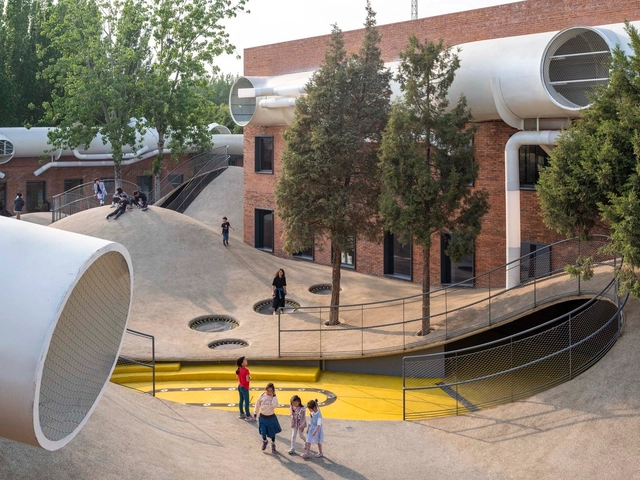
Design Communities for Children: 10 Exemplary Kindergartens in China

Subscriber Access | 

Bruce Jilk in his essay ‘Place Making and Change in learning environments” showcases a radical view of contemporary education which, he argues, is outdated and does not meet the needs of the modern world. Instead of providing for a world of individuals operating within a wider urban environment, schools have become internalized ghettos of childhood, cutting off from communities they are supposed to serve, centrally administered in a “one size fits all” ethos. Designers and architects around the world have always been seeking a more flexible architectural model which will allow much more creativity within the learning process and the environments which serve it.

Design with Digital Technology: 3D Printing Opens New Possibilities in China

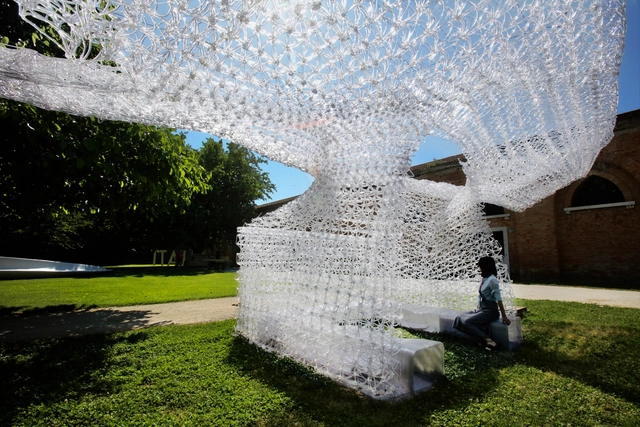
3D printing (as known as three-dimensional printing) is a type of rapid prototyping technology. It is a technology that uses powdered metal or plastic and other bondable materials to construct objects by printing layer by layer based on digital model files.

Perceiving Chinese Architecture From the Eyes of Structural Engineers

When we are discussing the definition of “structure”, the term varies within different disciplines. In the context of the built environment, "structure" refers to anything that is constructed or built from different interrelated parts with a fixed location on the ground.

The Contemporary Transformation of Traditional Chinese Architecture

Subscriber Access | 

The American architect, designer, and futurist Buckminster Fuller once defined the Dymaxion principle as “constructing ever more with ever less weight, time, and ergs per each given level of functional performance.”

Amateur Architecture Studio’s Works on Contemporary Chinese Architecture with Recycled Materials

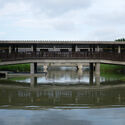
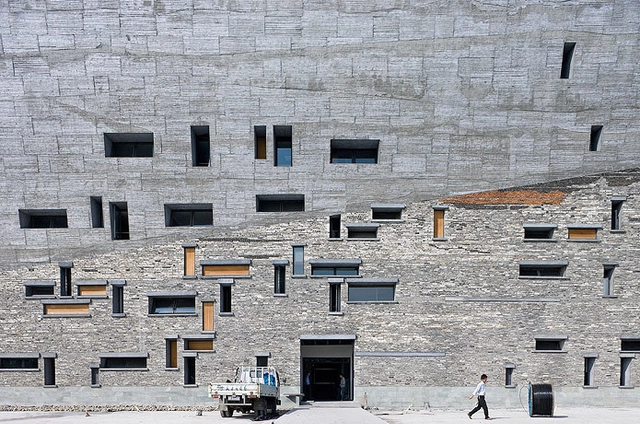
Over the past two centuries, cities in China have multiplied and expanded on a large scale, under accelerated urbanization. Mass demolition of the old city fabric, occurring everywhere, is leaving industrial debris and fragmented cultural artifacts buried forever, under shiny new skyscrapers. As old Chinese cities are collapsing and new urban centers are outspreading, a part of the city was lost, the old demolished landscape. Wang Shu and Lu Wenyu, the first Chinese citizens to win the Pritzker Architecture Prize, responded to this past-present relation by working with recycled materials and traditional know-how. In the following, we explore some of this couple's renowned works such as Ningbo History Museum, Ningbo (2008), Xiangshan Campus of China Academy of Art, Hangzhou (2004), and Ningbo Contemporary Art Museum (2005), to examine his humanistic approach to the city.
"I Identify Forms with Energy": Li Xiaodong of Li Xiaodong Atelier

One of the immediate impressions that I formed of the Beijing-based architect and Tsinghua University Professor Li Xiaodong (b. 1963) is his reassuring self-confidence. Following our interview, Professor Li asked me a question of his own - would I like to teach at his school? “I never taught in my life,” I replied. He quickly countered, “I know. You can teach. Yes or no?” If I have learned anything about life, it is that when opportunities come you should grab them first and think later. "If he is so confident in me, why shouldn’t I trust him?” I reasoned.

"I Identify Forms with Energy": Li Xiaodong of Li Xiaodong Atelier - Arch Daily Interviews"I Identify Forms with Energy": Li Xiaodong of Li Xiaodong Atelier - Arch Daily Interviews"I Identify Forms with Energy": Li Xiaodong of Li Xiaodong Atelier - Arch Daily Interviews"I Identify Forms with Energy": Li Xiaodong of Li Xiaodong Atelier - Arch Daily InterviewsI Identify Forms with Energy: Li Xiaodong of Li Xiaodong Atelier - More Images+ 19