1. ArchDaily
  2. Constructivism

Constructivism: The Latest Architecture and News

6 Schools That Defined Their Own Architectural Styles

Subscriber Access | 

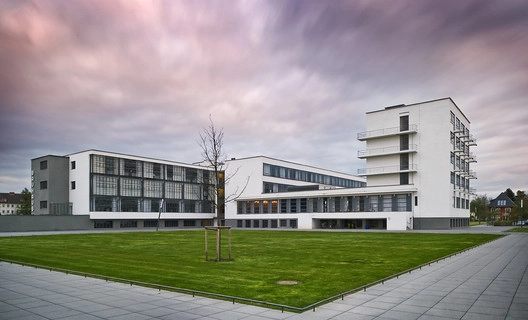
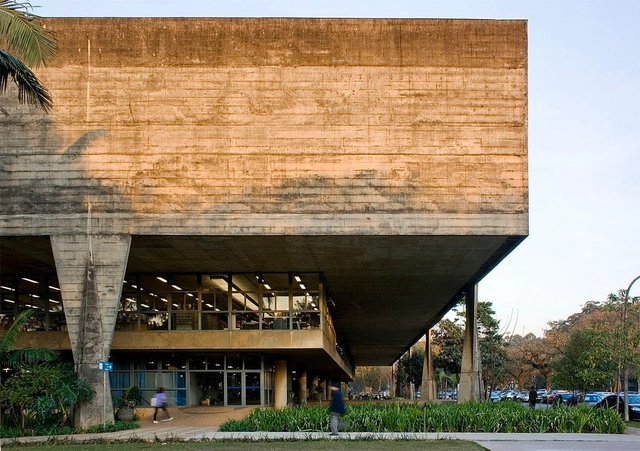
Architectural education has always been fundamentally influenced by whichever styles are popular at a given time, but that relationship flows in the opposite direction as well. All styles must originate somewhere, after all, and revolutionary schools throughout centuries past have functioned as the influencers and generators of their own architectural movements. These schools, progressive in their times, are often founded by discontented experimental minds, looking for something not previously nor currently offered in architectural output or education. Instead, they forge their own way and bring their students along with them. As those students graduate and continue on to practice or become teachers themselves, the school’s influence spreads and a new movement is born.
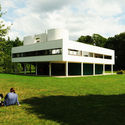
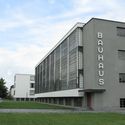
6 Schools That Defined Their Own Architectural Styles - Image 1 of 46 Schools That Defined Their Own Architectural Styles - Image 2 of 46 Schools That Defined Their Own Architectural Styles - Image 3 of 46 Schools That Defined Their Own Architectural Styles - Image 4 of 46 Schools That Defined Their Own Architectural Styles - More Images+ 9

Ukrainian Architectural Landmarks Face the Threat of Destruction

Ukrainian Architectural Landmarks Face the Threat of Destruction - Featured Image
Photo by Andriyko Podilnyk on Unsplash . ImageLviv

Russia’s invasion of Ukraine unleashed a major humanitarian and refugee crisis, with 4.2 million people fleeing into neighbouring countries and 6.5 displaced internally. According to the United Nations Office for the Coordination of Humanitarian Affairs (UNOCHA), 18 million people are projected to become affected in the near future with the current scale and direction of the ongoing military violence. In addition to the threat to human lives, Ukraine’s culture is also at risk, as cities and historic buildings are being destroyed. In March, the United Nations Educational, Scientific, and Cultural Organization (UNESCO) has expressed concern over the damage caused to historic landmarks in Ukraine and called for the protection of its cultural heritage. The following are some of Ukraine’s most prominent architectural landmarks, which are now in danger of being destroyed amid the conflict.

Ukrainian Architectural Landmarks Face the Threat of Destruction - Image 1 of 4Ukrainian Architectural Landmarks Face the Threat of Destruction - Image 2 of 4Ukrainian Architectural Landmarks Face the Threat of Destruction - Image 3 of 4Ukrainian Architectural Landmarks Face the Threat of Destruction - Image 4 of 4Ukrainian Architectural Landmarks Face the Threat of Destruction - More Images

Bofill's La Muralla Roja Captured in Evocative New Photoseries by Andrés Gallardo

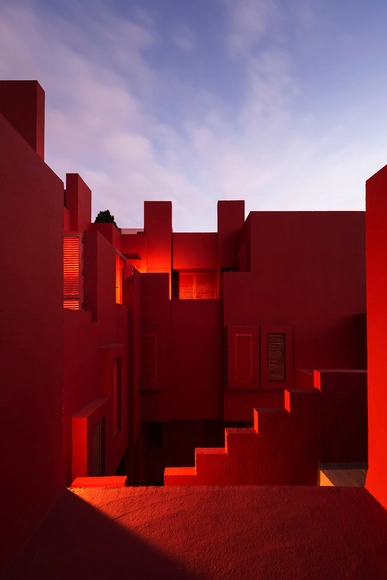
‘La Muralla Roja’ When the sun goes down III, is an evocative new Photo series by Andrés Gallardo. 5 years after initially visiting Ricardo Bofill’s creation, Gallardo revisited with the intention of creating a totally contrasting series, capturing the complex through sunset, the night and into sunrise. With regard to the fact that there are not many photographs in circulation during the night-time period, Gallardo set out to capture the complex during twilight, with the placid roll of the waves against the seafront.

‘La Muralla Roja’ translated as ‘The Red Wall’ is a vibrant housing project in Spain’s Calpe. Casbah is a term often mentioned in regards to this particular project, suggesting Bofill himself drew upon North African Arabic themes for his inspiration. Casbah refers to a citadel or castle, a walled central area of a town or city upon the traditional quarter. The Mediterranean complex mimics this built-up realm, with an entanglement of walkways, stairs, balconies, and bridges interlocking in harmonious effect.

Bofill's La Muralla Roja Captured in Evocative New Photoseries by Andrés Gallardo - Image 1 of 4Bofill's La Muralla Roja Captured in Evocative New Photoseries by Andrés Gallardo - Image 2 of 4Bofill's La Muralla Roja Captured in Evocative New Photoseries by Andrés Gallardo - Image 3 of 4Bofill's La Muralla Roja Captured in Evocative New Photoseries by Andrés Gallardo - Image 4 of 4Bofill's La Muralla Roja Captured in Evocative New Photoseries by Andrés Gallardo - More Images+ 3

"We Still Have Not Built that City of the Future Where I Once Lived": In Conversation with Nishan Kazazian

What follows this short introduction is my unusually personal interview with a Lebanese-American architect and artist Nishan Kazazian. His work is inspired by numerous sources that come from many directions such as Kintsugi, the Japanese art of putting broken pottery pieces back together, primary color geometric abstractions evocative of Russian Constructivism, as well as paintings by Piet Mondrian and Paul Klee. Yet, a stronger inspiration comes from his memories of home and family history. Layering and superimposition of cultures and languages were constantly present in his life since childhood and remain guiding forces to Kazazian, who is both a licensed architect and a professional artist.

"We Still Have Not Built that City of the Future Where I Once Lived": In Conversation with Nishan Kazazian - Image 1 of 4"We Still Have Not Built that City of the Future Where I Once Lived": In Conversation with Nishan Kazazian - Image 2 of 4"We Still Have Not Built that City of the Future Where I Once Lived": In Conversation with Nishan Kazazian - Image 3 of 4"We Still Have Not Built that City of the Future Where I Once Lived": In Conversation with Nishan Kazazian - Image 4 of 4We Still Have Not Built that City of the Future Where I Once Lived: In Conversation with Nishan Kazazian - More Images+ 20

Coop Himmelb(l)au to Build Constructivism-Inspired CKA Arena and Park

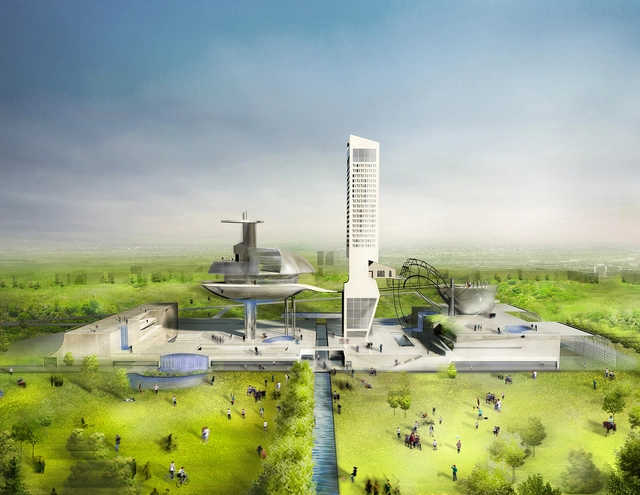
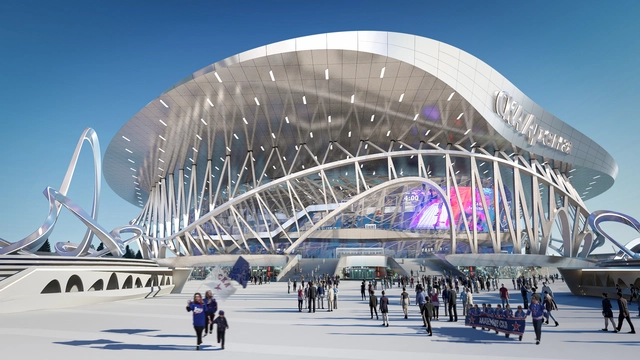
Vienna-based architecture firm Coop Himmelb(l)au has won an international competition to redesign the CKA Ice Hockey Arena and Park in St. Petersburg, Russia. The design of the complex is inspired by Russian Constructivist architecture, an era that redefined architecture with the works of Tatlin and El Lissitzky, and removed the limitations of construction and movement. The structure and general layout of the arena is based on Tatlin's “Monument to the Third International,” where it is translated as the flowing, dynamic movement of a person skating around the stadium.

Coop Himmelb(l)au to Build Constructivism-Inspired CKA Arena and Park - Image 1 of 4Coop Himmelb(l)au to Build Constructivism-Inspired CKA Arena and Park - Image 2 of 4Coop Himmelb(l)au to Build Constructivism-Inspired CKA Arena and Park - Image 3 of 4Coop Himmelb(l)au to Build Constructivism-Inspired CKA Arena and Park - Image 4 of 4Coop Himmelb(l)au to Build Constructivism-Inspired CKA Arena and Park - More Images+ 4

Evolution of the House Plan in Europe: from the Industrial Revolution to the Interwar Period

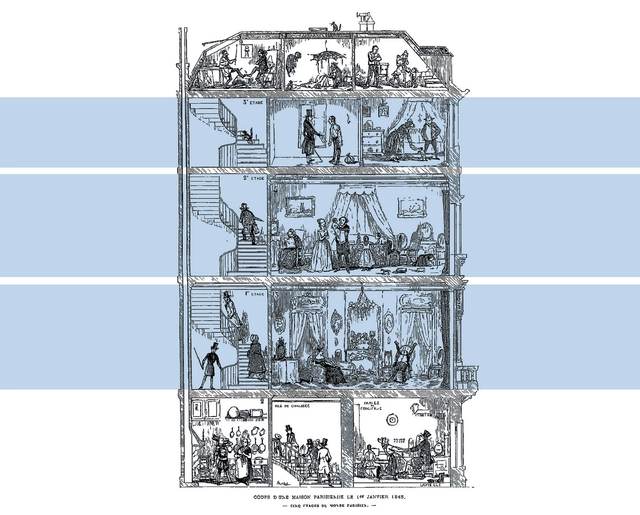
The introduction of new techniques and materials, along with innovations in indoor plumbing systems, resulting from the industrial revolution, paved the way for vertical living. Investigating specifically a period of time where a flux of population was driven to cities, and social class divisions were being questioned, this article looks back at the evolution of the house plan in Europe between 1760 and 1939.

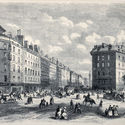
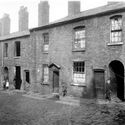
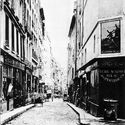
Tackling the transformation of the housing unit during the industrial revolution all the way to the interwar period, this feature highlights four prominent examples that rethought traditional layouts and responded to the challenges of their time. Still influential today, the mentioned models, restored for use, happen to be part of the 21st-century urban fabric. Located in London, Paris, Amsterdam, and Moscow, the plans showcase the ever-changing interior wellbeing standards, directly linked to a broader metamorphosis, equalizing and providing for growing urban populations. Discover the evolution of living units from the Back to Back Houses to the Garden Cities of England; the Haussmannien Block, a Vertical Living for a Modern Bourgeoisie; the Extension of Amsterdam, from Alcove Housing to Social Housing Blocks; and the Transition Type House in Russia.

Evolution of the House Plan in Europe: from the Industrial Revolution to the Interwar Period  - Image 1 of 4Evolution of the House Plan in Europe: from the Industrial Revolution to the Interwar Period  - Image 2 of 4Evolution of the House Plan in Europe: from the Industrial Revolution to the Interwar Period  - Image 3 of 4Evolution of the House Plan in Europe: from the Industrial Revolution to the Interwar Period  - Image 4 of 4Evolution of the House Plan in Europe: from the Industrial Revolution to the Interwar Period  - More Images+ 16

The Winding Saga of the Restoration of the Narkomfin, an Icon of Soviet Constructivism

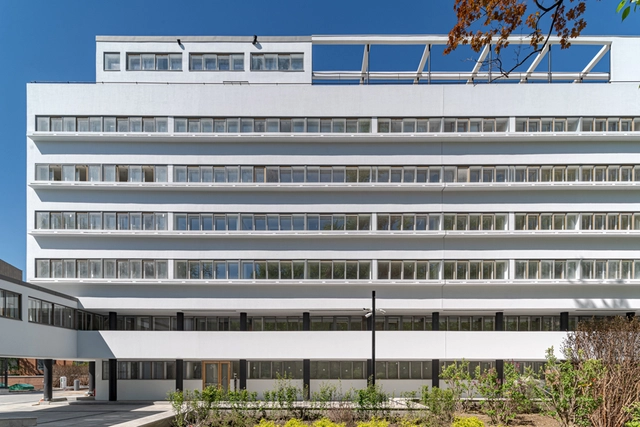
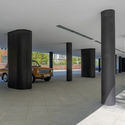
If you wandered down Novinsky Boulevard in central Moscow five years ago looking for the Narkomfin building, you’d have been greeted by a sorry sight. The Narkomfin, the poster child for Constructivist architecture designed by Moisey Ginzburg and Ignaty Milinis in 1928, had been slowly falling into a state of dereliction after being left unloved for 45 years. Paint peeling, concrete crumbling, and windows broken—not to mention the numerous, muddling alterations made to the block of flats, including a completely new ground floor.

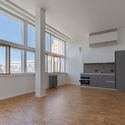
The Winding Saga of the Restoration of the Narkomfin, an Icon of Soviet Constructivism - Image 1 of 4The Winding Saga of the Restoration of the Narkomfin, an Icon of Soviet Constructivism - Image 2 of 4The Winding Saga of the Restoration of the Narkomfin, an Icon of Soviet Constructivism - Image 3 of 4The Winding Saga of the Restoration of the Narkomfin, an Icon of Soviet Constructivism - Image 4 of 4The Winding Saga of the Restoration of the Narkomfin, an Icon of Soviet Constructivism - More Images

12 Important Modernist Styles Explained

Subscriber Access | 

Modernism could be described as one of the most optimistic styles in architectural history, drawing from notions of utopia, innovation, and the reimagination of how humans would live, work, and interact. As we reflected in our AD Essentials Guide to Modernism, the philosophy of Modernism still dominates much of architectural discourse today, even if the world that gave rise to Modernism has changed utterly.

As we say goodbye to 2019, a year that saw the centenary of the Bauhaus, we have collated a list of key architectural styles that defined Modernism in architecture. This tool for understanding the development of 20th-century design is complete with examples of each style, showcasing the practice of Modernism that lay behind the theory.

12 Important Modernist Styles Explained - Image 1 of 412 Important Modernist Styles Explained - Image 2 of 412 Important Modernist Styles Explained - Image 3 of 412 Important Modernist Styles Explained - Image 4 of 412 Important Modernist Styles Explained - More Images+ 8

This Book Encourages Children to Build Their Own Russian Constructivist Playground

It was alongside the rise of the Soviet era when the Russian avant-garde movement started one of the most influential creative revolutions in the 20th Century. The Constructivists, forming part of this wave, rewrote the history of art, design and architecture, and their legacy still remains contemporary.

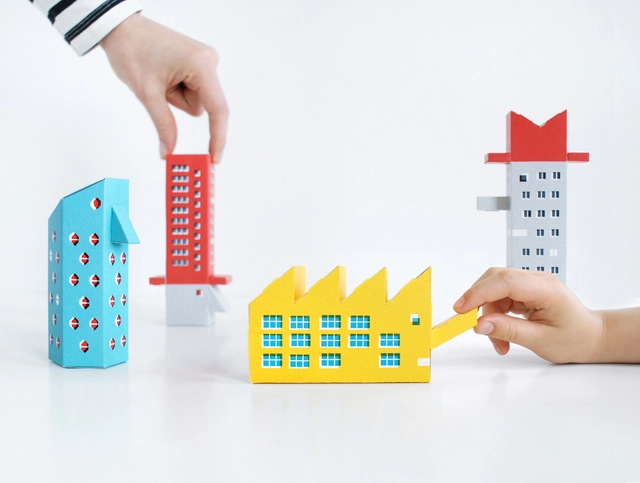
This Book Encourages Children to Build Their Own Russian Constructivist Playground - BuildingsThis Book Encourages Children to Build Their Own Russian Constructivist Playground - BuildingsThis Book Encourages Children to Build Their Own Russian Constructivist Playground - BuildingsThis Book Encourages Children to Build Their Own Russian Constructivist Playground - BuildingsThis Book Encourages Children to Build Their Own Russian Constructivist Playground - More Images+ 15

Spotlight: Konstantin Melnikov

Subscriber Access | 
Spotlight: Konstantin Melnikov - Image 1 of 4
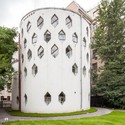
Melnikov Residence (1929) / Konstantin Melnikov. Image © Denis Esakov

Best known for the Rusakov Workers’ Club and his own house, Russian architect and painter Konstantin Melnikov (August 3rd, 1890 – November 28th, 1974) has only recently received his due, now more than forty years after his death. He spent much of the twentieth century shunned by the Soviet architectural establishment, having refused to capitulate to the increasingly conformist (and classicist) prescriptions of Stalinism. As a result, he was forced to end his career only a decade after it started, returning to his other avocation as a painter and leaving in his wake only a precious few completed works.

Spotlight: Konstantin Melnikov - Image 2 of 4Spotlight: Konstantin Melnikov - Image 3 of 4Spotlight: Konstantin Melnikov - Image 4 of 4Spotlight: Konstantin Melnikov - Image 1 of 4Spotlight: Konstantin Melnikov - More Images+ 9

These Drone Photographs Reveal the Hidden Geometries of Late Soviet Modernism

Subscriber Access | 

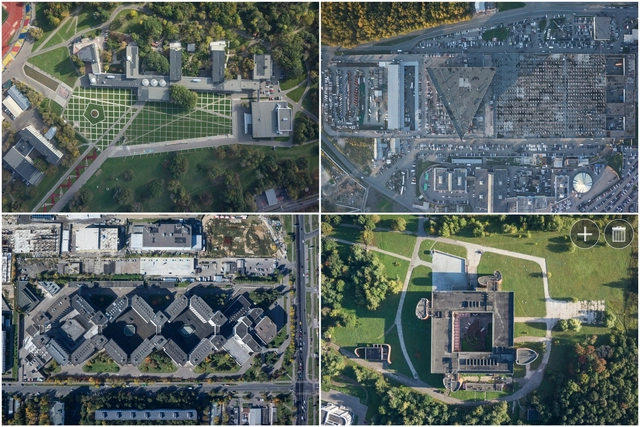
Though the ahistorical dogma of modernism would seem a perfect fit for the Soviet Union’s mandated break with traditions, the architectural history of the USSR was somewhat more complex. Stalin’s neoclassically-inflected socialist realism superseded the constructivist heyday of the early Soviet Union, only to be replaced by a return to modernism under Khrushchev, facilitated by an opening to the West. Architectural photographers Denis Esakov and Dmitry Vasilenko recently used a drone to capture photographs of several landmark structures of the Khrushchev-era return to modernism, focusing on how these aerial views reinforce their rational geometries and regimented forms. Until the recent advent of satellite imagery and commercially available drones, these were views that were only ever seen by the architects, and the officials who reviewed the plans. Even so, the photographer notes that these methodical forms must have been very attractive to the state officers tasked with implementing Khrushchev’s mandated aesthetic.

The photographs, taken in and around Moscow, include works by several prominent Soviet architects. Leonid Pavlov’s long career spanned the full spectrum of state-sponsored architectural styles, starting as a constructivist, and moving into more historicist designs under Stalin, before emerging as one of the Soviet Union’s most prominent post-war modernists. Similarly, Yuri Platonov’s work received extensive state recognition, earning him the title of “People’s architect of the USSR,” as well as awards such the Silver Medal of the Arts Academy of the USSR, the USSR State Prize, and the State Prize of Russia.

These Drone Photographs Reveal the Hidden Geometries of Late Soviet Modernism - Image 6 of 4These Drone Photographs Reveal the Hidden Geometries of Late Soviet Modernism - Image 7 of 4These Drone Photographs Reveal the Hidden Geometries of Late Soviet Modernism - Image 8 of 4These Drone Photographs Reveal the Hidden Geometries of Late Soviet Modernism - Image 9 of 4These Drone Photographs Reveal the Hidden Geometries of Late Soviet Modernism - More Images+ 28

Why NL Architects + BeL's Winning Proposal for Hamburg's St. Pauli Won't Win You Over With Glossy Renders

After the Bolsheviks secured power in Russia in the late 1910s and eventually created the Soviet Union in 1922, one of the first orders of business was a new campaign, Novyi bit (new everyday life), which sought to advance many of the most hallowed causes of their newly minted socialism. The initiative’s great success came from the bold designs of Constructivist artists such as Alexander Rodchenko, Vladimir Mayakovsky, and Lyubov Popova. Using a high-contrast visual language and a combination of words and symbols, the graphics were arresting and comprehensible in a post-tsarist country that was largely illiterate, and became some of the most recognizable examples of twentieth century graphics and political propaganda.

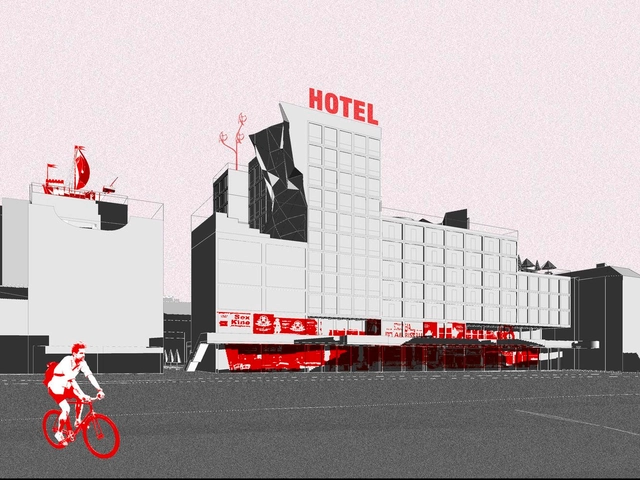
It's hard not to see the connection between the styles of the Constructivists and the unusual graphics created by NL Architects in association with BeL (Bernhardt und Leeser) Sozietät für Architektur BDA for their competition-winning proposal for Hamburg’s St. Pauli neighborhood, consisting of an urban plan of housing and other amenities at the former site of Esso Häuser on the Spielbudenplatz. And, while this stylistic connection may not have been intentionally drawn by the architects - the inspiration for the graphics is not mentioned in the four-page project description - it is oddly appropriate for this particular development.

Why NL Architects + BeL's Winning Proposal for Hamburg's St. Pauli Won't Win You Over With Glossy Renders - TableWhy NL Architects + BeL's Winning Proposal for Hamburg's St. Pauli Won't Win You Over With Glossy Renders - Facade, CityscapeWhy NL Architects + BeL's Winning Proposal for Hamburg's St. Pauli Won't Win You Over With Glossy Renders - Facade, CityscapeWhy NL Architects + BeL's Winning Proposal for Hamburg's St. Pauli Won't Win You Over With Glossy Renders - Facade, CityscapeWhy NL Architects + BeL's Winning Proposal for Hamburg's St. Pauli Won't Win You Over With Glossy Renders - More Images+ 16

A Short History of Yekaterinburg's Constructivist Architecture

Constructivist architecture is most often remembered in writing and on paper. The movement’s two most radical and recognized structures, Vladimir Tatlin’s “Monument to the Third International” and El Lissitzky’s “Lenin Tribune,” were never built at scales larger than models. Taking hold in the wake of the Russian Revolution of 1917, Constructivism was the result of Cubo-Futurist artists marrying their kineticism and abstraction to the social concerns of the Bolsheviks, in the hopes of using art as a platform to motivate changes in society. Viewing the museum establishment as a “mauseoleum of art,” in 1918 the new broadsheet Art of the Commune affirmed: “The proletariat will create new houses, new streets, new objects of everyday life...Art of the proletariat is not a holy shrine where things are lazily regarded, but work, a factory which produces new artistic things.”[1]

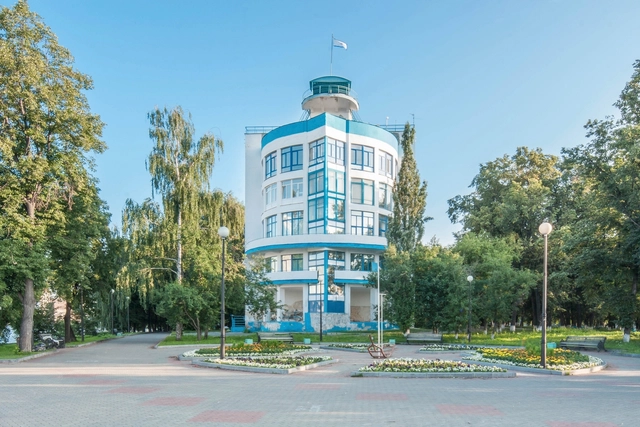
In spite of the predominance of "paper architecture" in the history of Constructivism, there is one city that experienced the fruit of this movement to an unrivaled degree. Yekaterinburg is Russia’s fourth-largest city, home to nearly 1.5 million people. It is also the largest concentration of Constructivist architecture anywhere in the world, with approximately 140 structures. To celebrate the importance of Yekaterinburg in the history of architecture, photographer Denis Esakov has shared his images of the city's architecture with ArchDaily.

A Short History of Yekaterinburg's Constructivist Architecture - Image 5 of 4A Short History of Yekaterinburg's Constructivist Architecture - Image 6 of 4A Short History of Yekaterinburg's Constructivist Architecture - Image 17 of 4A Short History of Yekaterinburg's Constructivist Architecture - Image 30 of 4A Short History of Yekaterinburg's Constructivist Architecture - More Images+ 29

Why Putin Likes Columns: 21st Century Russia Through the Lens of Architecture

Subscriber Access | 

In August 1932, Stalin, holidaying in Sochi, sent a memo containing his thoughts on the entries for the competition to design the Palace of the Soviets, the never-to-be-built monument to Lenin and center of government. In this memo he selected his preferred design, the colossal wedding cake of a tower topped with a 260-foot (79-meter) high statue of Lenin, designed by Boris Iofan. Just over 80 years later, Sochi again hosted the architectural whims of a powerful Russian leader for the 2014 Sochi Winter Olympics. An oversimplification? Probably. But it’s got nice symmetry to it.

Why Putin Likes Columns: 21st Century Russia Through the Lens of Architecture - Image 1 of 4Why Putin Likes Columns: 21st Century Russia Through the Lens of Architecture - Image 2 of 4Why Putin Likes Columns: 21st Century Russia Through the Lens of Architecture - Image 3 of 4Why Putin Likes Columns: 21st Century Russia Through the Lens of Architecture - Image 4 of 4Why Putin Likes Columns: 21st Century Russia Through the Lens of Architecture - More Images+ 2

Video: The City With the Most Constructivist Buildings in the World

Few Constructivist projects made it through the World Wars, but if you're looking for those that did, you'd be wise to travel to Yekaterinburg, Russia. With over a dozen complexes, the city probably has the world's biggest collection of Constructivist buildings—and it's definitely the only place with a hotel in the shape of a hammer and sickle.

The fascinating video above by Ural Life and Culture tours the city and surveys the elements common to Constructivist buildings. Yekaterinburg was a laboratory for Constructivist architects who started building there soon after the movement was founded in Moscow in 1921. Architects from all over the Soviet Union, Poland, and Germany designed 4-5 story apartment blocks and office towers to replace single story wooden houses. The Soviets also introduced new typologies like public baths, kindergartens, and a 14-building secret police complex called the "Little Town of Cheka Officers," with covered passages so residents could walk between buildings indoors.