1. ArchDaily
  2. De Stijl

De Stijl: The Latest Architecture and News

5 Art Movements that Influenced Architecture

Subscriber Access | 

As far as history goes back, art and architecture have always been interrelated disciplines. From the elaboration of the Baroque movement to the geometric framework of modernism, architects found inspiration from stylistic approaches, techniques, and concepts of historic art movements, and translated them into large-scale habitable structures. In this article, we explore 5 of many art movements that paved the way for modern-day architecture, looking into how architects borrowed from their characteristics and approaches to design to create their very own architectural compositions.

5 Art Movements that Influenced Architecture  - Image 1 of 45 Art Movements that Influenced Architecture  - Image 2 of 45 Art Movements that Influenced Architecture  - Image 3 of 45 Art Movements that Influenced Architecture  - Image 4 of 45 Art Movements that Influenced Architecture  - More Images+ 8

The Myth of Pure White Architecture: How Architects of Modernity Used Color

Given that the architects of modernity were in search of purity of form, it stands to reason that the image of this modern architecture is almost inevitably rendered in white in the collective imagination. Relieved of superfluous decorations, modern architecture became associated with the predominant use of white surfaces to highlight the volumetric composition. Combined with the concept of “material truth” first articulated by Victorian critic John Ruskin, white-colored architecture is often understood as straightforward, clear, and sincere.

The Myth of Pure White Architecture: How Architects of Modernity Used Color - Image 1 of 4The Myth of Pure White Architecture: How Architects of Modernity Used Color - Image 2 of 4The Myth of Pure White Architecture: How Architects of Modernity Used Color - Image 3 of 4The Myth of Pure White Architecture: How Architects of Modernity Used Color - Image 4 of 4The Myth of Pure White Architecture: How Architects of Modernity Used Color - More Images+ 9

A Rebellion Against Realism and Art: How Cubism Influenced Modern Architecture

Subscriber Access | 
A Rebellion Against Realism and Art: How Cubism Influenced Modern Architecture  - Featured Image

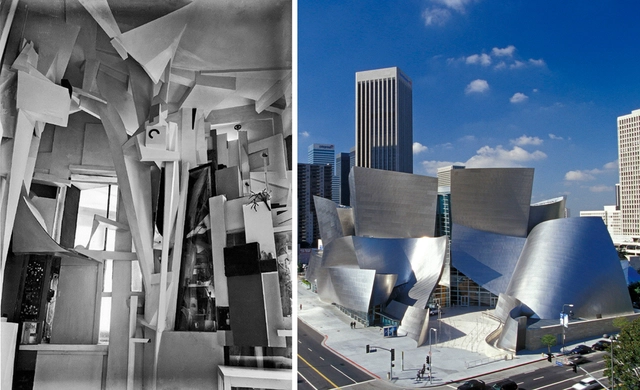
Historic art movements and their visual characteristics have considerably paved the way for modern day architecture. For years, architects have been borrowing techniques and stylistic approaches to create their own architectural compositions, merging both disciplines together. Cubism, one of the most influential styles of the twentieth century, and heavily criticized for its experimentation with its non-representational art approach, is perhaps the most significant architecture inspiration. Just as the radical art movement rejected the then-rooted concept that art should mimic nature, architects found themselves following suit and designing structures that borrow Cubism’s avant-gardist features, creating buildings that, to this day, stand as iconic landmarks of the practice.

A Rebellion Against Realism and Art: How Cubism Influenced Modern Architecture  - Image 1 of 4A Rebellion Against Realism and Art: How Cubism Influenced Modern Architecture  - Image 2 of 4A Rebellion Against Realism and Art: How Cubism Influenced Modern Architecture  - Image 3 of 4A Rebellion Against Realism and Art: How Cubism Influenced Modern Architecture  - Image 4 of 4A Rebellion Against Realism and Art: How Cubism Influenced Modern Architecture  - More Images+ 7

12 Important Modernist Styles Explained

Subscriber Access | 

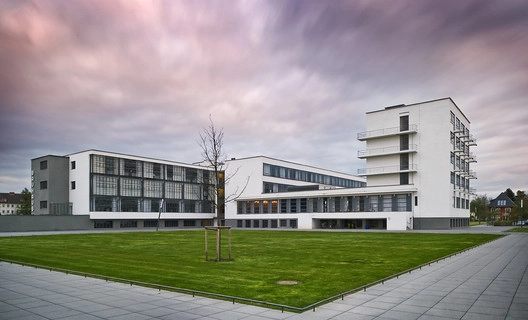
Modernism could be described as one of the most optimistic styles in architectural history, drawing from notions of utopia, innovation, and the reimagination of how humans would live, work, and interact. As we reflected in our AD Essentials Guide to Modernism, the philosophy of Modernism still dominates much of architectural discourse today, even if the world that gave rise to Modernism has changed utterly.

As we say goodbye to 2019, a year that saw the centenary of the Bauhaus, we have collated a list of key architectural styles that defined Modernism in architecture. This tool for understanding the development of 20th-century design is complete with examples of each style, showcasing the practice of Modernism that lay behind the theory.

12 Important Modernist Styles Explained - Image 1 of 412 Important Modernist Styles Explained - Image 2 of 412 Important Modernist Styles Explained - Image 3 of 412 Important Modernist Styles Explained - Image 4 of 412 Important Modernist Styles Explained - More Images+ 8

Diagrams of the Rietveld Schroder House Reveal its Graphic and Geometric Brilliance

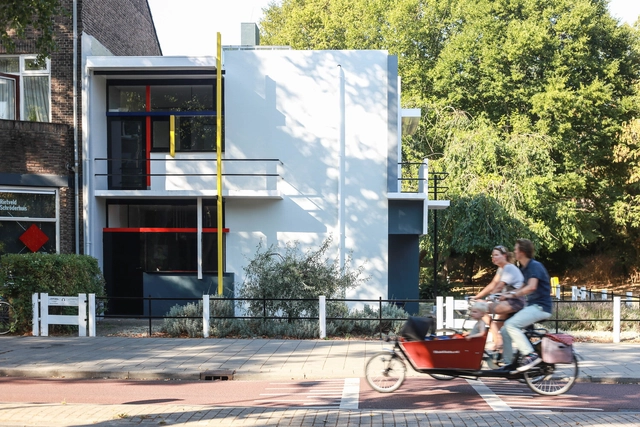
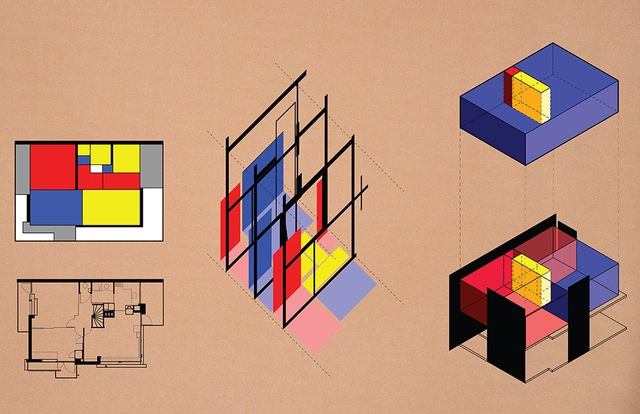
As one of the most prominent examples of the De Stijl movement, the 1925 Rietveld Schroder House represents a radical moment in modern architecture. Categorized by refining components to their geometric forms and primary paint hues, characteristics of the movement are evident in the architect Gerrit Rietveld's approach to residential design. Located in Utrecht, the house experiments with modular elements such as collapsible walls that provide a transformable way of living that still influences design to this day.

Because of its significance, the Schroder House has been the subject of study for many architects, artists, and historians. Inspired by its revolutionary design, aspiring architect and visual artist Yun Frank Zhang created a series of analytical diagrams and an accompanying video in order to understand the functionality, dimensions, and programmatic elements of the house. Below is a sample of Zhang’s exploration.

Diagrams of the Rietveld Schroder House Reveal its Graphic and Geometric Brilliance - Featured ImageDiagrams of the Rietveld Schroder House Reveal its Graphic and Geometric Brilliance - Image 1 of 4Diagrams of the Rietveld Schroder House Reveal its Graphic and Geometric Brilliance - Image 2 of 4Diagrams of the Rietveld Schroder House Reveal its Graphic and Geometric Brilliance - Image 3 of 4Diagrams of the Rietveld Schroder House Reveal its Graphic and Geometric Brilliance - More Images

Maison d'Artiste: An Unfinished Icon by De Stijl

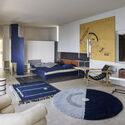
Description via Amazon. Though it was never built, the design for the legendary artist’s house Maison d’Artiste is one of the key works of the Dutch avant-garde movement De Stijl. Created in 1923 by painter Theo van Doesburg and architect Cornelis van Eesteren for De Stijl’s first group exhibition, the Maison d’Artiste was intended to encapsulate what De Stijl aspired to: a new everyday environment achieved through the harmonious fusion of painting and architecture. The scale model presented De Stijl’s ideal space for life and work, with a gym, a music room and a studio, as well as living spaces like guest rooms and bathrooms. Maison d’Artiste: An Unfinished Icon by De Stijl explores the revolutionary cultural importance of the design, its significance for the history of De Stijl and its place in a history of the unbuilt architecture of the 20th century.

See Richard Meier's City Hall in The Hague Repainted as the "World's Largest Mondrian"

Subscriber Access | 

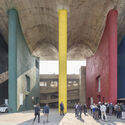
Richard Meier is well-known for his love of the color white, describing it as “the most wonderful color, because within it you can see all the colors of the rainbow” in his Pritzker Prize acceptance speech. As such, many of his buildings, including the City Hall of The Hague in Netherlands (completed in 1995), are painted head-to-toe in the snowy pigment. But now, all that white has given the building a new unintentional function: as a perfect canvas for the world’s largest Mondrian painting.

AD Classics: Café l'Aubette / Theo van Doesburg

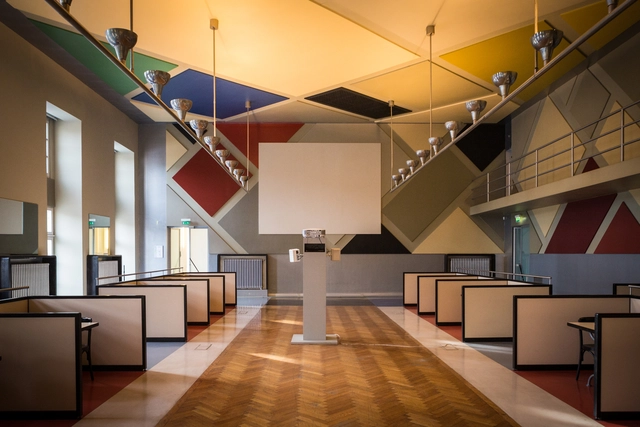
Concealed behind an 18th century Baroque façade in Strasbourg’s Place Kléber, the Café L’Aubette is a dazzlingly incongruous expression of the 1920s De Stijl movement. Designed by Theo van Doesburg, one of the movement’s founders and leading lights, the Aubette’s minimalist, geometric aesthetic was heavily influenced by the work of contemporary artists such as Piet Mondrian. In designing the café’s interiors, Van Doesburg sought to do more than simply place viewers before a painting; he wanted to envelop them in it.