Adaptive reuse has become a buzzword in the architecture industry. Framed as a sustainable and economical solution to urban decay, the practice has been adopted by cities facing pressures of climate change, real estate constraints, and cultural preservation. Architects are increasingly being hired to rehabilitate the old rather than build anew. Within this discourse is a growing sentiment towards who gets to reuse and how.
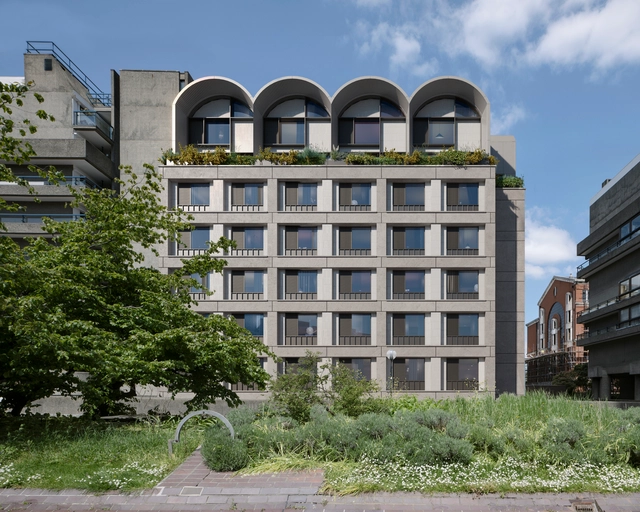
Allford Hall Monaghan Morris (AHMM)’s architectural studio has revealed the plans to convert a 1950s London office building into a co-living residential scheme. Initiated by developer HUB and Bridges Fund Management, “Cornerstone” is nestled on the fringes of the iconic Barbican estate, hoping to seamlessly transform the original office building to integrate 174 co-living residences.
For over half a century, the open floor plan has remained at the cutting edge of interior architecture, with both new-build and renovation clients choosing to splice together rooms and their functions to bring more harmonious connectivity to their homes. Families, despite busier schedules, were able to cook, talk, study, and relax together, all at the same time.
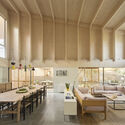
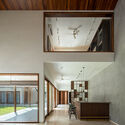
As it can force users to share their space with competing sounds, smells, and ambiances, however, many are turning away from the open plan with new concepts such as the broken plan gaining ground. Another evolutionary route for the open-plan, meanwhile, is to move upwards. In combination with double-, triple-, or even higher-story living spaces, the open-plan is given the space it needs to breathe while staying connected to the rest of the home.
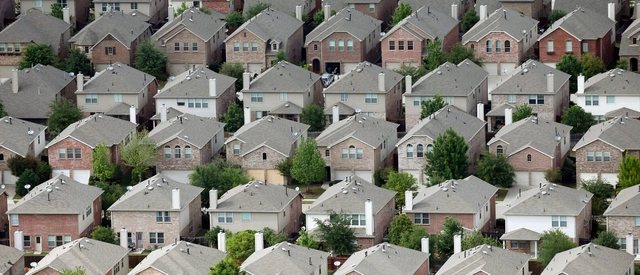
Ice caps are rapidly receding; one of America’s two political parties is actively undermining federal authority; despite new materials and additive manufacturing, most houses constructed today are built much as they were several generations ago; the pathological suburbanization of the nation continues unabated. In the face of this and more, it seems, “the center cannot hold.” Such were several of the issues that prompted Keith Krumwiede, a soon-to-be fellow at the American Academy in Rome (AAR) at the time, to argue in 2017 that if a single detached house for every family is at the core of “The American Dream,” then we need a new dream.
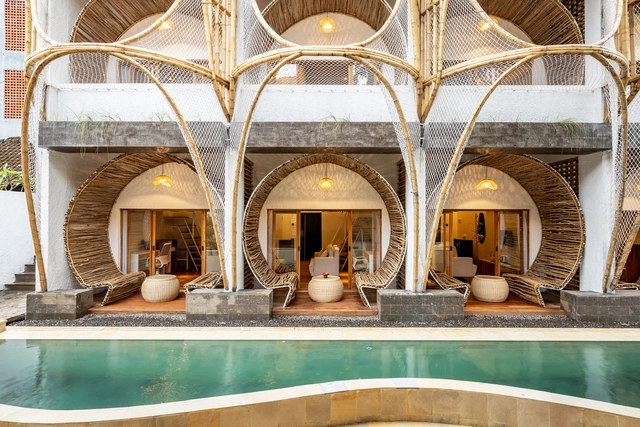
Dramatic societal transformations- such as pandemics and technological advancements - call for dramatic shifts in lifestyles. Architects keep up by exploring and proposing new models of housing, each iteration catering to society’s latest needs. The co-living model is one such example that has become a roaring success over the past few decades. Redefining the way people live, co-living seeks to provide a form of cost-effective social housing. Although widely targeted at younger generations, the co-living industryis evolving to cater to various niche groups.
The Nordic Pavilion at the 17th International ArchitectureExhibition of the Venice Biennale will be transformed into an experimental cohousing project by architects Helen & Hard, supported by a curatorial team from the National Museum of Norway. Responding to the theme of How will we live together? the intervention “will present a framework for designing and building communities based on participation and sharing”.
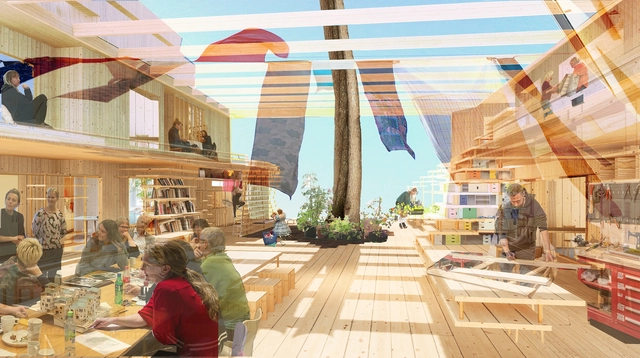
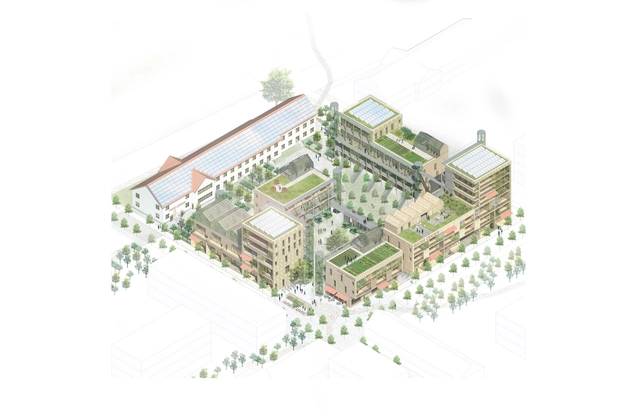
"It Takes a Block" Proposal. Image Courtesy of Kjellander Sjoberg
Stockholm-based firm Kjellander Sjöberg (K+S) won the Swedish division of the Nordic Built Cities Challenge 2016 with their vision to transform Sege Park, Malmö into a socially sustainable residential hub. Their project "It Takes a Block" uses climate-smart and economically varied housing models to test architecture's capability to foster sustainable living. The proposal was developed in association with students from Lund University and Danish landscape architecture firms BOGL and Sted.