1. ArchDaily
  2. coastal erosion

coastal erosion: The Latest Architecture and News

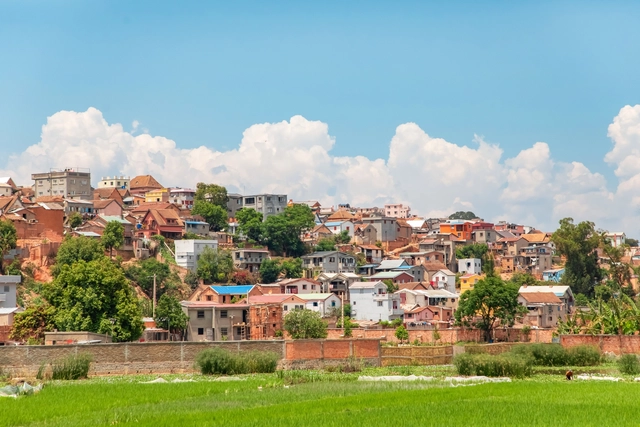
How Madagascar Is Confronting Climate Change

This article was originally published on Common Edge.

Madagascar is an island nation off the southeast coast of Africa that, despite its lush vegetation and unique flora and fauna, grapples with formidable environmental challenges, from rising sea levels to the excessive exploitation of natural resources. Joan Razafimaharo is an architect deeply involved in sustainability, climate change, and adaptation efforts in Madagascar and the broader Indian Ocean region. Razafimaharo is also one of only about sixty architects in the country, serving a population of 28 million.

Recently I spoke to her about environmental activism in the face of climate change, curbing the exploitation of natural resources, the role of architects in resource-scarce societies, and empowering women in isolated areas. The interview, originally conducted in French, has been translated and edited for length and clarity.

How Madagascar Is Confronting Climate Change - Image 1 of 4How Madagascar Is Confronting Climate Change - Image 2 of 4How Madagascar Is Confronting Climate Change - Image 3 of 4How Madagascar Is Confronting Climate Change - Image 4 of 4How Madagascar Is Confronting Climate Change - More Images

How Water Responds to Land Reclamation in Coastal Cities

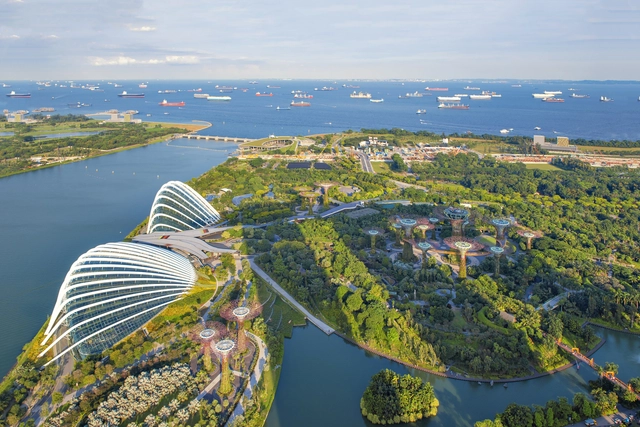
Land reclamation from the sea has become a popular phenomenon in coastal development. It is the most preferred solution to the need for land in coastal areas and has been implemented for various use cases, including flood control and agriculture. Nowadays, it has become a famous urban response to the rapid increase in coastal urbanization, economic activity, and global population. Countries like China and the Netherlands lead the chart on the amount of land area reclaimed. However, most reclamation projects today take place within urban centers in the global south. Cities in West Africa, East Asia, and the Middle East produce these new lands as economic forerunners for their commercial industry and as platforms to house luxury residences.

But the relationship between the design and production of reclaimed lands and the response of water in ocean environments is complex. It requires a symbiotic relationship with water bodies for stability but can provoke natural forces when negligently imposed on the sea. Ocean water behaviors, including tidal accumulation, sea level rise, connection to wetlands, and aquatic biodiversity, can question the success or failure of land reclamation projects in different contexts.

How Water Responds to Land Reclamation in Coastal Cities - Image 1 of 4How Water Responds to Land Reclamation in Coastal Cities - Image 2 of 4How Water Responds to Land Reclamation in Coastal Cities - Image 3 of 4How Water Responds to Land Reclamation in Coastal Cities - Image 4 of 4How Water Responds to Land Reclamation in Coastal Cities - More Images+ 1

Can Architecture and Urban Planning Fight Back Against Climate Change?

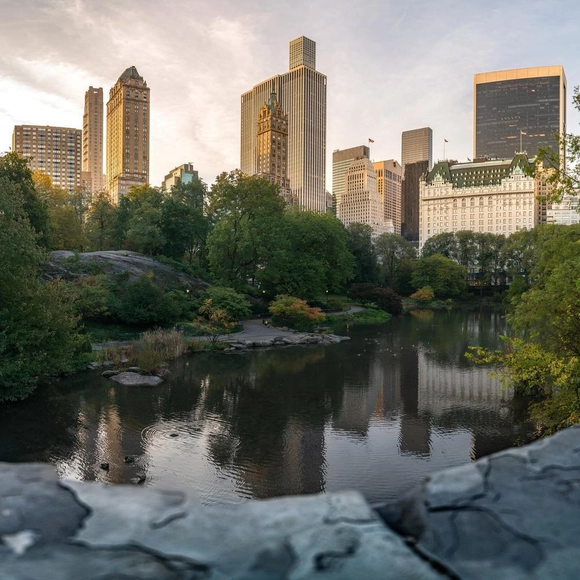
Climate change has been one of the most pressing topics of this year, and for a good reason. Its effects are visible not only in natural habitats but also in urban environments. The construction industry has an important role to play in this dynamic. Throughout the year, events such as COP27 emphasized the importance of striving to achieve net carbon zero and the challenges faced by developing countries affected by increasingly devastating natural disasters. Possible directions for development include actions at varying stages and scales, from optimizing green spaces for urban heat control to employing local and innovative building materials to minimize the carbon footprint or passing laws that help create more sustainable urban and natural environments.

This article represents a roundup of articles published on ArchDaily during the course of 2022 with themes related to climate change and architecture’s potential to make a difference. It breaks down the topic into four main questions: What Are Cities Doing to Mitigate Urban Heat? How to Tackle Rising Sea Levels? What Was COP27 and Why Does It Matter? Can Building Materials Play a Role in Achieving These Goals? The last section presents an overview of new legislation approved during 2022 as a way of understanding how state and local governments are imposing this need for change.

Can Architecture and Urban Planning Fight Back Against Climate Change? - Image 1 of 4Can Architecture and Urban Planning Fight Back Against Climate Change? - Image 2 of 4Can Architecture and Urban Planning Fight Back Against Climate Change? - Image 3 of 4Can Architecture and Urban Planning Fight Back Against Climate Change? - Image 4 of 4Can Architecture and Urban Planning Fight Back Against Climate Change? - More Images+ 25

The Right to the Beach: Walling off Coastal Erosion

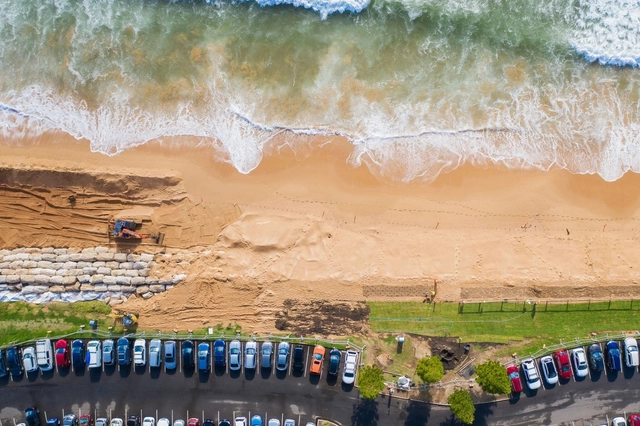
At the onset of the coronavirus pandemic in March 2020, affluent Parisians flocked to second homes on France’s Atlantic coast as a nationwide lockdown came down on the country. In June 2020, as the lockdown was eased in England, residents headed to seaside towns like Bournemouth to soak in sunny weather. The former scenario reflects the widening gap between France’s wealthy and the poor, whilst the latter is a reflection of the democratizing power of public-access beaches.

In both situations, what is sought out is the ecological calmness usually found on beaches. Globally, however, there’s an unsettling phenomenon, where intertwined with climate change and policy decisions, beaches are increasingly becoming private, inaccessible spaces.

The Right to the Beach: Walling off Coastal Erosion - Image 1 of 4The Right to the Beach: Walling off Coastal Erosion - Image 2 of 4The Right to the Beach: Walling off Coastal Erosion - Image 3 of 4The Right to the Beach: Walling off Coastal Erosion - Image 4 of 4The Right to the Beach: Walling off Coastal Erosion - More Images+ 5

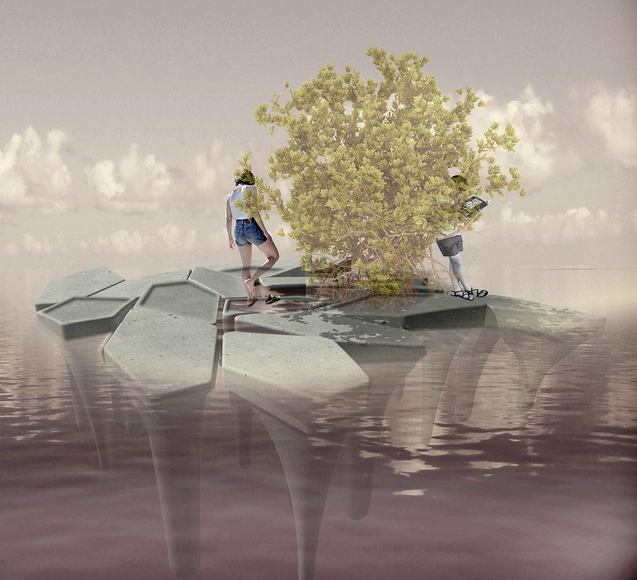
CEMEX + Aptum Architecture's Floating Concrete Structures Act as Mangroves for Shorelines

Mangroves are vital for stabilizing shorelines, but their recent depletion presents impending doom for coastal habitats. 

Aptum Architecture and CEMEX Research Group might have a solution. Their collaborative project, Rhizolith Island (Isla Rhizolith), is a prototype that explores the potential for floating concrete structures to revitalize deteriorating shorelines. The structure was just installed in Cartagena, Columbia as part of the RC 2016 (Reunion del Concreto), an international Expo and Academic Conference on Concrete.

CEMEX + Aptum Architecture's Floating Concrete Structures Act as Mangroves for Shorelines - Image 1 of 4CEMEX + Aptum Architecture's Floating Concrete Structures Act as Mangroves for Shorelines - Image 2 of 4CEMEX + Aptum Architecture's Floating Concrete Structures Act as Mangroves for Shorelines - Image 3 of 4CEMEX + Aptum Architecture's Floating Concrete Structures Act as Mangroves for Shorelines - Image 4 of 4CEMEX + Aptum Architecture's Floating Concrete Structures Act as Mangroves for Shorelines - More Images+ 8