1. ArchDaily
  2. Civic Centre

Civic Centre: The Latest Architecture and News

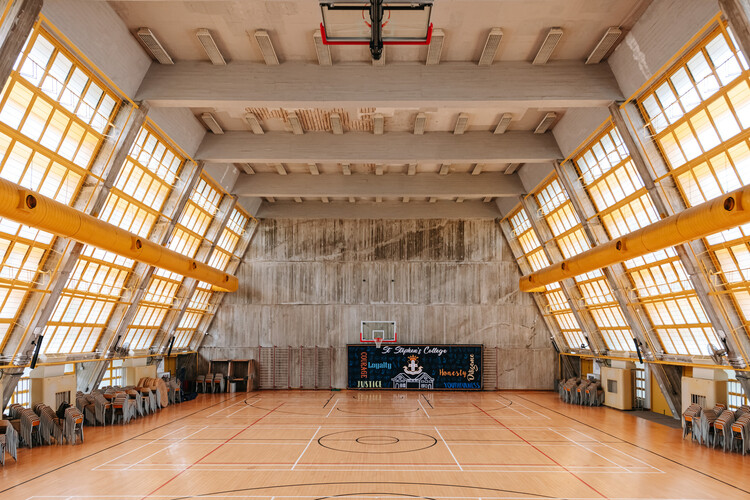
Beyond Imported Icons: Tao Ho and a Local Modernism for Hong Kong

Subscriber Access | 

When Hong Kong's architectural story is told, it is often reduced to a handful of icons. Many people most readily name I.M. Pei—Pritzker Prize laureate and architect of the Bank of China Tower in Central (1990), as well as global works such as the Le Grand Louvre in Paris and the Miho Museum in Shiga. Looking elsewhere, one also encounters a long lineage of British and international architects whose imprints have shaped the city's institutional skyline: from Ron Phillips' civic works—most notably the former Murray Building (1969), now The Murray Hotel, and Hong Kong City Hall (1962)—to Norman Foster's infrastructural and corporate monuments, including the Hongkong and Shanghai Banking Corporation (HSBC) Tower (1986) and Hong Kong International Airport (1998), and, more recently, Zaha Hadid Architects' The Henderson (2024).

Yet within the same period as Pei and Foster, local architects were also producing buildings of enduring significance—works that carried the legacies of Bauhaus, but translated them into a language distinctly calibrated to Hong Kong's climate, density, and civic life. These projects may not always read as commercially prominent icons, yet they often register a sharper sense of social responsibility and public agenda. Among the most important figures in this lineage is the late architect Tao Ho, whose work and public role formed a quieter—but no less foundational—strand in Hong Kong's modern architectural heritage.
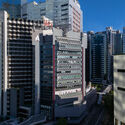
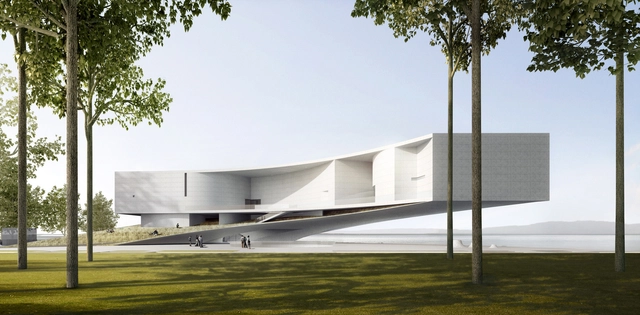
Beyond Imported Icons: Tao Ho and a Local Modernism for Hong Kong - Image 1 of 4Beyond Imported Icons: Tao Ho and a Local Modernism for Hong Kong - Image 2 of 4Beyond Imported Icons: Tao Ho and a Local Modernism for Hong Kong - Image 3 of 4Beyond Imported Icons: Tao Ho and a Local Modernism for Hong Kong - Image 4 of 4Beyond Imported Icons: Tao Ho and a Local Modernism for Hong Kong - More Images+ 14

In Times of Need: Architects Stepping Up in Humanitarian Crisis

Subscriber Access | 

Hard times bring people together. In recent years we have seen how collective work can be a driving force to help those affected by natural or man-made disasters. After a disaster or displacement, a safe physical environment is often essential. Therefore, the need for coordination becomes a key factor in assisting people in times of need.

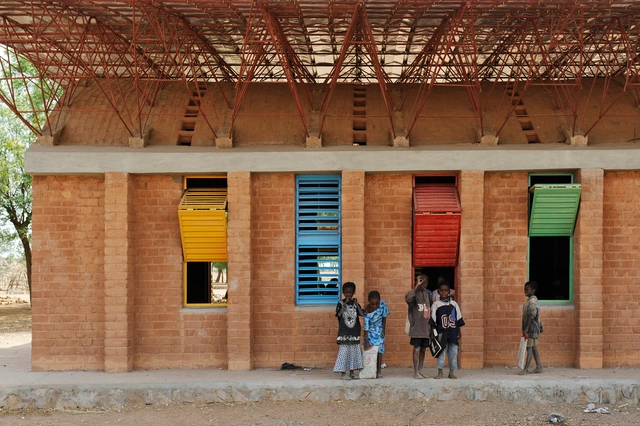
Architects, as "Shelter Specialists", play an important role in creating safe and adequate environments, whether it is individual housing, public buildings, schools, or emergency tent camps. But as architect Diébédo Francis Kéré says, "When you have nothing and you want to convince your community to believe in an idea, it may happen that everybody starts working with you, but you need to keep fighting to convince them."

In Times of Need: Architects Stepping Up in Humanitarian Crisis - Image 1 of 4In Times of Need: Architects Stepping Up in Humanitarian Crisis - Image 2 of 4In Times of Need: Architects Stepping Up in Humanitarian Crisis - Image 3 of 4In Times of Need: Architects Stepping Up in Humanitarian Crisis - Image 4 of 4In Times of Need: Architects Stepping Up in Humanitarian Crisis - More Images+ 25

A Low-Tech Office Building and a Vineyard Hotel: 14 Unbuilt Commercial Projects Submitted by Established Firms

Subscriber Access | 

This week’s curated selection of Best Unbuilt Architecture highlights commercial projects submitted by established firms. From art museums to offices, this article explores cultural functions and commercial spaces, and presents projects submitted to us from all over the world.

Featuring a reception center that merges the cultures of China and Italy by aoe architects, and a post-pandemic office building by NBBJ, this roundup explores how established architecture firms have designed buildings that optimize the functions of projects and ensure the comfort of their users. This round up also includes a collection of proposals from KPF Architects, Nordic Office of Architecture, AFF Architekten, along with many other firms, each responding to different spatial needs, facilities, and environments.

A Low-Tech Office Building and a Vineyard Hotel: 14 Unbuilt Commercial Projects Submitted by Established Firms - Image 1 of 4A Low-Tech Office Building and a Vineyard Hotel: 14 Unbuilt Commercial Projects Submitted by Established Firms - Image 2 of 4A Low-Tech Office Building and a Vineyard Hotel: 14 Unbuilt Commercial Projects Submitted by Established Firms - Image 3 of 4A Low-Tech Office Building and a Vineyard Hotel: 14 Unbuilt Commercial Projects Submitted by Established Firms - Image 4 of 4A Low-Tech Office Building and a Vineyard Hotel: 14 Unbuilt Commercial Projects Submitted by Established Firms - More Images+ 134

Zaha Hadid Architects Reveals Images of Zhuhai Jinwan Civic Art Centre, in China

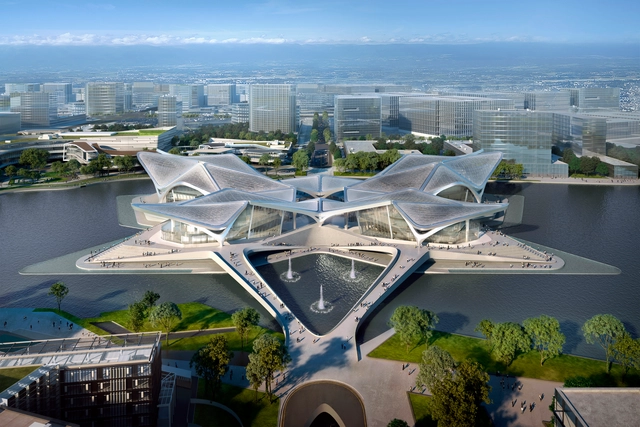
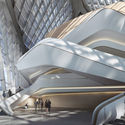
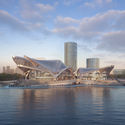
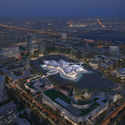
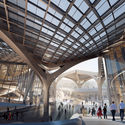
Zaha Hadid Architects unveiled images of on-going construction works on the site of the Zhuhai Jinwan Civic Art Centre in China. Located in one of the world’s most dynamic regions, the project is set to become a hub of contemporary creativity. Recent photos highlight the installed steel structure for the roof’s canopy and evolving works on the four cultural venues.

Zaha Hadid Architects Reveals Images of Zhuhai Jinwan Civic Art Centre, in China - Image 1 of 4Zaha Hadid Architects Reveals Images of Zhuhai Jinwan Civic Art Centre, in China - Image 2 of 4Zaha Hadid Architects Reveals Images of Zhuhai Jinwan Civic Art Centre, in China - Image 3 of 4Zaha Hadid Architects Reveals Images of Zhuhai Jinwan Civic Art Centre, in China - Image 4 of 4Zaha Hadid Architects Reveals Images of Zhuhai Jinwan Civic Art Centre, in China - More Images+ 4

Take a Tour Inside Shanghai's Cultural Hotspot

Take a walk through the Hub Performance and Exhibition Center, designed by Neri&Hu Design and Research Office, in the dynamic Hongqiao District of Shanghai, China. The video, produced with Pedro Pegenaute, showcases the Center's nature-inspired interior, featuring dramatic lighting and views framed by walnut- and oak-covered aluminum branches recalling forest canopies.

Fengxian Civic Centre Canopy / Atelier GOM

Fengxian Civic Centre Canopy / Atelier GOM  - Other Structures, Beam, LightingFengxian Civic Centre Canopy / Atelier GOM  - Other Structures, Facade, Arch, Fence, Handrail, BeamFengxian Civic Centre Canopy / Atelier GOM  - Other Structures, Facade, Column, Beam, Arch, Arcade, LightingFengxian Civic Centre Canopy / Atelier GOM  - Other Structures, BeamFengxian Civic Centre Canopy / Atelier GOM  - More Images+ 8

  • Architects: Atelier GOM
  • Area Area of this architecture project Area:  4213
  • Year Completion year of this architecture project Year:  2015