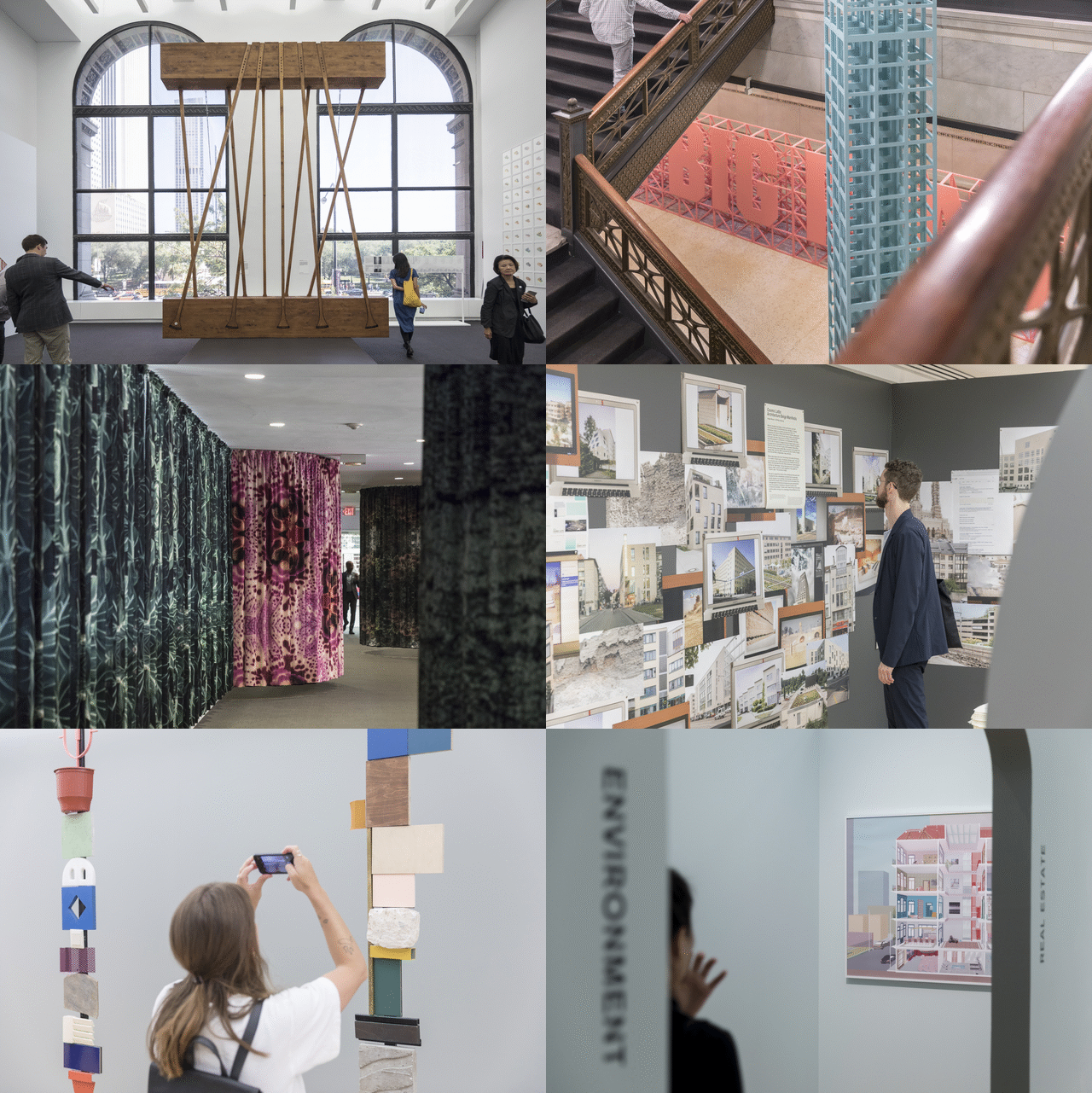
With the 2017 Chicago Architecture Biennial in full swing and open to the public until January 7, 2017, we've scoured the galleries, halls and corridors of the Chicago Cultural Center to bring you our favorite fifteen installations. Documented through the lens of Laurian Ghinitoiu and assembled by our Editorial Team on location, this selection intends to shed light on the breadth, scope and preoccupations of Make New History– the largest architecture event in North America.
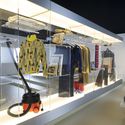
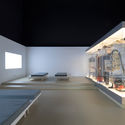
The Museum of Contemporary Art Chicago presents the first-ever museum exhibition of breakout Chicago artist Amanda Williams, featuring a new addition to her highly acclaimed project, Color(ed) Theory, which debuted at the first Chicago Architecture Biennial. The bright, monochromatic houses painted as part of Color(ed) Theory bring attention to the overwhelming number of vacancies on Chicago’s South Side, reflecting Williams’ perspective that architecture serves as a microcosm for larger social issues. Together with new works such as A Dream or Substance, a Beamer, a Necklace or Freedom? -- where Williams invited Englewood-based collaborators to gild a room in imitation gold leaf in the same proportion of a Chicago lot, and then sealed off the room with just a small gap for viewing the gleaming interior -- Williams’ solo debut creates an experience that comments on race, class, and urban space. Chicago Works: Amanda Williamsis organized by MCA Curatorial Assistant Grace Deveney and is on view from July 18 to December 31, 2017.
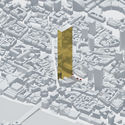
When it comes to tall building design, it’s often the structural system where the most groundbreaking innovations are made. Premiering this week in partnership with the Chicago Architecture Biennial is a new exhibition highlighting the innovative structural systems of an architecture firm that has completed their fair share of tall buildings: SOM.
Titled SOM: Engineering x [Art + Architecture], the exhibition uncovers the concepts and forms of the firm’s greatest achievements, including revolutionary tall buildings such as the John Hancock Building, the Willis Tower and the current world’s tallest building, the Burj Khalifa. The exhibition reveals the research and thought processes through a range of media: hand-drawn sketches, interactive sculpture, immersive video, and most notably, a lineup of models at 1:500 showing the structural skeletons of 30 significant projects.
Understanding the trace of history is more important than ever. Maybe now it's a good time to take stock and reevaluate to see what architecture could do better, and there are certain issues that other disciplines address better than architecture itself.
https://www.archdaily.com/879750/curators-johnston-marklee-introduce-the-2017-chicago-architecture-biennial-make-new-historyAD Editorial Team
In a large-scale, central installation at the 2017 Chicago Architecture Biennial, the likes of 6a architects, Barozzi Veiga, Kéré Architecture, MOS, OFFICE KGDVS, and Sergison Bates—among others—have designed and constructed sixteen five meter-tall contemporary iterations of the renowned 1922 Chicago Tribune Tower design contest.
https://www.archdaily.com/879715/in-vertical-city-16-contemporary-architects-reinterpret-the-tribune-tower-at-2017-chicago-architecture-biennialAD Editorial Team
Today SO-IL, in collaboration with Ana Prvački, debuted L’air pour air on the occasion of the press preview of the second edition of the Chicago Architecture Biennial. The performance explores the art of performing behind a filter in an age where many cities suffer from the environmental impact of human habitation. Described as "part installation and part musical performance," the creators have drawn inspiration from abundant plant life and the interconnectedness of people and nature.
https://www.archdaily.com/879646/so-il-with-ana-prvacki-debut-musical-spatial-performance-at-2017-chicago-architecture-biennialAD Editorial Team
In this episode of GSAPP Conversations, ahead of the opening of the 2017 Chicago Architecture Biennial, co-curator Mark Lee (of Johnston Marklee) and Dean Amale Andraos discuss the theme of the show—"Make New History"—and it's relevance to the field today.
https://www.archdaily.com/879401/ahead-of-the-2017-chicago-architecture-biennale-mark-lee-discusses-its-contemporary-relevanceAD Editorial Team
The Chicago Architecture Foundation (CAF) has announced the creation of the Chicago Architecture Center, a new headquarters and experience center that will invite visitors to discover “Chicago’s architectural legacy and its role in shaping cities everywhere.”
Located within the Mies van der Rohe-designed 111 East Wacker Drive along the Chicago River, the 20,000-square-foot center will provide space for a variety of exhibitions and educational initiatives, including direct access to the Chicago Architecture Foundation River Cruise. The new interiors will be designed by Adrian Smith + Gordon Gill Architecture.
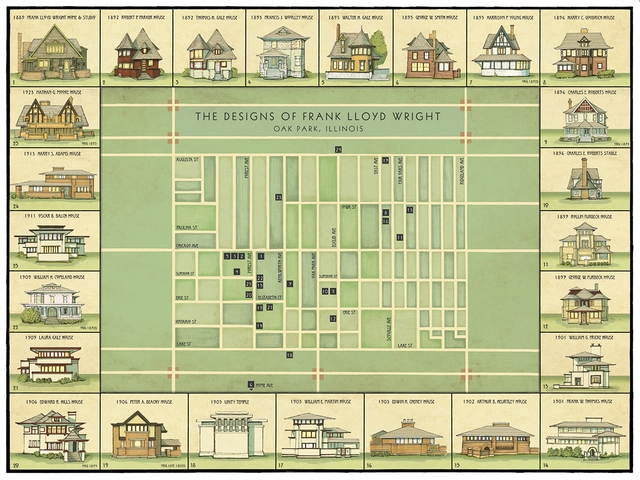
Home to Frank Lloyd Wright for many years, Oak Park, Illinois is also the site of the greatest concentration of Frank Lloyd Wright-designed homes and buildings than anywhere else in the world. Having designed structures for the neighborhood for nearly four decades, Wright used Oak Park as a place to try out new techniques and evolve his personal style.
Picking up on this, Illustrator Phil Thompson of Cape Horn Illustration has created a new map of Wright’s Oak Park designs. Organized both chronologically and by location, the map allows viewers to make connections between the structures, as their lines evolved from gabled to flat roofs and expanded in scale and in ambition.
https://www.archdaily.com/877939/this-map-shows-the-evolution-of-frank-lloyd-wrights-oak-park-designsAD Editorial Team
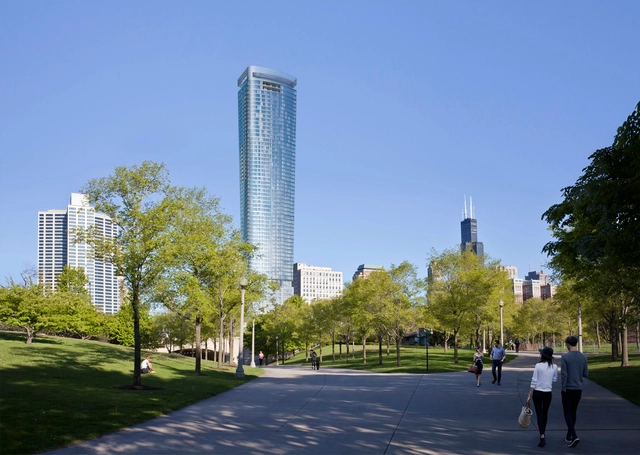
Updated renderings have been revealed for renowned architect Helmut Jahn’s1000M, an upcoming 832-foot skyscraper that will take the place of a currently vacant lot on Chicago’s historic Michigan Avenue. Accommodating 323 luxury residences and over 40,000 square feet of amenities, the building will be clad in a green and blue glass curtainwall, with horizontal metal spandrels running across and dividing it. The roof terrace is covered by a hovering metallic mesh crown, which is shown in the new renderings.
https://www.archdaily.com/877168/new-renderings-revealed-for-helmut-jahns-upcoming-832-foot-skyscraper-in-chicagoOsman Bari
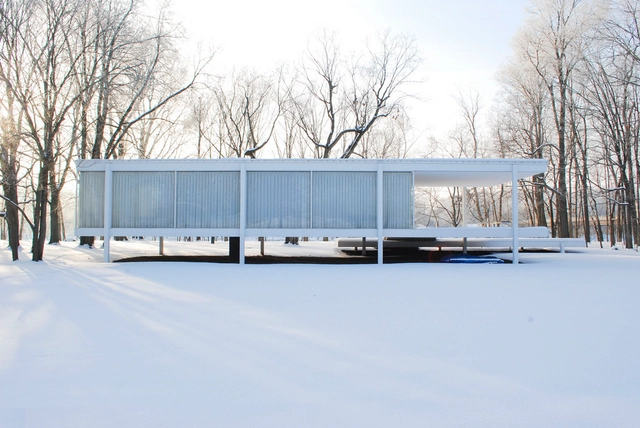
Farnsworth House. Image Courtesy of Flickr CC user Jonathan Rieke. (Licensed under CC BY-NC 2.0)
The Chicago Architecture Biennial and it's artistic directors, Johnston Marklee, have revealed a collection of Special Projects designed to harness the curatorial vision of the event—entitled Make New History—and bring it to a number of significant landmarks in the city and in it's surrounding area. Featuring a SO-IL and Ana Prvački collaboration, a Francois Perrin installation, a new performance artwork by Gerard & Kelly at the Farnsworth House, photographs by James Welling, and films by Gerard & Kelly, the projects will inhabit some Chicago's greatest "architectural gems."
https://www.archdaily.com/876117/chicago-architecture-biennial-special-projects-to-inhabit-a-series-of-architectural-landmarksAD Editorial Team
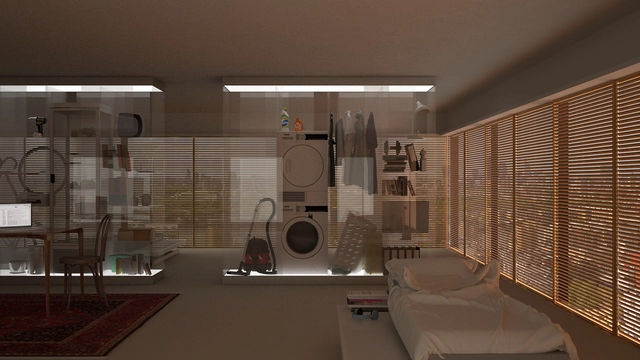
Interior design by REAL Foundation for Common Stock: Sharing as Luxury, the fourth tower in the Derivative Architecture series. Image Courtesy of Real Foundation
The Chicago Architecture Biennial is the largest platform for contemporary architecture in North America, and the blog invites designers and other contributors to express their perspectives in a range of formats. The 2017 exhibition, entitled Make New History, will be free and open to the public between September 16, 2017 and January 6, 2018.
Chicago Architecture Biennial (CAB): We want to start by noting that REAL foundation, which stands for "Real Estate Architecture Laboratory," is not a typical design practice. You design spaces, but you also make books, exhibitions, a magazine, and tools for advocacy. Why?
Jack Self (JS): The REAL foundation is an unusual model for an architectural firm. We're a normal architectural practice, but we are governed by a very strict set of conditions that allow us to pursue certain political and economic ideologies. We see the social role of the architect, as well as the structure of the architectural firm, as a subject for design as much as buildings.
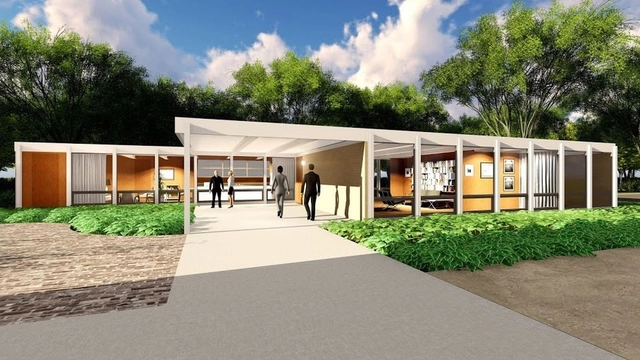
As Mies van der Rohe’s adopted city, Chicago and its surrounding area are home to more of the Modernist architect’s projects than anywhere else in the world, from Crown Hall to Federal Center to the Farnsworth House. Perhaps for that very reason, the McCormick House, located in the Chicago suburb of Elmhurst, is one of the lesser known projects in the architect's’ oeuvre – despite being one of just three single-family homes in the United States completed by Mies.
Built in 1952 for Robert McCormick Jr. – the owner of the land where Mies' 860-880 N. Lake Shore Drive was constructed – the house was moved down the street in 1994, where it was attached to the newly built Elmhurst Museum of Art via a 15-foot-long corridor. While its relocation allowed the building to remain in good care over the next 23 years, it also obscured the home’s front facade, “camouflaging one of the most prized objects in the museum's collection.”
But that’s all about to change, thanks to an upcoming restoration that will remove the offending corridor, allowing the original architecture to shine once again.
Taking a page from its own products, Chicago’s new flagship Apple Store will have what appears to be a MacBook-inspired roof topping its entrance. Videos from the Chicago Tribune and Twitter surfaced earlier last week detailing its roof installation complete with a white apple logo. The Foster + Partners design will offer unobstructed views towards the Chicago river as a tribute to Frank Lloyd Wright’s Prairie-style homes outside the city.
This article was originally published on the blog of the Chicago Architecture Biennial, the largest platform for contemporary architecture in North America. The blog invites designers, writers and other contributors to independently express their perspectives on the Biennial across a range of formats. The 2017 Biennial, entitled Make New History, will be free and open to the public between September 16, 2017 and January 6, 2018.
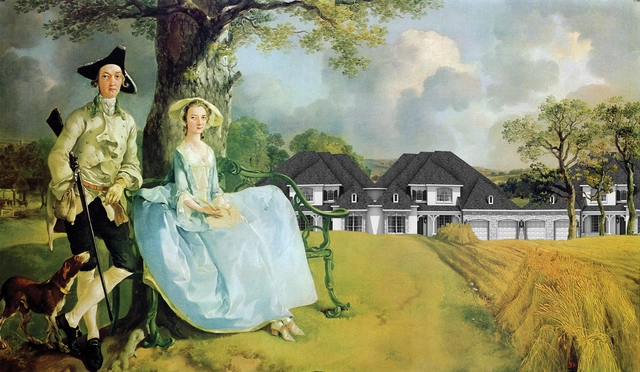
Some works of architectural writing can be taken at face value as stark manifestos for a new aesthetic. Keith Krumwiede’s Atlas of Another America is, instead, a constantly unfurling satire that offers layers upon layers of artfully imagined social commentary. Like McMansion Hell, my own long-form satirical project, Krumwiede’s “architectural fiction" sends up American ideas about economics, politics, and culture by picking apart our outrageous suburban housing types. The project will be on display at the Chicago Architecture Biennial this fall, delivering a sardonic vision of American architecture that comes out of academic theory, but has a potent message for anyone who has spent time in suburbia.
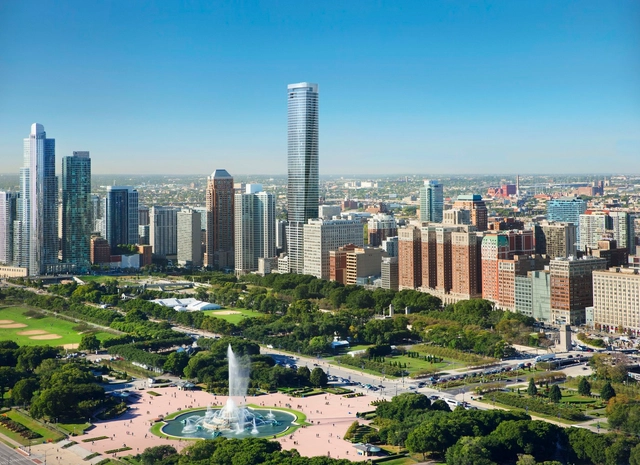
Renderings have been revealed for a new 832-foot-tall skyscraper that will rise from a current vacant lot on Chicago’s historic Michigan Avenue. Known as 1000M, the tower has been designed by JAHN, the practice helmed by one of Chicago’s most prolific architects, Helmut Jahn. The 74-story building will feature a blue-green glass curtain wall subdivided with metal horizontal spandrel panels, and a metallic mesh crown hovering over a rooftop terrace.
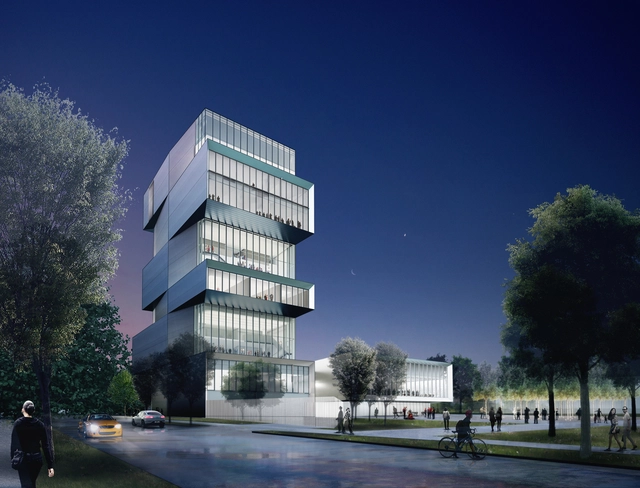
The University of Chicago has unveiled new renderings of its planned David M. Rubenstein Forum that show major changes to the buildings’ form and relationship to the site. Designed by Diller Scofidio + Renfro, the new scheme shows a more homogeneous structure featuring a uniform zinc and glass facade that will help to better signify the distinct “neighborhoods” located within the 8-story tower.


.jpg?1505616851 "© Laurian Ghinitoiu")
.jpg?1505616994 "© Laurian Ghinitoiu")
.jpg?1505616940 "© Laurian Ghinitoiu")
.jpg?1505616970 "© Laurian Ghinitoiu")


.jpg?1505510121&format=webp&width=640&height=580)
.jpg?1505510260 "© Laurian Ghinitoiu")
.jpg?1505510187 "© Laurian Ghinitoiu")
.jpg?1505510144 "© Laurian Ghinitoiu")
.jpg?1505510136 "© Laurian Ghinitoiu")
.jpg?1505510121)
.jpg?1505513121)
.jpg?1505513471 "© Laurian Ghinitoiu")
.jpg?1505513328 "© Laurian Ghinitoiu")
.jpg?1505513195 "© Laurian Ghinitoiu")
.jpg?1505513136 "© Laurian Ghinitoiu")
.jpg?1505513121)
.jpg?1505399498&format=webp&width=640&height=580)