1. ArchDaily
  2. cantilever

cantilever: The Latest Architecture and News

Elemental Shores in the Asia-Pacific: Concrete Recasts the Beach House

Subscriber Access | 

Living by the beach has long been a defining aspiration—drawn by the promise of tempered nature, privacy, and immediate access to the water. Historically, beach houses tended to be rustic and pared back: partly because servicing remote sites and delivering materials was difficult, and partly because their charm lay in being closer to the elements—simpler, rougher, more direct.

Accordingly, many early beach houses were built in timber. Wood offered clear advantages: it was lightweight, adaptable, quick to work with, and could be erected with minimal heavy machinery. While timber weathers and fares poorly in salt-laden humidity, exterior-grade lumber carries a raw, natural character that reinforced the appeal of the beach-house ideal.

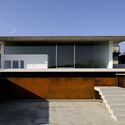
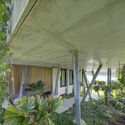
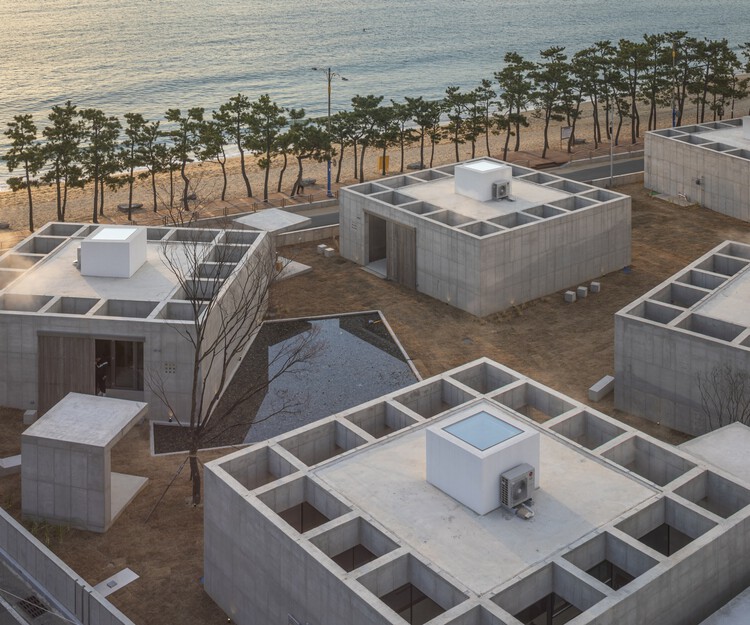
Elemental Shores in the Asia-Pacific: Concrete Recasts the Beach House - Image 1 of 4Elemental Shores in the Asia-Pacific: Concrete Recasts the Beach House - Image 2 of 4Elemental Shores in the Asia-Pacific: Concrete Recasts the Beach House - Image 3 of 4Elemental Shores in the Asia-Pacific: Concrete Recasts the Beach House - Image 4 of 4Elemental Shores in the Asia-Pacific: Concrete Recasts the Beach House - More Images+ 32

How to Build on a Sloped Terrain? 5 Modern Residential Projects Shaped For Their Environments With Split-Level Exteriors

Sloped terrain offers a tantalizing prospect for developers. With breathtaking views over either natural or urban landscapes, often without the realistic possibility of being overlooked by future development, a parcel of land on a slope provides a high reward. However, whether it’s the extra excavation involved to cut and fill or cantilever out on a flat surface, the complications of water drainage, or the loss of light and difficulty of access at the front of the property, building on sloped terrains is not without its difficulties.

But it’s not necessarily the angle of the site that’s most at fault, it’s the shape of the building. By splitting up a multi-story structure and repositioning – possibly even disconnecting – each level, projects designed to comply with the existing topography by applying multiple ground levels can reduce the amount of excavation required. The split floor plan can also help to improve access and natural light and increase both interior and exterior space.

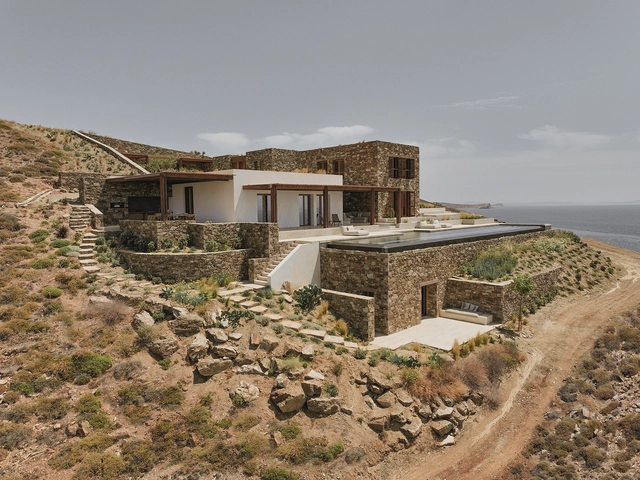
How to Build on a Sloped Terrain? 5 Modern Residential Projects Shaped For Their Environments With Split-Level Exteriors - Image 1 of 4How to Build on a Sloped Terrain? 5 Modern Residential Projects Shaped For Their Environments With Split-Level Exteriors - Image 2 of 4How to Build on a Sloped Terrain? 5 Modern Residential Projects Shaped For Their Environments With Split-Level Exteriors - Image 3 of 4How to Build on a Sloped Terrain? 5 Modern Residential Projects Shaped For Their Environments With Split-Level Exteriors - Image 4 of 4How to Build on a Sloped Terrain? 5 Modern Residential Projects Shaped For Their Environments With Split-Level Exteriors - More Images+ 7

Nikken Sekkei Completes World's Longest Cantilever Skyscraper in Dubai

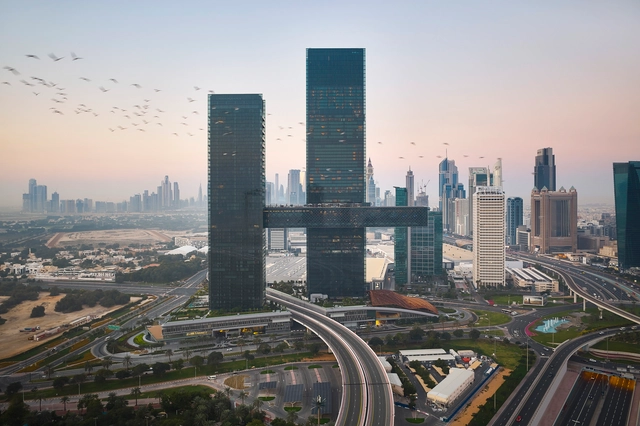
Japanese design firm Nikken Sekkei has just completed a new building in Dubai’s central financial district, encompassing the “World’s Longest Cantilever,” which floats 100m above ground. Compromising two towers connected by an enclosed horizontal bridge, “One Za’abeel” acts as a new point of entry into the city. Designed to be a symbol of Dubai’s growth and expansion, the project offers easy access to the downtown region. The scheme features restaurants, retail spaces, workspaces, and urban hotel accommodations.

Nikken Sekkei Completes World's Longest Cantilever Skyscraper in Dubai - Image 1 of 4Nikken Sekkei Completes World's Longest Cantilever Skyscraper in Dubai - Image 2 of 4Nikken Sekkei Completes World's Longest Cantilever Skyscraper in Dubai - Image 3 of 4Nikken Sekkei Completes World's Longest Cantilever Skyscraper in Dubai - Image 4 of 4Nikken Sekkei Completes World's Longest Cantilever Skyscraper in Dubai - More Images+ 15

RSHP Reveals Design for Office and Mixed-Use Tower in Shenzhen

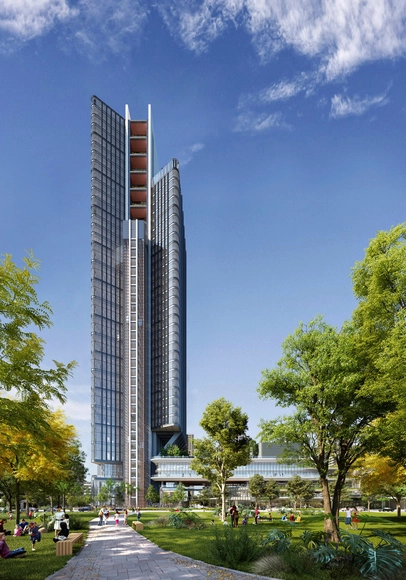
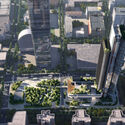
Architecture office RSHP has unveiled the design for the Shenzhen - Hong Kong Innovation Integrated Service Centre, a 45-storey tower in the Futian Free Trade Zone in south Shenzhen. The building features an integrated floating podium which provides spaces for retail, cultural events, and green roof gardens. It also connects to the existing metro station and articulates the street-level plaza. The design results from a negotiation between two distinct briefs asking for a tower and a mixed-use podium on neighboring plots. RSHP’s proposal was to merge the briefs by integrating the podium into the south side of the tower, thus creating a distinct identity and creating a better relationship with the surrounding public space.

RSHP Reveals Design for Office and Mixed-Use Tower in Shenzhen - Image 1 of 4RSHP Reveals Design for Office and Mixed-Use Tower in Shenzhen - Image 2 of 4RSHP Reveals Design for Office and Mixed-Use Tower in Shenzhen - Image 3 of 4RSHP Reveals Design for Office and Mixed-Use Tower in Shenzhen - Image 4 of 4RSHP Reveals Design for Office and Mixed-Use Tower in Shenzhen - More Images+ 1

Construction Begins on HENN’s Zoomlion Headquarters in Changsha, China

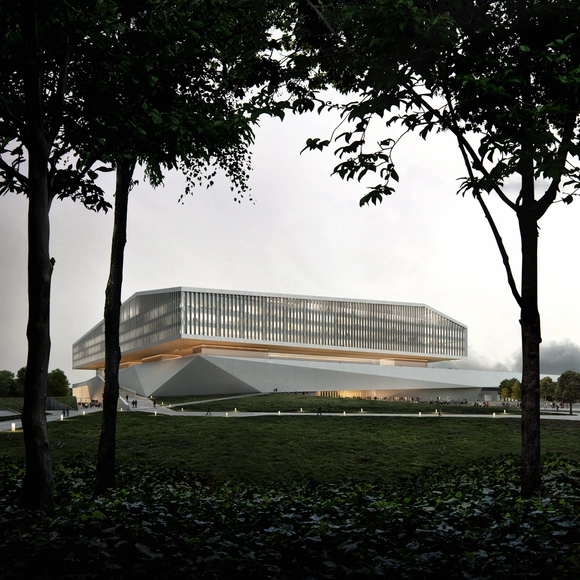
Architecture firm HENN has broken ground on the new Zoomlion Headquarters. The building is envisioned as the central feature of the Smart Industry City, an industrial park in the High-tech Zone of Changsha City, Hunan Province, China. HENN has envisioned the construction machinery manufacturer’s headquarters as a gathering place that will concentrate most of the social activities happening on the site. The building will house office spaces, a museum dedicated to the company’s history, a canteen, a data center, training and research areas, and sports facilities.

Construction Begins on HENN’s Zoomlion Headquarters in Changsha, China - Image 1 of 4Construction Begins on HENN’s Zoomlion Headquarters in Changsha, China - Image 2 of 4Construction Begins on HENN’s Zoomlion Headquarters in Changsha, China - Image 3 of 4Construction Begins on HENN’s Zoomlion Headquarters in Changsha, China - Image 4 of 4Construction Begins on HENN’s Zoomlion Headquarters in Changsha, China - More Images+ 4

The Architecture of Cantilevers

Subscriber Access | 

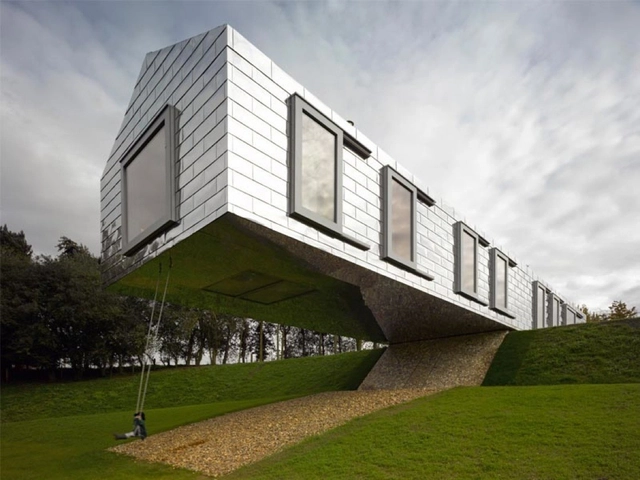
As a design feature, cantilevers can exist for any number of reasons, as rational results of form-making, impressive feats of engineering, or just unnecessary spectacles. Either way, they often result in buildings that appear both heavy and light at the same time and they present safely precarious situations for their inhabitants. The video describes what cantilevers are as well as some of the structural principles which govern their design like tension, compression, moment, and shear. It also goes over some great examples by architects like MVRDV, Rem Koolhaas, Ensemble Studio, and Richard Rogers. Finally, it concludes with appreciation for structural engineers and lists a few of the ones responsible for some of the most daring of delicate dangles.

The New York City Cantilever: If You Can’t Go Up, Go Out

New York City’s notoriously space-hungry real estate market is converting the cantilever – perhaps made most famous in Frank Lloyd Wright’s floating Fallingwater residence of 1935 – from a mere move of architectural acrobatics to a profit-generating design feature. Driven by a “more is more” mantra, developers and architects are using cantilevers to extend the reach of a building, creating unique vistas and extended floor space in a market in which both are priced at sky-high premiums.

Busan Cinema Center Nearing Completion

Subscriber Access | 
Busan Cinema Center Nearing Completion - Image 3 of 4
© Coop Himmelb(l)au

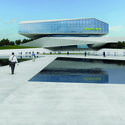
The construction of the Busan Cinema Center by architecture firm COOP HIMMELB(L)AU is nearing completion. Slated to be the new home of the Busan International Film Festival, the complex will house cinemas, restaurants, a 1000 seat multifunctional theater, and numerous public spaces. More details after the break.