1. ArchDaily
  2. Campus Design

Campus Design: The Latest Architecture and News

Climate, Culture, and Modernism: The Postcolonial Campus as Architectural Laboratory

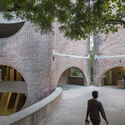
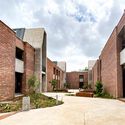
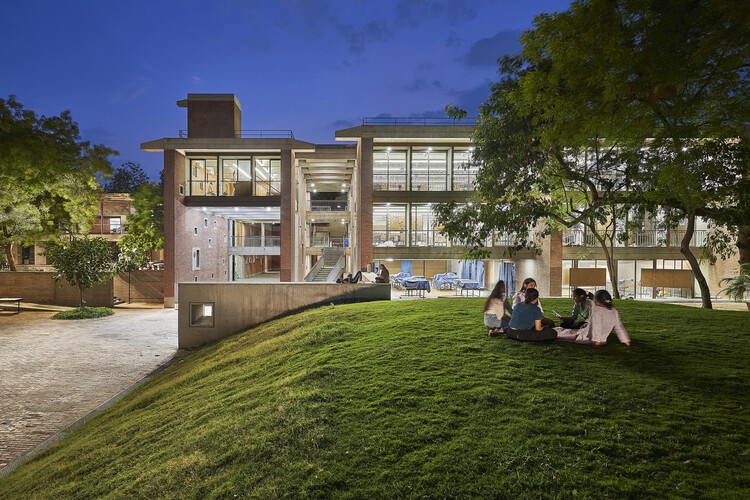
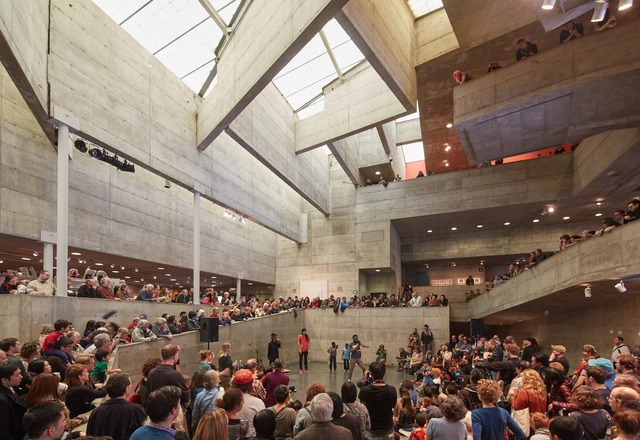
In the decades following independence, some of the most ambitious architectural experiments in the world did not emerge through museums, monuments, or government palaces. They emerged through universities. Across South Asia and Africa, newly formed nations turned campuses into testing grounds for entirely new ways of imagining collective life. These campuses functioned as more than educational institutions. They became territories where states tested how modernity might be organized, for citizens to gather, institutions to function, climate to shape architecture, and imported ideas to transform local realities.

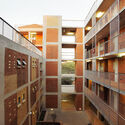
Climate, Culture, and Modernism: The Postcolonial Campus as Architectural Laboratory - Image 1 of 4Climate, Culture, and Modernism: The Postcolonial Campus as Architectural Laboratory - Image 2 of 4Climate, Culture, and Modernism: The Postcolonial Campus as Architectural Laboratory - Image 3 of 4Climate, Culture, and Modernism: The Postcolonial Campus as Architectural Laboratory - Image 4 of 4Climate, Culture, and Modernism: The Postcolonial Campus as Architectural Laboratory - More Images+ 7

Forming a Distinct Identity: How Brutalism Shaped American Architecture Education

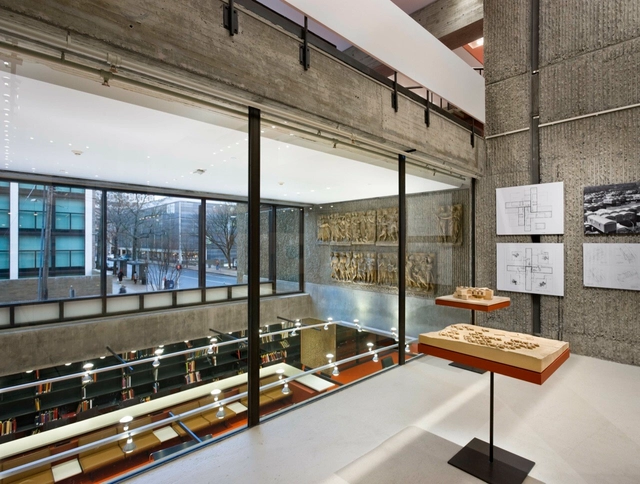
By the mid-nineteenth century, American universities began to distinguish architecture from civil engineering and the applied sciences formally. Architecture was emerging as a discipline defined by both technical competence and conceptual inquiry, spatial imagination, and cultural agency. As this disciplinary identity evolved in the postwar decades, its built expression coalesced into the emerging architectural language of Brutalism.

Forming a Distinct Identity: How Brutalism Shaped American Architecture Education - Image 1 of 4Forming a Distinct Identity: How Brutalism Shaped American Architecture Education - Image 2 of 4Forming a Distinct Identity: How Brutalism Shaped American Architecture Education - Image 3 of 4Forming a Distinct Identity: How Brutalism Shaped American Architecture Education - Image 4 of 4Forming a Distinct Identity: How Brutalism Shaped American Architecture Education - More Images+ 12

MCHAP Announces Thaden School by EskewDumezRipple, Marlon Blackwell Architects, and Andropogon Associates as Its Fifth Americas Prize Award Winners

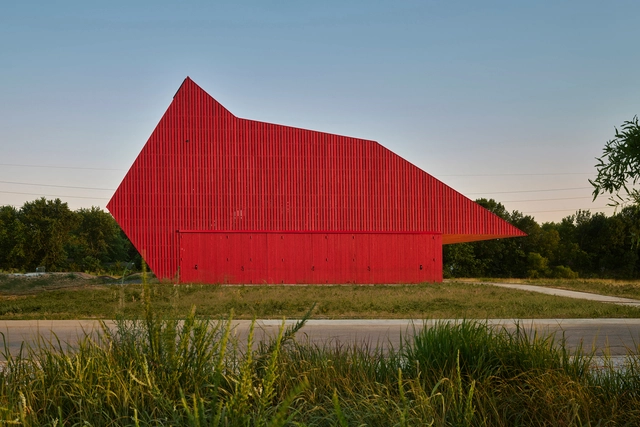
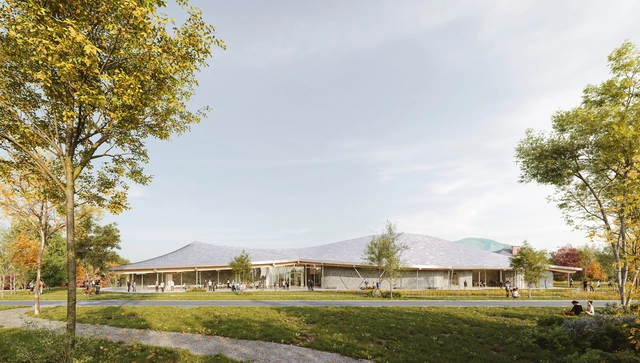
The Mies Crown Hall Americas Prize (MCHAP) has just announced the winners of the fifth MCHAP Americas Prize award: Thaden School, designed by EskewDumezRipple, Marlon Blackwell Architects, and Andropogon Associates. Located in Bentonville, Arkansas, on a 30-acre site, the campus explores the relationship between architecture, landscape, and community within the educational context. The announcement was made after a daylong celebration at S.R. Crown Hall on the Illinois Institute of Technology (IIT) campus. The event featured Masterclass presentations by students from IIT and regional universities, along with a roundtable discussion with the finalists and jury during the MCHAP Symposium.
MCHAP Announces Thaden School by EskewDumezRipple, Marlon Blackwell Architects, and Andropogon Associates as Its Fifth Americas Prize Award Winners - Image 1 of 4MCHAP Announces Thaden School by EskewDumezRipple, Marlon Blackwell Architects, and Andropogon Associates as Its Fifth Americas Prize Award Winners - Image 2 of 4MCHAP Announces Thaden School by EskewDumezRipple, Marlon Blackwell Architects, and Andropogon Associates as Its Fifth Americas Prize Award Winners - Image 3 of 4MCHAP Announces Thaden School by EskewDumezRipple, Marlon Blackwell Architects, and Andropogon Associates as Its Fifth Americas Prize Award Winners - Image 4 of 4MCHAP Announces Thaden School by EskewDumezRipple, Marlon Blackwell Architects, and Andropogon Associates as Its Fifth Americas Prize Award Winners - More Images+ 7

How Architecture Drives Scientific Discovery: Lab and Research Facility Design Across Scales

Subscriber Access | 

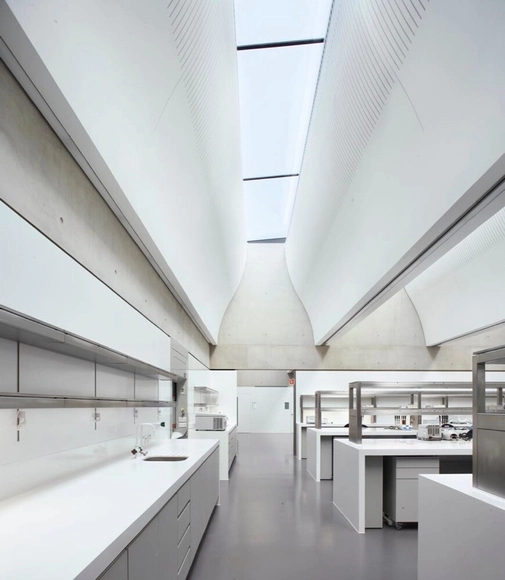
The synergetic relationship between architectural design and scientific discovery tends to be rarely addressed, yet a lucrative proposition. The built environment holds immense potential in supporting research breakthroughs and innovation and the scientific community. The influence extends beyond physical spaces to include both internal dynamics and external engagement through strategic design interventions that connect various caches of impact, from individual researchers to the broader community.

How Architecture Drives Scientific Discovery: Lab and Research Facility Design Across Scales  - Image 1 of 4How Architecture Drives Scientific Discovery: Lab and Research Facility Design Across Scales  - Image 2 of 4How Architecture Drives Scientific Discovery: Lab and Research Facility Design Across Scales  - Image 3 of 4How Architecture Drives Scientific Discovery: Lab and Research Facility Design Across Scales  - Image 4 of 4How Architecture Drives Scientific Discovery: Lab and Research Facility Design Across Scales  - More Images+ 3

Architecture Inspired by Permaculture: How to Integrate Its Design Principles Across Diverse Contexts

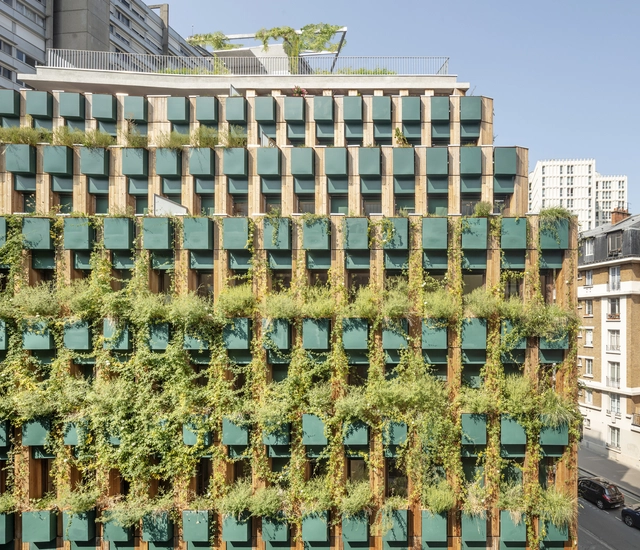
The concept of permaculture refers to a design system capable of creating sustainable human environments based on an ethic and a series of ecological, environmental, and resilience design principles. In contact with plants, animals, buildings, and infrastructures such as water, energy, and/or communications, permaculture analyzes the possible relationships between these elements based on their position in the landscape. Its 12 design principles can be applied in multiple architecture projects of varying scales and programs, contributing, for example, to the dissemination of new ways to reduce energy consumption in homes, save water through rainwater harvesting or the recycling of greywater for sanitary systems, gardens, and more, and participate in food production, among other matters.

Are For-Profit Developments Consistent With the Values of a Public University?

This article was originally published on Common Edge.

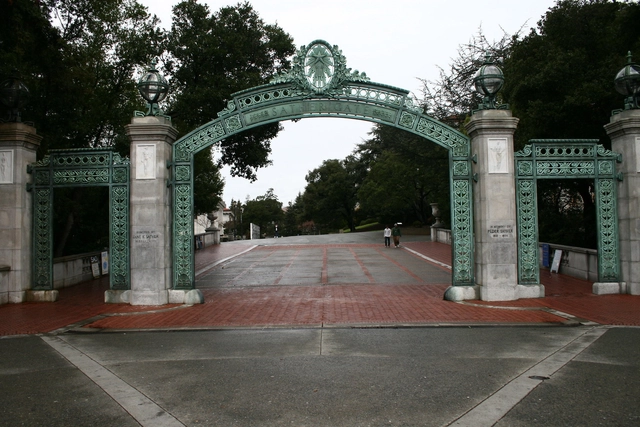
I am by no means an expert on public-private partnerships. But for about 10 years, as the University of California Berkeley’s campus planner and then campus architect, I watched these developments play out in higher education—sometimes from a front-row seat, sometimes as a participant. During that time, this strategy, promoted with great enthusiasm and optimism, was touted as the answer to whatever problem arose. And yet the definition of a public-private partnership was slippery. The concept itself seemed to be all things for all people, depending on what was needed, who was recommending it, and what equivalents (if any) existed outside the university. The bandwagon continues to play today, making it ever more important to nail down the pros and cons of this development strategy, not only for colleges and universities, but for all public decision-making.

Are For-Profit Developments Consistent With the Values of a Public University? - Image 1 of 4Are For-Profit Developments Consistent With the Values of a Public University? - Image 2 of 4Are For-Profit Developments Consistent With the Values of a Public University? - Image 3 of 4Are For-Profit Developments Consistent With the Values of a Public University? - Image 4 of 4Are For-Profit Developments Consistent With the Values of a Public University? - More Images

Symmetry in Architecture: 15 Contemporary Collective Housing Units in Latin America

Subscriber Access | 

What is symmetry in architecture? Why is it used to design spaces? What advantages and disadvantages does it present compared to other projection tools such as rotation, translation, and/or repetition? Contemporary architecture evolves day by day by implementing different strategies to create habitable spaces where people can carry out their daily activities, meet their needs, and more. Considering symmetry as a possible means of organization, distribution, and movement in the plane, architecture expresses and communicates largely through graphic means (floor plans, volumes, photographs, etc.) in a relationship that seeks coexistence, in most cases, of spaces, proportions, and scales in harmony.

Symmetry in Architecture: 15 Contemporary Collective Housing Units in Latin America - Image 1 of 4Symmetry in Architecture: 15 Contemporary Collective Housing Units in Latin America - Image 2 of 4Symmetry in Architecture: 15 Contemporary Collective Housing Units in Latin America - Image 3 of 4Symmetry in Architecture: 15 Contemporary Collective Housing Units in Latin America - Image 4 of 4Symmetry in Architecture: 15 Contemporary Collective Housing Units in Latin America - More Images+ 27

Designing for Plants: The Architecture of Greenhouses and Their Relationship with the Environment

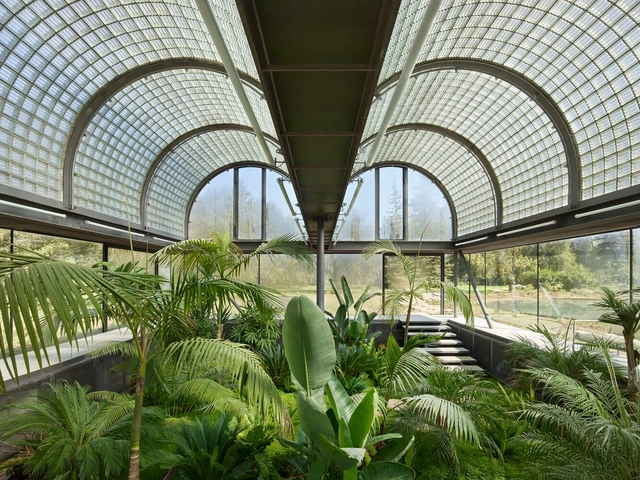
When delving into the envelope of construction and examining how the interior relates to the exterior, the concept of greenhouses emerges as an opportunity to cultivate life indoors, whether dependent on external factors or not. Defined as spaces enclosed by glass or other transparent plastic materials, greenhouses facilitate the growth of vegetables and ornamental plants even during periods of adverse external weather conditions. However, what does designing for plants involve? Climate, species, structural design, and the type of covering are just a few of the considerations to take into account.

SO–IL Designs a Teaching Museum of Art for Williams College in the United States

Brooklyn-based firm SO-IL has revealed the design for a new campus art museum at Williams College in Massachusetts, created to become a primary teaching resource for the institution renowned for its art history program. Since its inauguration in 1926, the Williams College Museum of Art has gathered an expansive collection of over 15,000 works. Through the design of SO-IL, the museum will be able to move into its first freestanding purpose-built home. In May 2024, the museum will present an exhibition on SO-IL’s design.

SO–IL Designs a Teaching Museum of Art for Williams College in the United States - Image 1 of 4SO–IL Designs a Teaching Museum of Art for Williams College in the United States - Image 2 of 4SO–IL Designs a Teaching Museum of Art for Williams College in the United States - Image 3 of 4SO–IL Designs a Teaching Museum of Art for Williams College in the United States - Image 4 of 4SO–IL Designs a Teaching Museum of Art for Williams College in the United States - More Images+ 13

OMA / Chris van Duijn Wins Bid to Design Hongik University's New Campus in Seoul

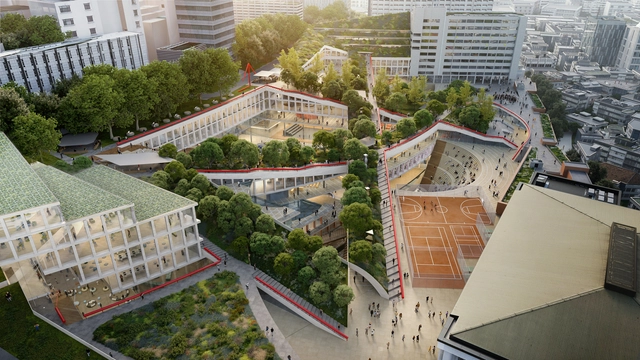
OMA / Chris van Duijn won the competition to design a new campus for Hongik University in Seoul, South Korea. The proposal introduces a cluster of low-rise buildings interconnected by a network of public spaces molded on the existing topography of the site. The design aims to reemphasize the university’s connection to the city and its neighboring areas and to introduce greenery and various open spaces creating a seamless connection between roof terraces, outdoor courtyards, and sunken plazas. The winning proposal was chosen from the entries from established international practices, including SANAA, Herzog & de Meuron, Renzo Piano Building Workshop, and David Chipperfield Architects.

HENN Develops Master Plan for City University of Hong Kong

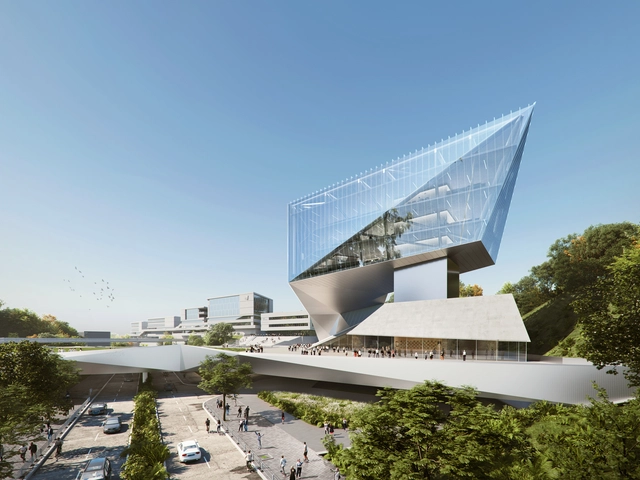
International architecture office HENN developed a 300,000m² master plan for the City University of Hong Kong in the province of Guangdong. The construction will be split into two phases: the central library is planned for 2023 and the academic amenities, including student residences, are scheduled for completion in 2025. As the City University of Hong Kong's third mainland site, "CityU Dongguan" will connect researchers and industry collaborators across the Greater Bay Area Technology Innovation Corridor and create a multifaceted university district in the Pearl River Delta region. Moreover, the complex will be home to the Faculty of Science, Engineering, Business, and Medicine.

HENN Develops Master Plan for City University of Hong Kong - Image 1 of 4HENN Develops Master Plan for City University of Hong Kong - Image 2 of 4HENN Develops Master Plan for City University of Hong Kong - Image 3 of 4HENN Develops Master Plan for City University of Hong Kong - Image 4 of 4HENN Develops Master Plan for City University of Hong Kong - More Images+ 1

Letter From Berkeley: Campus Planning in an Increasingly Virtual World

This article was originally published on Common Edge.

In March 2020, the Covid-19 pandemic shifted our university—the University of California, Berkeley—totally online, along with the whole of education from childcare up across the country and most of the planet. In the wake of this forced and unprecedented experiment, debates about what it means remain ongoing. Will the episodic dream of a placeless university, or at minimum a hybrid place/placeless one, come true? Millennia of experience argue for giving higher education a local, physical anchor. And most universities and colleges have this anchor as their starting place, even as they consider what their ongoing experience with virtual teaching, research, and administration means.

Exhibition Center of Zhengzhou Linkong Biopharmaceutical Park / WSP ARCHITECTS

Exhibition Center of Zhengzhou Linkong Biopharmaceutical Park / WSP ARCHITECTS - Offices, Facade, Handrail, FenceExhibition Center of Zhengzhou Linkong Biopharmaceutical Park / WSP ARCHITECTS - Offices, LightingExhibition Center of Zhengzhou Linkong Biopharmaceutical Park / WSP ARCHITECTS - Offices, Facade, ArchExhibition Center of Zhengzhou Linkong Biopharmaceutical Park / WSP ARCHITECTS - Offices, FacadeExhibition Center of Zhengzhou Linkong Biopharmaceutical Park / WSP ARCHITECTS - More Images+ 14

  • Architects: WSP ARCHITECTS
  • Area Area of this architecture project Area:  4872
  • Year Completion year of this architecture project Year:  2017