1. ArchDaily
  2. Blair Kamin

Blair Kamin: The Latest Architecture and News

The Architect as Writer: Expanding the Discipline Beyond Buildings

Architecture has always been more than bricks and mortar. It is equally constructed through words, ideas, and narratives. From ancient treatises to radical manifestos, from technical manuals to poetic essays, the written word has served as a spatial, pedagogical, and political tool within the field. Writing shapes how architecture is conceptualized, communicated, and critiqued — often long before, or even in the absence of, physical construction.

Historically, figures such as Vitruvius, Alberti, and Palladio employed writing to codify principles, project ideals, and legitimize architecture as a discipline. In the modern era, Le Corbusier, Adolf Loos, and Lina Bo Bardi wrote prolifically to expand the scope of architecture beyond form and function, often using publications as tools for persuasion and experimentation. The postwar period gave rise to new editorial strategies, as evident in the manifestos of Archizoom and Superstudio, and the polemical publications of Delirious New York and Oppositions, where writing served as both critique and project.
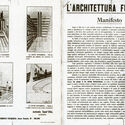
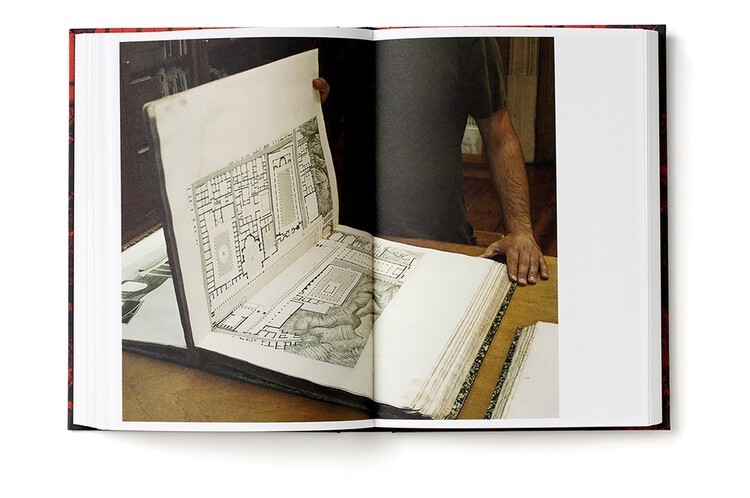
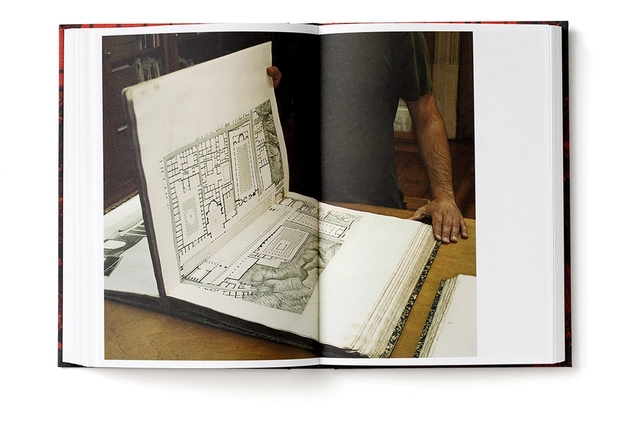
The Architect as Writer: Expanding the Discipline Beyond Buildings - Image 1 of 4The Architect as Writer: Expanding the Discipline Beyond Buildings - Image 2 of 4The Architect as Writer: Expanding the Discipline Beyond Buildings - Image 3 of 4The Architect as Writer: Expanding the Discipline Beyond Buildings - Image 4 of 4The Architect as Writer: Expanding the Discipline Beyond Buildings - More Images+ 31

Blair Kamin: ‘Who Is the City For?’

This article was originally published on Common Edge.

Blair Kamin stepped down as architecture critic for the Chicago Tribune in January 2021, after a nearly 30-year run in the post. He won a Pulitzer Prize in 1999 for a body of work highlighted by a series on Chicago’s lakefront, including a story that documented the race- and class-based disparity between the city’s north and south lakefronts. He has previously published two collections of his work: Why Architecture Matters (2001) and Terror and Wonder (2010), both from the University of Chicago Press. His third collection, Who is the City For? Architecture, Equity, and the Public Realm in Chicago, was released last week. Recently I talked to Kamin about the new book, the state of post-pandemic Chicago, and the need for more mainstream architecture criticism. I will post the second of our conversations tomorrow, in which the critic pushes the need for a redefinition of the phrase “design equity.”

Lee Bey Is Back on the Architecture Beat in Chicago

Lee Bey Is Back on the Architecture Beat in Chicago - Featured Image
via WTTW

This article was originally published on Common Edge.

When the estimable Blair Kamin stepped down as architecture critic of the Chicago Tribune in early 2021, it left the city without a daily critic at any of the local news outlets. That sad state of affairs was partially corrected recently, when the Chicago Sun-Times announced that Lee Bey would begin a monthly architecture column. The writer, historian, photographer, and critic brings a wealth of experience to the task: he was architecture critic for the Sun-Times for five years in the late 1990s, served as deputy chief of staff for planning and design in Mayor Richard M. Daley’s administration, directed governmental affairs at SOM, and taught at IIT. His most recent book is Southern Exposure: The Overlooked Architecture of Chicago’s South Side. Last week I talked to Bey about the new role, how the city has changed since his last stint as a critic, and the unique importance of architecture to the city.

What Chicago Loses When It Loses an Architecture Critic

Chicago architecture is empty without Chicago architectural journalism. From the 1880s launch of the black-and-white publication Inland Architect, which covered the rebuilding after the Great Chicago Fire, to a 1985 critique of the James R. Thompson Center by Paul Gapp in the Chicago Tribune titled “Masterpiece or Ego Trip?” which set the course for the public reception of the building, coverage, and criticism of architecture in local newspapers and architecture publications has provided a critical link to how Chicago maintains its reputation as a city of extraordinary architecture. Architectural criticism and journalism have and continue to help Chicago understand how we arrived at this built environment and what the future holds.

Blair Kamin: "You Judge the Architecture, Not the Architect"

This article was originally published on Common Edge as "Blair Kamin Ends His Run as Architecture Critic of the Chicago Tribune"

Last Friday, January 15, Blair Kamin ended his 28-year run as architecture critic for the Chicago Tribune. I have known and admired Kamin for almost two decades. His writing on architecture and the built environment was sharp and lucid; he was not afraid to offend the less than delicate sensibilities of those in power.

Winner of the Pulitzer Prize for Criticism in 1999, Kamin was an activist critic, very much in the tradition of Ada Louise Huxtable and Allan Temko. Late last week, I reached out to Kamin to talk about the role of critics, and the end of his singular run.

Society of Architectural Historians 68th Annual International Conference

The Society of Architectural Historians (SAH) will hold its 68th Annual International Conference in Chicago, Illinois, from April 15–19, 2015, with the theme "Chicago at the Global Crossroads." SAH will celebrate its 75th anniversary during the conference, which includes lectures by Jeanne Gang and Blair Kamin, as well as roundtables and 36 paper sessions covering topics in architecture, art and architectural history, preservation, landscape architecture, and the built environment. SAH is committed to engaging both conference attendees and local participants with public programming that includes over 30 architectural tours, a plenary talk, and a half-day seminar addressing Chicago’s waterways and neighborhoods. Register at sah.org/2015.