Bjarke Ingels Group has been working on the Mars Science City project after the United Arab Emirates announced the initiative in 2017. The $140 Million USD (AED 500 million) research city aims to serve as a “viable and realistic model” for the simulation of human occupation of the martian landscape. The project is designed with a team of Emirati scientists, engineers and designers from the Mohammed bin Rashid Space Center.
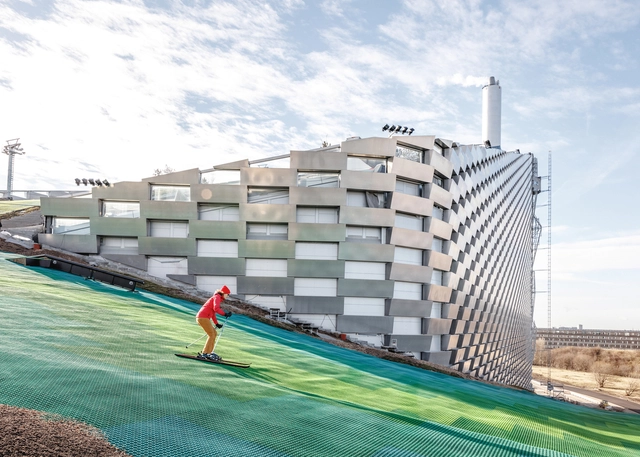
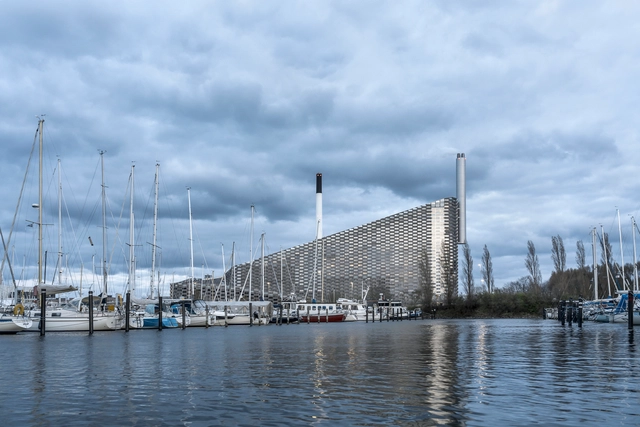
Nearly a decade in the making, the landmark CopenHill waste-to-energy plant first imagined by Bjarke Ingels Group has finally opened in Copenhagen. ArchDaily initially covered BIG's project in January 2011, and the waste-to-energy plant would later include hedonistic ideas of the world’s first steam ring generator and crowdfunding through Kickstarter. Today, the project has fulfilled many of its promises, and CopenHill stands as a modern architectural zeitgeist reflecting BIG's own evolution.
Danish architect Bjarke Ingels (born 2 October 1974) is often cited as one of the most inspirational architects of our time. At an age when many architects are just beginning to establish themselves in professional practice, Ingels has already won numerous competitions and achieved a level of critical acclaim (and fame) that is rare for new names in the industry. His work embodies a rare optimism that is simultaneously playful, practical, and immediately accessible.
Wolf Prix. Image Courtesy of NewSchool and AIAS San Diego
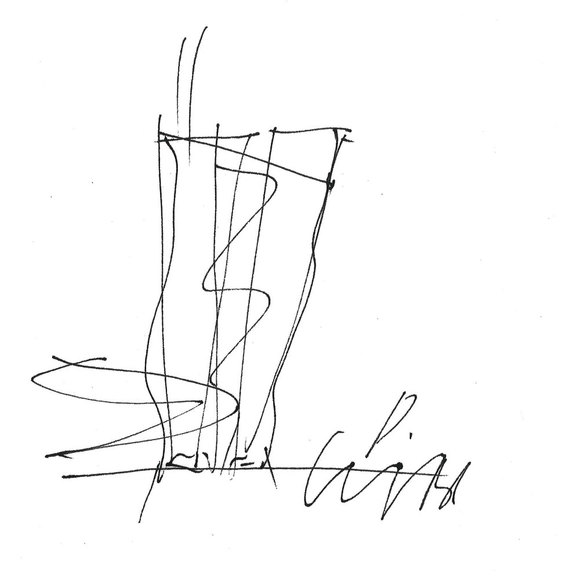
The napkin sketch has always had its place in architecture. In 2015, some of the world's more respected architects donated their very own conceptual doodles to the NewSchool of Architecture & Design and San Diego American Institute of Architecture Students (AIAS) in an effort that helped raise thousands to fund scholarships and programs for architecture students.
"The event was a big success,” said David Garcia back then, a NewSchool architecture undergraduate and fundraising chair for the AIAS event. “Personally, this project means a lot to me, and not just because of the time and involvement, but because this is a nice way to bring students and their favorite architects together, even if it's just through a sketch. Plus, since it's a fundraiser, the proceeds have been a great help to the success of the chapter.”
Bjarke Ingels has featured in a new documentary about BIG’s Amager Bakke waste-to-energy plant in Copenhagen. Known for its iconic ski slope, the hybrid plant produces district heating for 60,000 households annually from waste generated in Copenhagen, and electricity for 30,000 houses.
https://www.archdaily.com/919415/bjarke-ingels-reflects-on-his-waste-energy-ski-slope-plant-in-copenhagenNiall Patrick Walsh
Japanese architect Junya Ishigami's 2019 Serpentine Pavilion is taking shape in London. A series of photographs by Laurian Ghinitoiu showcase the project and its flowing, free-form roof. Ishigami is the second-youngest designer of the pavilion, and his work is known for a light and ephemeral approach. The design for the 2019 pavilion takes the form of a slate sheet rising from the landscape of the park, held up by pilotis that form an interior field.
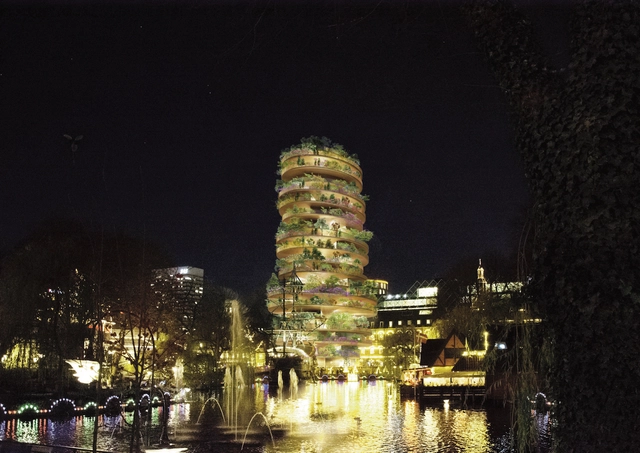
Bjarke Ingels Group has designed an 18-story pagoda for Tivoli's new H.C Andersen Hotel in Copenhagen. Created for the iconic amusement park in the center of the Danish capital, the project will include the refurbishing and re-purposing of the 1893 Tivoli Castle, as well as a renovation of the 1883 Panorama Pavilion. The new pagoda and refurbishment aims to continue Tivoli’s tradition of balancing old-world charm with visionary architecture.
Media channel the slowdown has released the latest episode in their Time Sensitive podcast series, featuring an interview by Andrew Zuckerman with BIG founder Bjarke Ingels. The episode, titled “Bjarke Ingels to Cities: Take a Longer View,” sees Ingels communicate the value and world-changing potential of architecture, and reflect on his own career.
https://www.archdaily.com/917626/bjarke-ingels-appears-on-podcast-to-discuss-his-past-present-and-futureNiall Patrick Walsh
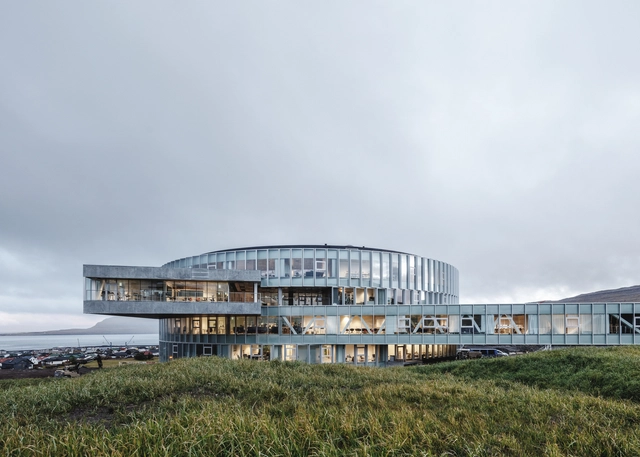
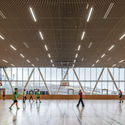
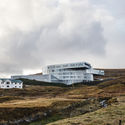
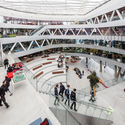
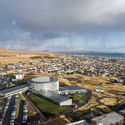
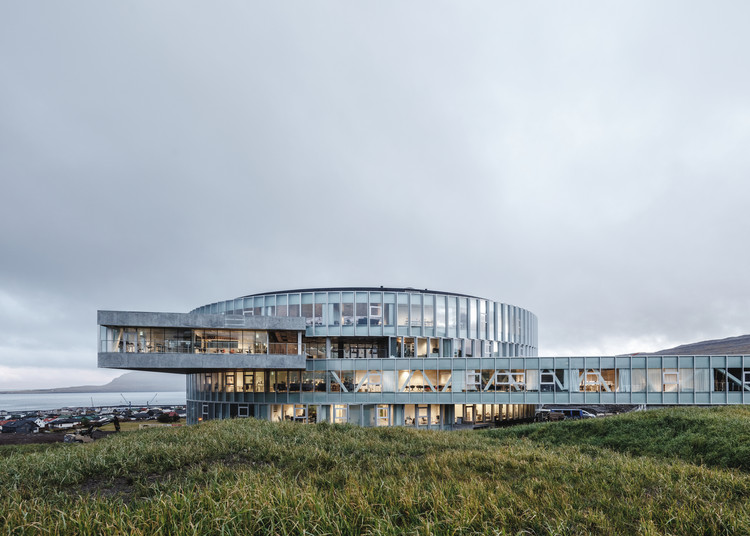
Bjarke Ingels Group.'s vortex-shaped education center has opened in the Faroe Islands. The Glasir Tórshavn College combines three schools under one roof in an area of over 19,000 square meters. Made to celebrates the Faroese landscape, the project includes the Faroe Islands Gymnasium, Tórshavn Technical College and the Business College. The design features glass façades that are mounted in a sawtooth shingle to form the building's circular shape.
Construction has begun on “The Spiral,” a 1,031-foot-tall project in New York’s Hudson Yards designed by Bjarke Ingels Group. The fifth supertall to be added to the area, The Spiral was commissioned by developer Tishman Speyer as part of the ongoing revitalization of the Midtown West region of Manhattan.
The tower is named after its defining feature - an "ascending ribbon of lively green spaces" that extend the High Line "to the sky," says Bjarke Ingels. The scheme will offer 2.85 million of office space, with the anchor tenant Pfizer occupying 18 floors, according to New York YIMBY.
Oakland Gondola. Image Courtesy of Bjarke Ingels Group
Bjarke Ingels Group has designed an expansive cable-car system to connect to the new Oakland Athletics baseball stadium. The new stadium will replace the Oakland A’s existing 51-year-old Oakland-Alameda County Coliseum as a waterfront “jewel box” at Howard Terminal. At the Oakland A’s FanFest, the A’s President Dave Kaval unveiled the new Gondola connecting the Oakland Convention Center to Water Street at Jack London Square. The zero-emission transit line will provide residents and visitors with a way to see the A’s play in their future ballpark.
There are at least as many definitions of architecture as there are architects or people who comment on the practice of it. While some embrace it as art, others defend architecture’s seminal social responsibility as its most definitive attribute. To begin a sentence with “Architecture is” is a bold step into treacherous territory. And yet, many of us have uttered — or at least thought— “Architecture is…” while we’ve toiled away on an important project, or reflected on why we’ve chosen this professional path.
Most days, architecture is a tough practice; on others, it is wonderfully satisfying. Perhaps, though, most importantly, architecture is accommodating and inherently open to possibility.
This collection of statements illustrates the changing breadth of architecture’s significance; we may define it differently when talking among peers, or adjust our statements for outsiders.
Babina’s images create an inverse point of view, a reversal of perception for an alternative reading of space, and reality itself. Making negative space his protagonist, Babina traces the “Architectural footprints” of famous architects, coupling mysterious geometries with a vibrant color scheme.
Bjarke Ingels Group has revealed new images for their King Street West condo community in Toronto. The development was formed as sets of pixels extruded upwards to create space for housing, retail and boutique offices. The concept was made to avoid the footprints of heritage buildings that already exist on site. The latest renderings revealed both interior and exterior images of the striking new development.
The designers wanted the giant sphere to act as a guiding landmark for festival-goers, and set up an Indiegogo campaign back in July to raise the remaining funding for the installation. In total, the team invested 30 tons of steel, 1,000 welding and sewing hours, and $300,000 of their own funds to make the ORB a reality.
https://www.archdaily.com/905681/bjarke-ingels-burning-man-orb-captured-through-the-lens-of-laurian-ghinitoiuNiall Patrick Walsh
If the surest sign of summer in London is the appearance of a new pavilion in front of the Serpentine Gallery, then it’s perhaps fair to say that summer is over once the pavilion is taken down. The installations have gained prominence since its inaugural edition in 2000, acting as a kind of exclusive honor and indication of talent for those chosen to present; celebrated names from the past names include Zaha Hadid, Rem Koolhaas, and Olafur Eliasson.












_2655.jpg?1560892327&format=webp&width=640&height=580)
_2741.jpg?1560892362 "2019 Serpentine Pavilion. Image © Laurian Ghinitoiu")
_2541.jpg?1560892289 "2019 Serpentine Pavilion. Image © Laurian Ghinitoiu")
_2605.jpg?1560892300 "2019 Serpentine Pavilion. Image © Laurian Ghinitoiu")
_2763.jpg?1560892398 "2019 Serpentine Pavilion. Image © Laurian Ghinitoiu")
_2655.jpg?1560892327)




















.jpg?1542028753&format=webp&width=640&height=580)
.jpg?1539856634&format=webp&width=640&height=580)


.jpg?1539856634)


