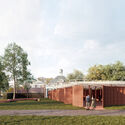
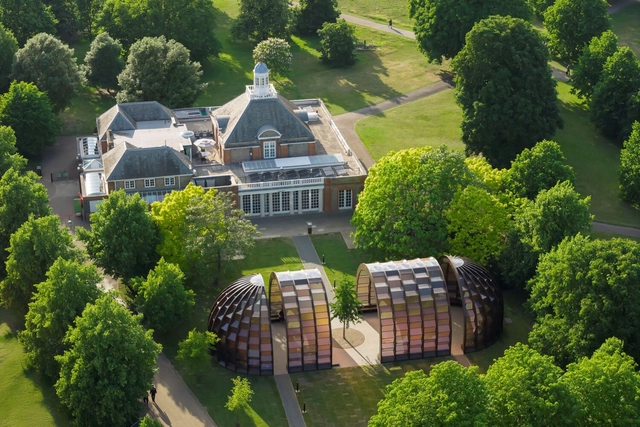
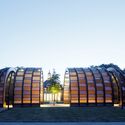
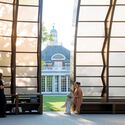
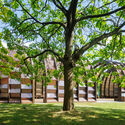
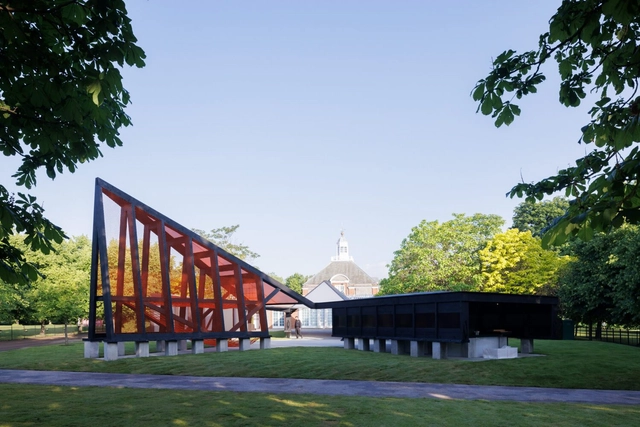
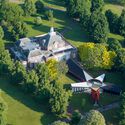
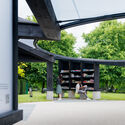
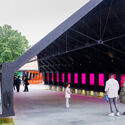
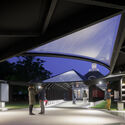
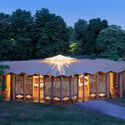
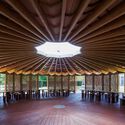
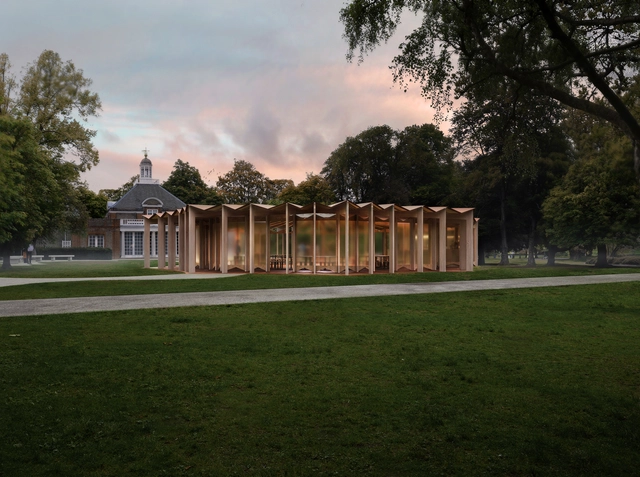
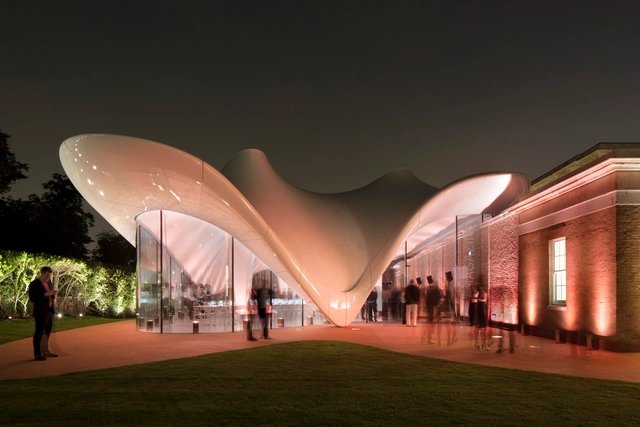
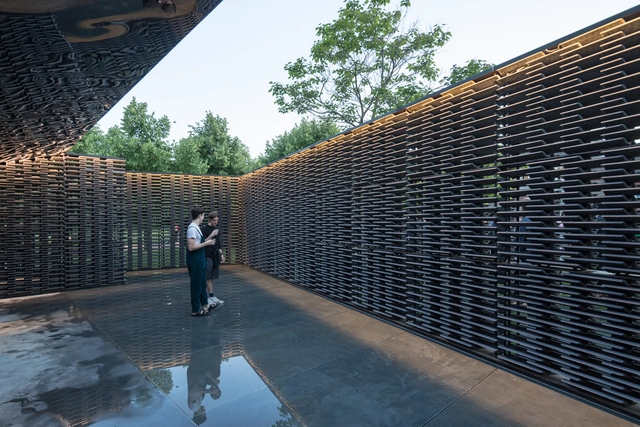
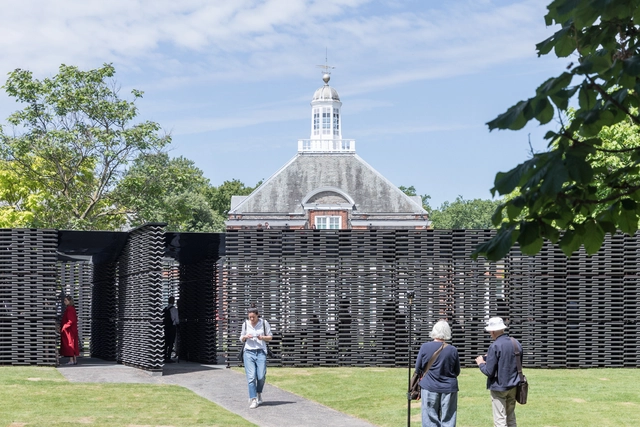
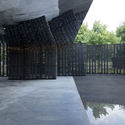
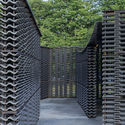
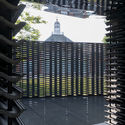
Mexican architecture practice LANZA atelier has unveiled new details for the 2026 Serpentine Pavilion, titled "a serpentine," which will open to the public on 6 June 2026 at Serpentine South. Designed by studio founders Isabel Abascal and Alessandro Arienzo, the project reinterprets the historic serpentine or crinkle-crankle wall through a lightweight brick structure integrated into the landscape of Hyde Park. Marking the 25th edition of the annual commission, the pavilion will remain on view through October 2026 and serve as a venue for Serpentine's public programme of performances, talks, screenings, and community events.
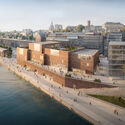
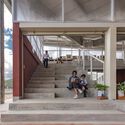
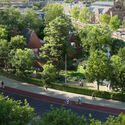
Architecture's public role emerges as a central theme across recent announcements, institutional projects, and professional programs. The selection of the 2026 Serpentine Pavilion designer foregrounds architecture as a space for public encounter and material inquiry, while major civic and cultural projects point to renewed investment in institutions that support education, exchange, and urban continuity. Alongside these developments, international award programs and policy-aligned initiatives continue to situate architecture within broader conversations on sustainability, social responsibility, and long-term impact, highlighting how design decisions at both intimate and monumental scales respond to shared environmental and civic challenges.
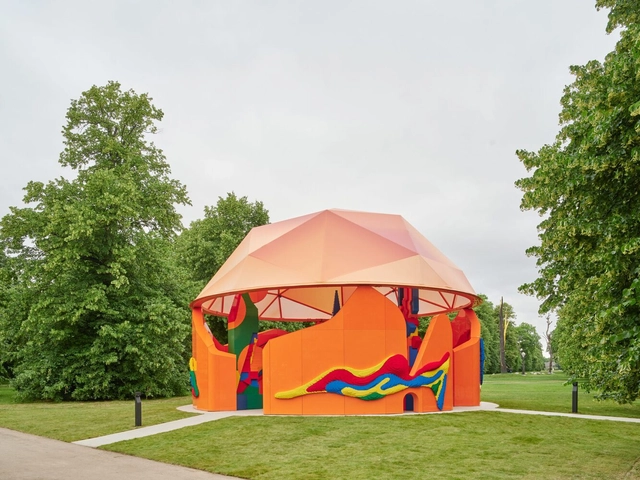
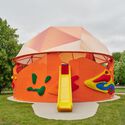
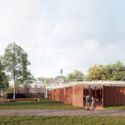
Marking World Play Day, June 11, the Play Pavilion, designed by British architect Peter Cook in collaboration with the LEGO Group, has just opened. The Pavilion is located next to Serpentine South in Kensington Gardens, London. Developed with Pablo Wheldon and Cong Ding, the Pavilion is a collaboration between Serpentine, the LEGO Group, The Royal Parks, and CONSUL. The project builds on Serpentine's broader efforts to connect architecture, design, and public engagement through temporary installations in the park.
The official opening date for the 23rdSerpentine Pavilion has been announced for June 7th, 2024. The structure designed by Seoul-based Korean architect Minsuk Cho and his firm Mass Studies, will welcome visitors until October 27, 2024, in London’s Kensington Gardens. Titled “Archipelagic Void,” the pavilion is composed of five islands displayed around a central void in reference to the mandang, a type of open courtyard found in traditional Korean houses. The intervention will be activated throughout the summer with a diverse program of events, starting with a conversation between Minsuk Cho and Serpentine Artistic Director Hans Ulrich Obrist on June 7, 2024.
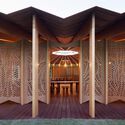
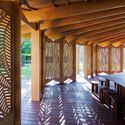
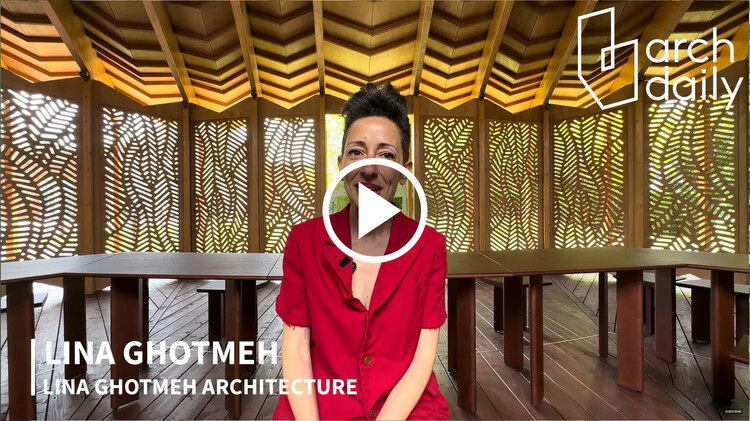
While visiting this year’s Serpentine Pavilion, the ArchDaily team has a chance to sit down with French-Lebanese architect Lina Ghotmeh, the designer behind the temporary structure built in the Kensington Gardens in London. The conversation touched upon Ghotmeh’s motivations and concepts that prompted this pavilion titled À table, conceived as an invitation to sit down together at a table, to enjoy sharing food and engaging in open dialogues. Delving into her Lebanese roots, the architect also expands on her methodology and the desire to create space for conversation and decision-making while encouraging conviviality among people of different backgrounds and experiences. The ArchDaily team also talked to Hans Ulrich Obrist, artistic director at the Serpentine Galleries, about the pavilion as a platform for architecture and the arts.
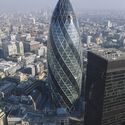
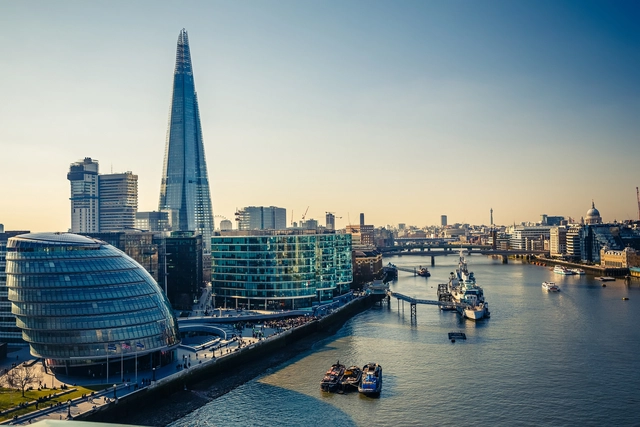
London’s architectural history is a rich tapestry that weaves together styles of various periods and influences. In the post-war era, the city experienced a surge in modern architecture, becoming a canvas for experimentation. New stylistic movements saw their expression crystalized through buildings such as Richard Rogers’ Lloyd’s Building, one of the most representative examples of High-Tech architecture, or the Barbican Estate, a large-scale housing estate that became the iconic structure for Brutalist architecture.
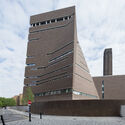
London’s contemporary architectural landscape continues to evolve, in part through the works of internationally-recognized architects such as Norman Foster, Zaha Hadid, and Thomas Heatherwick. This varied blend of styles, and ways of expression reflects the city’s ability to embrace architectural movements of global significance. As a center for innovation, London continues to attract established and emerging architects who shape its skyline and contribute to its international architectural discourse, with each new building offering a glimpse into the ever-changing nature of London’s urban fabric.
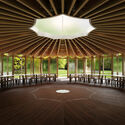
Beirut-born, Paris-based architect Lina Ghotmeh has been announced as the designer of the 22nd annual Serpentine GalleryPavilion. Titled “À Table,” the French expression for sitting together to eat, her proposal introduces a slender wooden structure with nine pleated petals supported by radial ribs. Inside the pavilion, a ring of tables and benches invites visitors to enter, sit down and relax, eat or work together. According to the architect, the modest space and low-slung canopy is meant to make people feel close to the earth. The Serpentine Pavilion will be open from June to October 2023.
Japanese architect Junya Ishigami's 2019 Serpentine Pavilion is taking shape in London. A series of photographs by Laurian Ghinitoiu showcase the project and its flowing, free-form roof. Ishigami is the second-youngest designer of the pavilion, and his work is known for a light and ephemeral approach. The design for the 2019 pavilion takes the form of a slate sheet rising from the landscape of the park, held up by pilotis that form an interior field.
Augmented Reality. Image Courtesy of Matt Alderton
The Serpentine Galleries, Google Arts & Culture and trustee David Adjaye have released a call for augmented reality (AR) architecture proposals to run alongside the 2019 Serpentine Pavilion this summer. Applicants are asked to propose "imaginary city spaces and speculations on the built environment to be developed and experienced” in AR onsite at the galleries. The call invites applicants to consider AR as a digital layer that offers new opportunities to design, visualize and experience.
London’s annual temporary architecture pavilion spectacular has returned. Each summer the Serpentine Pavilion program selects an accomplished architect who has yet to create work in the United Kingdom, and asks them to build a temporary shelter on the gallery's lawn. The resulting structure is erected in June and dismantled in October.
This year’s offering is designed by Francis Kéré—the first pavilion designed by an African Architect to grace Kensington Gardens. Kéré’s project is composed of a series of curving blue walls shaded by an elliptical cantilevering wood and steel canopy. Thus far the design has been universally lauded by critics; read on to find out why they thought the project was so appealing.
Following the opening of the 2017 Serpentine Pavilion, designed this year by Diébédo Francis Kéré (Kéré Architecture), photographer Laurian Ghinitoiu has turned his lens to London. Designed to mimic a tree, or a canopy of trees, the wooden structure has been designed to fuse cultural references from Kéré's home town of Gando in Burkino Faso with more "experimental" construction techniques. His ambition is that the pavilion becomes a social condenser – "a symbol of storytelling and togetherness."
The 2017 Serpentine Pavilion, designed by Diébédo Francis Kéré (Kéré Architecture), was unveiled today in London. Conceived as a micro cosmos—"a community structure within Kensington Gardens"—the pavilion has been designed to consciously fuse cultural references from Kéré's home town of Gando in Burkino Faso, with "experimental construction techniques." The architect hopes that the pavilion, as a social condenser, "will become a beacon of light, a symbol of storytelling and togetherness."
https://www.archdaily.com/874091/diebedo-francis-kere-serpentine-pavilion-opens-london-will-come-alive-when-it-rainsAD Editorial Team
Serpentine Pavilion 2017, Designed by Francis Kéré, Design Render, Interior. Image Courtesy of Kéré Architecture
The Serpentine Galleries have announced that the 2017 Serpentine Pavilion will be designed by Diébédo Francis Kéré (Kéré Architecture), an African architect based between Berlin, Germany, and his home town of Gando in Burkino Faso. The design for the proposal, which will be built this summer in London's Kensington Gardens, comprises an expansive roof supported by a steel frame, mimicking the canopy of a tree. According to Kéré, the design for the roof stems from a tree that serves as the central meeting point for life in Gando. In line with the criteria for the selection of the Serpentine Pavilion architect Kéré has yet to have realised a permanent building in England.
In a recent episiode of Section D, Monocle 24 visit a new exhibition at London's Serpentine Galleries presenting the paintings of Zaha Hadid. The show, first conceived with Hadid herself, "reveals her as an artist with drawing at the very heart of her work." According to the gallery, it "includes the architect’s calligraphic drawings and rarely seen private notebooks with sketches that reveal her complex thoughts about architectural forms and their relationships." This episode takes the listener on a tour of the display with commentary from the exhibition's curator.
https://www.archdaily.com/804667/zaha-hadid-explosive-paintings-drawings-sketches-on-display-london-serpentineAD Editorial Team
The latest designer of the prestigious Serpentine Gallery Pavilion has been named as SelgasCano, the Spanish practice known for their use of the latest synthetic materials and new technology. The Serpentine Pavilion, which has grown to become one of the most visited annual architecture attractions in the world, aims to provide architects who have never built in the UK their first chance to do so. In the past, this has led to pavilions by globally-recognized names such as Frank Gehry, Zaha Hadid, Rem Koolhaas, Oscar Niemeyer, and Peter Zumthor, but in recent years the Serpentine Gallery seems to have changed course a little, instead bringing lesser-known, emergent stars to a much wider audience. This was true of Smiljan Radić and his 2014 pavilion, and will likely prove true for the duo of José Selgas and Lucía Cano.
Although designs for the 2015 pavilion will not be released until February, SelgasCano have promised "to use only one material... the Transparency," adding that "the most advanced technologies will be needed to be employed to accomplish that transparency." This coy description perhaps calls to mind the design of their own office, a partially sunken tube of a building with one side made entirely of curved glass, which won them widespread recognition in 2009.
To give a better idea of the design style that SelgasCano will bring to the 2015 Serpentine Pavilion, we've rounded up a number of their major projects for your viewing pleasure, after the break.
Spanish architects SelgasCano have been selected to design the 2015 Serpentine Gallery Pavilion, which has become one of the top-ten most visited architectural and design exhibitions in the world. The Pavilion will stand in Kensington Gardens during the summer and serving as a multi-purpose social space.
The award-winning studio is led by José Selgas and Lucía Cano and will be the first Spanish architecture practice to design a Serpentine Pavilion, with AECOM once again providing the engineering and technical design services. Although designs will not be revealed until February 2015, SelgasCano had this to say about designing the pavilion:
This is an amazing and unique opportunity to work in a Royal Garden in the centre of London. Both aspects, ‘Garden’ and ‘London’, are very important for us in the development of this project. We are in the middle of a garden, a ‘Royal’ garden indeed, once divided in two and separated by a Serpentine. That garden clings in the middle of London. Garden and London (which best defines London?) will be the elements to show and develop in the Pavilion. For that we are going to use only one material as a canvas for both: the Transparency. That ‘material’ has to be explored in all its structural possibilities, avoiding any other secondary material that supports it, and the most advanced technologies will be needed to be employed to accomplish that transparency. A good definition for the pavilion can be taken from J. M. Barrie: it aims to be as a ‘Betwixt-and-Between’.