“Can you help me design my residential tower? It's 30 stories and located in Brooklyn, New York.” ChatGPT’s response may be surprising. Given that the bot has no architectural experience, and is certainly not a licensed architect, it was quick to rattle off a list of considerations for my building. Zoning codes, floor plan functionality, building codes, materiality, structural design, amenity spaces, and sustainable measures were just a few of the topics ChatGPT shared information about.
Envision your ideal neighborhood. Maybe it’s on a cul-de-sac in the suburbs, where every neighbor has a well-manicured lawn, a two-car garage, and everyone gives each other a friendly wave on their way to work. Or maybe you live in a high-rise building in a dense urban center, where you take public transit to the office five days a week and say hello to your doorman on your way out. Whatever your neighborhood might look like, there’s always a sense of wanting to know the people who live around your- or at least an unspoken reliance on one another to ensure that your surroundings are safe. What happens when technology brings you and your neighbors together to report on local happenings? Is it a good thing, or does it create a vigilante situation gone awry?
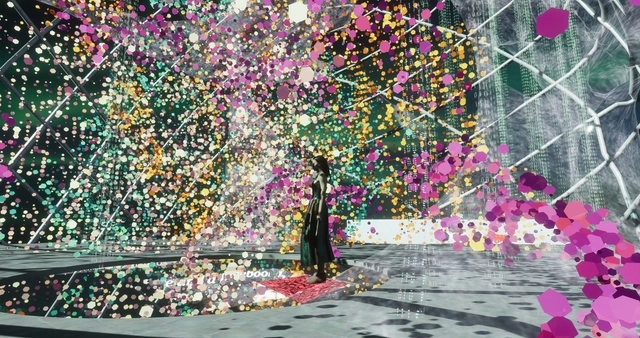
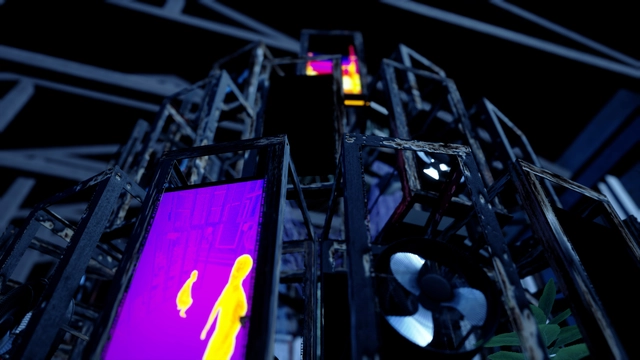
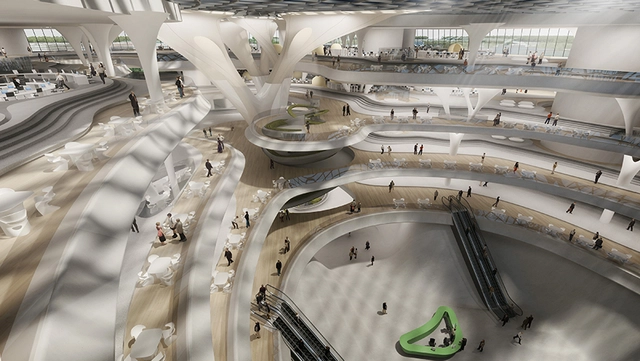
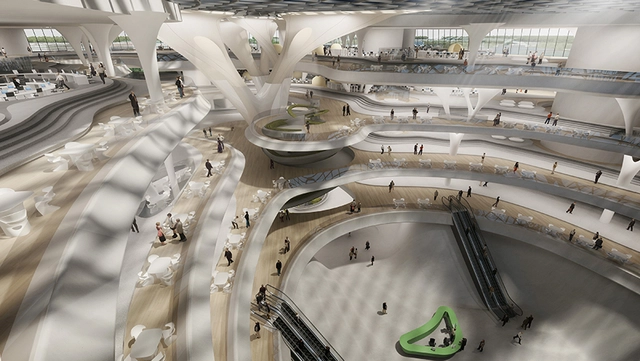
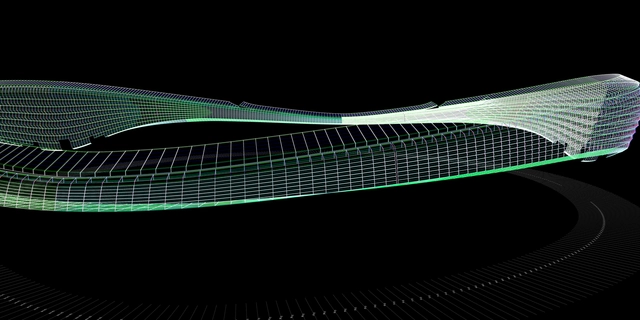
El poder de la Data - Mirador. Image Cortesía de Online Lab of Architecture (OLA)
The Power of Data is an exhibition created in a virtual building, conceived by three-dimensional geometries based on various artificial intelligence algorithms. The project was created by the OLA (Online Lab of Architecture) team of research architects formed by Jennifer Durand (Peru), Daniel Escobar (Colombia), Claudia Garcia (Spain), Giovanna Pillaca (Peru) and Jose Luis Vintimilla (Ecuador).
Artificial intelligence systems endeavor to replicate or mimic human intelligence by combining datasets with iterative processing algorithms to learn from patterns and experience. From Siri, Alexa and other smart assistants to conversational bots and email spam filters, what once seemed like a technology pulled from science fiction has become ubiquitous in our daily lives.
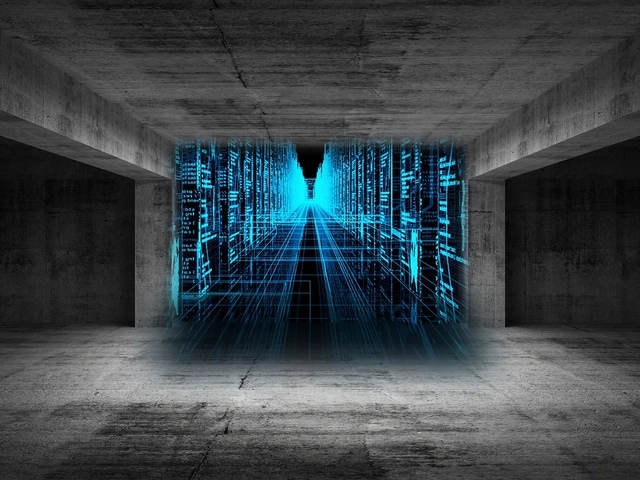
For this edition of the Venice Architecture Biennale, the Irish Pavilion focuses on data technologies and their presence within the physical landscape, exploring the cultural end environmental implications of data production and consumption. Titled Entanglement and curated by the multidisciplinary research and design collective ANNEX, the exhibition challenges the presumed immateriality of the Cloud, highlighting the infrastructure of data production and its impact on everyday life while also examining Ireland’s role in the evolution of global communication.
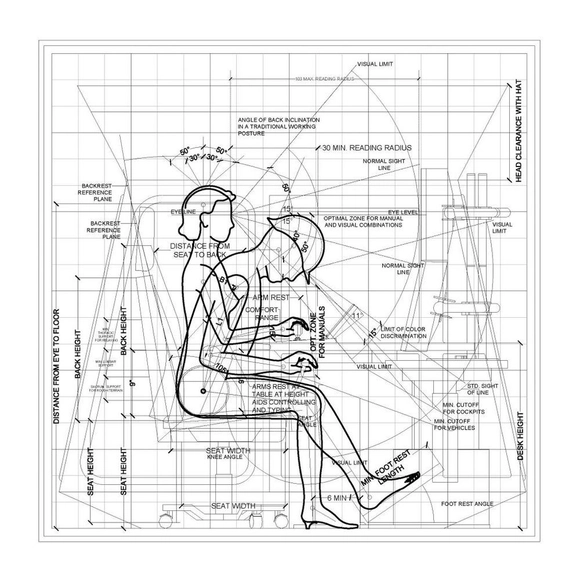
Anthropometric Data - Crane Cabin Operator vs Remote Control Operator. Drawing by Het Nieuwe Instituut 2017. Image Courtesy of Het Nieuwe Instituut
In 2013, Michael Osborne and Carl Benedikt Frey ranked 702 occupations according to their probability of computerisation in the near future, from least probable (“recreational therapist”) to most probable (“telemarketers”). "Architectural and Engineering Managers” was ranked seventy-third, and “architects” eighty-second, while “architectural and civil drafters” ranked three-hundred and fifth. Clearly, technological advancements in fields such as machine learning and robotics are rapidly confronting us with issues of changing professional demand and qualifications. In this essay, Maurizio Ferraris turns the table on us: what if what we should be concerned with is not maintaining the human element in labor as production, but rather recognising human labor as consumption? Expanding on the arguments of his 2012 book, “Lasciar tracce: documentalità e architettura,” the author sees in automation an extraordinary opportunity in defining a renewed centrality of the human element, as the production of value associated with digital exchange is read through the three concepts of invention, mobilization and consumption.
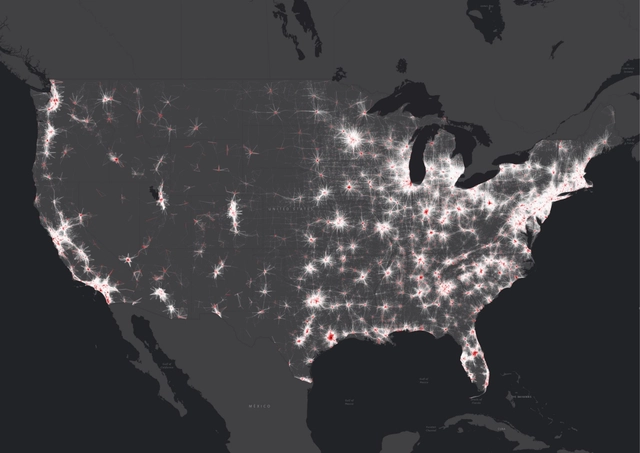
Intro GPS systems and Location Based Services give access to an important amount of data that is currently being used mostly for traffic analysis - but which, if properly processed, could open up infinite possibilities for planning.The access to these Mobility Big Data is no longer a privilege of large cities; on the contrary, it is possible to effectively apply the technologies to increasingly more diverse territories, from mega-regions to contained districts and cities. These data, when retrospectively compared to previously collected ones, lend themselves to multiple applications loosely related to the traffic issue, such as socio-demographic or economical studies. Systematica opens the doors of its laboratory to show us what are the potentials and limits of these tools, starting from a direct experience - a research project, developed in the Los Angeles area.
For the 2019 Shenzhen Biennale of Urbanism\Architecture (UABB), titled "Urban Interactions," (21 December 2019-8 March 2020) ArchDaily is working with the curators of the "Eyes of the City" section to stimulate a discussion on how new technologies might impact architecture and urban life. The contribution below is part of a series of scientific essays selected through the “Eyes of the City” call for papers, launched in preparation of the exhibitions: international scholars were asked to send their reflection in reaction to the statement by the curators Carlo Ratti Associati, Politecnico di Torino and SCUT, which you can read here.
Big Data refers to data that, due to its quantity and complexity, requires specific applications in order to be processed. New trends in urbanism, data collection, and management, not to mention the development of new platforms and tools, have given rise to a new era in urban analysis, creating new resources to understand, evaluate, and manage the evolution of cities.
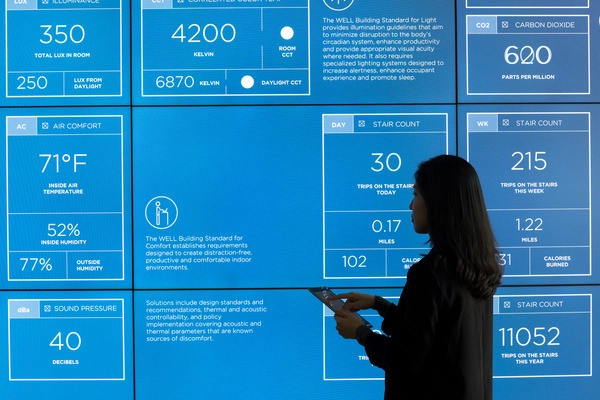
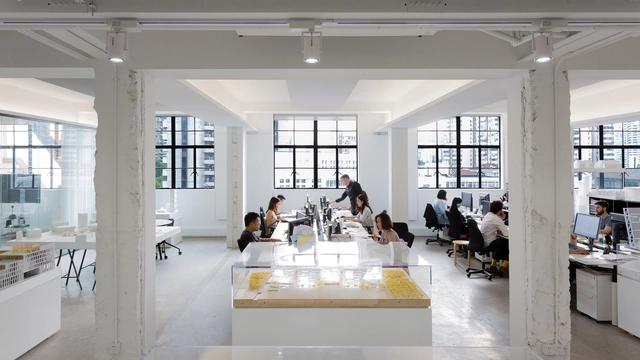
In the highly connected world we live in, technology influences and impacts almost every decision we make. Big Data, Artificial Intelligence (AI), and the Internet of Things (IoT) have enhanced our connected world and helped us understand more about the spaces we inhabit. Aside from the smart homes and smart appliances we have become accustomed to, the modern day office is being redesigned and reprogrammed to include a variety of smart technology systems. The goal of these systems is to put our offices to work and empower businesses to better understand their design decisions, real estate investments, and most importantly- their own employees.
The “smart” movement has gained traction and generated buzz over the last decade, but despite all of the hype, what even is a smart city? The dogma behind its loose definition and goals has been rather elusive, and while some claim that it relies on digitization of all urban aspects, others argue an increase in personal data collection is the sole method for improving urban lifestyles. One person’s digital paradise is perhaps another person’s technophobic doomsday. Extending beyond the mere definition of these cities, what role do designers and researchers play in creating this loosely identified futuristic landscape? As Corbusier once defined a home as a machine for living, it’s time to redefine how our buildings shed their passive exteriors and become the true machines for working that they were always meant to be.
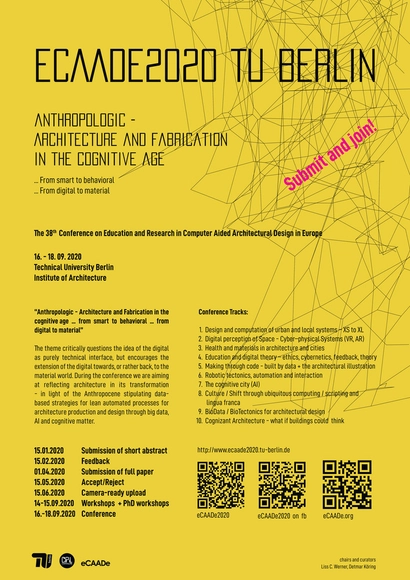
Humans and technology today form an inseparable link that have profound implications for Earth’s ecosystems – leading to the debate for a new era: the Anthropologic. In recent years, the transition from analog to digital architecture has materialized through increasing availability of novel software and new methods in digital architecture fabrication – tooling. The cognitive and digital turn implies ubiquitous computing, artificial intelligence, augmented reality and material intelligence, but to mention a few. The resulting design strategies overwhelm our discipline of architecture, encouraging a re-thinking of architecture, the architect’s role and responsibility, as well as architectural education. The development of digital technologies is compounding the need to develop ethics for this new technological state – shifting computer architecture from its focus on technology to a focus on humans.
Regardless of where you live or work or who you’re friends with, you usually move around the same neighbourhoods and streets of your city. It may be London, Santiago, Shanghai, or Moscow, but in any of these places, there are always districts you have never set a foot in. Have you ever considered how many ‘cities’ are within your own city?
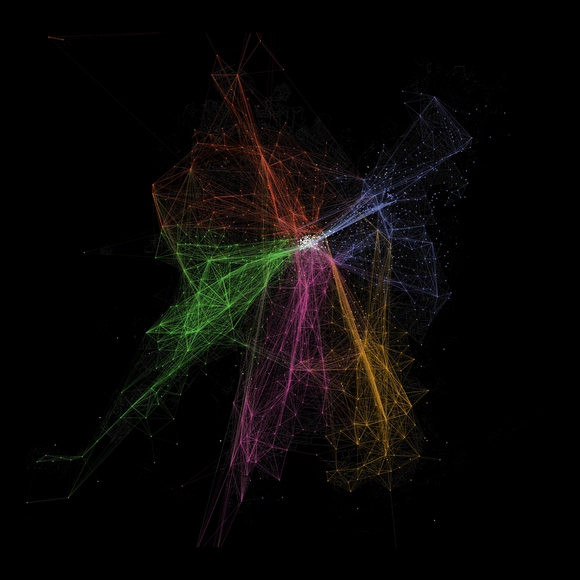
A research article published in The Royal Society Open Science and signed by Chilean researchers utilizes big data to analyze and visualize urban segregation, delivering spatial tools that allow us to develop strategies in a city of many cities. "We know there are [social] bubbles in Santiago, Chile, and that therefore, there is segregation," says Teodoro Dannemann, co-author of the research paper The time geography of segregation during working hours, in a conversation with ArchDaily. “We know that each person explores only a small fraction of the city, which is basically the home-work trajectory. This implies that we only engage with a small group of citizens," he adds.
The Analytics and Insight unit at Zaha Hadid Architects (ZHA) has developed data-driven space-planning models for workplaces that can be changed or adapted in real time. The team, led by architect Uli Blum and Arjun Kaicker, applies their research directly to ZHA projects, including the Sberbank Technopark at the Skolkovo Innovation Centre, Moscow, Russia (seen here), and the Galaxy SOHO Beijing, which was built in 2012. Image
A workplace that improves employee productivity and efficiency has been a white whale of corporate managers for decades. But even before the office as we know it today was born, designers and innovators were already studying sites of labor, such as the factory, to devise strategies to boost worker performance. By the 1960s, Robert Propst, the inventor behind Herman Miller’s Action Office line of workplace furniture, and others were conducting workspace research that would ultimately lead to the creation of the modern cubicle.
These developments relied largely on observation and intuition to organize office workers in purportedly effective ways. Now, advances in technology allow designers to take a more sophisticated approach, using sensors, internet-connected furniture and fixtures, and data analytics to study offices in real time. “You can take into account every single employee, and people are very different,” says London architect Uli Blum. “It’s about solving the fundamental problems of getting people the environment they need. And the easiest way is to ask them,” he adds. But finding out the needs of hundreds, sometimes thousands, of workers can quickly become an exercise in futility.
Before airplanes, it took mail carriers on horseback months to transport letters across the country. Before washing machines, it took a full day of physical exercise to wash and dry a family’s laundry. And before cranes, it took decades—sometimes centuries—to build large structures such as castles and cathedrals.
The point being: Whatever you do, technology probably gives you a better way to do it.
Credits: Supreme Committee for Delivery & Legacy / Architect : ZHA & AECOM / Automatization Processes for Digital Fabrication : ECHOES.PARIS
Applications are open for the third edition of the Design by Data Advanced Master® in Computational Design, Digital Manufacturing and Building Technologies opening in September 2018 in Paris.
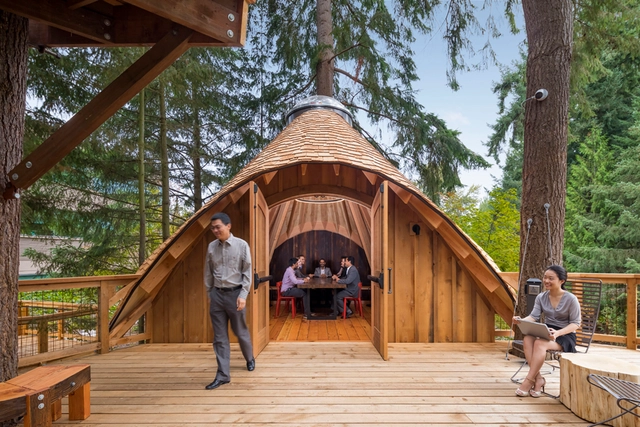
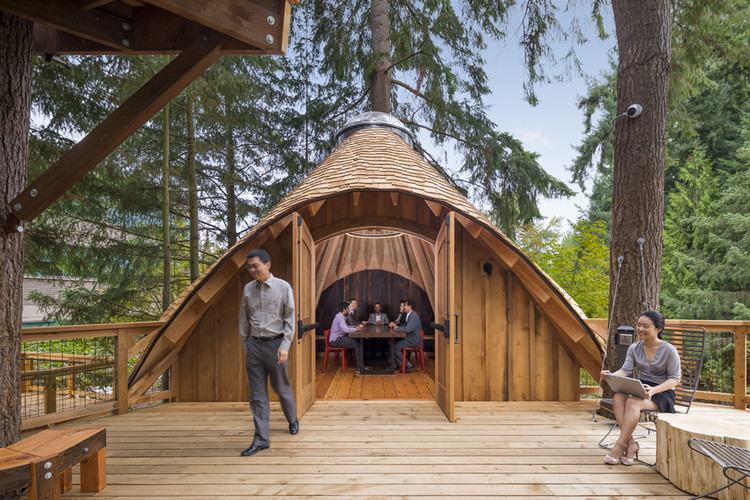
Microsoft is undertaking an ambitious overhaul of its 800 offices around the world and uncovering great insights about the intersections of technology and workplace design in the process. The technology giant’s global director of workplace strategies, Riku Pentikäinen, speaks to Metropolis’s Avinash Rajagopal about the company’s new workplaces, collaborating with designers and furniture manufacturers, and how his team takes a data-driven approach to office design.
Ideasforward wants to give young creative people from around the world the opportunity to express their views on the future of societies through their innovative and visionary proposals. We are an experimental platform seeking progressive ideas that reflect on emerging themes.