1. ArchDaily
  2. Berlin

Berlin: The Latest Architecture and News

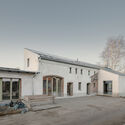
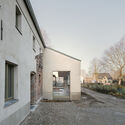
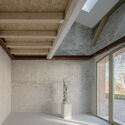
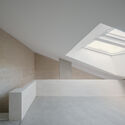
Tegel Quartier / Max Dudler

Tegel Quartier / Max Dudler - Exterior Photography, Renovation, Facade
© Stefan Müller

Tegel Quartier / Max Dudler - Exterior Photography, RenovationTegel Quartier / Max Dudler - Exterior Photography, RenovationTegel Quartier / Max Dudler - Exterior Photography, RenovationTegel Quartier / Max Dudler - Interior Photography, Renovation, FacadeTegel Quartier / Max Dudler - More Images+ 3

Studios Frobenstraße 1 / BOLLES+WILSON

Studios Frobenstraße 1 / BOLLES+WILSON - Commercial ArchitectureStudios Frobenstraße 1 / BOLLES+WILSON - Commercial ArchitectureStudios Frobenstraße 1 / BOLLES+WILSON - Interior Photography, Commercial Architecture, Kitchen, Beam, FacadeStudios Frobenstraße 1 / BOLLES+WILSON - Exterior Photography, Commercial Architecture, FacadeStudios Frobenstraße 1 / BOLLES+WILSON - More Images+ 28

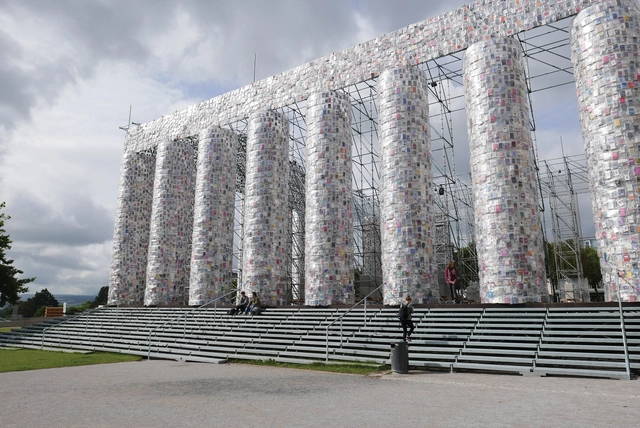
Is Fake the New Real? Searching for an Architectural Reality

Subscriber Access | 

Excerpt from the book: Real and Fake in Architecture–Close to the Original, Far from Authenticity? (Edition Axel Menges)

The term “fake” has been in the media frequently in the early 21st century, referring to headlines and fictional statements that are perceived as real and are influencing public opinion and action. Replacing the historically more common term “propaganda,” fake news aims at misinformation and strives to “damage an agency, entity, or person, and/or gain financially or politically, often using sensationalist, dishonest, or outright fabricated headlines.” Tracing fake news and differentiating “real” information from personal opinions and identifying intentional (or unintentional) deceit can be complicated. It is similarly complex to trace the duality of fake and real in the built world. To explore the larger context of fake statements in architecture and environmental design, a look at the definition of fake and related terms might be necessary.
Is Fake the New Real? Searching for an Architectural Reality - Image 1 of 4Is Fake the New Real? Searching for an Architectural Reality - Image 2 of 4Is Fake the New Real? Searching for an Architectural Reality - Image 3 of 4Is Fake the New Real? Searching for an Architectural Reality - Image 4 of 4Is Fake the New Real? Searching for an Architectural Reality - More Images+ 11

The Graphic Novel as Architectural Narrative: Berlin and Aya

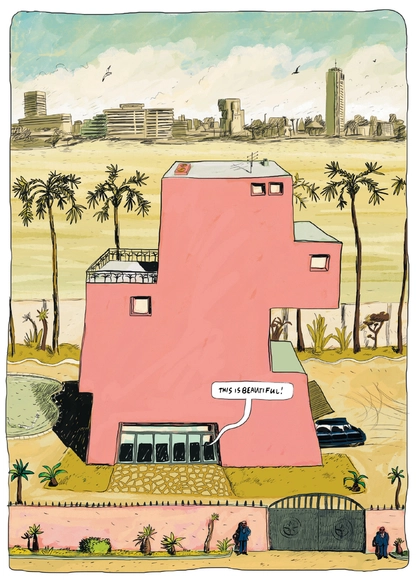
The comic strip, la bande dessinée, the graphic novel. These are all part of a medium with an intrinsic connection to architectural storytelling. It’s a medium that has long been used to fantasise and speculate on possible architectural futures, or in a less spectacular context, used as a device to simply show the perspectival journey through an architectural project. When the comic strip meshes fiction with architectural imagination, however, it’s not only the speculation on future architectural scenarios that takes place. It’s also the recording and the critiquing of the urban conditions of either our contemporary cities or the cities of the past.

The Graphic Novel as Architectural Narrative:  Berlin and Aya  - Image 1 of 4The Graphic Novel as Architectural Narrative:  Berlin and Aya  - Image 2 of 4The Graphic Novel as Architectural Narrative:  Berlin and Aya  - Image 3 of 4The Graphic Novel as Architectural Narrative:  Berlin and Aya  - Image 4 of 4The Graphic Novel as Architectural Narrative:  Berlin and Aya  - More Images+ 9

Rules of the Road for Becoming a More Bike-Dependent City

Subscriber Access | 
Rules of the Road for Becoming a More Bike-Dependent City - Featured Image
Proposal for Car-Free Times Square in New York City. Image via 3deluxe

Over the last century, cars have been the dominant element when designing cities and towns. Driving lanes, lane expansions, parking garages, and surface lots have been utilized as we continue our heavy reliance on cars, leaving urban planners to devise creative ways to make city streets safe for pedestrians and cyclists alike. But many cities, especially a handful in Europe, have become blueprints for forward-thinking ideologies on how to design new spaces to become car-free and rethink streets to make them pedestrian-friendly. Are we experiencing the slow death of cars in urban cores around the world in favor of those who prefer to walk or ride bikes? And if so, how can it be done on a larger scale?

Office Building Hamburger Bahnhof / Miller & Maranta

Office Building Hamburger Bahnhof / Miller & Maranta - Exterior Photography, Office Buildings
© Ruedi Walti

Office Building Hamburger Bahnhof / Miller & Maranta - Exterior Photography, Office BuildingsOffice Building Hamburger Bahnhof / Miller & Maranta - Exterior Photography, Office BuildingsOffice Building Hamburger Bahnhof / Miller & Maranta - Interior Photography, Office Buildings, StairsOffice Building Hamburger Bahnhof / Miller & Maranta - Interior Photography, Office Buildings, Door, ChairOffice Building Hamburger Bahnhof / Miller & Maranta - More Images+ 10

Studio Visit: A Conversation with Christoph Hesse Architects in Their Workspace in Berlin

Subscriber Access | 
Studio Visit: A Conversation with Christoph Hesse Architects in Their Workspace in Berlin - Featured Image
© Marc Goodwin

There is so much more to know about architects and their projects when you begin to learn the stories behind their work. When you know where and how they draw their inspiration from and how an idea becomes a reality that you can touch, feel and experience, you get a better idea of why the project ended up the way it did.

Together with photographer Marc Goodwin, as part of his project Atlas of Architectural Atmospheres this time in the city of Berlin, we had the opportunity to meet with German architect Christoph Hesse, of Christoph Hesse Architects, based in Korbach and Berlin, and we spoke about all these things that make up his idea of architecture and his work. Meeting a creator on their own workspace is also an added value; we went through different projects while looking at the physical models and the narrative of his work became a beautiful story about a place, a countryside town in Germany, its people, and their lives, and a sustainable future in nature.
Studio Visit: A Conversation with Christoph Hesse Architects in Their Workspace in Berlin - Image 1 of 4Studio Visit: A Conversation with Christoph Hesse Architects in Their Workspace in Berlin - Image 2 of 4Studio Visit: A Conversation with Christoph Hesse Architects in Their Workspace in Berlin - Image 3 of 4Studio Visit: A Conversation with Christoph Hesse Architects in Their Workspace in Berlin - Image 4 of 4Studio Visit: A Conversation with Christoph Hesse Architects in Their Workspace in Berlin - More Images+ 13

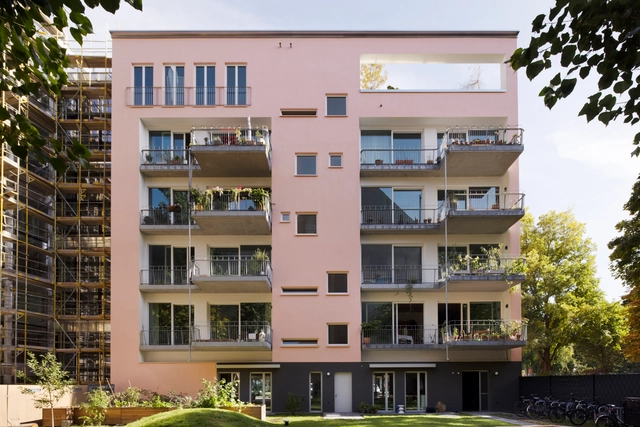
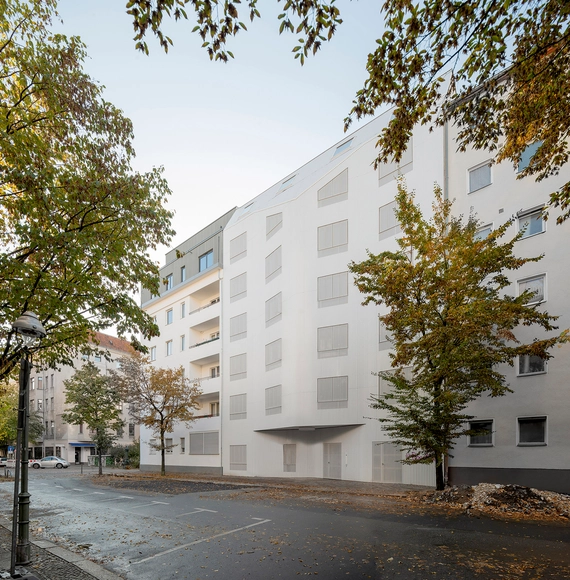
Iceberg Residential Building / rundzwei Architekten

Iceberg Residential Building / rundzwei Architekten - Interior Photography, Residential, Facade, DoorIceberg Residential Building / rundzwei Architekten - Exterior Photography, Residential, FacadeIceberg Residential Building / rundzwei Architekten - Interior Photography, ResidentialIceberg Residential Building / rundzwei Architekten - Interior Photography, Residential, StairsIceberg Residential Building / rundzwei Architekten - More Images+ 15

  • Area Area of this architecture project Area:  1740
  • Year Completion year of this architecture project Year:  2019

Berlin Citizens Propose World's Largest Car-Free Area in the German Capital

Volksentscheid Berlin Autofrei (People’s Decision for Auto-Free Berlin), has proposed a plan to limit cars within Berlin's Ringbahn, a long circle route around the inner city, making it the world's largest car-free area once approved. The citizen-initiative is aimed mostly at banning the use of private cars in central Berlin, with the exception of emergency vehicles, garbage trucks, taxis, delivery vehicles, and residents with limited mobility, who would all be given special access permits.

Berlin Citizens Propose World's Largest Car-Free Area in the German Capital - Image 1 of 4Berlin Citizens Propose World's Largest Car-Free Area in the German Capital - Image 2 of 4Berlin Citizens Propose World's Largest Car-Free Area in the German Capital - Image 3 of 4Berlin Citizens Propose World's Largest Car-Free Area in the German Capital - Image 4 of 4Berlin Citizens Propose World's Largest Car-Free Area in the German Capital - More Images

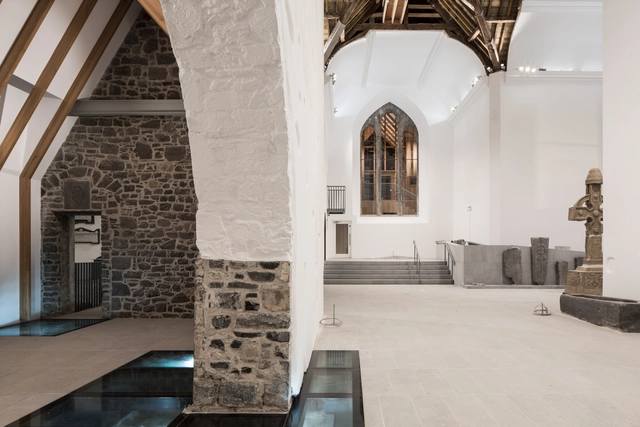
Architectural Salvage: Cultural Hotspots using Adaptive Reuse

Subscriber Access | 

The dawn of the Anthropocene has thrown the idea of adaptive reuse into the limelight: effectively the pinnacle of urban regeneration and revitalization. It utilizes the presence of existing buildings with historic and cultural value and re-purposes them to be functional. Essentially a form of architectural salvage; a sustainable and viable means of rebuilding.

Recent events such as the pandemic has highlighted inequalities in our cityscape, the inadequate segments in a state of disuse and disrepair. Adaptive reuse can replenish these areas and create new cultural hotspots, encouraging activity and creating vibrant and healthy mixed-use environments.

Below is a diverse selection of cultural hotspots using Adaptive Reuse

Architectural Salvage: Cultural Hotspots using Adaptive Reuse  - Image 1 of 4Architectural Salvage: Cultural Hotspots using Adaptive Reuse  - Image 2 of 4Architectural Salvage: Cultural Hotspots using Adaptive Reuse  - Image 3 of 4Architectural Salvage: Cultural Hotspots using Adaptive Reuse  - Image 4 of 4Architectural Salvage: Cultural Hotspots using Adaptive Reuse  - More Images+ 10

9 Newly Opened Museums Enriching the Arts and Culture Scene

9 Newly Opened Museums Enriching the Arts and Culture Scene - Featured Image
© Staatliche Museen zu Berlin, Nationalgalerie / Reinhard Friedrich

Last year, a series of new museums, expansions and several museum renovations have opened their doors to the public, adding a new dimension to the cultural landscape around the world. From the long-awaited re-opening of the Neue Nationalgalerie in Berlin, to Ryue Nishizawa's Jining Art Museum merging with the landscape, and MVRDV's reflective Art Depot, discover the architecture of the latest venues of art and culture.
9 Newly Opened Museums Enriching the Arts and Culture Scene - Image 1 of 49 Newly Opened Museums Enriching the Arts and Culture Scene - Image 2 of 49 Newly Opened Museums Enriching the Arts and Culture Scene - Image 3 of 49 Newly Opened Museums Enriching the Arts and Culture Scene - Image 4 of 49 Newly Opened Museums Enriching the Arts and Culture Scene - More Images+ 5

Berlin's Famous Architecture Studios Captured by Marc Goodwin

Subscriber Access | 

After a two-year hiatus due to the global pandemic, Architectural photographer Marc Goodwin has resumed work on the Atlas of Architectural Atmospheres, Archmospheres, starting with the city of Berlin. This project that seeks to capture architecture offices from around the world has already gathered images from Madrid, Brazil, Panama City, the Netherlands, Dubai, London, Paris, Beijing, Shanghai, Seoul, the Nordic countries, Barcelona, Los Angeles, and Istanbul.

Documenting diverse architecture and design studios, Goodwin captured 13 different office spaces in Berlin, including Hesse, LAVA, JWA, Tchoban Voss, Richter Musikowski, Barkow Leibinger, FAR frohn&rojas, studio Karhard, Jasper, Kleihues + Kleihues, Graft, Bundschuh Architekten and Sauerbruch Hutton.

Berlin's Famous Architecture Studios Captured by Marc Goodwin - Image 1 of 4Berlin's Famous Architecture Studios Captured by Marc Goodwin - Image 2 of 4Berlin's Famous Architecture Studios Captured by Marc Goodwin - Image 3 of 4Berlin's Famous Architecture Studios Captured by Marc Goodwin - Image 4 of 4Berlin's Famous Architecture Studios Captured by Marc Goodwin - More Images+ 52

Hagius Sports Studio / Gonzalez Haase Architects

Hagius Sports Studio / Gonzalez Haase Architects - Interior Photography, Wellbeing
© Thomas Meyer

Hagius Sports Studio / Gonzalez Haase Architects - Interior Photography, Wellbeing, CountertopHagius Sports Studio / Gonzalez Haase Architects - Interior Photography, WellbeingHagius Sports Studio / Gonzalez Haase Architects - Interior Photography, Wellbeing, Kitchen, FacadeHagius Sports Studio / Gonzalez Haase Architects - Interior Photography, Wellbeing, BedroomHagius Sports Studio / Gonzalez Haase Architects - More Images+ 8

Daycare Center and Office Space at Berlin University of Technology / KRP Architektur GmbH

Daycare Center and Office Space at Berlin University of Technology / KRP Architektur GmbH - Exterior Photography, Cowork Interiors
© Hanns Joosten

Daycare Center and Office Space at Berlin University of Technology / KRP Architektur GmbH - Exterior Photography, Cowork Interiors, FacadeDaycare Center and Office Space at Berlin University of Technology / KRP Architektur GmbH - Exterior Photography, Cowork InteriorsDaycare Center and Office Space at Berlin University of Technology / KRP Architektur GmbH - Interior Photography, Cowork Interiors, StairsDaycare Center and Office Space at Berlin University of Technology / KRP Architektur GmbH - Interior Photography, Cowork Interiors, Facade, DoorDaycare Center and Office Space at Berlin University of Technology / KRP Architektur GmbH - More Images+ 13

A New Exhibition in Berlin Explores the Human Side of Architecture

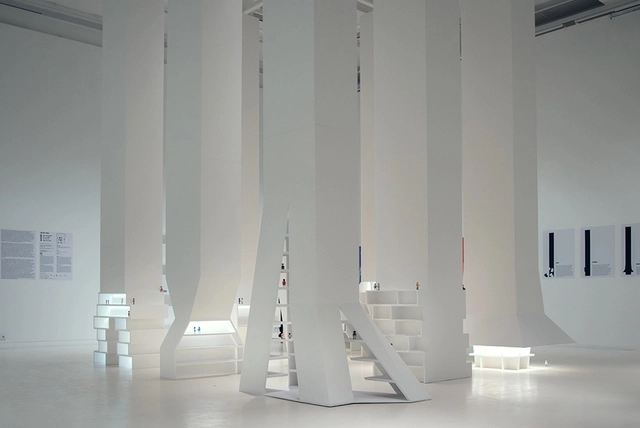
Shape Tomorrow, a new exhibition at AEDES Architecture Forum in Berlin, is a reaction to both staid, self-serious architecture shows and to the staid, self-serious architecture profession. Taking the form of a miniature city, it turns buildings into named characters, encourages visitors to populate structures with miniature people, and leaves space for them to fill the room with their ideas and criticism.

The exhibition, on view through January 13, is the brainchild of German architect Matthias Hollwich, founder of New York-based HWKN—a burgeoning firm known for both its research and its sense of whimsy. The show centers on nine, 16-foot-tall white plaster towers whose glowing bases take on the forms of some of the firm’s playful, kinetic projects from around the world. These include 25 Kent, a fractured office building in Williamsburg, and Die Macherei, a jutting and terraced mixed-use business district in Munich.

Fotografiska Announces Three New Locations in Berlin, Shanghai and Miami, Becoming the Largest Private Art Museum

Fotografiska Announces Three New Locations in Berlin, Shanghai and Miami, Becoming the Largest Private Art Museum - Featured Image
Fotografiska Berlin by Herzog & De Meuron. Image © bloomimages

Fotografiska Museum has announced its expansion to three new locations in Berlin, Shanghai and Miami, to be housed within existing buildings redesigned by Herzog & De Meuron, Neri&Hu and Rockwell Group. A former department store in Berlin's Jewish Quarter, a 1946 factory building in Miami and a historically significant warehouse complex in Shanghai are the future Fotografiska venues set for completion in 2022 and 2023. Together with the existing locations in Stockholm, Tallin and New York, these will form the world's largest private art museum in terms of size, number of locations, and exhibitions per year.

Fotografiska Announces Three New Locations in Berlin, Shanghai and Miami, Becoming the Largest Private Art Museum - Image 1 of 4Fotografiska Announces Three New Locations in Berlin, Shanghai and Miami, Becoming the Largest Private Art Museum - Image 2 of 4Fotografiska Announces Three New Locations in Berlin, Shanghai and Miami, Becoming the Largest Private Art Museum - Image 3 of 4Fotografiska Announces Three New Locations in Berlin, Shanghai and Miami, Becoming the Largest Private Art Museum - Image 4 of 4Fotografiska Announces Three New Locations in Berlin, Shanghai and Miami, Becoming the Largest Private Art Museum - More Images+ 3

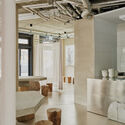
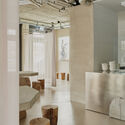
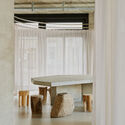
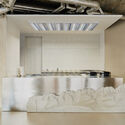
JIGI Poke Restaurant / VAUST Studio

JIGI Poke Restaurant / VAUST Studio - Interior Photography, Restaurant & Bar InteriorsJIGI Poke Restaurant / VAUST Studio - Interior Photography, Restaurant & Bar Interiors, Bathroom, Beam, ColumnJIGI Poke Restaurant / VAUST Studio - Interior Photography, Restaurant & Bar Interiors, Table, ChairJIGI Poke Restaurant / VAUST Studio - Interior Photography, Restaurant & Bar Interiors, Kitchen, LightingJIGI Poke Restaurant / VAUST Studio - More Images+ 13

  • Architects: VAUST Studio
  • Area Area of this architecture project Area:  120
  • Year Completion year of this architecture project Year:  2021

Rosé Atelier House / Helga Blocksdorf Architektur

Rosé Atelier House  / Helga Blocksdorf Architektur - Interior Photography, Offices Interiors, Bench
© Simon Menges

Rosé Atelier House  / Helga Blocksdorf Architektur - Exterior Photography, Offices Interiors, Facade, DoorRosé Atelier House  / Helga Blocksdorf Architektur - Exterior Photography, Offices InteriorsRosé Atelier House  / Helga Blocksdorf Architektur - Interior Photography, Offices Interiors, Bathroom, BeamRosé Atelier House  / Helga Blocksdorf Architektur - Interior Photography, Offices InteriorsRosé Atelier House  / Helga Blocksdorf Architektur - More Images+ 8