1. ArchDaily
  2. Automobile

Automobile: The Latest Architecture and News

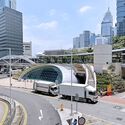
Not Just a Train Stop: The Evolution of Transit-Oriented Developments in East Asia

Subscriber Access | 

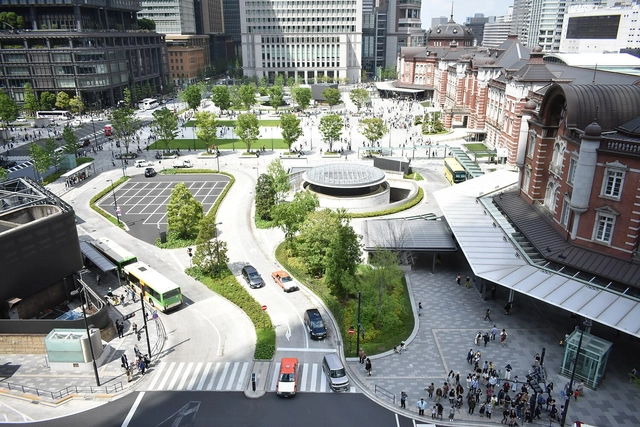
Transit-Oriented Development (TOD) is a comprehensive urban planning strategy aimed at creating dense, walkable, and vibrant neighborhoods centered around public transportation hubs. By seamlessly integrating residential, commercial, and recreational facilities within close proximity to transit nodes, TODs seek to reduce automobile dependency, increase public transit ridership, and stimulate local economic development. Government agencies play a pivotal role in supporting these developments through zoning reforms, easing floor area ratios (FARs), selling air rights, and facilitating public-private partnerships to secure capital for public infrastructure. While TODs have gained global traction, East Asia boasts some of the most successful examples. Conversely, efforts to replicate these models in different contexts—such as New York City—highlight the importance of adapting TOD principles to local conditions, geographical characteristics, and community needs.

Not Just a Train Stop: The Evolution of Transit-Oriented Developments in East Asia - Image 1 of 4Not Just a Train Stop: The Evolution of Transit-Oriented Developments in East Asia - Image 2 of 4Not Just a Train Stop: The Evolution of Transit-Oriented Developments in East Asia - Image 3 of 4Not Just a Train Stop: The Evolution of Transit-Oriented Developments in East Asia - Image 4 of 4Not Just a Train Stop: The Evolution of Transit-Oriented Developments in East Asia - More Images+ 17

Confronting the Racist Legacy of Urban Highways

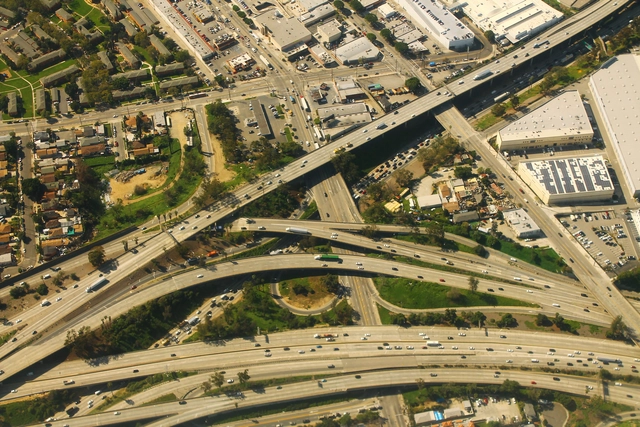
Highways, in their inanimate state, cannot be racist. However, the forces that located them and the consequences of their placement are inextricably connected to race. Deborah Archer, a law professor and civil rights lawyer, captures the central concept: “Highways were built through and around Black communities to entrench racial inequality and protect white spaces and privilege.”

In the new book, Justice and the Interstates: The Racist Truth About Urban Highways, editors Ryan Reft, Amanda Phillips du Lucas, and Rebecca Retzlaff explore racial injustice and the interstate highway system. They collect essays that address the dislocation caused by interstates. The book came out of a series of articles in Metropole, a publication of the Urban History Association.
Exploring the History and Future of Parking Garage Designs

Subscriber Access | 

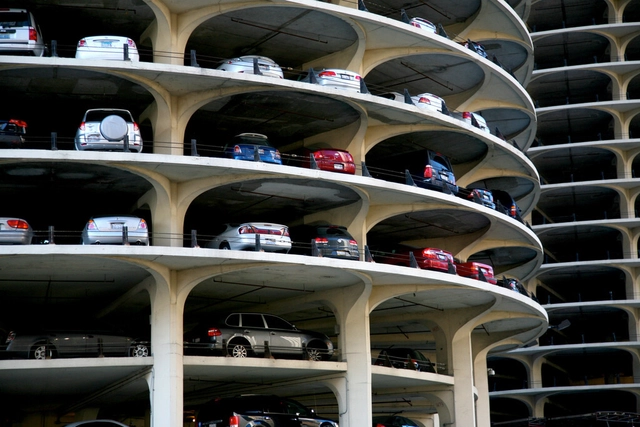
For every car that drives on the road, we need to find a place to put it- but are parking garages the answer? Parking garages are often seen as the antithesis of people-friendly urban planning. Large gray boxes are used solely to store cars that make temporary visits and seem like a poor use of space, especially in cities where land comes at a premium. Because of these garages, urban cores have quickly been transformed into parking districts, where vehicle storage dominates the aesthetic of a business district. Building codes only contribute to the problem, where the number of spaces is passed down as a mandate, even spreading out into suburban areas. Parking garages are everywhere- flanking shopping malls, connecting to residential towers, and surrounding sporting venues.

Art Deco: How Discovery, Invention and Fashion Created a Movement

Subscriber Access | 

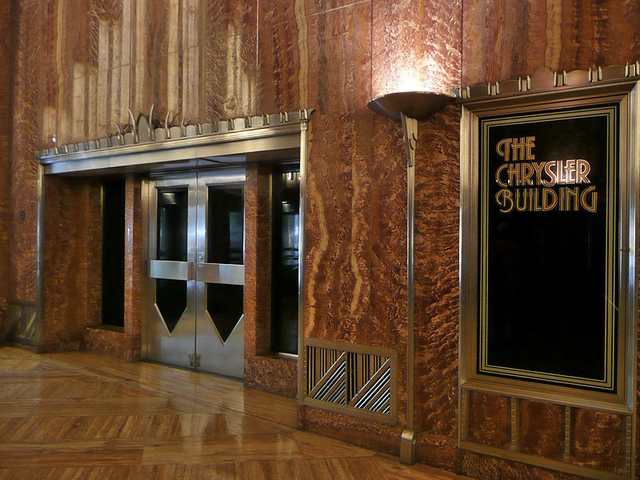
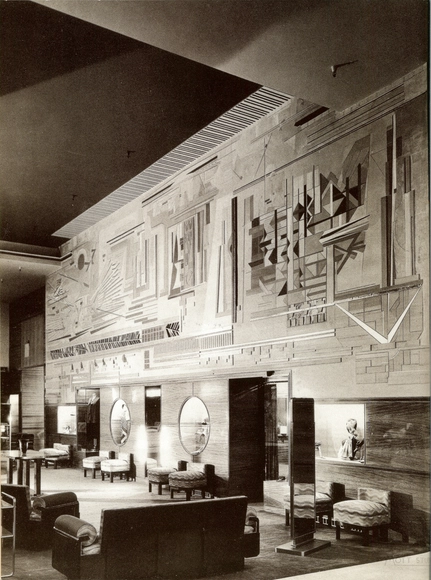
Art Deco or Arts Décoratifs originated in the 1920's, following the Exposition Internationale des Arts Décoratifs et Industriels Modernes held in Paris (1925). However, it wasn’t until the 1930’s that the movement gained momentum across both Europe and the US, broadening Art Deco to cover all elements of decorative art including furniture, interior design, jewelry and architecture. Its popularity stems from its unique origins. Rather than a design movement driven by political or philosophical forces, it was created for the desire of glamorous and alluring change, a reflection of the golden age in Hollywood and a widespread economic boom.

Characterized by its decadence, rich application of color, and geometrical shapes, the movement is dramatically influenced by the discovery of the artifacts of ancient civilizations, and the introduction and admiration of the automobile. A movement heavily influenced by aspects in vogue it sought to create a form of luxury modernism, a step away from a more traditional architecture. It put an emphasis on handcrafted and individually designed elements, rarely to be mass produced.

Art Deco: How Discovery, Invention and Fashion Created a Movement - Image 1 of 4Art Deco: How Discovery, Invention and Fashion Created a Movement - Image 2 of 4Art Deco: How Discovery, Invention and Fashion Created a Movement - Image 3 of 4Art Deco: How Discovery, Invention and Fashion Created a Movement - Image 6 of 4Art Deco: How Discovery, Invention and Fashion Created a Movement - More Images+ 7

100 Years Later, Prismática Gives an Abandoned Mechanic Shop a New Life

Subscriber Access | 

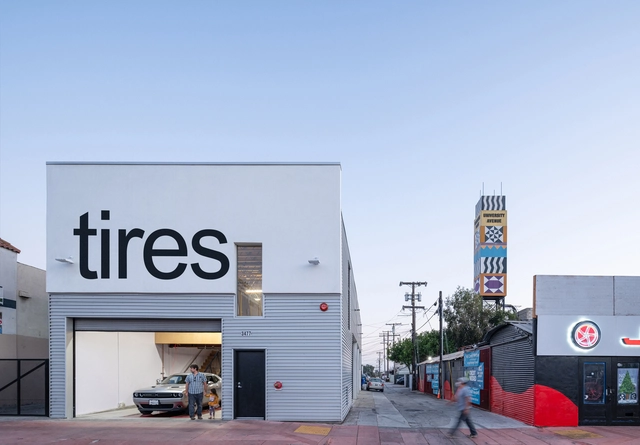
Prismática Architects has completed a remodel of an abandoned mechanic shop from 1921 in San Diego, California. Giving the old structure a new life, the firm created an unexpected and vibrant remodel. The designers recognized that the Edie's building may not be a mechanic shop forever, and the project was conceived keeping in mind that the use may change with time.

100 Years Later, Prismática Gives an Abandoned Mechanic Shop a New Life - Image 1 of 4100 Years Later, Prismática Gives an Abandoned Mechanic Shop a New Life - Image 2 of 4100 Years Later, Prismática Gives an Abandoned Mechanic Shop a New Life - Image 3 of 4100 Years Later, Prismática Gives an Abandoned Mechanic Shop a New Life - Image 4 of 4100 Years Later, Prismática Gives an Abandoned Mechanic Shop a New Life - More Images+ 18

What is the Future of the Gas Station?

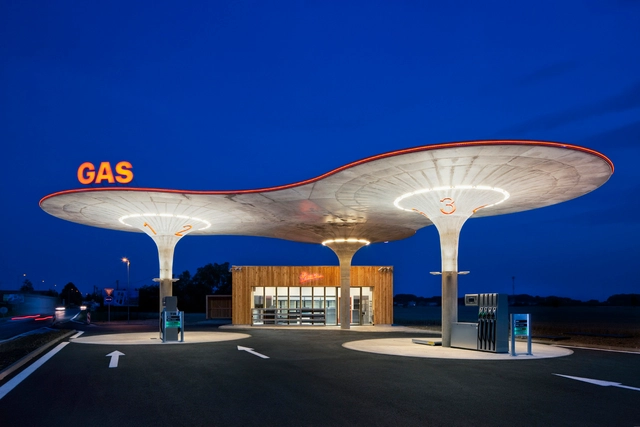
For decades, the gas station has been a staple of both urban and rural landscapes. As the 20th century saw the democratization of automobiles, the gas station became arguably one of the most generic, universal architectural typologies. Today in the USA alone, there are 130,000 gas stations serving 268 million cars. However, as populations move to condensed, urban areas with ever-improving public transit systems, and as the internal combustion engine evolves into electric alternatives, it is time to either redesign or retire the gas station.

What is the Future of the Gas Station? - Image 1 of 4What is the Future of the Gas Station? - Image 2 of 4What is the Future of the Gas Station? - Image 3 of 4What is the Future of the Gas Station? - Image 4 of 4What is the Future of the Gas Station? - More Images+ 10

Aston Martin Will Now Design Automotive Lairs for Your Car

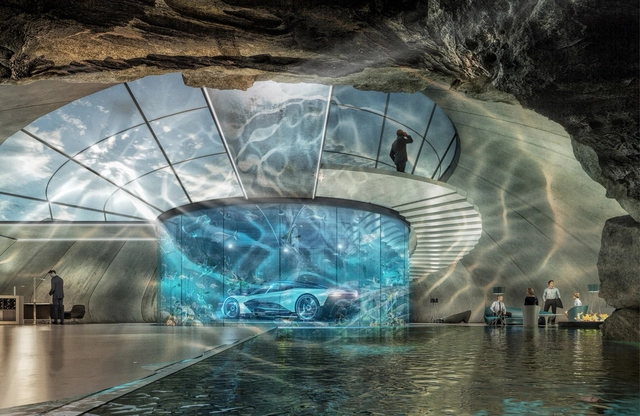
Aston Martin has announced a new design service to create “automotive lairs” for car owners and enthusiasts. Called Aston Martin Automotive Galleries and Lairs, the service aims to create one of kind spaces and luxury garages. The team believes the new service is an opportunity for clients to work with the Aston Martin Design Team and with renowned architects alike.

Aston Martin Will Now Design Automotive Lairs for Your Car - Image 1 of 4Aston Martin Will Now Design Automotive Lairs for Your Car - Image 2 of 4Aston Martin Will Now Design Automotive Lairs for Your Car - Image 3 of 4Aston Martin Will Now Design Automotive Lairs for Your Car - Image 4 of 4Aston Martin Will Now Design Automotive Lairs for Your Car - More Images+ 2

AD Classics: Bullocks Wilshire / John and Donald Parkinson

With its iconic copper-clad tower looming over Wilshire Boulevard, the Bullock’s Wilshire has been a celebrated element of the Los Angeles cityscape since its opening in 1929. Known for its lavish Art Deco aesthetic, the department store made its mark as a prime shopping destination in a city filled with celebrities. But the Bullock’s Wilshire was more than a glamorous retail space; with a design centered around the automobile, it was to set a new standard for how businesses adapted to a rapidly changing urban environment.

AD Classics: Bullocks Wilshire / John and Donald Parkinson - Landmarks & Monuments, Facade, CityscapeAD Classics: Bullocks Wilshire / John and Donald Parkinson - Landmarks & Monuments, Door, FacadeAD Classics: Bullocks Wilshire / John and Donald Parkinson - Landmarks & MonumentsAD Classics: Bullocks Wilshire / John and Donald Parkinson - Landmarks & Monuments, FacadeAD Classics: Bullocks Wilshire / John and Donald Parkinson - More Images+ 9

Where Automobiles & Architecture Meet

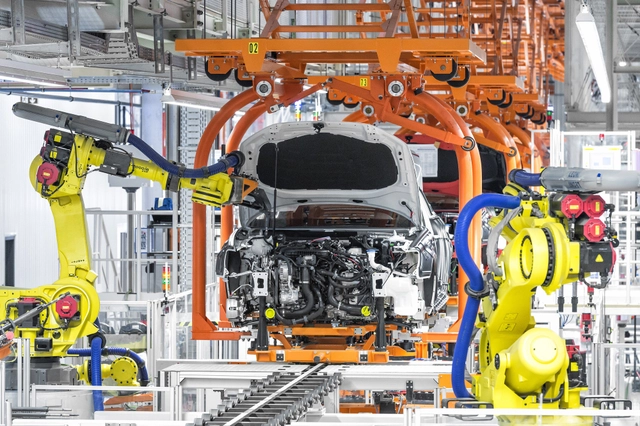
Where does architecture and the automobile industry meet? Many architects, including Le Corbusier, have tried to understand how building construction can be more like car manufacturing, with mass-produced parts that can be easily assembled on site. Ford recently explored the idea at their Design with a Purpose: Built Tough panel discussion held at New York's Center for Architecture. Click here to read The New York Times' coverage of the discussion, and check out ArchDaily editor-in-chief's thoughts on cars and architecture here.