1. ArchDaily
  2. Authorship

Authorship: The Latest Architecture and News

PREVI Lima and the Politics of Resident Authorship in Social Housing

Subscriber Access | 

Architects are accustomed to being credited for buildings long after construction ends. Names remain attached to projects through photographs, publications, and histories, often decades after the original drawings were produced. Buildings, on the other hand, rarely remain faithful to that narrative for long. Families grow, technologies change, businesses emerge, and daily life introduces demands that no plan can fully anticipate. Over time, architecture accumulates modifications, repairs, additions, and improvisations that gradually distance it from its original form.

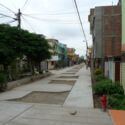
Few projects confront this question as directly as PREVI Lima. Conceived in the late 1960s as Peru's Experimental Housing Project, PREVI invited an international group of architects to develop housing prototypes capable of accommodating growth over time. The project is often remembered for its ambitious roster of designers, which included figures such as James Stirling, Aldo van Eyck, and Christopher Alexander. More than fifty years later, the neighborhood has become a record of resident decisions, revealing a form of architecture designed to remain unfinished.

PREVI Lima and the Politics of Resident Authorship in Social Housing - Image 1 of 4PREVI Lima and the Politics of Resident Authorship in Social Housing - Image 2 of 4PREVI Lima and the Politics of Resident Authorship in Social Housing - Image 3 of 4PREVI Lima and the Politics of Resident Authorship in Social Housing - Image 4 of 4PREVI Lima and the Politics of Resident Authorship in Social Housing - More Images+ 14

Women in Architecture: Progress, Gaps, and the Work Still Ahead

Each year, International Women's Day brings renewed attention to questions of gender within many professional fields, architecture among them. Public conversations often center on celebrating prominent figures or highlighting notable projects, moments that briefly illuminate the contributions of women within the discipline. Yet the visibility produced by these occasions sits within a longer and more complex trajectory. Over the past several decades, the architectural profession has undergone gradual shifts that have expanded opportunities and broadened participation, even as longstanding structures continue to shape how careers develop and how architectural work becomes visible.

Women in Architecture: Progress, Gaps, and the Work Still Ahead - Image 1 of 4Women in Architecture: Progress, Gaps, and the Work Still Ahead - Image 2 of 4Women in Architecture: Progress, Gaps, and the Work Still Ahead - Image 3 of 4Women in Architecture: Progress, Gaps, and the Work Still Ahead - Image 4 of 4Women in Architecture: Progress, Gaps, and the Work Still Ahead - More Images+ 13

The Machine in the Age of Collective Practice

Subscriber Access | 

This article is part of our new Opinion section, a format for argument-driven essays on critical questions shaping our field.

Every architectural epoch has been defined by its instruments. The compass, the drawing board, the camera, and the computer have each altered how architects think and produce. Yet the current moment feels qualitatively different. As artificial intelligence and generative systems enter daily workflows, tools cease to be passive extensions of the architect's hand and begin to operate as semi-autonomous agents. They propose, optimize, and simulate, producing outcomes that are, at times, beyond the author's full anticipation.

The Machine in the Age of Collective Practice - Image 1 of 4The Machine in the Age of Collective Practice - Image 2 of 4The Machine in the Age of Collective Practice - Image 3 of 4The Machine in the Age of Collective Practice - Image 4 of 4The Machine in the Age of Collective Practice - More Images+ 17

Architectural Authorship in the Age of the Collective Practices

Subscriber Access | 

This article is part of our new Opinion section, a format for argument-driven essays on critical questions shaping our field.

Who designs architecture today? In a professional landscape increasingly defined by collaborative workflows, generative software, and distributed teams, the figure of the architect as a singular creative author feels both anachronistic and inadequate. This article argues that architectural authorship is no longer an individual act, but a collective and distributed condition shaped by institutions, technologies, and shared forms of labor. The transition from individual to collective authorship is not simply a consequence of larger offices or digital tools; it signals a deeper structural shift in how architecture is produced, communicated, and validated.

Architectural Authorship in the Age of the Collective Practices - Image 1 of 4Architectural Authorship in the Age of the Collective Practices - Image 2 of 4Architectural Authorship in the Age of the Collective Practices - Image 3 of 4Architectural Authorship in the Age of the Collective Practices - Image 5 of 4Architectural Authorship in the Age of the Collective Practices - More Images+ 23

The Story of Miyashita Park: Resistance, Partnership, and Publicness

Subscriber Access | 

Urban renewal is inherently fraught—financially complex, politically exposed, stakeholder-dense, and almost guaranteed to leave someone dissatisfied. Precisely for these reasons, many cities default to inertia rather than risk the upheaval that comes with reworking entrenched urban fabrics, their residences, and their dynamics; once the "sleeping bear" is prodded, unexpected complications tend to multiply.

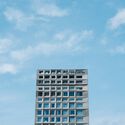
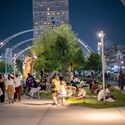
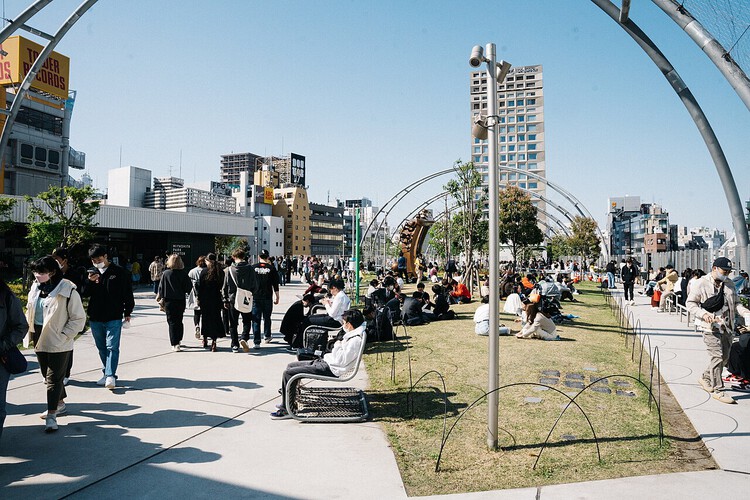
Miyashita Park (Miyashita Kōen), located in Shibuya, Tokyo, crystallizes this dilemma. Its current form—a layered, mixed-use complex balancing commercial activity with a publicly accessible park—emerged from years of negotiation, critique, and recalibration. The result is a distinctive example of a public-private partnership that seeks to align urban amenity, everyday leisure, and economic viability, producing a new piece of city that hosts public life while underwriting its own upkeep.

The Story of Miyashita Park: Resistance, Partnership, and Publicness - Image 1 of 4The Story of Miyashita Park: Resistance, Partnership, and Publicness - Image 2 of 4The Story of Miyashita Park: Resistance, Partnership, and Publicness - Image 3 of 4The Story of Miyashita Park: Resistance, Partnership, and Publicness - Image 4 of 4The Story of Miyashita Park: Resistance, Partnership, and Publicness - More Images+ 24

The Architecture of Restraint: When Choosing Not to Build Becomes Design

In a world facing ecological exhaustion and spatial saturation, the act of building has come to represent both creation and consumption. For decades, architectural progress was measured by the new: new materials, new technologies, new monuments of ambition. Yet today, the discipline is increasingly shaped by another form of intelligence, one that values what already exists. Architects are learning that doing less can mean designing more, and this shift marks the emergence of what might be called an architecture of restraint: a practice defined by care, maintenance, and the deliberate choice not to build.

The principle recognizes that the most sustainable building is often the one that already stands, and that transformation can occur through preservation, repair, or even absence. Choosing not to build becomes a political and creative act, a response to the material limits of the planet and to the ethical limits of endless growth. That Architecture moves beyond the production of new forms to embrace continuity, extending the life of structures, materials, and memories that already inhabit the world.

The Architecture of Restraint: When Choosing Not to Build Becomes Design - Image 1 of 4The Architecture of Restraint: When Choosing Not to Build Becomes Design - Image 2 of 4The Architecture of Restraint: When Choosing Not to Build Becomes Design - Image 3 of 4The Architecture of Restraint: When Choosing Not to Build Becomes Design - Image 4 of 4The Architecture of Restraint: When Choosing Not to Build Becomes Design - More Images+ 33

Chaos White Paper Reveals How AI Is Transforming Roles, Risks, and Skills in Architecture

 | Sponsored Content

Nearly three years after artificial intelligence captured the world's attention, architecture is still searching for stable ground in the conversation. Between confident claims and cautious trials, many professionals still question whether—and how—AI is truly changing everyday practice.

A new white paper from Chaos addresses this through practitioner interviews and in-depth internal research, revealing how the technology is beginning to reshape productivity, authorship, and creative identity across the industry.

The white paper offers a closer look at where AI creates value, where it falls short, and how architects can navigate what comes next.

The Spatial Agency Gap: Rethinking Public Space through Co-Designing with Foreign Domestic Workers

Subscriber Access | 

Domestic workers in Hong Kong and Singapore are the city's quiet infrastructure. In Hong Kong alone, there are a total of roughly 300,000 domestic workers, serving a portion of the approximate 2.7 million households. Their care labor sustains dual-income family routines: childcare, eldercare, cooking, cleaning, and the everyday logistics that make professional life possible. Yet the people who hold this balance together remain largely invisible in policy—and, crucially, in space.

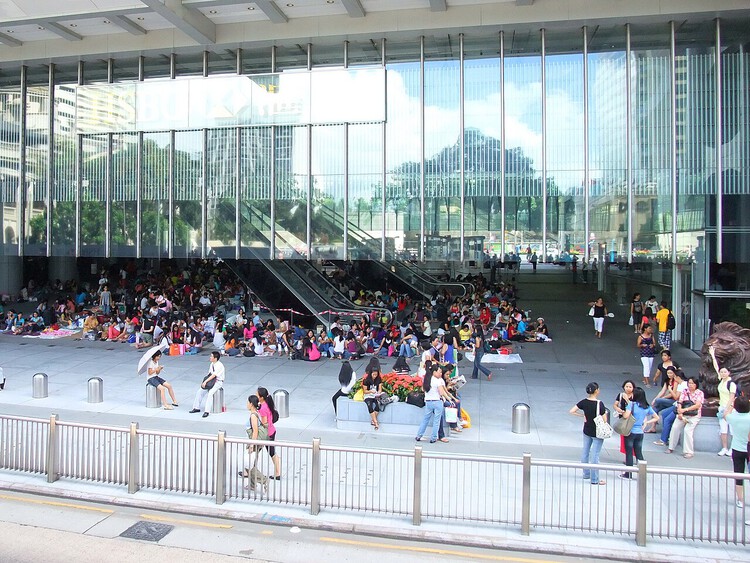
On Sundays in Hong Kong's financial district, that invisibility becomes visible. Elevated walkways and podium forecourts—underused on weekends—turn into ad-hoc commons. With cardboard mats, small tents, towels, food and water, and a music speaker or two, domestic workers assemble places to sit, rest, and socialize. These improvised rooms in the city are often their only chance to exercise spatial agency—something they rarely have in the homes they maintain or in formal public infrastructure. In the absence of sanctioned, serviced places for rest, quieter bridges and passages become practical stand-ins.

The Spatial Agency Gap: Rethinking Public Space through Co-Designing with Foreign Domestic Workers - Image 1 of 4The Spatial Agency Gap: Rethinking Public Space through Co-Designing with Foreign Domestic Workers - Image 2 of 4The Spatial Agency Gap: Rethinking Public Space through Co-Designing with Foreign Domestic Workers - Image 3 of 4The Spatial Agency Gap: Rethinking Public Space through Co-Designing with Foreign Domestic Workers - Image 4 of 4The Spatial Agency Gap: Rethinking Public Space through Co-Designing with Foreign Domestic Workers - More Images+ 17

Cover Me Softly: Beta 2024 Explores Architecture as an Act of Copying, Imitating, or Stealing

Subscriber Access | 

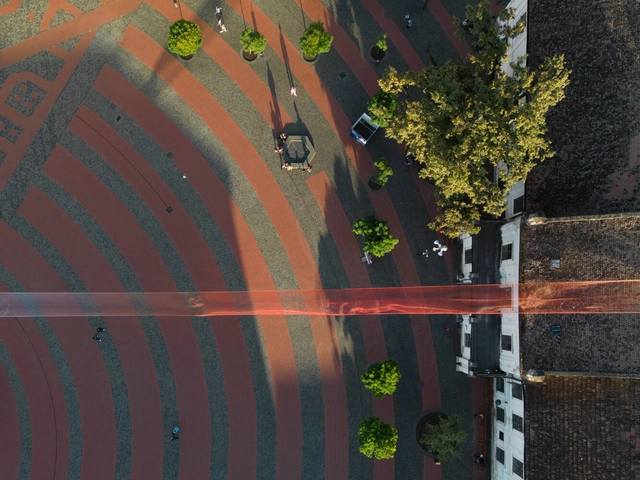
The 2024 Beta Architecture Biennial, in Timișoara, Romania, marks the tenth anniversary of this influential event. Curated by Oana Stănescu, this year's biennial, titled "cover me softly," explores the nuanced relationship between originality and influence, challenging conventional notions of copying, imitation, and appropriation. In addition to the Beta Awards, aiming to highlight significant contributions to architecture from across Romania, Hungary, and Serbia, the main exhibition offers a distinctive interpretation of recurring themes of the architectural field.

Cover Me Softly: Beta 2024 Explores Architecture as an Act of Copying, Imitating, or Stealing - Image 1 of 4Cover Me Softly: Beta 2024 Explores Architecture as an Act of Copying, Imitating, or Stealing - Image 2 of 4Cover Me Softly: Beta 2024 Explores Architecture as an Act of Copying, Imitating, or Stealing - Image 3 of 4Cover Me Softly: Beta 2024 Explores Architecture as an Act of Copying, Imitating, or Stealing - Image 4 of 4Cover Me Softly: Beta 2024 Explores Architecture as an Act of Copying, Imitating, or Stealing - More Images+ 16

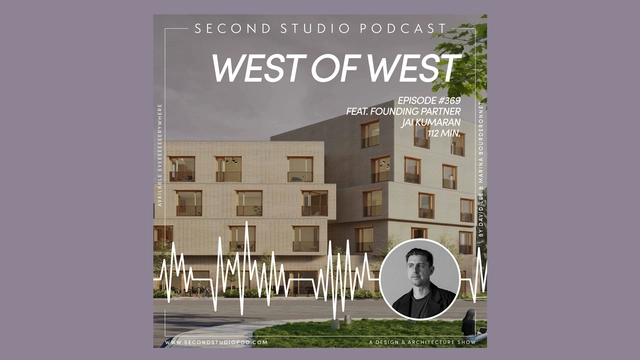
The Second Studio Podcast: Interview with Jai Kumaran

The Second Studio (formerly The Midnight Charette) is an explicit podcast about design, architecture, and the everyday. Hosted by Architects David Lee and Marina Bourderonnet, it features different creative professionals in unscripted conversations that allow for thoughtful takes and personal discussions.

A variety of subjects are covered with honesty and humor: some episodes are interviews, while others are tips for fellow designers, reviews of buildings and other projects, or casual explorations of everyday life and design. The Second Studio is also available on iTunes, Spotify, and YouTube.

This week David and Marina of FAME Architecture & Design are joined by Architect Jai Kumaran, founding partner of West of West to discuss his background; the influence his father’s work had on his career; attending architecture school; why he pursued a master’s degree; starting and growing an office; exploring project types; branding in architecture; and more!

The Second Studio Podcast: Interview with Jai Kumaran - Image 1 of 4The Second Studio Podcast: Interview with Jai Kumaran - Image 2 of 4The Second Studio Podcast: Interview with Jai Kumaran - Image 3 of 4The Second Studio Podcast: Interview with Jai Kumaran - Image 4 of 4The Second Studio Podcast: Interview with Jai Kumaran - More Images+ 12

Copyrights for Architectural Imagery in the AI Era

Architecture is a referential discipline. From ziggurats, machines for living, to contemporary biophilic high-rises designs, it is impossible to know whether ideas are genuinely novel or whether they have been conceptualized before. Artificial intelligence has ignited the conversation on intellectual property (IP) even more. As millions generate unique graphic work by typing keywords, controversies have arisen, specifically concerning protecting creative work and the Copyright of architects in their creations. Therefore, understanding the scope of what is protected helps determine whether licenses are sufficient, whether trademark registration's long road is worth it; or perhaps a graphic piece cannot be protected and belongs to the public domain.

"I Wanted to Look at Places in a New Three-Dimensional Way": In Conversation with Daniel Libeskind

"I Wanted to Look at Places in a New Three-Dimensional Way": In Conversation with Daniel Libeskind - Featured Image
Jewish Museum Berlin. Image © Hufton+Crow

Daniel Libeskind (b. 1946, Lodz, Poland) studied architecture at Cooper Union in New York, graduating in 1970, and received his post-graduate degree from Essex University in England in 1972. While pursuing a teaching career he won the 1989 international competition to design the Jewish Museum in Berlin before ever realizing a single building. He then moved his family there to establish a practice with his wife Nina and devoted the next decade to the completion of the museum that opened in 2001. The project led to a series of other museum commissions that explored such notions as memory and history in architecture.

"I Wanted to Look at Places in a New Three-Dimensional Way": In Conversation with Daniel Libeskind - Image 1 of 4"I Wanted to Look at Places in a New Three-Dimensional Way": In Conversation with Daniel Libeskind - Image 2 of 4"I Wanted to Look at Places in a New Three-Dimensional Way": In Conversation with Daniel Libeskind - Image 3 of 4"I Wanted to Look at Places in a New Three-Dimensional Way": In Conversation with Daniel Libeskind - Image 4 of 4I Wanted to Look at Places in a New Three-Dimensional Way: In Conversation with Daniel Libeskind - More Images+ 15

OASE 101: Microcosm: Searching for the City in Its Interiors

This issue of OASE proactively confronts a disturbing trend: the encroaching standardization of interiors as civilization moves inwards. Rather than simply identifying the issue, the editors single out projects for interiors that derive their significance from a specific approach and show a recognizable element of authorship.

Architecture's "Dark Products": What Do Architects Claim Ownership of in the Design Process?

Subscriber Access | 

Why do we build? How do we build? Who do we ultimately build for? These have been questions that have dominated the worlds of both practice and pedagogy since the early ages of architecture. On a basic level, those questions can be answered almost reflexively, with a formulaic response. But is it time to look beyond just the simple why, how, and who?

In a world where the physical processes of architecture are becoming increasingly less important and digital processes proliferate through all phases of architectural ideas and documentation, we should perhaps be looking to understand the ways in which architects work, and examine how we can claim the processes—not just the products—of our labors.