1. ArchDaily
  2. Asia

Asia: The Latest Architecture and News

“Expanding the Biennial in Time and Space”: In Conversation With Mariana Pestana, Curator of the 5th Istanbul Design Biennial 

Subscriber Access | 

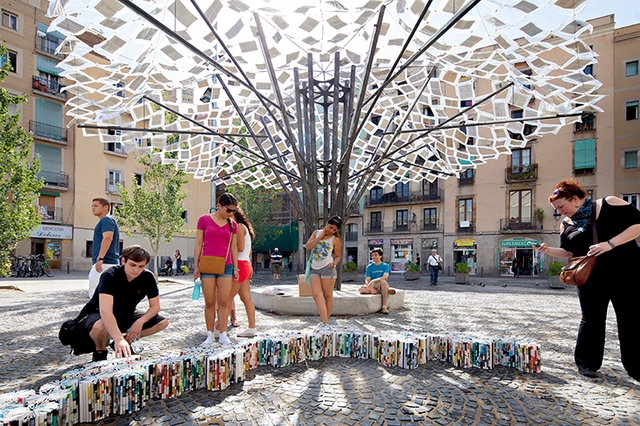
With an on-going digital and physical evolution, the 5th Istanbul Design Biennial took a new approach. “Rather than focusing on the presentation of final results in a compressed period of time and space”, the global circumstances created the opportunity to present new projects on a longer period of time and in expanded spaces, offering not an exhibition but “a digital and research program with a series of permanent interventions in the city.”

Launched on October 15, 2020, the event brought together, with its new structure, different formats under the theme of Empathy Revisited. As the first part of the physical display has ended, ArchDaily had the chance to discuss with Mariana Pestana, architect and curator of the 5th Istanbul Design Biennial, the event and choice behind this year’s theme, the programs and the participants as well as the evolution of her approach due to the global circumstances.

“Expanding the Biennial in Time and Space”: In Conversation With Mariana Pestana, Curator of the 5th Istanbul Design Biennial  - Image 1 of 4“Expanding the Biennial in Time and Space”: In Conversation With Mariana Pestana, Curator of the 5th Istanbul Design Biennial  - Image 2 of 4“Expanding the Biennial in Time and Space”: In Conversation With Mariana Pestana, Curator of the 5th Istanbul Design Biennial  - Image 3 of 4“Expanding the Biennial in Time and Space”: In Conversation With Mariana Pestana, Curator of the 5th Istanbul Design Biennial  - Image 4 of 4“Expanding the Biennial in Time and Space”: In Conversation With Mariana Pestana, Curator of the 5th Istanbul Design Biennial  - More Images+ 16

History of Architecture: Ancient India & Southeast Asia

Subscriber Access | 

As far as written records report, “prehistory” dates back between 35,000 BCE and 3000 BCE in the Middle East (2000 BCE in Western Europe). Ancient builders had a profound understanding of human responses to environmental conditions and physical needs. Initially, families and tribes lived together in skin-covered huts and bone structures. Thousands of years later, human settlements evolved into fortified mud-brick walls surrounding rectangular volumes with pierced openings for ventilation and sunlight. 

During the upcoming months, we will be publishing short articles on the history of architecture and how it evolved to set the fundamentals of architecture we know today. This week, we are exploring the architectural characteristics of ancient India and Southeast Asia.

No More Room for the Living or the Dead: Exploring the Future for Burials in Asia

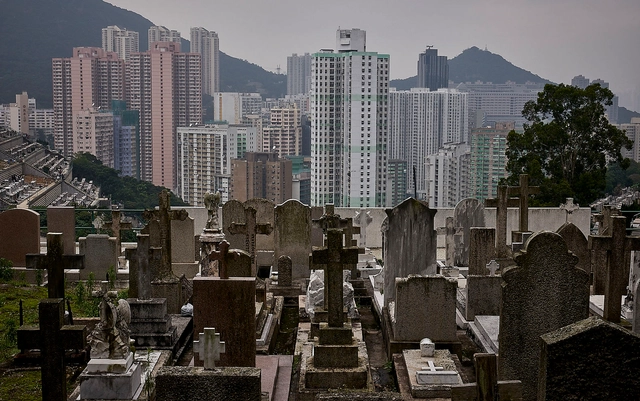
In some of the most dense cities around the world, it’s becoming an increasing challenge to find a comfortable space to live- and similar for when you die, too. It’s estimated that 55 million people pass away each year, and for every one living person today, there are 15 times the number of deceased. Yet urban planners and architectural developers are more interested in dealing with the living than dabbling in the business of death. As a result, it’s created tension in the two parallel worlds- and as time goes on, more questions are being raised about how we address public space that can be designed so that both the living and the dead can coexist.

9 Innovative Practices Redefining What Architects Can Be

Wherever there is a center, there is by necessity a periphery. This in itself should not generate any headlines; we live in a world of centers, and peripheries that continually stretch those centers, whether it be politics, countries, or societal norms. It also applies to architectural practice. In a complex, interconnected world, members of the architectural profession around the world are constantly expanding into new peripheries, generating new visions for how practice should operate, influenced by technological, political, cultural, and environmental changes.

Beyond Angkor Wat: Cambodia's New Cultural Architecture

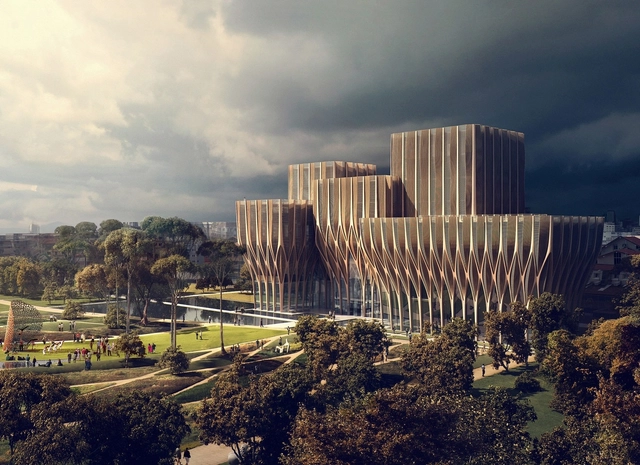
The Kingdom of Cambodia has a rich history of Khmer architecture. Built from the latter half of the 8th century to the first half of the 15th century, these structures are embodied by the iconic Angkor Wat temple complex. But new architecture is being built throughout Cambodia, projects that reinterpret culture and tradition to create modern spaces for contemporary life.

Beyond Angkor Wat: Cambodia's New Cultural Architecture - Image 1 of 4Beyond Angkor Wat: Cambodia's New Cultural Architecture - Image 2 of 4Beyond Angkor Wat: Cambodia's New Cultural Architecture - Image 3 of 4Beyond Angkor Wat: Cambodia's New Cultural Architecture - Image 4 of 4Beyond Angkor Wat: Cambodia's New Cultural Architecture - More Images+ 8

Call for Submissions: Adelaide Creative Community Hub

What makes a ‘creative city’? And what capacity does architecture have to foster, inspire, or use to celebrate creativity within an urban environment? These questions are part of a growing discussion in Adelaide, Australia, surrounding what the city could be, and how to make Adelaide a more creative, vibrant, and innovative place to live.

Examining China's "Edifice Complex"

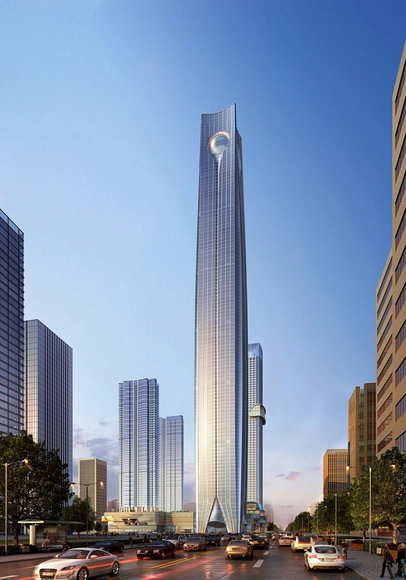
In an article for the Wall Street Journal, Dinny McMahon and Yang Jie visit Shenyang - a "chilly industrial town" in north eastern China which was once the country's capital (circa 1600). The city will soon be home to what's being dubbed the 'Pearl of the North', "a 111-floor office tower that will, briefly, be the seventh-largest in the world, dwarfing One World Trade Center." The tower, designed by Atkins, is "symptomatic of China’s edifice complex," McMahon notes - and the city is "just getting started." Read the article in full here.

AD Interviews: Moshe Safdie / Safdie Architects

Subscriber Access | 

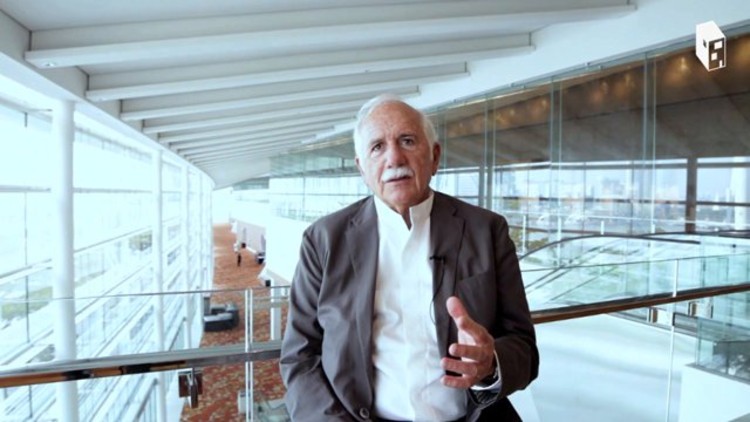
During this year’s World Architecture Festival (WAF) held in Singapore, we had the chance to talk with keynote speaker Moshe Safdie. Standing inside the Marina Bay Sands, a massive mixed-use project by Safdie Architects and an example of the firm’s ongoing research on density, Safdie talked to us about Asia's urban environment and the challenges of working there. As the world's growth is happening in dense areas, this subject is utterly important, and Safdie has proven that these kind of mega-urbanism projects can be functionally integrated into the city. “Working in Asia at the intensity and scale that we do has been a paradigm shift for our practice because much of our work in the United States and Israel and elsewhere in recent years has been focused on institutions - on libraries, museums, airports - here we are involved with urban place, mixed-use mostly, extremely dense, working for the private sector, and having to reconcile the market forces with the architectural environmental demands, which is no mean task,” he said.

AD Interviews: Moshe Safdie / Safdie Architects - Arch Daily InterviewsAD Interviews: Moshe Safdie / Safdie Architects - Arch Daily InterviewsAD Interviews: Moshe Safdie / Safdie Architects - Arch Daily InterviewsAD Interviews: Moshe Safdie / Safdie Architects - Arch Daily InterviewsAD Interviews: Moshe Safdie / Safdie Architects - More Images+ 1

13 Projects Win Regional Holcim Awards 2014 for Asia Pacific

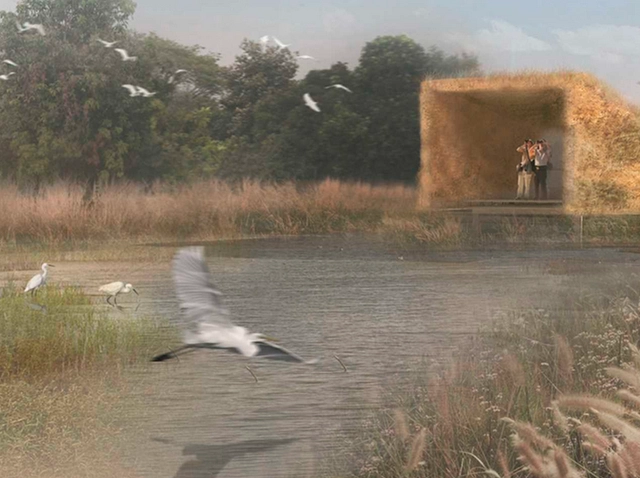
Teams from Thailand and New York have received top honors in the 2014 regional Holcim Awards for Asia Pacific, an award which recognizes the most innovative and advanced sustainable construction designs. Among the top three winners are the “Protective Wing” bird sanctuary and a locally-adapted orphanage and library in Nepal.

The 13 recognized projects will share over $300,000 in prize money, with the top three projects overall going on to be considered for the global Holcim Awards, to be selected in 2015.

The full list of Asia Pacific winners, after the break…

“Move to Care” Winners Envision Relocatable Healthcare Facilities for Southeast Asia

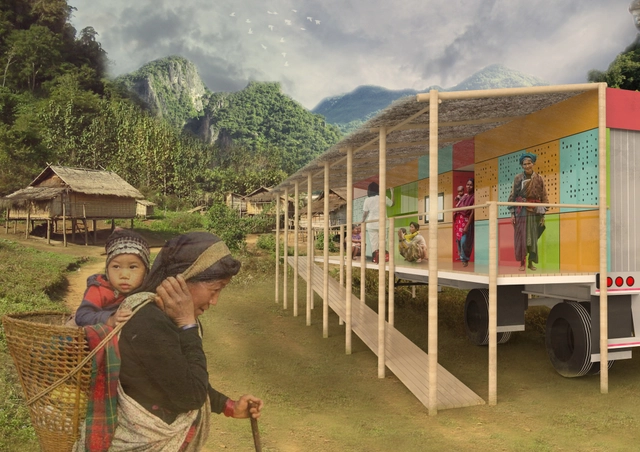
Responding to the demand for healthcare services in rural Southeast Asia, Building Trust International launched an international competition - Moved to Care - to envision flexible and relocatable healthcare facilities. Over 200 entrants participated; one professional winner, a multi-disciplinary team from the USA, and one student winner were honored. Check out their winning proposals, after the break...

AD Interviews: David Gianotten / OMA

Subscriber Access | 

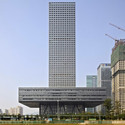
During the Shenzhen Bi-City Biennale of Urbanism/Architecture, we had the opportunity to speak with David Gianotten, partner-in-charge of OMA’s Hong Kong office. Gianotten launched the Dutch firm’s Asian headquarters in 2009, where he supervises major projects such as the Shenzhen Stock Exchange and the Taipei Performing Arts Centre.

Standing outside of the recently completed Stock Exchange headquarters, he answered our questions about urbanization, innovation and the intricacies of running an office in an environment with such rapid urban growth. Shenzhen has proven an experiment of economic openness and is a vivid example of China’s recent growth. The city’s skyline is practically a physical graph of an upward-trending economy, with buildings designed by nearly every internationally renowned architecture firm. But OMA’s Shenzhen Stock Exchange building stands apart from the rest not only because of its impeccable construction (a rarity in the fast-paced building booms of Chinese cities), but also because it houses the institution that lists China’s biggest companies.

The 254 meter tower is an elegant structure that combines pure volumes with an exoskeleton grid clad in translucent glass. It represents a characteristic OMA-approach to innovative architectural solutions, made possible by extensive programmatic and technical research.

Read the full interview (which includes Gianotten’s insights on the study of architecture, the role of architects, and the importance of simplicity when communicating complex innovation) after the break. 

AD Interviews: David Gianotten / OMA - Arch Daily InterviewsAD Interviews: David Gianotten / OMA - Arch Daily InterviewsAD Interviews: David Gianotten / OMA - Arch Daily InterviewsAD Interviews: David Gianotten / OMA - Arch Daily InterviewsAD Interviews: David Gianotten / OMA - More Images+ 1

World's Tallest Buildings of 2013 Dominated by Asia

World's Tallest Buildings of 2013 Dominated by Asia - Featured Image
Courtesy of Council of Tall Buildings and Urban Habitats

According to the latest Tall Trends Report, 73 buildings in excess of 200 meters were completed in 2013 worldwide, the second highest total only behind 2011 with 81 completions. The increase of completions from 2012 to 2013 continues a significant upward trend that, since 2000, has seen an astounding 318 percent increase in tall buildings.

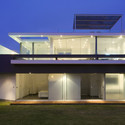
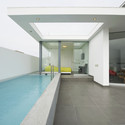
El Golf D17 Beach House / rrmr arquitectos

El Golf D17 Beach House / rrmr arquitectos - Houses
© Elsa Ramírez
Asia, Peru
  • Architects: rrmr arquitectos
  • Area Area of this architecture project Area:  255
  • Year Completion year of this architecture project Year:  2009

El Golf D17 Beach House / rrmr arquitectos - HousesEl Golf D17 Beach House / rrmr arquitectos - HousesEl Golf D17 Beach House / rrmr arquitectos - HousesEl Golf D17 Beach House / rrmr arquitectos - HousesEl Golf D17 Beach House / rrmr arquitectos - More Images+ 8

In Progress: Lotte World Tower / KPF

Subscriber Access | 
In Progress: Lotte World Tower / KPF - Image 19 of 4
image by dbox branding & creative for KPF

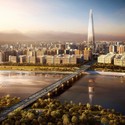
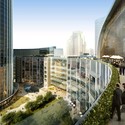
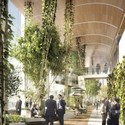
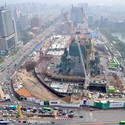
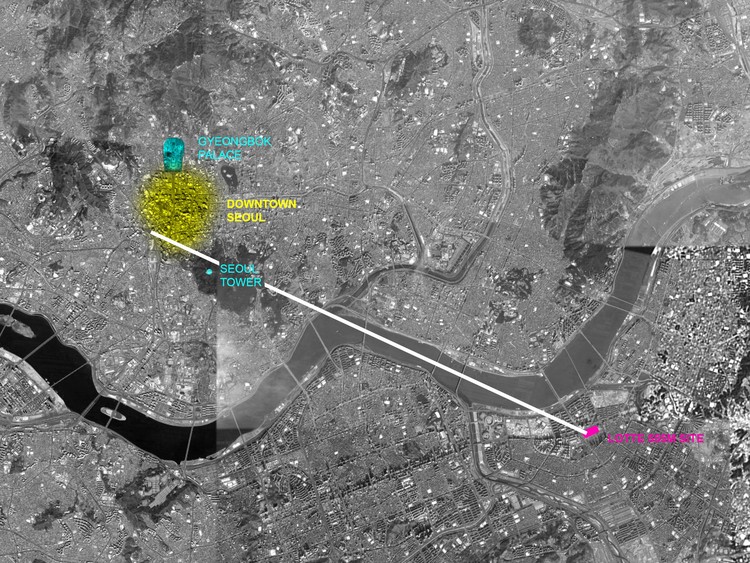
Construction of the Lotte World Tower in Seoul, South Korea designed by high-rise architectural firm KPF is well underway. Won via an international design competition, this new tower will rise up to a pinnacle height of 555 meters. Organized around a mixed-use program including retail, office, hotel and an observation deck at the peak, the tower pulls inspiration from historical Korean arts of ceramics, porcelain, and calligraphy. More details after the break.

In Progress: Lotte World Tower / KPF - Image 18 of 4In Progress: Lotte World Tower / KPF - Image 14 of 4In Progress: Lotte World Tower / KPF - Image 23 of 4In Progress: Lotte World Tower / KPF - Image 16 of 4In Progress: Lotte World Tower / KPF - More Images+ 19

OMA Announces New Partners

Subscriber Access | 
OMA Announces New Partners - Featured Image

Today OMA announced the appointment of Iyad Alsaka and David Gianotten as new partners in the company. Architectural and research projects in North Africa, the Middle East and Asia have been increasing for OMA and this recent appointment signifies their investment to grow and develop projects within these regions.