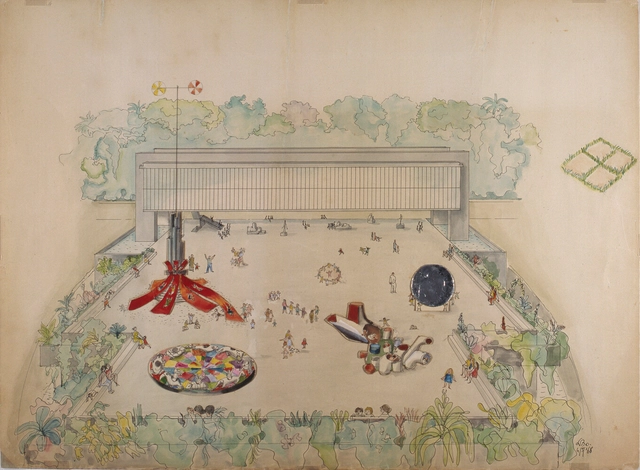
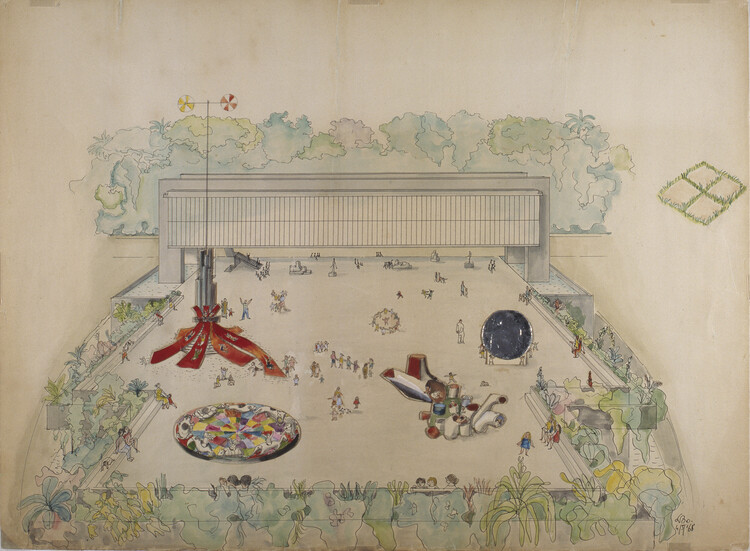
Lina Bo Bardi / Preliminary Study – Practicable Sculptures for the Belvedere at Museu Arte Trianon, 1968. Credit line: Doação Instituto Lina Bo e P.M. Bardi, 2006. Cortesia de MASP.
Aldo van Eyck and Lina Bo Bardi were two subversive figures. Their visions of collectivity and playfulness—though applied to very different kinds of structures—shared a common ground: an idea of architecture that goes beyond design. For both, architecture was a living space, animated by appropriation, movement, and exchange. From Dutch playgrounds to thw São Paulo Museum of Art, their ideals intertwined, reinforcing the notion of an architecture where anyone could become a child again.
Kindergarten architecture has long stood apart as a realm where design and imagination converge. Unlike most building typologies, these spaces are conceived not only to shelter and function but to shape the earliest experiences of curiosity, play, and social interaction. Throughout history, the design of kindergartens has evolved alongside pedagogical shifts, moving from modest, utilitarian beginnings to highly intentional environments that stimulate both learning and wonder. In this context, architecture becomes more than a backdrop — it becomes a silent educator, capable of nurturing emotional, cognitive, and physical development.
Play extends beyond its recreational dimension, unfolding as a social act that encourages children to learn, interact, be creative, and engage with their spatial context. As Johan Huizinga notes in Homo Ludens, it is a fundamental element of culture, where kids form bonds and explore ways of coexisting. When the architecture of play spaces excludes certain bodies or modes of participation, the collective experience becomes fragmented and loses part of its meaning. Designing with inclusion in mind, therefore, means recognizing that the actual value of play lies in its potential to be shared by everyone.
https://www.archdaily.com/1033205/inclusive-playgrounds-every-body-can-play-through-architectureEnrique Tovar
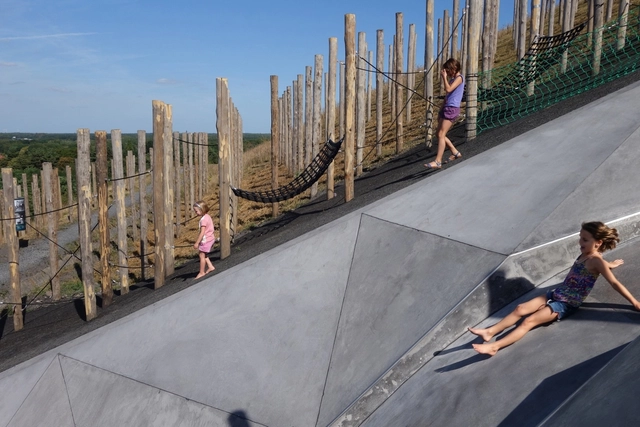
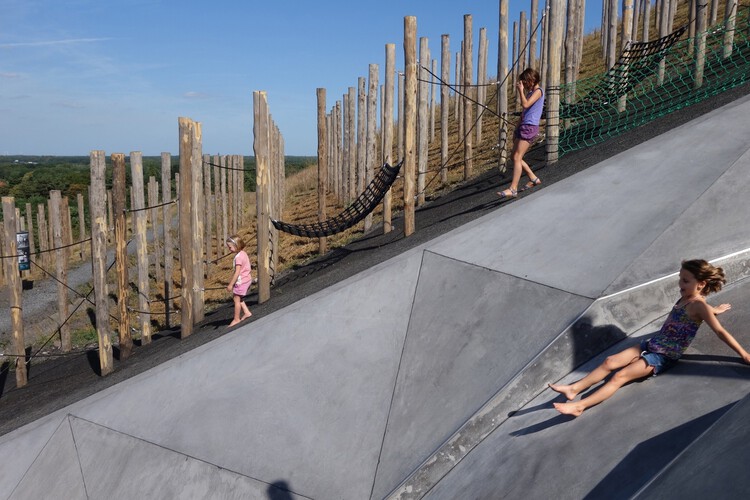
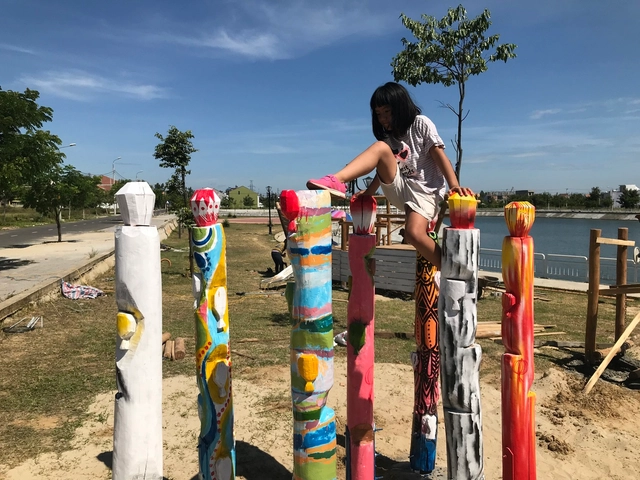
Play Landscape be-MINE / Carve + OMGEVING. Image Courtesy of Carve
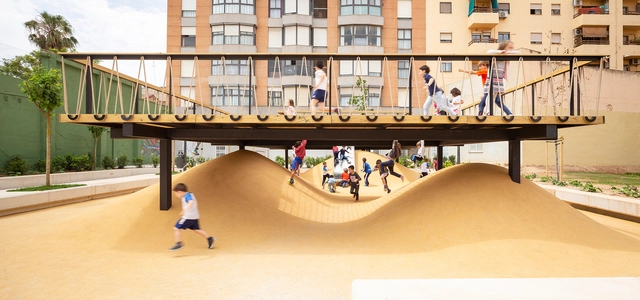
Playgrounds are spatial instruments through which society projects its expectations on childhood, testing the boundaries between control and autonomy, exposure and protection. They regulate how children relate to space, to others, and their bodies — encoding, often invisibly, social norms, fears, and aspirations. In this sense, playgrounds are not peripheral spaces of leisure; they are political constructs shaped by specific ideologies about what childhood is and how it should unfold. Since 1989, the right to play has been formally recognised in the United Nations Convention on the Rights of the Child, affirming that play is a fundamental part of human development. To design a playground is not only to draw lines on a plan or to install equipment in a park; it is to define the conditions under which play is permitted, imagined, or constrained.
A good design should be adapted to the user's needs, and participatory design aims to reduce the distance between architects and those for whom the project is made. In this sense, projects for children that welcome them as central actors in the design process demonstrate how the potential of active listening and co-designing is reflected in spaces adapted to a smaller scale and to an audience in a phase of intense learning.
Whether they are kindergartens, schools, community centers, or public spaces, participatory projects with children show how the design process can be an enriching exchange for both sides. On the one hand, children can learn about materials, scales, decision-making, and develop spatial awareness. On the other hand, the architects responsible for making the desires and needs of the young users concrete can learn to exercise sensitivity and imagination and recognize a different worldview focused on discovery. All of this is possible through listening and open dialogue between different age groups.
The world certainly looks different through the eyes of a young child; enormous, intriguing, and somewhat overwhelming, and it has long been believed that what we encounter as children shapes our perspective of the world. When asked about his childhood memories in Switzerland, Peter Zumthor shared that the memories of his youth contain the deepest architectural experience, which has become reservoirs of the architectural atmospheres and images that he explores in his work as an architect today.
Having a complete understanding of how children change and grow physically and psychologically throughout their childhood requires an in-depth observation of different factors, such as their hereditary traits and genetics, the interactions they have with other children and adults, as well as the environment they are living, playing, and learning in. In celebration of World Children's Day on November 20th, we look at how architects and designers stimulated children's autonomy and promoted their mental and physical well-being through architecture and interior design. This initiative aligns with the theme of World Architecture Day 2024: "Mobilizing the Next Generation for Urban Transformation," emphasizing the crucial role that thoughtful design plays in shaping a sustainable and inclusive future for our cities and the communities within them.
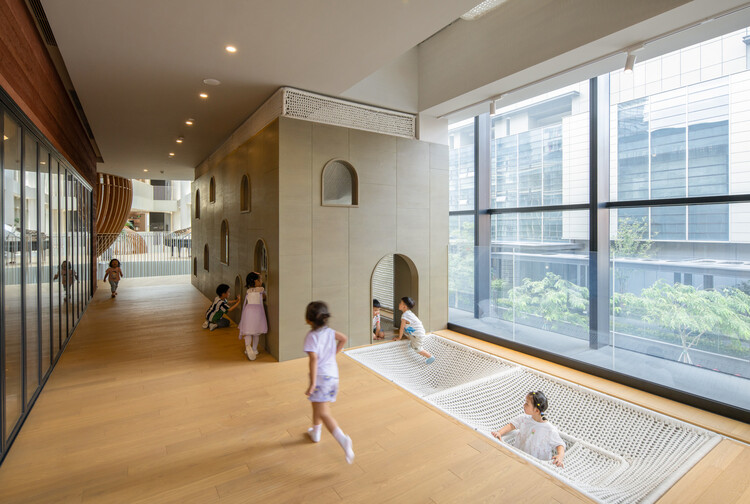
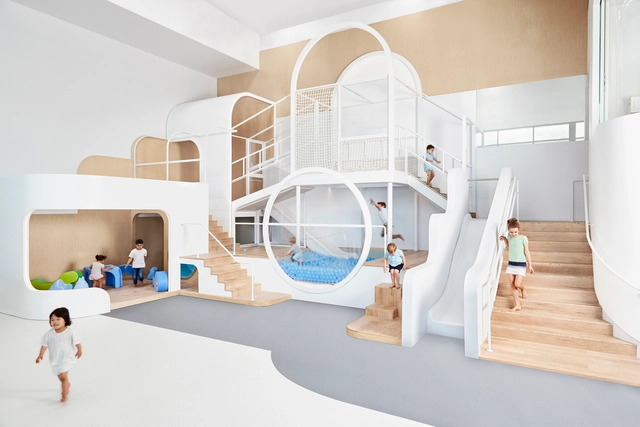
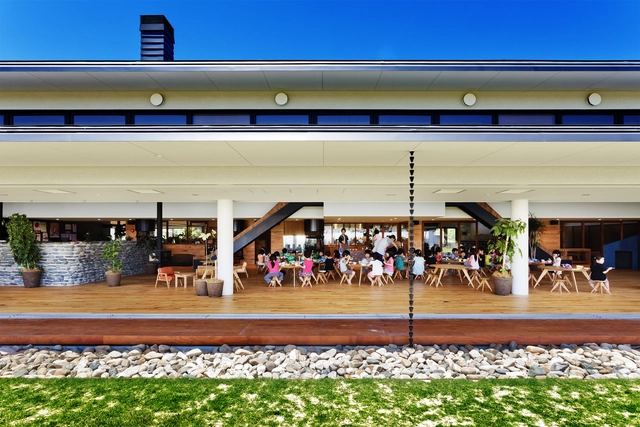
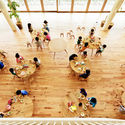
Designing for children is certainly not child's play. While adults lead the design process, the end-users are often children, as seen in kindergartens, schools, and parks. Architects have the responsibility to create built environments that provide children with opportunities to play, explore, and learn, even in today's digital age.
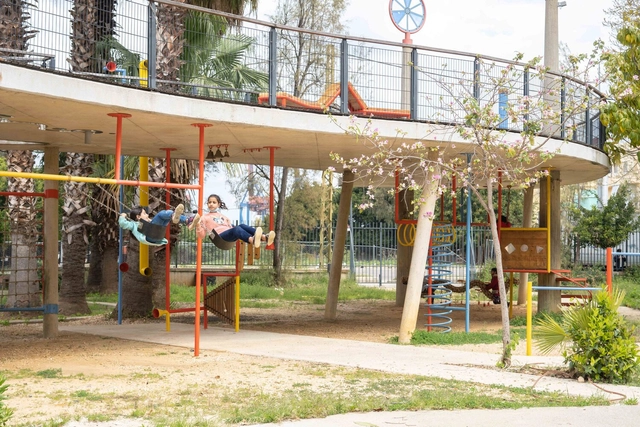
Karantina Public Park 2020-2023. Image Courtesy of CatalyticAction
Public spaces are not always shaped by planning but by the practices they host. Their existence stems from our inherent need for connection with others. As spaces of encounter, these urban, open, and accessible areas reflect how we interact with our surroundings and each other while offering places for exercise, play, socializing, and recreation.
Recognizing that public spaces are more than just physical environments, CatalyticAction is dedicated to fostering a sense of community, safety, and belonging, especially for children, who are among the most vulnerable in society. Their mission is not only to create spaces where children can play and grow but also to empower them, ensuring they have a voice in shaping their surroundings. To learn more about their work, Christele Harrouk, ArchDaily's Editor-in-Chief, spoke with Joana Dabaj, Co-founder and Director of Programmes at CatalyticAction.
In the book Design of Childhood, architect and researcher Alexandra Lange states that children were considered nonpersons throughout almost the entire history of ancient and modern architecture, being excluded from the process of creating urban and interior spaces. This process has caused and is still causing several problems when children reach adulthood, since these children grew up being constantly watched by fear of movement and the eyes of adults.
Reminiscing on his childhood, Peter Zumthor once said: “Memories like these contain the deepest architectural experience that I know. They are the reservoirs of the architectural atmospheres and images that I explore in my work as an architect.” These words allude to a fundamental concept behind kid friendly-design: everything we encounter in the first years of our lives, including architecture, can have a great impact on our future perspective of the world. When spaces are designed according to children’s specific needs, they stimulate their physical and mental well-being, as well as boosting autonomy, self-esteem and socialization skills. Therefore, architects have the responsibility to ensure that kids live, play and learn in environments that contribute to their long-term healthy development.
Trang Keo Park - Vietnam. Image Courtesy of UN-Habitat
The Un-Habitat or the United Nations agency for human settlements and sustainable urban development, whose primary focus is to deal with the challenges of rapid urbanization, has been developing innovative approaches in the urban design field, centered on the active participation of the community. ArchDaily has teamed up with UN-Habitat to bring you weekly news, article, and interviews that highlight this work, with content straight from the source, developed by our editors.
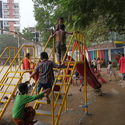
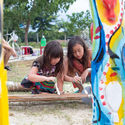
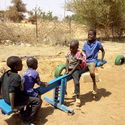
In this second collaboration with UN-Habitat, discover different examples on how to design with and for kids in marginalized areas. In fact, child-responsive planning leads to a vibrant and animated inclusive city. Focusing on spaces for children, this feature highlights cases in Bangladesh, Niger, and Vietnam. These public spaces implementation projects seek to promote environment-friendly livable cities, taking on participatory approaches and involving the youngsters from the beginning of the process. In the end, no one knows the needs of kids, more than the kids themselves.
The architectural model: a tool, a sculptural artifact, a prized possession, and yet in the digital age of BIM and Virtual Reality, perhaps becoming an enigma, a relic for settling dust. And yet, we are still making them. If you imagine that famous photo of earth from space, of every model ever made in a single image, it raises the question - where are they all? Where does the architectural model go to die?
Jaime Lerner defines urban acupuncture as a series of small-scale, highly focused interventions that have the capacity to regenerate or to begin a regeneration process in dead or damaged spaces and their surroundings.
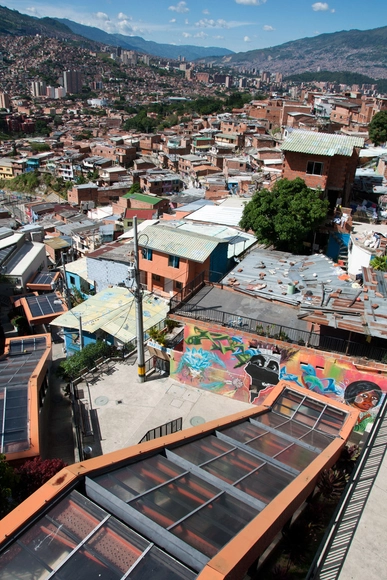
Rather than urban acupuncture, the intervention that took place in the rugged geography of Medellin’s Comuna 13 was like an open-heart surgery, a large-scale action aimed at bringing about physical and social change of what was once one of the most dangerous neighbourhoods in the world’s most dangerous city.
The bilingual guides take us through the neighbourhood, showing us the escalators that gave the intervention worldwide fame. At the same time, in one of the many refurbished squares, a CNN team records interviews with locals and foreigners who visit by the hundreds what was, until recently, an unlikely tourist destination. A drone flies over the scene, we do not know if it is operated by the omnipresent police, CNN or tourists.






.jpg?1637144526&format=webp&width=640&height=580)


.jpg?1637144526)






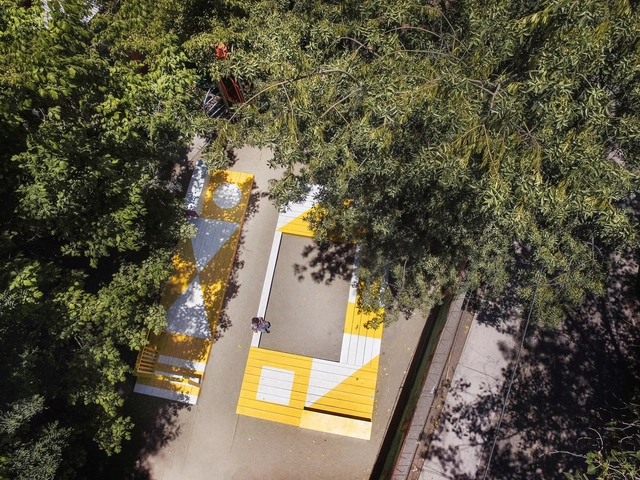

.jpg?1530466848 "© María González")