1. ArchDaily
  2. Architectural Robotics

Architectural Robotics: The Latest Architecture and News

Facing the Age of Robots? Material Innovation in Architectural Structures

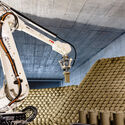
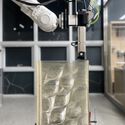
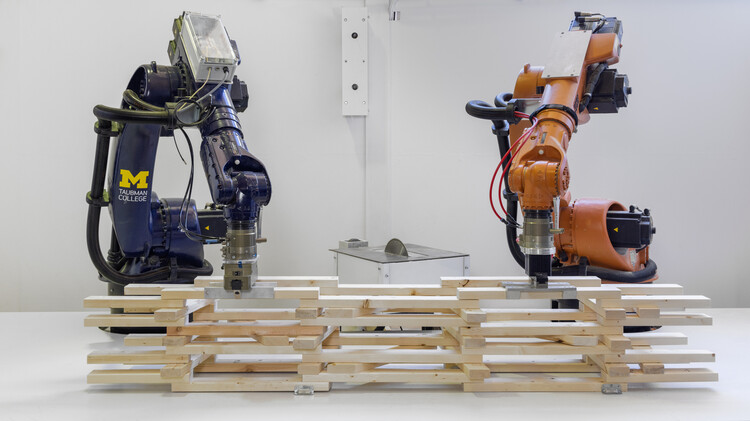
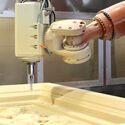
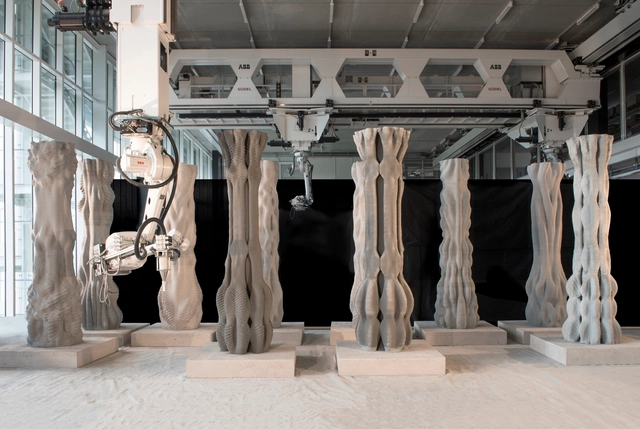
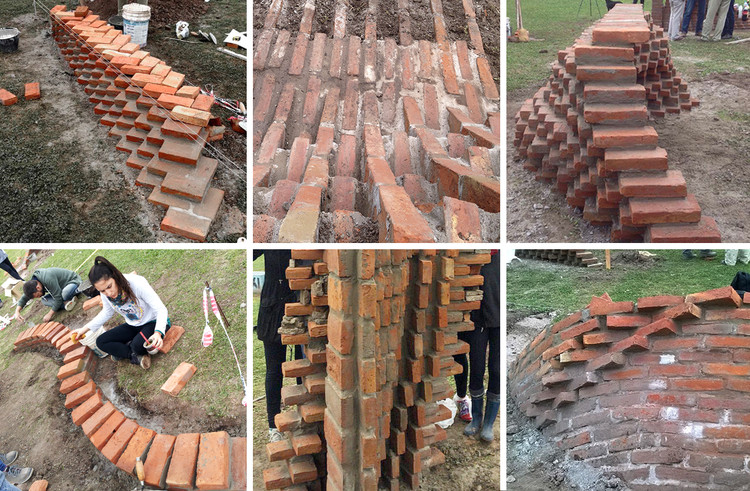
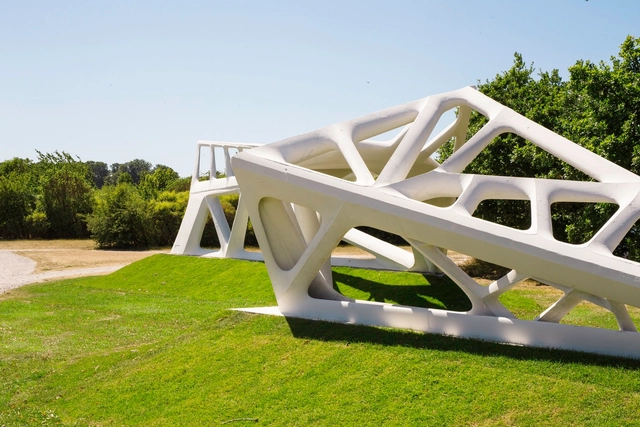
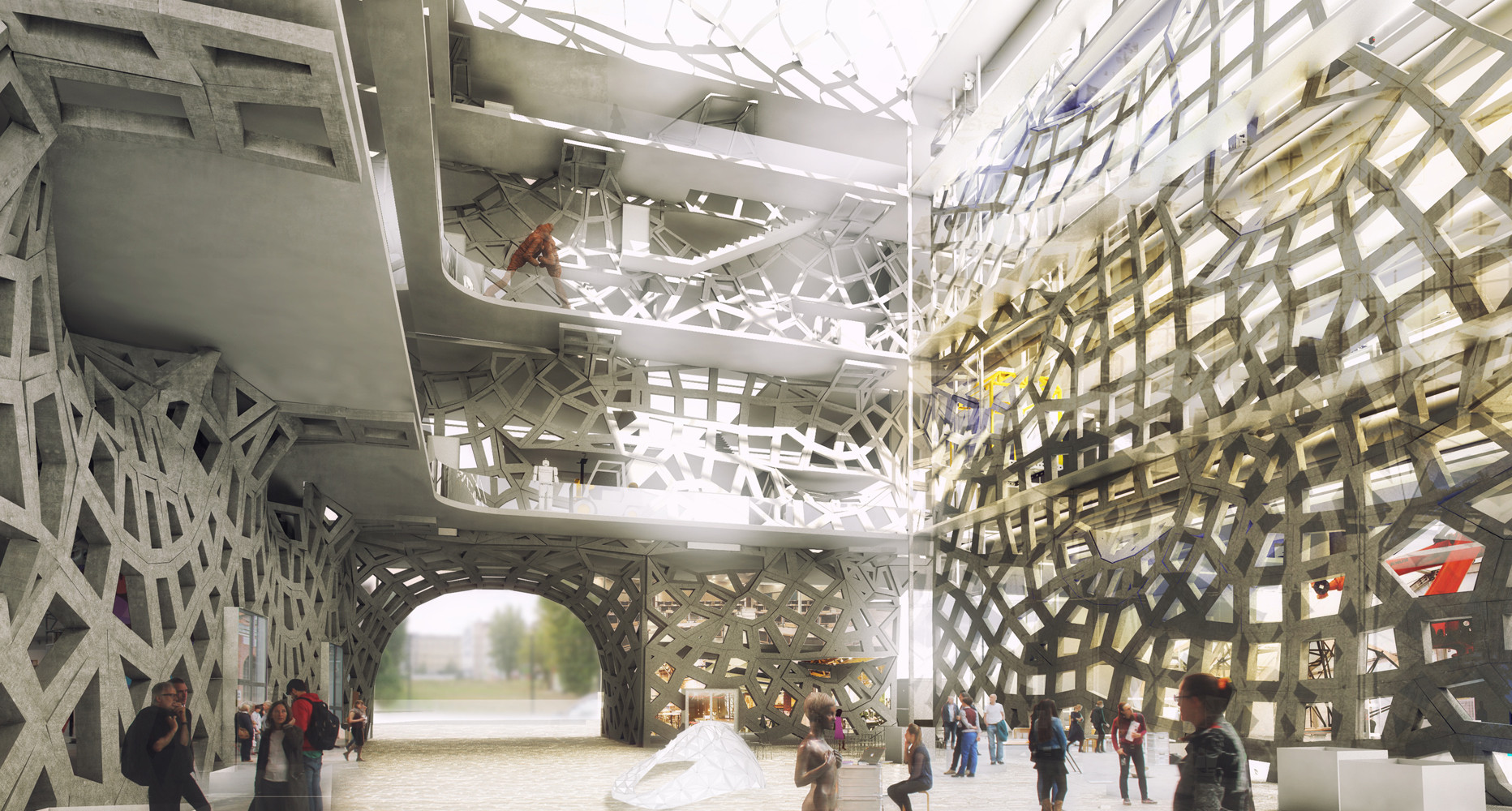
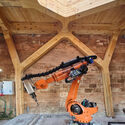
By exploring the art of robotics in construction, advances in architectural technologies are increasingly shaping multiple aspects of human life. From robotic arms and drones to robots that move across large surfaces and even 3D printing robots, their use in construction is accelerating research and the development of new working methods, as well as structural and material experimentation. In collaboration with multiple disciplines and spanning various facets of architecture, the role of robots in the contemporary landscape demonstrates a potential that extends beyond merely automating processes or reducing construction times and costs. This raises the question: Are we building architecture to serve technology, or technology to serve architecture?
Facing the Age of Robots? Material Innovation in Architectural Structures - Image 1 of 4Facing the Age of Robots? Material Innovation in Architectural Structures - Image 2 of 4Facing the Age of Robots? Material Innovation in Architectural Structures - Image 3 of 4Facing the Age of Robots? Material Innovation in Architectural Structures - Image 4 of 4Facing the Age of Robots? Material Innovation in Architectural Structures - More Images+ 17
Historic Materials in the Digital Age: How Digitally Assisted Stone Carving Adds a New Dimension to Heritage Restoration

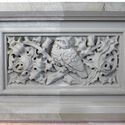
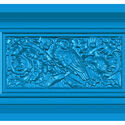
Heritage restoration has always been an intricate process that requires delicate balancing between preserving the integrity of historic materials while integrating contemporary techniques that can enhance accuracy, efficiency, and resilience. With the restoration process of Parliament Hill in Ottawa, Canada's capital city, this intersection of tradition and technology is now on full display. The East Block, built in 1865, offers a compelling example of how digital tools can support the efforts of heritage restoration and contribute to a centuries-old craft such as stone carving.

Historic Materials in the Digital Age: How Digitally Assisted Stone Carving Adds a New Dimension to Heritage Restoration  - Image 4 of 4Historic Materials in the Digital Age: How Digitally Assisted Stone Carving Adds a New Dimension to Heritage Restoration  - Image 6 of 4Historic Materials in the Digital Age: How Digitally Assisted Stone Carving Adds a New Dimension to Heritage Restoration  - Image 5 of 4Historic Materials in the Digital Age: How Digitally Assisted Stone Carving Adds a New Dimension to Heritage Restoration  - Image 2 of 4Historic Materials in the Digital Age: How Digitally Assisted Stone Carving Adds a New Dimension to Heritage Restoration  - More Images+ 8

Rethinking Cities' Relationships with Nature: Robotic Urban Farmers

Subscriber Access | 

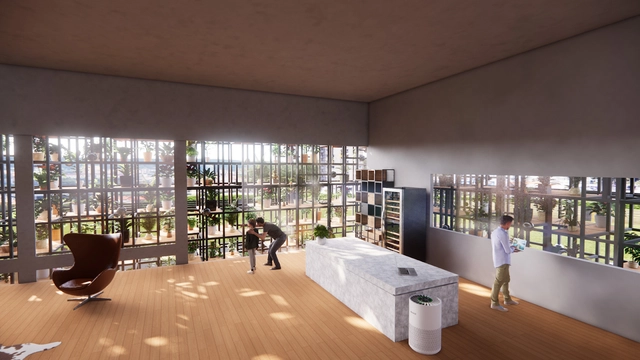
In our current context of ecological crisis, global warming, biodiversity loss, human population growth, and urban sprawl, we need to rethink the way we build and live in our city. We have observed the consequence of uncontrolled urban planning and construction driven only by a capitalist and productivist vision of the city, packing as many humans as possible in the cheapest constructions available, without consideration for the impact on our planet, our fellow animals &  plants inhabitants, and our own wellbeing. The concrete jungles we have been building for the past century have proven to be disrupting our climate (Global Warming, Local heat island effect), our ecosystems (loss of biodiversity, and recess of animals & plants population), and our economy (the food and product industry have been displaced far away, replaced by the only service industry, and the generation of the huge amount of waste in the city).

Rethinking Cities' Relationships with Nature: Robotic Urban Farmers - Image 1 of 4Rethinking Cities' Relationships with Nature: Robotic Urban Farmers - Image 2 of 4Rethinking Cities' Relationships with Nature: Robotic Urban Farmers - Image 3 of 4Rethinking Cities' Relationships with Nature: Robotic Urban Farmers - Image 4 of 4Rethinking Cities' Relationships with Nature: Robotic Urban Farmers - More Images+ 1

An Artificial Intelligence Bot Picks The Architecture Trends of 2023

2022 could be remembered as the year when surprising AI-fueled tools became accessible to a larger audience: from text-to-image generation Stable Diffusion, Midjourney, and DALL-E 2 to unsettling design experiments such as This House Does Not Exist, to surprisingly smart OpenGPT, a language-processing designed artificial intelligence to generate human-like text.

Cautiously described by OpenAI CEO Sam Altman as "a preview of progress", any user can talk with OpenGPT about almost anything: the results are astonishing and it easily can embody an umpteenth so-called threat for creative-related jobs. However, OpenGPT does not have access to browse the internet. Instead, it interacts based on the gigantic database that it has been trained on. As expressed by Gannett's Eric Ulken, "even the best generative AI tools are only as good as their training", so what an "inappropriate request" is has previously been tuned (by humans) as well.

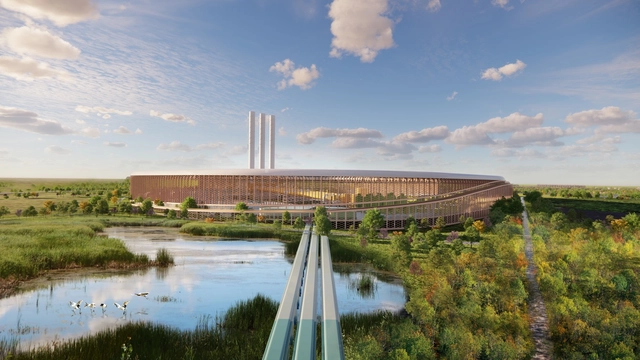
Bjarke Ingels Group and The Metals Company Design Next-Generation Robotic Mineral Collecting Facility

Award-winning architecture firm Bjarke Ingels Group has collaborated with lower-impact battery metals developer The Metals Company to reimagine a traditional metal production facility in a new contemporary and sustainable context. The firm designed a circular zero-solid-waste metallurgical plant that includes manufacturing, processing, and storage facilities, along with offices, visitor centers, and innovation facilities.

Bjarke Ingels Group and The Metals Company Design Next-Generation Robotic Mineral Collecting Facility - Image 1 of 4Bjarke Ingels Group and The Metals Company Design Next-Generation Robotic Mineral Collecting Facility - Image 2 of 4Bjarke Ingels Group and The Metals Company Design Next-Generation Robotic Mineral Collecting Facility - Image 3 of 4Bjarke Ingels Group and The Metals Company Design Next-Generation Robotic Mineral Collecting Facility - Image 4 of 4Bjarke Ingels Group and The Metals Company Design Next-Generation Robotic Mineral Collecting Facility - More Images+ 35

Project Galath3a: a Woman-Machine Collaboration at the Berlin Open Lab

Exploring the use of innovative technologies in architecture and practicing at the crossroads between art and spatial design, Gili Ron and Irina Bogdan have imagined project Galath3a, a woman-machine collaboration. The research-based venture uses a UR5 robotic arm named Gala (short for Galatea), to speculate on what is culturally considered as "womanly behavior".

Project Galath3a: a Woman-Machine Collaboration at the Berlin Open Lab - Image 1 of 4Project Galath3a: a Woman-Machine Collaboration at the Berlin Open Lab - Image 2 of 4Project Galath3a: a Woman-Machine Collaboration at the Berlin Open Lab - Image 3 of 4Project Galath3a: a Woman-Machine Collaboration at the Berlin Open Lab - Image 4 of 4Project Galath3a: a Woman-Machine Collaboration at the Berlin Open Lab - More Images+ 4

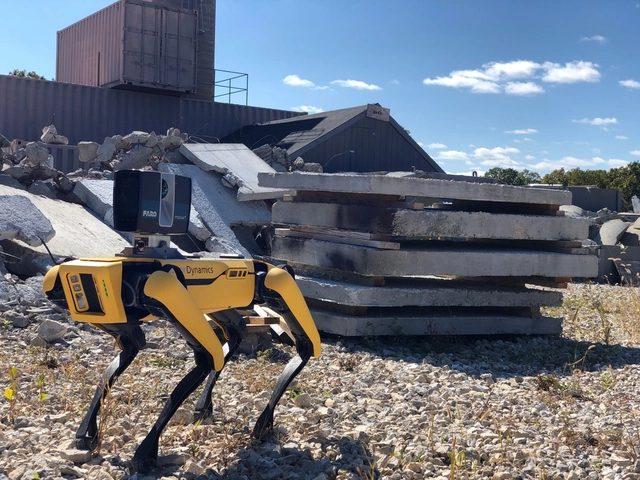
The New Boston Dynamics' Spot 1.1 Revolutionizes the Construction Industry

Design:ED Podcast is an inside look into the field of architecture told from the perspective of individuals that are leading the industry. This motivational series grants unique insight into the making of a successful design career, from humble beginnings to worldwide recognition. Every week, featured guests share their personal highs and lows on their journey to success, that is sure to inspire audiences at all levels of the industry. Listening to their stories will provide a rare blueprint for anyone seeking to advance their career, and elevate their work to the next level.

Michael Perry of the Robotics Company Boston Dynamics joins the podcast to discuss the release of Spot 1.1, and how their company is using robotics to revolutionize the construction industry.

Robots will Construct Melike Altınışık' Robot Museum in Seoul

Robots will Construct Melike Altınışık' Robot Museum in Seoul - Image 1 of 4
© Melike Altınışık Architects

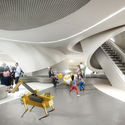
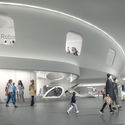
Turkish practice Melike Altınışık Architects (MAA) has won an international competition for the design of a Robot Science Museum in Seoul, South Korea. Hosted by the Seoul Metropolitan Government, the competition called for a “world first” museum to support public education in robotics, and increase public interest in robots.

The principles of robotics, science, technology, and innovation have shaped all aspects of the scheme’s design, from form and structure to material and operation. The main character of the museum is to “create its own universe for robots and their visitors,” manifesting as a non-directional, fluid, spherical structure.

Robots will Construct Melike Altınışık' Robot Museum in Seoul - Featured ImageRobots will Construct Melike Altınışık' Robot Museum in Seoul - Image 1 of 4Robots will Construct Melike Altınışık' Robot Museum in Seoul - Image 2 of 4Robots will Construct Melike Altınışık' Robot Museum in Seoul - Image 3 of 4Robots will Construct Melike Altınışık' Robot Museum in Seoul - More Images+ 4

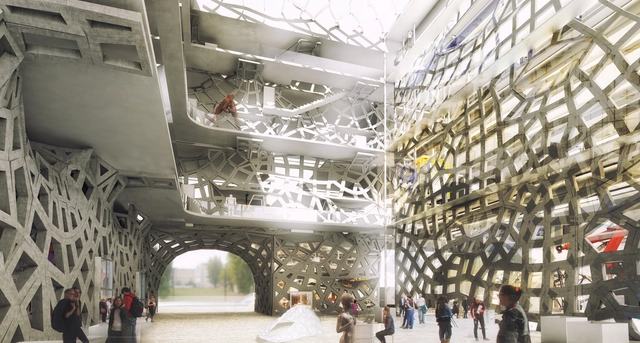
Digitized Stone: ZAarchitects Develop “Smart Masonry”

When one hears the term masonry architecture, digital fabrication and automated construction processes are probably not the first ideas to come to mind. By its very nature, the architecture produced with stone masonry is often heavy, massive, and incorporates less natural light than alternative methods. However, with their research proposal for "Smart Masonry," ZAarchitects are proposing to change masonry buildings as we know them and open opportunities for digital fabrication techniques in stone and other previously antiquated materials. Read on after the break to get a glimpse of what these new masonry buildings could look like and learn more about the process behind their construction.

Digitized Stone: ZAarchitects Develop “Smart Masonry” - Image 1 of 4Digitized Stone: ZAarchitects Develop “Smart Masonry” - Image 2 of 4Digitized Stone: ZAarchitects Develop “Smart Masonry” - Image 3 of 4Digitized Stone: ZAarchitects Develop “Smart Masonry” - Image 4 of 4Digitized Stone: ZAarchitects Develop “Smart Masonry” - More Images+ 6

IAAC Invents a Family of Robots to 3D Print Structures of Any Size

One of the major challenges in translating 3D Printing technology into architecture has been the issue of scale. So far, this has generally resulted in ever larger printers, with one of the most successful examples being the KamerMaker, which has been used to 3D print a Dutch Canal House in 2x2x3.5 metre chunks. However, recognizing the limitations on the size of 3D printers, the Institute for Advanced Architecture of Catalonia (IAAC) has developed a family of three small, mobile robots which together can print a structure of any size.

Read on after the break for more on the process.

IAAC Invents a Family of Robots to 3D Print Structures of Any Size - Image 1 of 4IAAC Invents a Family of Robots to 3D Print Structures of Any Size - Image 2 of 4IAAC Invents a Family of Robots to 3D Print Structures of Any Size - Image 3 of 4IAAC Invents a Family of Robots to 3D Print Structures of Any Size - Image 4 of 4IAAC Invents a Family of Robots to 3D Print Structures of Any Size - More Images+ 9

MIT Develops Self-Assembling, Easy-Bake Robots

Subscriber Access |