1. ArchDaily
  2. Apartments

Apartments: The Latest Architecture and News

More Architecture for Less: SSdH and the Latent Potential of Existing Buildings

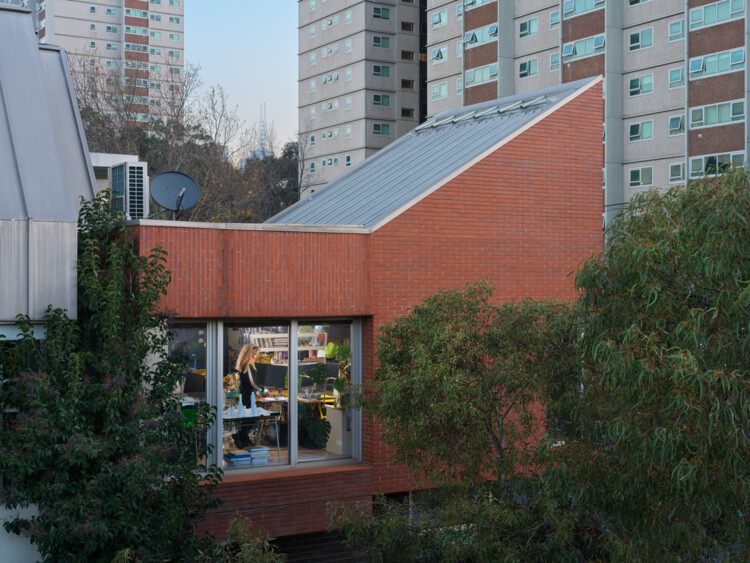
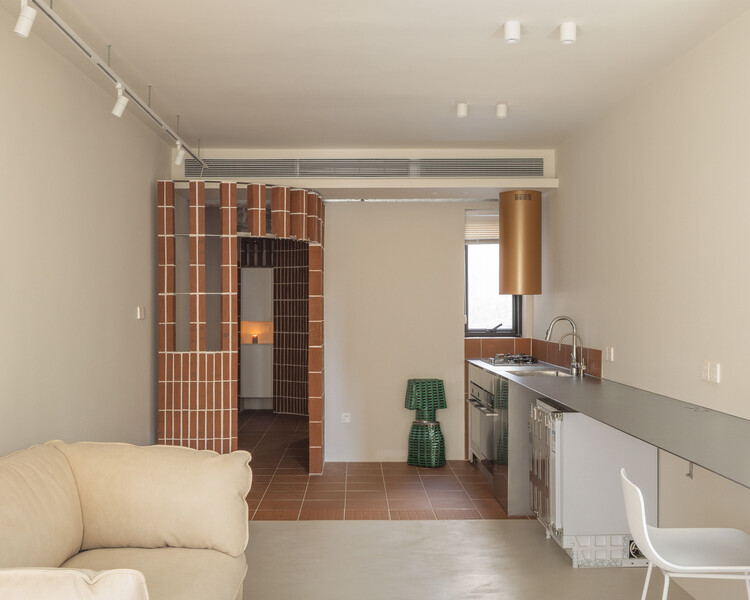
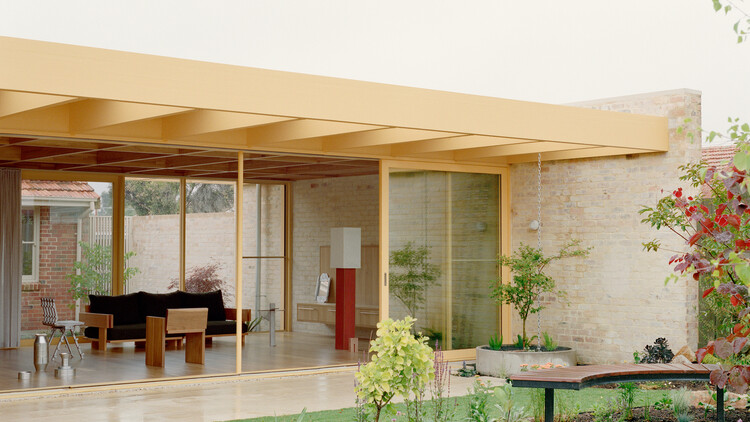
Amid growing recognition of architecture's responsibility toward environmental and planetary ecologies, contemporary practice is increasingly oriented toward working with what already exists—its material, spatial, and historical conditions. Within this shift, architecture and design aesthetics are increasingly about reshaping inherited environments. This approach underpins the work of SSdH, a Melbourne-based architecture practice founded in 2020 by Todd de Hoog, Harrison Smart, and Jean-Marie Spencer. Working across scales of renovation, extension, and adaptive insertion, the studio consistently engages existing buildings as active agents. Winner of the ArchDaily 2025 Next Practices Awards, the Australian firm foregrounds environmental responsibility, material economy, and collaborative processes grounded in site-specific conditions.

More Architecture for Less: SSdH and the Latent Potential of Existing Buildings - Image 1 of 4More Architecture for Less: SSdH and the Latent Potential of Existing Buildings - Image 2 of 4More Architecture for Less: SSdH and the Latent Potential of Existing Buildings - Image 3 of 4More Architecture for Less: SSdH and the Latent Potential of Existing Buildings - Image 4 of 4More Architecture for Less: SSdH and the Latent Potential of Existing Buildings - More Images+ 16

The Technical Reality of Mass Timber Housing: Five European Case Studies

Subscriber Access | 

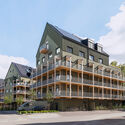
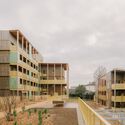
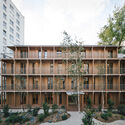
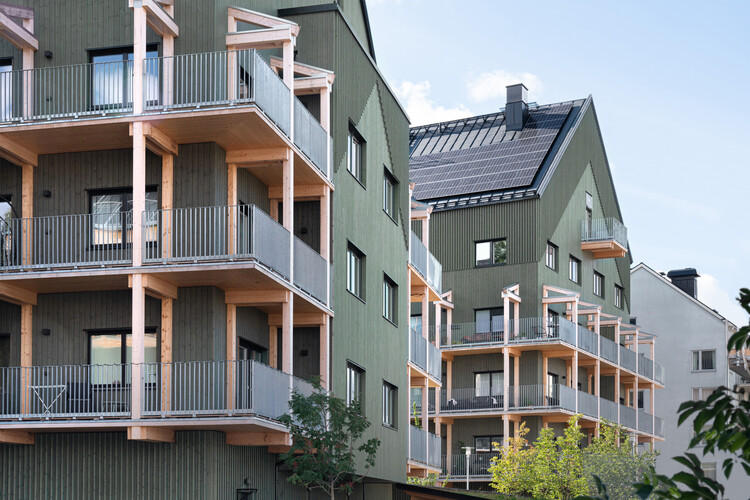
Recent years have seen a shifting paradigm in multi-family residential architecture, as more and more new projects are being built with engineered wood, specifically Cross-Laminated Timber (CLT) and glued-laminated timber (glulam). Because timber is lightweight, these systems can reduce dead load and ease foundation demands, which is especially useful on sites with limited bearing capacity or over existing infrastructure. From a sustainability standpoint, timber can store carbon over the life of the building and often reduces embodied carbon compared with conventional concrete-and-steel systems. In fire design, large timber members can be engineered to char at a predictable rate, allowing the structural core to remain protected for a defined period when detailed appropriately.

The Technical Reality of Mass Timber Housing: Five European Case Studies - Image 1 of 4The Technical Reality of Mass Timber Housing: Five European Case Studies - Image 2 of 4The Technical Reality of Mass Timber Housing: Five European Case Studies - Image 3 of 4The Technical Reality of Mass Timber Housing: Five European Case Studies - Image 4 of 4The Technical Reality of Mass Timber Housing: Five European Case Studies - More Images+ 2

The Productive Clash: Heritage Interiors, Contemporary Projects, and the Value of Imperfection

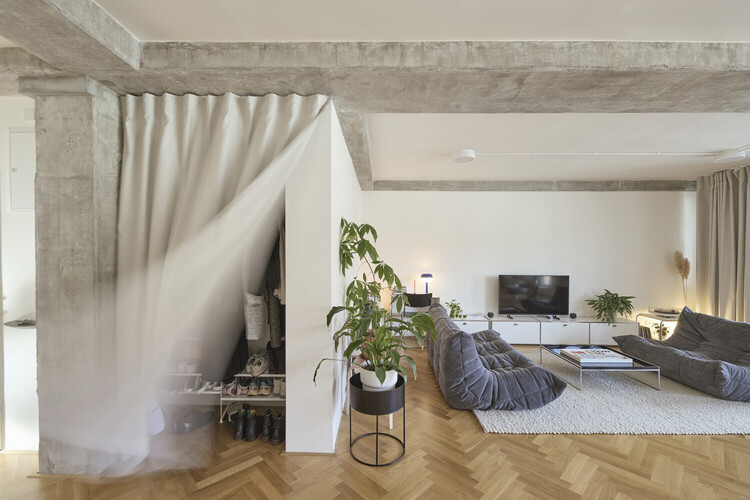
Heritage, in interiors, is increasingly rarer to be only a matter of preservation alone. More often it arrives as friction: the encounter between what a building already is—its plan logic, its scars, its structural inconsistencies—and what contemporary life demands of it.

Some of the most convincing projects today are not those that "restore" an interior back to a single moment, nor those that erase the past under a seamless new skin. They are the ones that stage a relationship between old and new—allowing contrast to do more than tell a story, and letting the clash become a pragmatic tool for construction, budget, and speed.

The Productive Clash: Heritage Interiors, Contemporary Projects, and the Value of Imperfection - Image 1 of 4The Productive Clash: Heritage Interiors, Contemporary Projects, and the Value of Imperfection - Image 2 of 4The Productive Clash: Heritage Interiors, Contemporary Projects, and the Value of Imperfection - Image 3 of 4The Productive Clash: Heritage Interiors, Contemporary Projects, and the Value of Imperfection - Image 4 of 4The Productive Clash: Heritage Interiors, Contemporary Projects, and the Value of Imperfection - More Images+ 28

From Industry to the Living Room: Metal Furniture in Interior Architecture

Subscriber Access | 

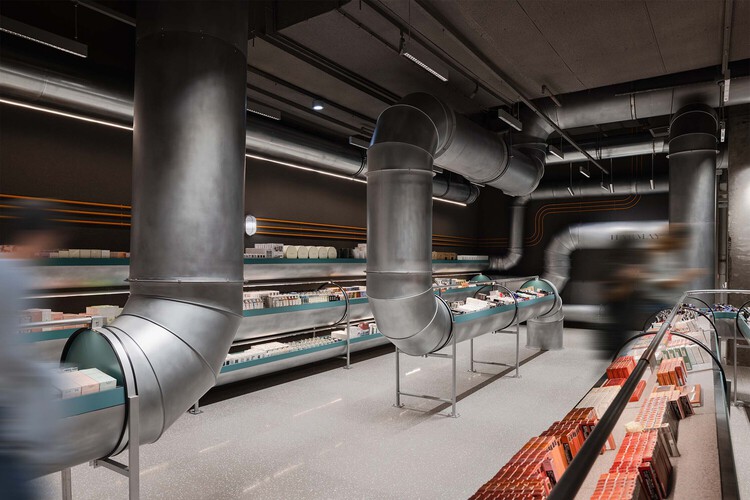
How did a material conceived for bridges, factories, and large-scale structures make its way to the living room bench, the apartment bookshelf, the café table? For centuries, metal was associated with labor, machinery, and monumentality—from the exposed structures of 19th-century World’s Fairs to the productive logic of modern industry. Its presence in domestic interiors is not self-evident but rather a cultural achievement: the transformation of an industrial material into an element of everyday, intimate use, in close proximity to the body.
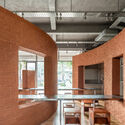

From Industry to the Living Room: Metal Furniture in Interior Architecture - Image 1 of 4From Industry to the Living Room: Metal Furniture in Interior Architecture - Image 2 of 4From Industry to the Living Room: Metal Furniture in Interior Architecture - Image 3 of 4From Industry to the Living Room: Metal Furniture in Interior Architecture - Image 4 of 4From Industry to the Living Room: Metal Furniture in Interior Architecture - More Images+ 26

MVRDV Designs Spherical Landmark for Tirana’s New Asllan Rusi Sports Palace

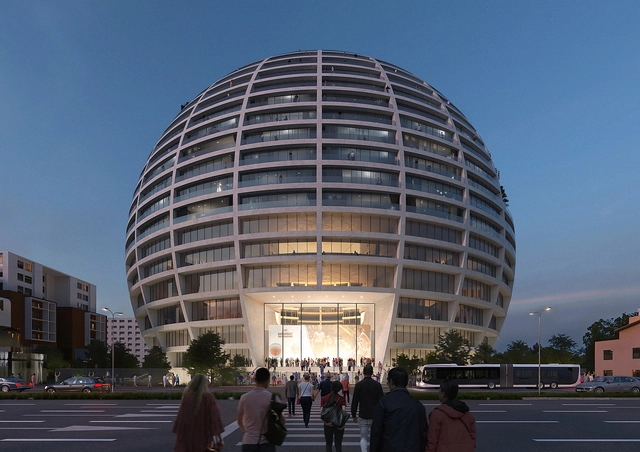
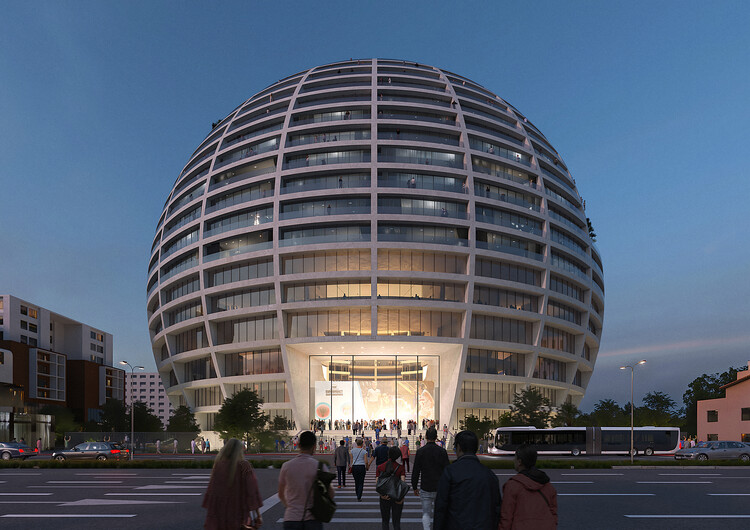
Tirana, the capital of Albania, is experiencing a rapid transformation driven by the long-term urban strategy outlined in the Tirana 2030 (TR030) Master Plan. Developed in 2017 by Stefano Boeri Architetti, UNLAB, and IND [Inter.National.Design] through a competition organized by the Ministry of Urban Development, the plan's objectives include increasing urban density, improving public infrastructure, and integrating green spaces and open areas into the urban fabric. It is in this dynamic setting that MVRDV has won the international competition for Tirana's new Asllan Rusi Sports Palace. Conceived as a mixed-use development, the project, named The Grand Ballroom, combines a 6,000-seat arena for basketball and volleyball with residential apartments, a hotel, and ground-level retail. With its spherical form exceeding 100 metres in diameter, the design adds a distinctive landmark to Tirana's growing collection of ambitious architectural projects.

MVRDV Designs Spherical Landmark for Tirana’s New Asllan Rusi Sports Palace - Image 1 of 4MVRDV Designs Spherical Landmark for Tirana’s New Asllan Rusi Sports Palace - Image 2 of 4MVRDV Designs Spherical Landmark for Tirana’s New Asllan Rusi Sports Palace - Image 3 of 4MVRDV Designs Spherical Landmark for Tirana’s New Asllan Rusi Sports Palace - Image 4 of 4MVRDV Designs Spherical Landmark for Tirana’s New Asllan Rusi Sports Palace - More Images+ 5

MVRDV Advances Urban Densification with The Sax Residential Towers in Rotterdam

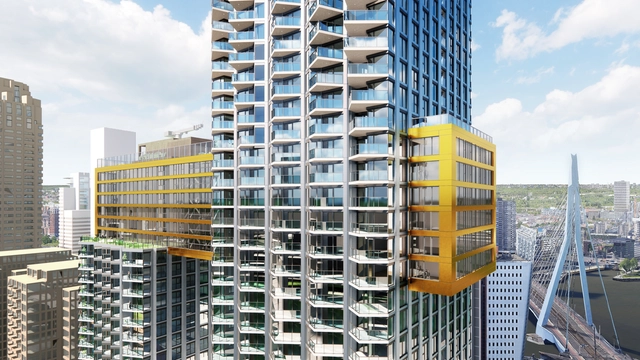
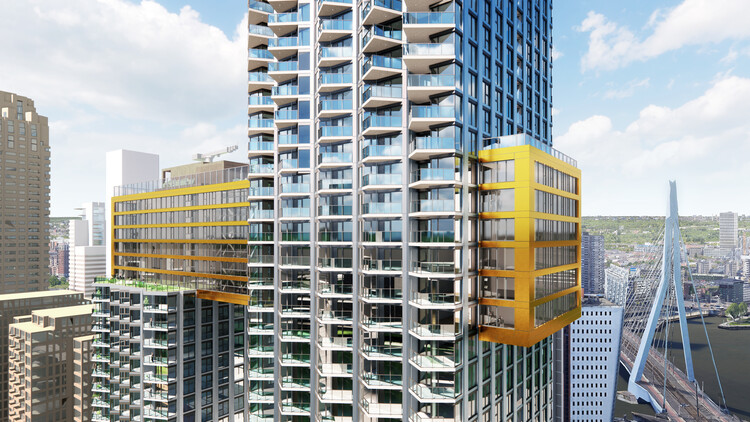
The City of Rotterdam, developers BPD and Synchroon, and architecture firm MVRDV have officially begun construction on The Sax, a major residential project located on Rotterdam's Wilhelminapier. Designed to contribute to the city's ongoing densification efforts, the development will deliver 916 apartments within two interconnected towers. Once completed, The Sax will make Wilhelminapier the most densely populated area in the Netherlands, making the project an example of compact urban growth. The design comprises two towers, combining a wide mix of housing types and shared amenities with strong connections to public transport and sustainable mobility solutions, including parking for 1,800 bicycles and a fully automated car garage. With its silver façade and undulating balconies, the building's form echoes the shape of a saxophone, reflecting the character of Rotterdam.

MVRDV Advances Urban Densification with The Sax Residential Towers in Rotterdam - Image 1 of 4MVRDV Advances Urban Densification with The Sax Residential Towers in Rotterdam - Image 2 of 4MVRDV Advances Urban Densification with The Sax Residential Towers in Rotterdam - Image 3 of 4MVRDV Advances Urban Densification with The Sax Residential Towers in Rotterdam - Image 4 of 4MVRDV Advances Urban Densification with The Sax Residential Towers in Rotterdam - More Images+ 18

Scaling the Threshold: When Community Architecture Becomes Too Large

Subscriber Access | 

When Hudson Yards opened in Manhattan in 2019, it promised a new urban neighborhood built from scratch. 16 towers with 4,000 residential units were erected in hopes of creating a strong community. Despite its lavish amenities and lofty public plazas, a peculiar emptiness persisted. The development felt anonymous, speaking to a fundamental truth about human social capacity.

Scaling the Threshold: When Community Architecture Becomes Too Large - Image 1 of 4Scaling the Threshold: When Community Architecture Becomes Too Large - Image 2 of 4Scaling the Threshold: When Community Architecture Becomes Too Large - Image 3 of 4Scaling the Threshold: When Community Architecture Becomes Too Large - Image 4 of 4Scaling the Threshold: When Community Architecture Becomes Too Large - More Images+ 2

Apartments in Brazil: Interiors with Reused and Recovered Materials

Subscriber Access | 

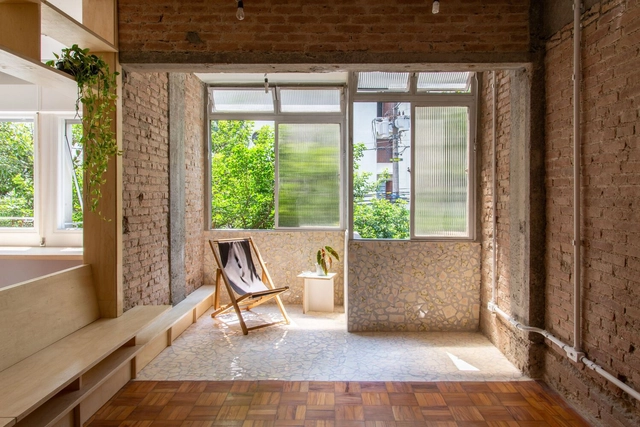
From the field of architecture and construction, the concept of material reuse is closely tied to circular economy and the reduction of carbon footprints, paving the way toward a more sustainable and responsible future. By incorporating recycling practices, recovery, restoration, and/or the reuse of demolition materials, resource efficiency along with the reduction of energy consumption makes it feasible to experiment with techniques, applications, and new materials that honor the memory of spaces while also bringing new life to both interiors and exteriors.

Apartments in Brazil: Interiors with Reused and Recovered Materials - Image 1 of 4Apartments in Brazil: Interiors with Reused and Recovered Materials - Image 2 of 4Apartments in Brazil: Interiors with Reused and Recovered Materials - Image 3 of 4Apartments in Brazil: Interiors with Reused and Recovered Materials - Image 4 of 4Apartments in Brazil: Interiors with Reused and Recovered Materials - More Images+ 7

Design Solutions for Small Living: Maximizing Space in Apartments Under 40 Square Meters

Subscriber Access | 

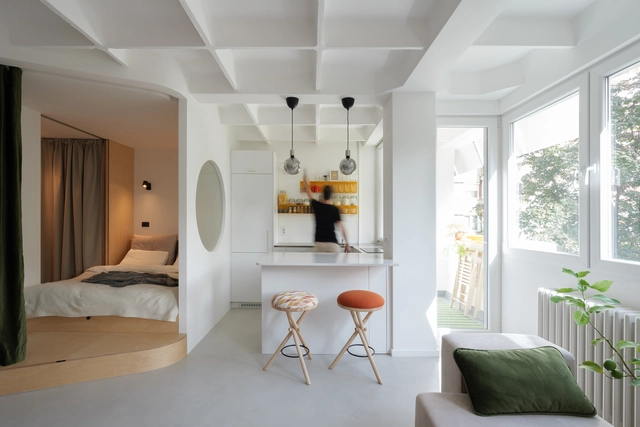
Living in densely populated cities is a reality for many. While the benefits of urban living—such as proximity to amenities, infrastructure, job opportunities, and lifestyle—remain highly valued, homes have seen a significant reduction in square footage. The trend toward smaller apartments has become increasingly common, with interior design playing a fundamental role. Reducing square meters demands efficient use of space and smart floor plan layouts. However, far from generating dull spaces, creativity in design has led to interesting architectural solutions that condense high-quality living into what is often called a micro apartment or studio, studios of 40m2 or under.

Design Solutions for Small Living: Maximizing Space in Apartments Under 40 Square Meters - Image 1 of 4Design Solutions for Small Living: Maximizing Space in Apartments Under 40 Square Meters - Image 2 of 4Design Solutions for Small Living: Maximizing Space in Apartments Under 40 Square Meters - Image 3 of 4Design Solutions for Small Living: Maximizing Space in Apartments Under 40 Square Meters - Image 4 of 4Design Solutions for Small Living: Maximizing Space in Apartments Under 40 Square Meters - More Images+ 22

Metal Façade Systems with Community Resonance: The Case of Africatown Plaza

 | Sponsored Content

As urban neighborhoods continue to evolve, design plays a key role in shaping how buildings respond to urbanization, functional demands, and the character of their surroundings. Intertwined, these elements guide the transformation of urban life and influence how new developments engage with their context—a dynamic clearly visible in Seattle's Central District. Long considered a historic hub for the city's African American community, the Africatown Plaza project proposes a comprehensive approach that integrates architectural performance with community resonance, using the building envelope as a primary medium.

Raw, Refined, and Resilient: 14 Projects Showcasing Concrete Block as a Design Language

Subscriber Access | 

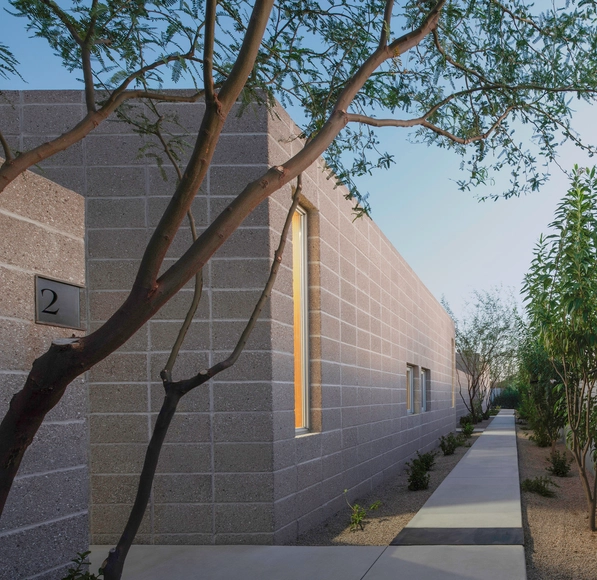
Once seen as purely utilitarian, bare concrete blocks have increasingly become part of an architectural transformation. In regions where warm climates make insulation unnecessary, this material can be left exposed, free of cladding, finishes, or embellishment. In doing so, texture, bond, and form can define the building's character and simplify construction while creating new opportunities for expression and identity. This also creates a platform to explore the concept of material honesty. Beyond its aesthetic value, using a material "as is" can significantly reduce construction costs and minimize maintenance during the building's lifespan.

 Raw, Refined, and Resilient: 14 Projects Showcasing Concrete Block as a Design Language - Image 1 of 4 Raw, Refined, and Resilient: 14 Projects Showcasing Concrete Block as a Design Language - Image 2 of 4 Raw, Refined, and Resilient: 14 Projects Showcasing Concrete Block as a Design Language - Image 3 of 4 Raw, Refined, and Resilient: 14 Projects Showcasing Concrete Block as a Design Language - Image 4 of 4 Raw, Refined, and Resilient: 14 Projects Showcasing Concrete Block as a Design Language - More Images+ 11

Case Studies in Community-Centered Living: Innovative Residential Design

Subscriber Access | 

Architecture evolves, particularly in how it reflects the relationships between people, their behavior, and the environment. Even subtle variations in these dynamics can influence how we think and live in our communities. According to the World Bank, 56% of the population currently lives in urban environments, and it is estimated that by 2050 this number will reach 70%. This projection echoes the speed and magnitude of urban growth, posing challenges for architects and design firms, from the viability of buildings to the sustainability of the built environment, encompassing residential architecture and other typologies that influence daily life.

The Rise of Co-Living Spaces for Young Professionals in East Asia: 5 Projects Redefining Flexible Living

Subscriber Access | 

Co-living in East Asia has been rising since 2020, rapidly expanding while remaining in its early stages. At the same time, it continues to fulfill a significant demand from young professionals working in major cities. A 2020 study by real estate services firm JLL highlighted the growing demand for co-living in China and Singapore, citing key advantages such as affordability compared to private studio apartments and a contemporary urban lifestyle that fosters openness and shared experiences. Much like other industries where ownership is becoming less relevant—such as streaming services for music, films, and television, or mobility solutions like car- and bike-sharing—co-living appeals to a similar demographic that values flexibility and access over long-term commitments.

Unlike co-living initiatives in Spain, which often focus on multigenerational shared spaces, East Asian co-living primarily targets young professionals with dynamic career paths. Often required to relocate every few years, these individuals prioritize convenience and adaptability over investing in a permanent home. For them, committing to a long-term residence may not be practical, making fully furnished, professionally managed co-living spaces with built-in amenities and hygiene services an attractive option. These environments cater to fast-paced urban lifestyles, where networking at professional events often precedes solitary downtime at home.

The Rise of Co-Living Spaces for Young Professionals in East Asia: 5 Projects Redefining Flexible Living  - Image 1 of 4The Rise of Co-Living Spaces for Young Professionals in East Asia: 5 Projects Redefining Flexible Living  - Image 2 of 4The Rise of Co-Living Spaces for Young Professionals in East Asia: 5 Projects Redefining Flexible Living  - Image 3 of 4The Rise of Co-Living Spaces for Young Professionals in East Asia: 5 Projects Redefining Flexible Living  - Image 4 of 4The Rise of Co-Living Spaces for Young Professionals in East Asia: 5 Projects Redefining Flexible Living  - More Images+ 26

Cultivating Green Apartments: A Guide to Integrating Nature in Small Urban Spaces

Subscriber Access | 

Urban living has become synonymous with limited space and creativity for compact apartments. As cities become more dominated by concrete and steel, there is an exciting, yet unsurprising, rise in interest in embracing the green thumb, even within the constraints of a dense urban environment. This interest is not purely to tend aesthetic tastes, as studies consistently show that exposure to nature reduces stress, improves focus, and enhances overall well-being. However, in dense urban environments, the challenge lies in finding innovative ways to make this vision a reality for apartments where every inch matters.

Cultivating Green Apartments: A Guide to Integrating Nature in Small Urban Spaces - Image 1 of 4Cultivating Green Apartments: A Guide to Integrating Nature in Small Urban Spaces - Image 2 of 4Cultivating Green Apartments: A Guide to Integrating Nature in Small Urban Spaces - Image 3 of 4Cultivating Green Apartments: A Guide to Integrating Nature in Small Urban Spaces - Image 4 of 4Cultivating Green Apartments: A Guide to Integrating Nature in Small Urban Spaces - More Images+ 4

Vibrancy and Utility: Embracing Color in Urban Apartment Kitchens

Subscriber Access | 

Urban apartments are frequently praised for their clever use of space, but what of their approach to color? Thoughtfully incorporating color is more than an aesthetic decision; it has the potential to shape emotional responses, influence mood, and create spatial illusions. Research in color psychology shows that colors affect our social, cultural, and psychological reactions, making them powerful design tools. Variations of blue, for instance, have been shown to slow melatonin production, keeping people more awake and alert, while shades of green relieve strain on our nervous systems, helping us feel calmer and more grounded. Color in architectural spaces can even alter our perception, creating illusions of depth, movement, and texture that influence how we experience space. Warmer hues like oranges and reds tend to make a room feel more intimate and cozy, while cool whites and blues lend a sense of openness, making spaces appear taller and more expansive.

Vibrancy and Utility: Embracing Color in Urban Apartment Kitchens - Image 2 of 4Vibrancy and Utility: Embracing Color in Urban Apartment Kitchens - Image 1 of 4Vibrancy and Utility: Embracing Color in Urban Apartment Kitchens - Image 8 of 4Vibrancy and Utility: Embracing Color in Urban Apartment Kitchens - Image 3 of 4Vibrancy and Utility: Embracing Color in Urban Apartment Kitchens - More Images+ 29

SO – IL Reveals Design for a New Residential Condominium Project in Brooklyn, New York

Architecture firm SO – IL has revealed plans for a new residential condominium project planned for Brooklyn's Fort Greene neighborhood. Named 144 Vanderbilt, the development offers 26 condominiums and amenities spanning almost 90,000 square feet. According to SO – IL, the architecture takes cues from Brooklyn's historical heritage, while incorporating a modern twist, as the staggered building prioritizes community interactions and comfortable urban living.

SO – IL Reveals Design for a New Residential Condominium Project in Brooklyn, New York - Image 1 of 4SO – IL Reveals Design for a New Residential Condominium Project in Brooklyn, New York - Image 2 of 4SO – IL Reveals Design for a New Residential Condominium Project in Brooklyn, New York - Image 3 of 4SO – IL Reveals Design for a New Residential Condominium Project in Brooklyn, New York - Image 4 of 4SO – IL Reveals Design for a New Residential Condominium Project in Brooklyn, New York - More Images+ 2

Transforming Small Spaces: Renovations of 6 Apartments Under 60 m² in Madrid

Subscriber Access | 

The domestic space reflects individuals' activities, behaviors, and actions, where various dynamics and processes coexist as part of daily life. Although each home has its distribution logic according to the time of its design, the needs of its inhabitants, the technologies of the era, and other factors, residential interior renovations often express an interest in recovering old structures and façades, recycling unused furniture, restoring high-quality elements present in coverings and flooring, or directly integrating new features to achieve greater spatial fluidity, lighting, and optimization of surfaces.

Transforming Small Spaces: Renovations of 6 Apartments Under 60 m² in Madrid - Image 1 of 4Transforming Small Spaces: Renovations of 6 Apartments Under 60 m² in Madrid - Image 2 of 4Transforming Small Spaces: Renovations of 6 Apartments Under 60 m² in Madrid - Image 3 of 4Transforming Small Spaces: Renovations of 6 Apartments Under 60 m² in Madrid - Image 4 of 4Transforming Small Spaces: Renovations of 6 Apartments Under 60 m² in Madrid - More Images+ 8

Urban Living in the United States: How Exclusive Residential Developments are Redefining Homeownership

Subscriber Access | 

New developments, companies, start-ups in the real estate industry are transforming perceptions and needs around home ownership and rental experiences. In a society where home ownership is attributed to personal success, innovations in the residential rental market seek to enhance the appeal of renting. Evolving consumer needs are resulting in a trend of exclusive, community-focused living models. This shift is redefining how people view their living spaces, interact with their communities, and perceive the value of their homes.

Urban Living in the United States: How Exclusive Residential Developments are Redefining Homeownership - Image 6 of 4Urban Living in the United States: How Exclusive Residential Developments are Redefining Homeownership - Image 1 of 4Urban Living in the United States: How Exclusive Residential Developments are Redefining Homeownership - Image 2 of 4Urban Living in the United States: How Exclusive Residential Developments are Redefining Homeownership - Image 3 of 4Urban Living in the United States: How Exclusive Residential Developments are Redefining Homeownership - More Images+ 2