1. ArchDaily
  2. Andes

Andes: The Latest Architecture and News

Regenerative Salt Landscapes: An ArchDaily Student Project Awards Winner Rethinking Extraction in Argentina

Subscriber Access | 

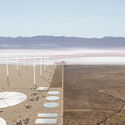
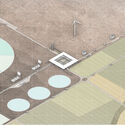
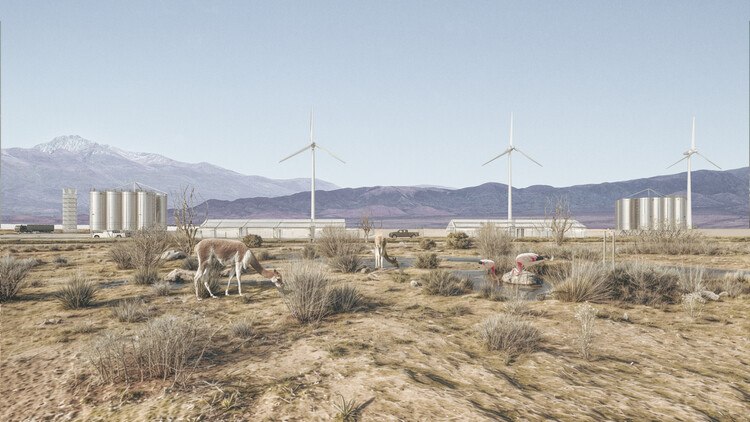
When people think of Argentina, they often picture landmarks like the Obelisk of Buenos Aires. Yet the country spans over 2,780,400 km², making it one of the largest in South America and home to a wide range of landscapes and realities that frequently go unnoticed. In fact, the province of Jujuy in northern Argentina lies within the Lithium Triangle: a high-altitude region shared with Bolivia and Chile that contains roughly 54% of the world's lithium reserves. Within this territory sits the Olaroz Salt Flat, a site where today two competing dynamics converge: the expansion of industrial lithium extraction and the preservation of ancestral culture and lands inhabited by Kolla and Atacama communities, creating a clash of high-capacity industrial extraction and traditional, low-impact agrarian practices.

In light of this problem, one of the winning teams of the ArchDaily Student Project Awards, made up of Ezequiel Lopez, Maria Victoria Echegaray, and Agustina Durandez, decided to look into the issue. This was done as part of their thesis project for the Bachelor's in Architecture program at the National University of Córdoba. Their work stems from an interest in engaging with territories that remain peripheral to architectural discourse, using the thesis as an opportunity for sustained, in-depth research. This allowed them to formulate informed design responses grounded in both territorial and socio-economic realities. Rejecting the binary between extraction and preservation, the project approaches the territory as a system where both can coexist through spatial and technical mediation.

Regenerative Salt Landscapes: An ArchDaily Student Project Awards Winner Rethinking Extraction in Argentina - Image 1 of 4Regenerative Salt Landscapes: An ArchDaily Student Project Awards Winner Rethinking Extraction in Argentina - Image 2 of 4Regenerative Salt Landscapes: An ArchDaily Student Project Awards Winner Rethinking Extraction in Argentina - Image 3 of 4Regenerative Salt Landscapes: An ArchDaily Student Project Awards Winner Rethinking Extraction in Argentina - Image 4 of 4Regenerative Salt Landscapes: An ArchDaily Student Project Awards Winner Rethinking Extraction in Argentina - More Images+ 13

Kengo Kuma & Associates Unveils Its First Project in Ecuador with Qapital Tower

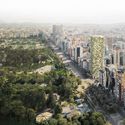
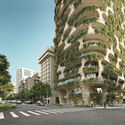
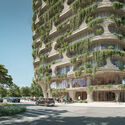
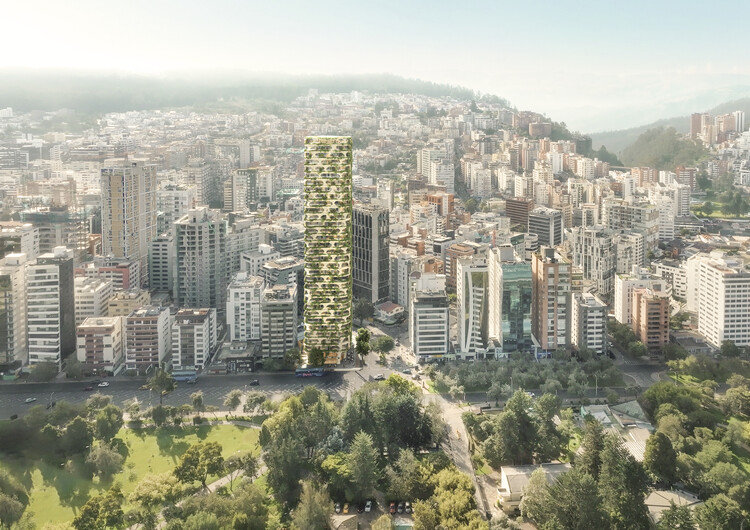
Kengo Kuma & Associates has unveiled plans for Qapital, a 32-story mixed-use tower set to rise in Quito, Ecuador, in collaboration with local developer Uribe Schwarzkopf. Scheduled for completion in 2029, the project marks Japanese architect Kengo Kuma's first work in the country, extending the studio's international portfolio into the South American context. Located opposite La Carolina Park in Quito's central business district, the 125.8-meter tower introduces a vertically organized program that brings together residential, commercial, and shared amenities.

Kengo Kuma & Associates Unveils Its First Project in Ecuador with Qapital Tower - Image 1 of 4Kengo Kuma & Associates Unveils Its First Project in Ecuador with Qapital Tower - Image 2 of 4Kengo Kuma & Associates Unveils Its First Project in Ecuador with Qapital Tower - Image 3 of 4Kengo Kuma & Associates Unveils Its First Project in Ecuador with Qapital Tower - Image 4 of 4Kengo Kuma & Associates Unveils Its First Project in Ecuador with Qapital Tower - More Images+ 5

Mauro Marinelli Wins 2025 Wheelwright Prize for Research on Mountain Architecture Across the Alps, Andes, and Himalayas

Harvard University Graduate School of Design (GSD) has announced Maura Marinelli, co-founder of franzosomarinelli, as the winner of the 2025 Wheelwright Prize. The annual $100,000 grant supports emerging architects in pursuing investigative research that addresses contemporary architectural challenges with a global perspective. Marinelli's winning proposal, "Topographies of Resistance: Architecture and the Survival of Cultures," explores how architecture can sustain and revitalize rural, mountainous regions that confront climate change, infrastructure limitations, and cultural erosion. His research aims to develop design strategies that promote autonomy, sustainability, and local identity by comparing contexts in the Alps, Andes, and Himalayas. Through fieldwork and analysis, the project seeks to propose architectural approaches that empower communities and challenge urban-centric perspectives.

Bofedales: Natural Infrastructures and Andean Landscapes

Subscriber Access | 

In the highlands of the Central Andes, one finds the "bofedales." Known by some as 'high Andean wetlands,' bofedales are ecosystems and landscapes crucial for water regulation and storage in the Andes. Moreover, they are natural infrastructures that constitute a material and immaterial heritage to address contemporary climate crises and to sustain local Andean communities, which have nurtured them for generations.

Julio Vargas Neumann on the Future of Materials: 'Today's Reinforced Concrete will Disappear'

Subscriber Access | 

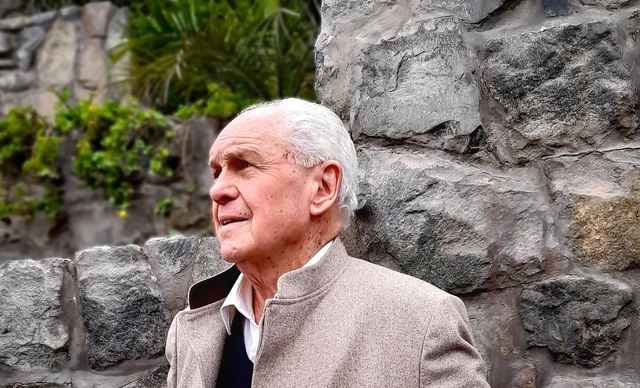
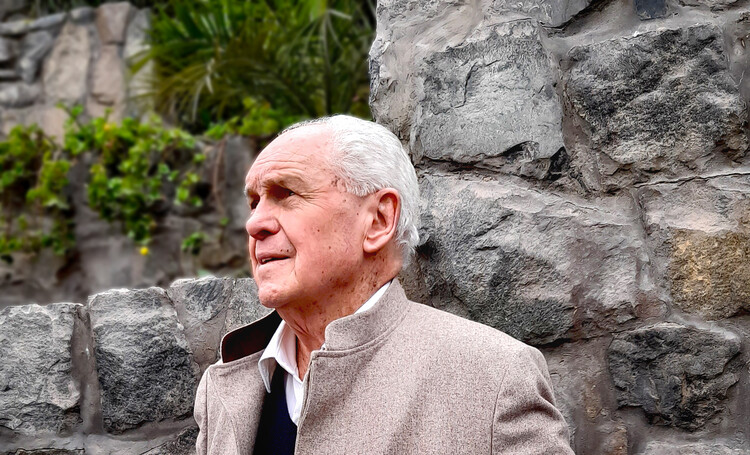
With an air of simplicity and wisdom, engineer Julio Vargas Neumann welcomes us. His two dogs accompany us as we descend after the necessary ascent to enter, and we are also accompanied by the stone walls defining the lot. We sit down and begin - or continue - the interview and conversation regarding the value of 'shicras', local materials, and earth construction. We also discuss criticisms of cement, aluminum, and steel, as well as perspectives on the future of materials in Peru and the world. Likewise, we delve into the long-neglected and recurrent rural problem in South America, discussing the inexorable need to change paradigms and priorities.

Julio Vargas Neumann on the Future of Materials: 'Today's Reinforced Concrete will Disappear' - Image 1 of 4Julio Vargas Neumann on the Future of Materials: 'Today's Reinforced Concrete will Disappear' - Image 2 of 4Julio Vargas Neumann on the Future of Materials: 'Today's Reinforced Concrete will Disappear' - Image 3 of 4Julio Vargas Neumann on the Future of Materials: 'Today's Reinforced Concrete will Disappear' - Image 4 of 4Julio Vargas Neumann on the Future of Materials: 'Today's Reinforced Concrete will Disappear' - More Images+ 23

Bolivia's Ignored Satellite City is Building Itself a Whole New Identity

La Paz, the historic de-facto capital of Bolivia, is widely renowned for its incredible setting, colonial architecture, and cultural buildings. El Alto, on the other hand, is not. It was, in fact, La Paz's rather dismal satellite city, all low rise brick and commuting. Yet El Alto has become the centre of an entirely new, independently evolved architectural style that is rapidly catching on across South America.

Bolivia's Ignored Satellite City is Building Itself a Whole New Identity - Image 1 of 4