1. ArchDaily
  2. America

America: The Latest Architecture and News

Crossing Hemispheres: Thatched Roofs from America to Asia

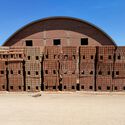
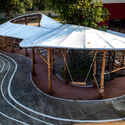
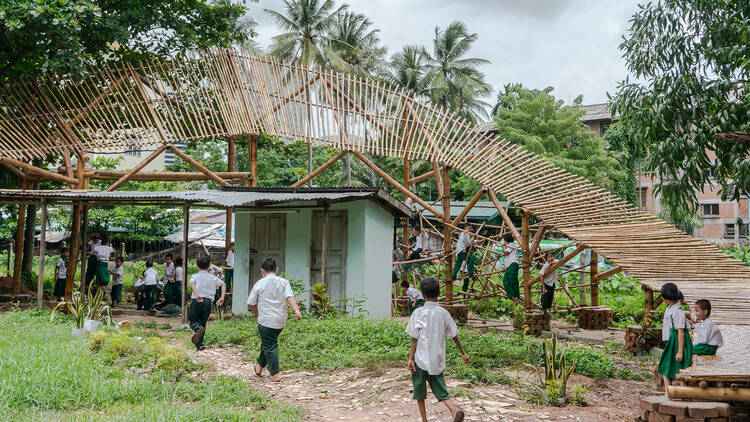
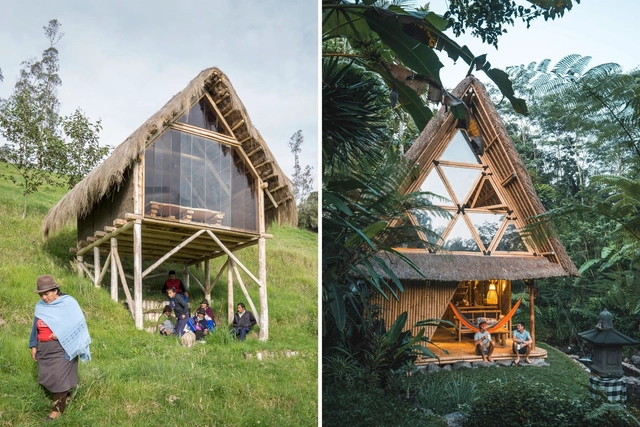
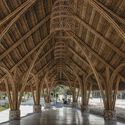
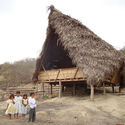
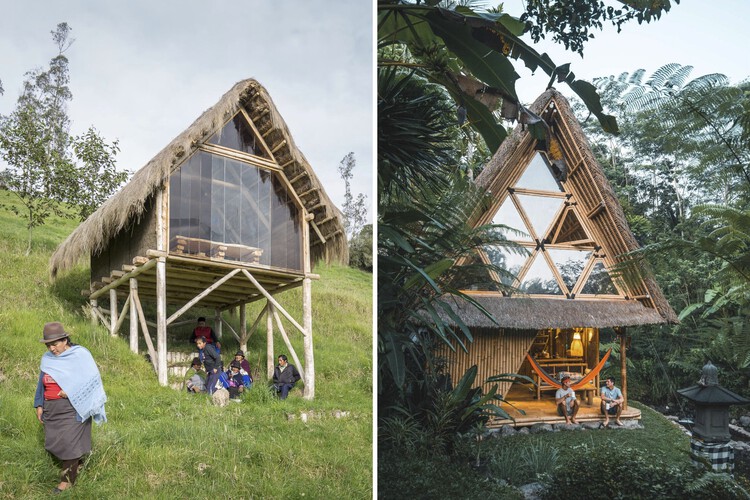
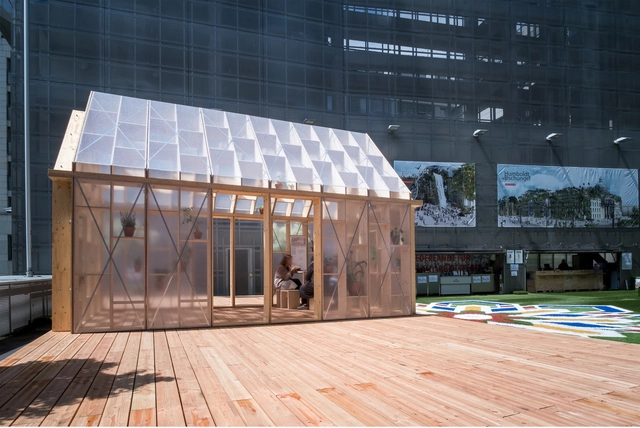
Thatching is a traditional building technique that has been reinterpreted in different ways in contemporary projects, allowing its value to continue to endure over time. As well as being a culturally and historically valuable technique, given its presence in humanity for centuries, it also has a number of other constructive advantages, such as its great environmental value, as it is an accessible renewable material.

The technique consists of grouping, intertwining, and overlapping dry vegetation, creating light surfaces with excellent thermal and sound insulation and which are cheap and relatively simple to build. In addition, flexibility is one of the technique's most prominent features, and it is particularly popular in roofing applications. 

Crossing Hemispheres: Thatched Roofs from America to Asia - Image 1 of 4Crossing Hemispheres: Thatched Roofs from America to Asia - Image 2 of 4Crossing Hemispheres: Thatched Roofs from America to Asia - Image 3 of 4Crossing Hemispheres: Thatched Roofs from America to Asia - Image 4 of 4Crossing Hemispheres: Thatched Roofs from America to Asia - More Images+ 16

Socialization and Resilience: 10 Community Centers in the Outskirts of Latin American Cities

Subscriber Access | 

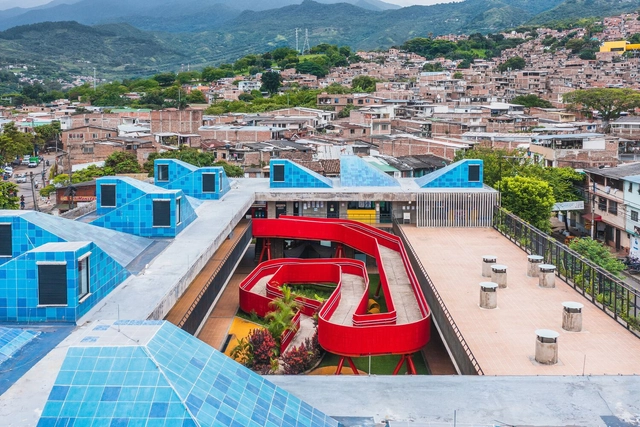
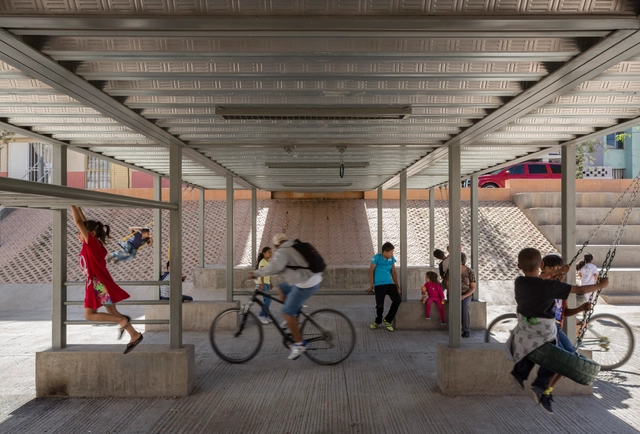
From November 20 to 23, São Paulo hosted the IV International Seminar on Favela Urbanization, bringing together discussions that bridged theory and practice to address interventions in these territories. Centered on Brazil’s realities, the seminar shed light on the political challenges and the struggle to recognize the potential of peripheral spaces. It also highlighted a shared issue across Latin America: the need for adequate funding to support transformative actions and the legitimization of these territories. Within this framework, the article underscores the critical role of high-quality public facilities in favelas and peripheral neighborhoods. These spaces not only provide access to opportunities but also foster community bonds, serving as essential hubs for social organization and collective efforts toward building a more inclusive future.

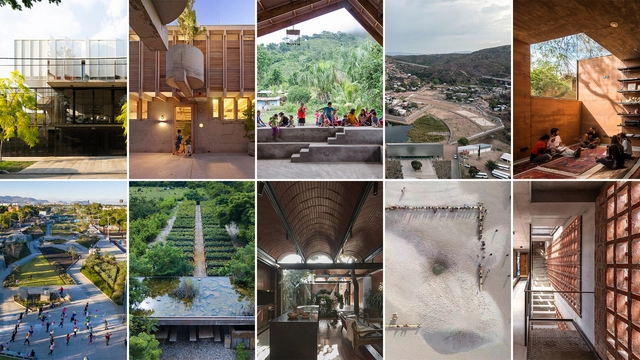
Socialization and Resilience: 10 Community Centers in the Outskirts of Latin American Cities - Image 1 of 4Socialization and Resilience: 10 Community Centers in the Outskirts of Latin American Cities - Image 2 of 4Socialization and Resilience: 10 Community Centers in the Outskirts of Latin American Cities - Image 3 of 4Socialization and Resilience: 10 Community Centers in the Outskirts of Latin American Cities - Image 4 of 4Socialization and Resilience: 10 Community Centers in the Outskirts of Latin American Cities - More Images+ 10

The Mies Crown Hall Americas Prize Announces 2024 MCHAP Emerging and Outstanding Projects

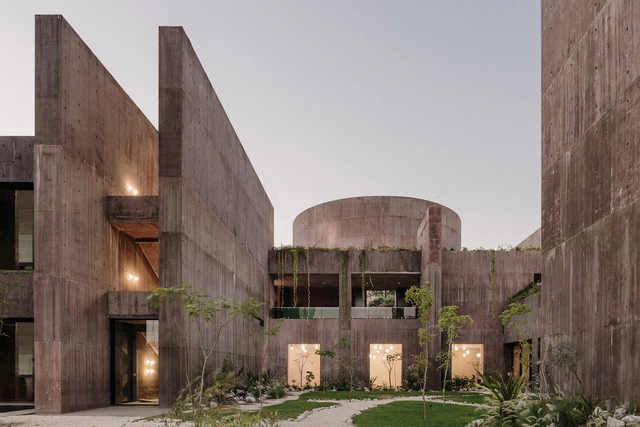
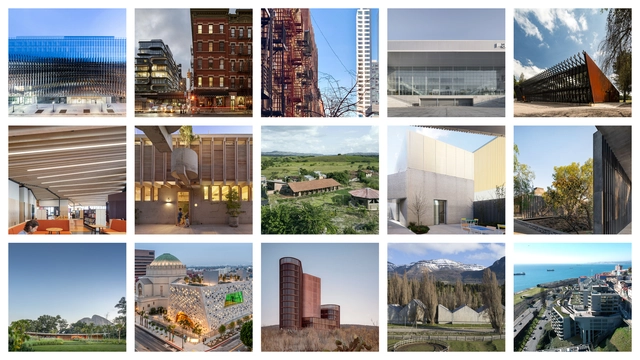
The Mies Crown Hall Americas Prize (MCHAP) at the College of Architecture at Illinois Institute of Technology has announced the shortlist of 53 Outstanding projects. The 5th cycle of awards celebrates built works completed in North, Central, and South America in 2022 and 2023, striving to bring visibility to those projects that best address the demands of our time and work towards building resilient communities.

The Mies Crown Hall Americas Prize Announces 2024 MCHAP Emerging and Outstanding Projects - Image 1 of 4The Mies Crown Hall Americas Prize Announces 2024 MCHAP Emerging and Outstanding Projects - Image 2 of 4The Mies Crown Hall Americas Prize Announces 2024 MCHAP Emerging and Outstanding Projects - Image 3 of 4The Mies Crown Hall Americas Prize Announces 2024 MCHAP Emerging and Outstanding Projects - Image 4 of 4The Mies Crown Hall Americas Prize Announces 2024 MCHAP Emerging and Outstanding Projects - More Images+ 19

Monument to the Summit of the Americas: The Story Behind Mario Botta's Work in Santa Cruz de la Sierra, Bolivia

Subscriber Access | 

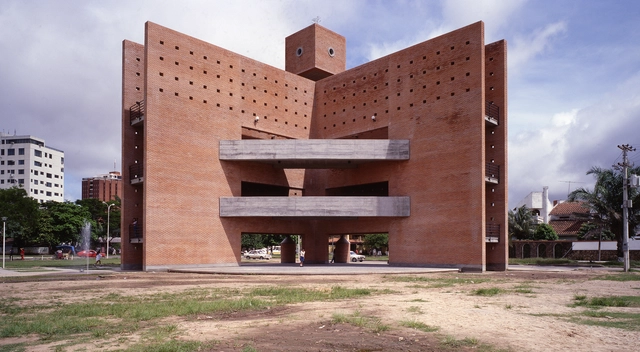
Santa Cruz de la Sierra is located on the eastern plains of Bolivia, on the banks of the Pirai River. Being the most populous city in the country, it reveals an extreme social and cultural complexity surrounded by extensive pampas and plains. Additionally, it represents one of the most developed cities in Bolivia, with a high municipal indicator of sustainable development. Delving into the importance of community architecture, popular appropriation, the character of urbanity, and other concepts, this article explores the history behind the Summit of the Americas Monument through a series of narratives, documentations, drawings, and images captured by Pino Musi.

Monument to the Summit of the Americas: The Story Behind Mario Botta's Work in Santa Cruz de la Sierra, Bolivia - Image 1 of 4Monument to the Summit of the Americas: The Story Behind Mario Botta's Work in Santa Cruz de la Sierra, Bolivia - Image 2 of 4Monument to the Summit of the Americas: The Story Behind Mario Botta's Work in Santa Cruz de la Sierra, Bolivia - Image 3 of 4Monument to the Summit of the Americas: The Story Behind Mario Botta's Work in Santa Cruz de la Sierra, Bolivia - Image 4 of 4Monument to the Summit of the Americas: The Story Behind Mario Botta's Work in Santa Cruz de la Sierra, Bolivia - More Images+ 8

How Modular Construction Can Provide Architectural Aid: From Rapid-Response to Transitional and Affordable Housing

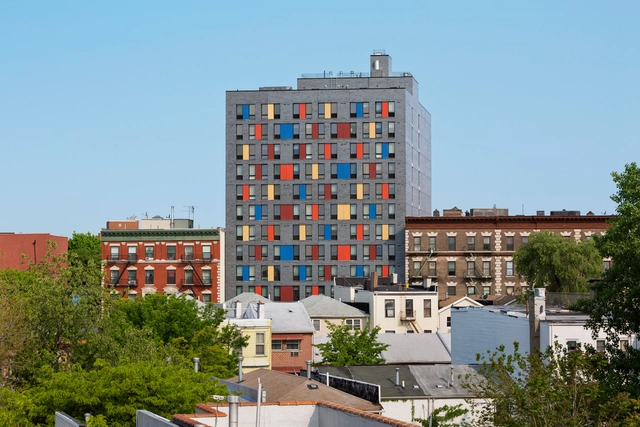
Ever since the Industrial Revolution and the introduction of mass production, the ownership and use of simple products and services like flush toilets with running water, electricity, heating, and cooling are seen as human rights in many areas of the world. With the majority of homes and residential projects being individually designed and built to order – therefore without the speed and cost advantages of mass production – an underperforming housing construction sector means many people – even in the world’s richest countries – are being denied one of the most basic human rights, having somewhere to call home.

The UNHCR (UN Refugee Agency) states that there were over 100 million forcibly displaced people worldwide in 2023 – a figure that has tripled over the last 10 years. For host countries, finding safe, sustainable housing solutions for those in need, both in the short- and the long-term, is an ongoing and dramatically worsening challenge.

How Modular Construction Can Provide Architectural Aid: From Rapid-Response to Transitional and Affordable Housing - Image 1 of 4How Modular Construction Can Provide Architectural Aid: From Rapid-Response to Transitional and Affordable Housing - Image 2 of 4How Modular Construction Can Provide Architectural Aid: From Rapid-Response to Transitional and Affordable Housing - Image 3 of 4How Modular Construction Can Provide Architectural Aid: From Rapid-Response to Transitional and Affordable Housing - Image 4 of 4How Modular Construction Can Provide Architectural Aid: From Rapid-Response to Transitional and Affordable Housing - More Images+ 5

Social Housing in America: Architects Must Answer the Call

This article was originally published on Common Edge.

If you follow housing policy in America, you may have noticed a particular term cropping up a lot recently: social housing. Maybe you’ve read a longform academic article, live in a city that is codifying a social-housing policy like Seattle or Atlanta, or seen one of the recent mentions in The New York Times, highlighting U.S. and Viennese success stories. On the design front, Dezeen is running a social-housing revival series.

Social Housing in America: Architects Must Answer the Call - Image 1 of 4Social Housing in America: Architects Must Answer the Call - Image 2 of 4Social Housing in America: Architects Must Answer the Call - Image 3 of 4Social Housing in America: Architects Must Answer the Call - Image 4 of 4Social Housing in America: Architects Must Answer the Call - More Images+ 2

"My Photographs Are a Celebration of the Making of Things": In Conversation with Christopher Payne

This article was originally published on Common Edge.

Christopher Payne’s fascination with factories goes back decades. As an architecture student at the University of Pennsylvania in the 1990s, Payne had the good fortune to find a summer job with an agency inside the National Park Service called the Historic American Buildings Survey. “They sent teams of architecture students, historians, and photographers to document all kinds of projects,” he says. “We documented grain elevators in Buffalo, cast iron bridges in Ohio, a power plant in Alabama, and national parks in Utah. That experience instilled a deep appreciation for industrial architecture.” After graduation, he worked for several years as an architect in New York City before transitioning full-time to photography. His previous books include New York’s Forgotten Substations: The Power Behind the Subway; Asylum: Inside the Closed World of State Mental Hospitals; North Brother Island: The Last Unknown Place in New York City; and Making Steinway: An American Workplace. Last month, Payne gave the School of Visual Art’s Ralph Caplan Memorial Lecture, and shortly afterward I reached out to him to talk about his most recent book, Made in America (Abrams), his long love affair with factories, and the photographic process.

"My Photographs Are a Celebration of the Making of Things": In Conversation with Christopher Payne - Image 1 of 4"My Photographs Are a Celebration of the Making of Things": In Conversation with Christopher Payne - Image 2 of 4"My Photographs Are a Celebration of the Making of Things": In Conversation with Christopher Payne - Image 3 of 4"My Photographs Are a Celebration of the Making of Things": In Conversation with Christopher Payne - Image 4 of 4My Photographs Are a Celebration of the Making of Things: In Conversation with Christopher Payne - More Images+ 9

Making America: Sameer Makarius and his Photographs of the Feria de América in 1954 in Mendoza

Subscriber Access | 

Sameer Makarius was born in Cairo in 1924. In 1933, he immigrated with his family to Berlin. At the age of ten, his father gifted him a camera, marking the beginning of his journey with photography. Following the outbreak of the Second World War, in 1940, they moved to Budapest, where he completed his secondary education, began his artistic training, and connected with the protagonists of the local avant-garde. In 1946, he embarked on his return to Egypt with a prior stop in Zurich. There, he organized an exhibition of Hungarian modern art with the support of Max Bill. Back in Cairo, he worked as a decorative artist for advertising and also for an architecture and construction studio.

His artistic work arrived in the Río de La Plata a few years before he did, through his partner Eva Reiner, who was already living in Argentina with her family. In 1948, she lent one of his works for the MADI art exhibition organized in the workshop of the German sculptor Martin Blaszko. After marrying Eva in Egypt in 1952, they traveled together to Paris, where they worked as pattern designers. They finally arrived in Buenos Aires in April 1953, a city that would become their permanent residence. His migratory journey was marked by the drama of war. At the same time, during these displacements, Makarius built a network of relationships around photography, visual arts, and architecture that allowed him to unfold his work in various territories and formats.

Modernity in Mendoza: Pavilion 24 at the Feria de América International Exhibition

Subscriber Access | 

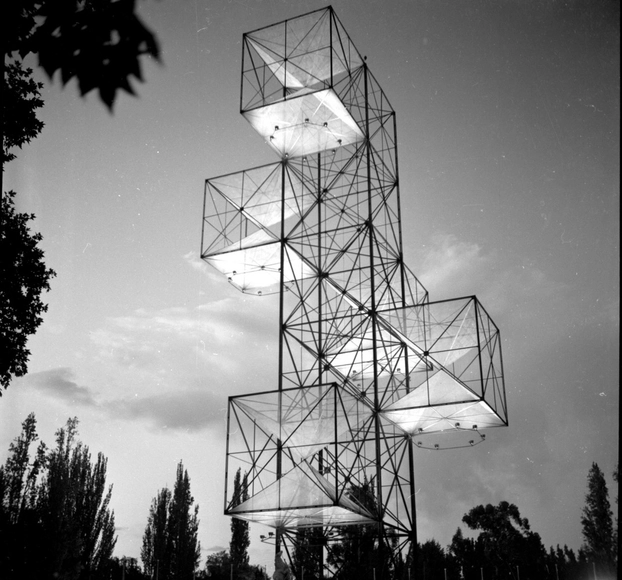
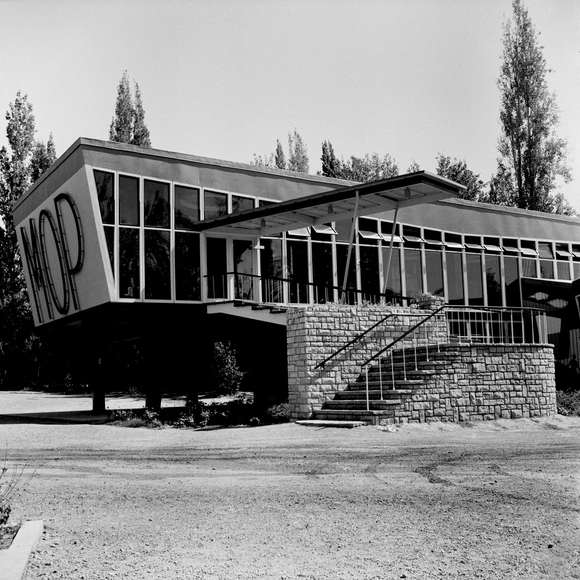
The city of Mendoza, Argentina, hosted the international event known as the "Feria de América," an industrial and continental exhibition that took place from January to April 1954. To provide a suitable setting for the exhibition, 30 hectares of land were allocated around the perimeter of Lake Parque General San Martín. Here, 93 pavilions and nearly 20 facilities were set up, including the Allegorical Tower, an open-air theater, and bars. The American countries represented with their own pavilions were Brazil, Chile, Ecuador, and Paraguay. There was also a large pavilion that housed various Latin American countries such as Colombia, Cuba, Bolivia, El Salvador, Honduras, and Mexico, along with stands for Chilean and local Mendoza-based companies and provincial pavilions for Mendoza, San Juan, Misiones, La Rioja, Eva Perón (now La Pampa), Juan Domingo Perón (now Chaco), Córdoba, Corrientes, Santa Fe, Tucumán, and Buenos Aires. Additionally, there were stands and premises for various trade chambers (Quiroga, 2012). The fair embodied the government's aspiration to showcase a thriving, prosperous Argentina that was connected to regional countries and at the forefront of industrial development.

Why Mass Transit in America Disappeared

This article was originally published on Common Edge.

As its full title somewhat implies, Nicholas Dagen Bloom’s new book, The Great American Transit Disaster: A Century of Austerity, Auto-Centric Planning, and White Flight (University of Chicago Press), tells the whole grisly story of how, in less than a century, the U.S. changed from a rail-connected nation of cities and towns to a sprawling network of increasingly congested roads. A historian and a professor of urban policy and planning at Hunter College, Bloom rejects the sort of conspiracy-driven narratives around transit’s demise and comes to an uneasy conclusion: America essentially chose the car for a variety of reasons, only one of which was automobile company collusion. I talked with Bloom about why transit in the U.S. collapsed, why it turned out differently in European cities, and the hopes for a transit renaissance.

Why Mass Transit in America Disappeared - Image 1 of 4Why Mass Transit in America Disappeared - Image 2 of 4Why Mass Transit in America Disappeared - Image 3 of 4Why Mass Transit in America Disappeared - Image 4 of 4Why Mass Transit in America Disappeared - More Images

Overcoming Barriers: Social Justice in Latin American Architecture

Subscriber Access | 

February 20th marks a new edition of the World Day of Social Justice. The theme, "Overcoming barriers and unlocking opportunities", is a perfect occasion to reflect on the importance of equity in all areas of society - and especially from architecture and urbanism. And yes: they both have a fundamental role in building accessible cities and are important tools for addressing the challenges of economic inequality and social exclusion.

It’s Time to Be Honest About the Impending Costs of Climate Change

This article was originally published on Common Edge.

The passage of the Biden Administration’s climate change package, the so-called “Inflation Reduction Act,” has predictably split along partisan lines, with Republicans characterizing the bill as an act of reckless government spending, certain to raise taxes and fuel further inflation. But does this act really represent reckless spending? The legislation authorizes $430 billion in spending, the bulk of which—more than $300 billion—is earmarked for tax credits; other spending, and initiatives aimed at stimulating the clean energy economy; and reducing carbon emissions. (The bill also allows Medicare to negotiate prices with drug companies for certain expensive drugs.) The bill is funded in part by a 15% minimum tax on large corporations and an excise tax on companies that repurchase shares of their own stock. Given the scope of the problem, and the escalating future costs of climate inaction, this legislation is an exceedingly modest, but very necessary, first step.

The Mies Crown Hall Prize Announces Shortlist for 2022 MCHAP Award for Emerging Practice

After a two-year suspension due to the COVID-19 Pandemic, the Mies Crown Hall Americas Prize has announced that 10 projects designed by emerging practices in the Americas have been shortlisted for the 2022 MCHAP.emerge.

The MCHAP.emerge acknowledges the best architectural project in the Americas by practices within its first ten years of operation: Pezo von Ellrichausen's Poli House won the inaugural MCHAP.emerge in 2014. Two years later, Mexican office PRODUCTORA was awarded for their design for the Pavilion for the Culture Fair at the Zocalo in Mexico City. In the latest cycle held in 2018, Rozana Montiel's Common Unity was chosen as the winner—the design of public space in a housing complex in Mexico City.

The Mies Crown Hall Americas Prize Announces 2022 MCHAP Outstanding Projects

The Mies Crown Hall Americas Prize (MCHAP) announced the 48 outstanding projects selected by the MCHAP 2022 jury. From the body of nominated projects, the jury elected 38 entries in MCHAP as outstanding among other submissions. The fourth prize cycle considers built works completed in the Americas between January 2018 to December 2021, nominated by an anonymous network of international experts and professionals.

The Mies Crown Hall Americas Prize Announces 2022 MCHAP Outstanding Projects - Image 1 of 4The Mies Crown Hall Americas Prize Announces 2022 MCHAP Outstanding Projects - Image 2 of 4The Mies Crown Hall Americas Prize Announces 2022 MCHAP Outstanding Projects - Image 3 of 4The Mies Crown Hall Americas Prize Announces 2022 MCHAP Outstanding Projects - Image 4 of 4The Mies Crown Hall Americas Prize Announces 2022 MCHAP Outstanding Projects - More Images+ 1

The Mies Crown Hall Americas Prize Announces Nominated Projects and Jury for its 2022 Cycle

Mies Crown Hall Americas Prize announced the full list of jurors for its fourth edition, chaired by Sandra Barclay of Barclay and Crousse Architecture, and just released the nominated projects comprising 200 built works in North and South America, for MCHAP 2022 and 50 projects for MCHAP.emerge 2022.

The Mies Crown Hall Americas Prize Announces Nominated Projects and Jury for its 2022 Cycle - Image 2 of 4The Mies Crown Hall Americas Prize Announces Nominated Projects and Jury for its 2022 Cycle - Image 3 of 4The Mies Crown Hall Americas Prize Announces Nominated Projects and Jury for its 2022 Cycle - Image 5 of 4The Mies Crown Hall Americas Prize Announces Nominated Projects and Jury for its 2022 Cycle - Image 4 of 4The Mies Crown Hall Americas Prize Announces Nominated Projects and Jury for its 2022 Cycle - More Images+ 7

Reevaluating America’s Priorities: Digging into the Practice of Architecture in the United States

Subscriber Access | 

In this week's reprint from Metropolis, author Avinash Rajagopal "takes a broad look at American Design, digging into the practice of architecture, the resurgence of craft, quintessential building forms, and decaying infrastructure". Asking questions such as "what values do we hold dear? What harm have we caused, and who benefits from the work we do?" architects and designers across the United States explore the contextual consequences of the global challenges.

12 Outdoor Art Spaces, Parks, and Landscapes that Have Reopened or are Reopening Soon in the US

As many Americans tentatively ease back into their museum- and park-going routines, numerous cultural institutions and public spaces are slowly coming back to life on a limited/adjusted basis after months of hibernation to greet them, with coronavirus precautions firmly in place. Meanwhile, large, indoor gallery-centered museums continue to plot their eventual returns. The Metropolitan Museum of Art in New York, for example, plans to reopen in late August while the Getty Center in Los Angeles has still not announced its phased re-opening dates.

In many locales, a trickle of small but positive re-openings has taken place in recent weeks and/or are slated for mid-to-late July. With an eye toward public landscapes, open-air museums, and multifaceted art spaces with room to spread out, here’s a small sampling of places across the country that have reopened or expanded public access or are due to allow visitors in the very near future.

“My Buildings Are Rides”: In Conversation with Antoine Predock

Architect Antoine Predock (b.1936 in Lebanon, Missouri) started his pursuit of an engineering degree at the University of New Mexico College of Engineering. A chance encounter with architecture professor Don Schlegel sparked a life-long passion in architecture. After switching to architecture school – first at the University of New Mexico and then, at the advice of Schlegel, transferring to Columbia University, Predock obtained a Bachelor of Architecture in 1962. After traveling throughout Europe on a Columbia University Traveling Fellowship with a focus on work in Spain, he began his internship in San Francisco with Gerald McCue, a future Dean at Harvard’s Graduate School of Design. In 1966, Predock went back to New Mexico, the place he considers his spiritual home, to establish what since has become a world-renowned practice. In 1985, he was awarded the Rome Prize with residency and study at the American Academy in Rome.

“My Buildings Are Rides”: In Conversation with Antoine Predock - Arch Daily Interviews“My Buildings Are Rides”: In Conversation with Antoine Predock - Arch Daily Interviews“My Buildings Are Rides”: In Conversation with Antoine Predock - Arch Daily Interviews“My Buildings Are Rides”: In Conversation with Antoine Predock - Arch Daily Interviews“My Buildings Are Rides”: In Conversation with Antoine Predock - More Images+ 31