
-
Architects: Luigi Rosselli Architects
- Area: 150 m²
- Year: 2021
-
Manufacturers: David Reddy Furniture, Evolution Windows


Vladimir Belogolovsky speaks with American architect Rick Joy about his early inclinations towards architecture, what kind of architecture he likes to visit, and about designing his buildings as instruments.
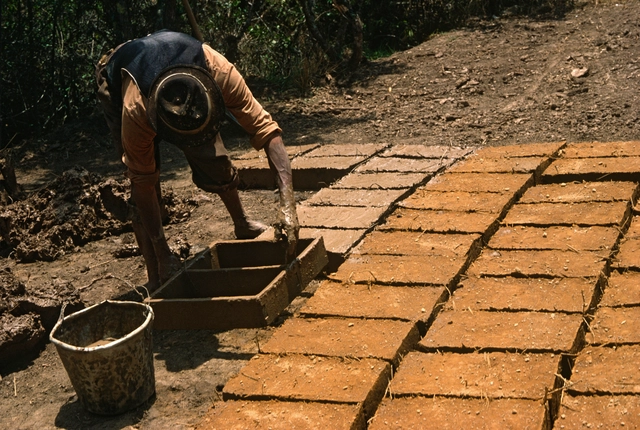
When building for a more sustainable world, the materials you choose undoubtedly play the biggest part in minimizing your project's carbon footprint. Building a wall out of plastic bottles, for example, prevents them from adding to the hoard in a landfill. However, there is a material used for centuries throughout the world that tops all the rest when it comes to sustainability: adobe.
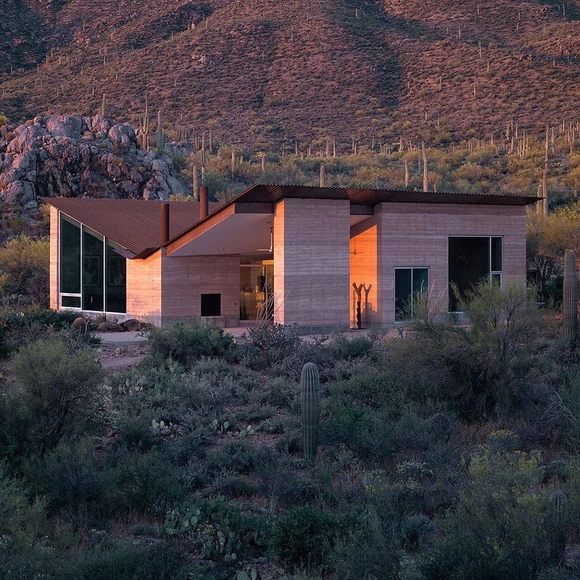
There is a slide I like to show at the beginning of the architecture courses I teach that provides an overview of the last hundred years or so in design and technology. In the left column, a car from the beginning of the 20th Century (a Ford Model T) is poised over a contemporary car (a Tesla). The middle column contains a similar juxtaposition, showing a WWI-era biplane and a modern-day stealth fighter (an F-117A). In the right column, Walter Gropius’s 1926 Bauhaus Dessau building is seen next to an up-to-date urban mixed-use building. The punch line, of course, is that the two buildings—separated by roughly 100 years—look basically the same, whereas the cars and planes separated by the same timespan seem worlds apart. What is the reason for this?

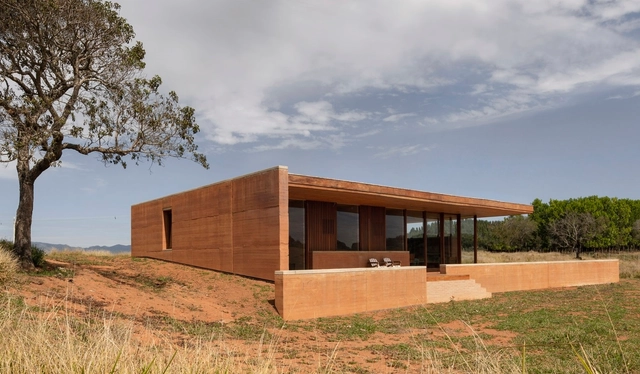
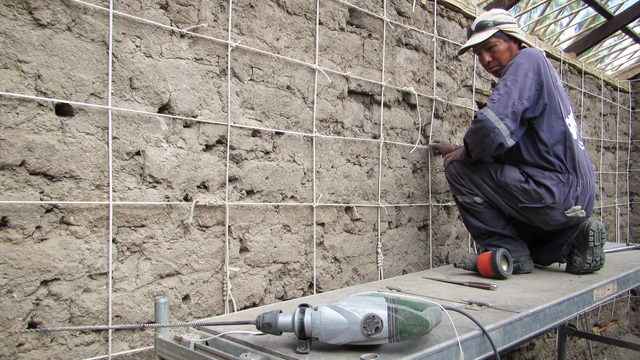
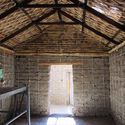
In the city of Belén, Chile, as a part of the second phase of a Training Program for the Restoration of Facades in Belén, two historically important structures were recently completely restored. The project was financed by the Regional Government of Arica and Parinacota and SUBDERE (Undersecretariat of Regional and Administrative Development), in partnership with the Altiplano Foundation.
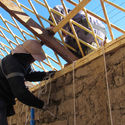
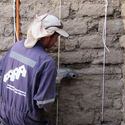
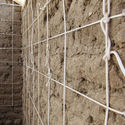
In both houses, the foundations and, where necessary, the walls were reinforced, and the traditional Andean roof and existing carpentry was restored. Notably, the structural reinforcement of the adobe walls used a rope mesh system, which was first seen in Chile in 2014 as part of the restoration of a church in San Pedro de Atacama.


.jpg?1618263979 "Bayhouse / Studio Rick Joy. Image © Jeff Goldberg / ESTO")

.jpg?1586908171 "© Federico Cairoli")
.jpg?1586907956 "© Federico Cairoli")
.jpg?1586908151 "© Federico Cairoli")
.jpg?1586904288 "© Federico Cairoli")