1. ArchDaily
  2. AD Interviews

AD Interviews: The Latest Architecture and News

Sumayya Vally on the First Islamic Arts Biennale: "Claim, Reclaim, Configure, and Reconfigure"

Subscriber Access | 

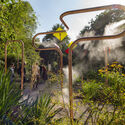
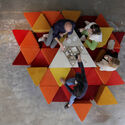
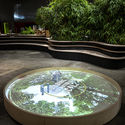
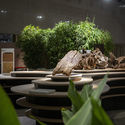
The First Islamic Arts Biennale, artistically directed by Sumayya Vally, opened on January 2023 and is still ongoing until May 23, 2023, in Jeddah, Saudi Arabia. The inaugural event was commissioned and produced by the Diriyah Biennale Foundation and was curated by Vally alongside Dr. Julian Raby, Dr. Omniya Abdel Barr, and Dr. Saad Al-Rashid. The biennale re-imagines the Western Hajj Terminal at King Abdulaziz Airport, designed by Skidmore, Owings & Merrill and winner of the 1983 Aga Khan Award, as a cultural space to redefine Islamic Arts from "within, in a way, that connects some of these art forms and forms of artistic expression to the experience and rituals" of those that live it.

Sumayya Vally is a South African architect, founder, and director of the Johannesburg-based collaborative architectural studio Counterspace. Designer of the Serpentine Pavilion in 2020/2021, she was the youngest architect to get this commission. Part of Time’s 100 emerging leaders who are shaping the future, in 2021, the only architect to make the list at that time, Sumayya started her career as a curator and teacher, and recently she was appointed as artistic director of the first Islamic Arts Biennale in Jeddah. ArchDaily had the chance to talk with Vally about her contribution to this biennale, her vision of the exhibition, the venue, the scenography, and the participating architects. Sumayya also shared some exclusive info about her entry for the 2023 Venice Architecture Biennale, starting on May 20th, in Venice, Italy.

Sumayya Vally on the First Islamic Arts Biennale: "Claim, Reclaim, Configure, and Reconfigure" - Image 1 of 4Sumayya Vally on the First Islamic Arts Biennale: "Claim, Reclaim, Configure, and Reconfigure" - Image 2 of 4Sumayya Vally on the First Islamic Arts Biennale: "Claim, Reclaim, Configure, and Reconfigure" - Image 3 of 4Sumayya Vally on the First Islamic Arts Biennale: "Claim, Reclaim, Configure, and Reconfigure" - Image 4 of 4Sumayya Vally on the First Islamic Arts Biennale: Claim, Reclaim, Configure, and Reconfigure - More Images+ 41

Lesley Lokko on the 2023 Venice Architecture Biennale: "I Hope It Provokes the Audience to Think Differently and More Empathetically"

Subscriber Access | 

The 18th International Architecture Exhibition, curated by Lesley Lokko, is set to open in just one month's time with a focus on "The Laboratory of the Future", casting the African continent as a leading force in shaping the world to come, and challenging conventional notions of what the future can hold and what a laboratory can be. Featuring 63 National Pavilions, 89 Participants, and 9 collateral events in the city, the 2023 Venice Architecture Biennale invites practitioners from a wide range of disciplines and backgrounds to explore new possibilities.

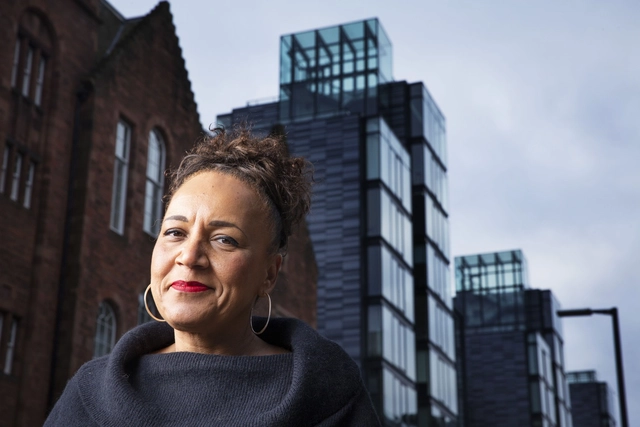
Founder and Director of the African Futures Institute (AFI) based in Accra, Ghana, Lesley Lokko, is a Ghanaian-Scottish architect, educator, and novelist. With a career that spans Johannesburg, London, Accra, and Edinburgh, she has held several teaching positions and is widely recognized in her field. Professor Lokko was appointed as the curator of the 18th International Architecture Exhibition, La Biennale di Venezia in December 2021, after serving as a jury member for the Golden Lions Awards for the previous edition of the Venice Biennale. In her first interview with ArchDaily, after she was appointed curator of the 2023 Architecture Biennale, Lesley Lokko shares insights about the preparations, the theme, and this 18th edition.

Lesley Lokko on the 2023 Venice Architecture Biennale: "I Hope It Provokes the Audience to Think Differently and More Empathetically" - Image 1 of 4Lesley Lokko on the 2023 Venice Architecture Biennale: "I Hope It Provokes the Audience to Think Differently and More Empathetically" - Image 2 of 4Lesley Lokko on the 2023 Venice Architecture Biennale: "I Hope It Provokes the Audience to Think Differently and More Empathetically" - Image 3 of 4Lesley Lokko on the 2023 Venice Architecture Biennale: "I Hope It Provokes the Audience to Think Differently and More Empathetically" - Image 4 of 4Lesley Lokko on the 2023 Venice Architecture Biennale: I Hope It Provokes the Audience to Think Differently and More Empathetically - More Images+ 4

Gus Wüstemann: How to Provide Quality Living Spaces With Less Resources

Subscriber Access | 

With offices in Zürich, Barcelona and Majorca, the work of Gus Wüstemann Architects is a constant evolution between matter and context. From the strong heritage of timber and concrete construction in Switzerland, to the blurry boundaries of inside and outside found in Mediterranean architecture, Gus' work always put an emphasis on the core values of the local construction and craftsmanship, mixed with the cross learnings of working across different regions.

Currently working on projects such as A Barn, for Demna’s Atelier and Loïc’s Studio, and a mixed use hybrid concrete/timber in Feldmeilen, along with several residential projects in Italy and the Balearic Islands, Wüstemann's architecture can be seen as archetypical, essential or even raw. The interiors are a direct expression of these core concepts, with a brut aesthetic.

Zaha Hadid Architects and Office for Visual Interaction: an Interview about Architecture, Light and a Longstanding Collaboration

Subscriber Access | 

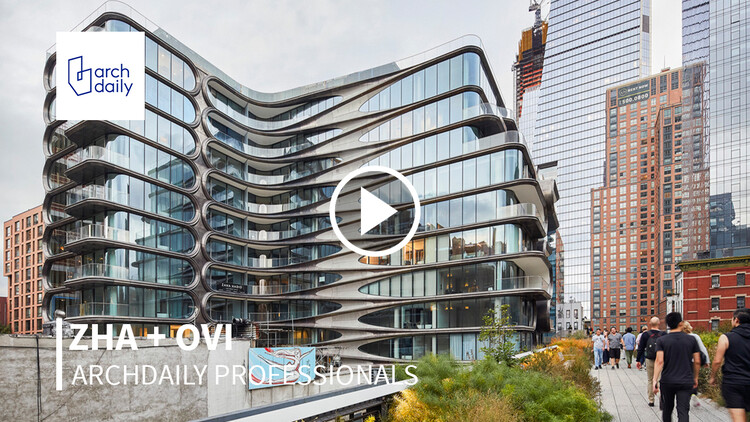
With more than 900 projects in over 40 countries, every project that Zaha Hadid Architects designs and builds has an impact on the narrative of contemporary architecture. At ArchDaily, we know that each architectural project has a team of professionals behind it which makes it possible. In this edition of the ArchDaily Professionals Video Interviews, we talked to Johannes Schafelner, associate director at Zaha Hadid Architects, and Enrique Peiniger, founder of OVI-Office for Visual Interaction about their long-standing collaboration in projects merging design and lighting.

Zaha Hadid Architects and Office for Visual Interaction: an Interview about Architecture, Light and a Longstanding Collaboration - Image 1 of 4Zaha Hadid Architects and Office for Visual Interaction: an Interview about Architecture, Light and a Longstanding Collaboration - Image 2 of 4Zaha Hadid Architects and Office for Visual Interaction: an Interview about Architecture, Light and a Longstanding Collaboration - Image 3 of 4Zaha Hadid Architects and Office for Visual Interaction: an Interview about Architecture, Light and a Longstanding Collaboration - Image 4 of 4Zaha Hadid Architects and Office for Visual Interaction: an Interview about Architecture, Light and a Longstanding Collaboration - More Images+ 1

"Architecture of the Future Should be in Harmony with Nature": In Conversation with Sou Fujimoto at the House of Music Hungary

Subscriber Access | 

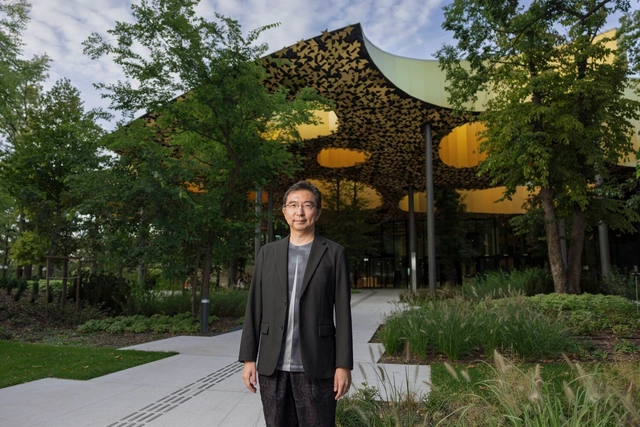
The House of Music Hungary is one of the biggest cultural investments in the European Union. Designed by Sou Fujimoto Architects, it is becoming a hub for city dwellers and worldwide visitors wishing to attend concerts, visit the exhibition or record music in the building's open studios.

ArchDaily editors first got in touch with the Liget Budapest Project in the summer of 2021 and were treated to an impressive site visit at the House of Music Hungary. We were among a few select invitees that caught a glimpse of the finishing phases at one of the city's major projects located in its 200-year-old park. Developers and contractors were racing to catch up on the time they’d missed due to the pandemic – a challenge they certainly fulfilled, with the project completed in less than six years and being opened to the public in December 2021.

"Architecture of the Future Should be in Harmony with Nature": In Conversation with Sou Fujimoto at the House of Music Hungary - Arch Daily Interviews"Architecture of the Future Should be in Harmony with Nature": In Conversation with Sou Fujimoto at the House of Music Hungary - Arch Daily Interviews"Architecture of the Future Should be in Harmony with Nature": In Conversation with Sou Fujimoto at the House of Music Hungary - Arch Daily Interviews"Architecture of the Future Should be in Harmony with Nature": In Conversation with Sou Fujimoto at the House of Music Hungary - Arch Daily InterviewsArchitecture of the Future Should be in Harmony with Nature: In Conversation with Sou Fujimoto at the House of Music Hungary - More Images+ 13

"BIG Ideas" : DAAily Bar Live Talk with Jakob Lange

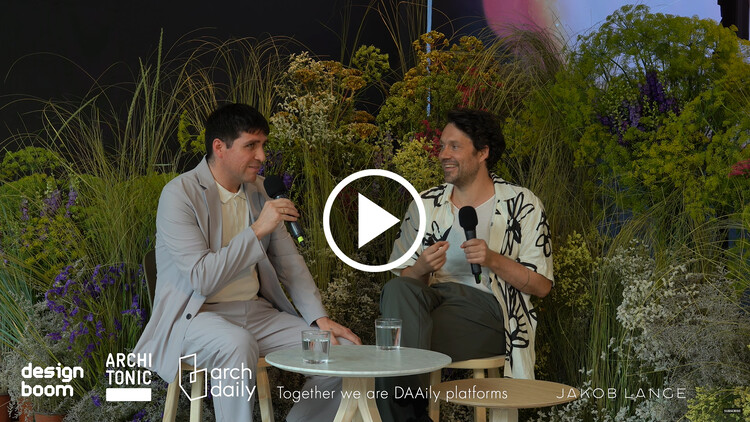
The DAAily platforms Designboom, Architonic, and ArchDaily held a unique storytelling space to feature curated talks about design and architecture during the Milan Design Week 2022. Dubbed the DAAily Bar, the set served as a new meeting point inviting renowned designers and exhibiting immersive art installations.

As part of the DAAily Bar Live Talks, ArchDaily's Founder and Editor-in-Chief David Basulto had the opportunity to talk with Jakob Lange, architect and partner at BIG, about the BIG Ideas project, BIG – Bjarke Ingels Group’s latest endeavors, and the future of the company.

"BIG Ideas" : DAAily Bar Live Talk with Jakob Lange - Image 1 of 4"BIG Ideas" : DAAily Bar Live Talk with Jakob Lange - Image 2 of 4"BIG Ideas" : DAAily Bar Live Talk with Jakob Lange - Image 3 of 4"BIG Ideas" : DAAily Bar Live Talk with Jakob Lange - Image 4 of 4BIG Ideas : DAAily Bar Live Talk with Jakob Lange - More Images+ 2

Hanif Kara: As Engineers We Are Still Judged by What We Finished, Not What We Wrote About

Subscriber Access | 

In the complex trade of architecture and construction, you are never alone. And behind every great building there is a strong team of professionals combining their expertise. 

Hanif Kara OBE is a structural engineer and one of the founders of AKT II, one of the top engineering firms in the world. Based in London, he has been closely collaborating with some of the world’s most innovative architects, including Grafton Architects, David Chipperfield, Norman Foster, BIG, Zaha Hadid, Thomas Heatherwick, and many more.

Notable projects include the Kingston University Town House by Grafton Architects, the Bloomberg HQ by Foster + Partners and the Peckham Library by Will Alsop, all recognized with the RIBA Stirling Prize, and the recently completed Twist Museum by BIG, LSE Marshall Building by Grafton Architects, and 404 One Park Drive by Herzog & de Meuron.

“Design with Nature”: DAAily Bar Live Talk with Mario Cucinella

Designboom, Architonic, and ArchDaily which make up DAAily platforms, created a unique, storytelling-programmed space for design and architecture enthusiasts dubbed the DAAily Bar during this year's Milan Design Week. The space featured curated talk series and gathering spots, along with immersive art installations by renowned designers.

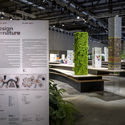
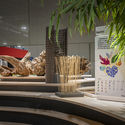
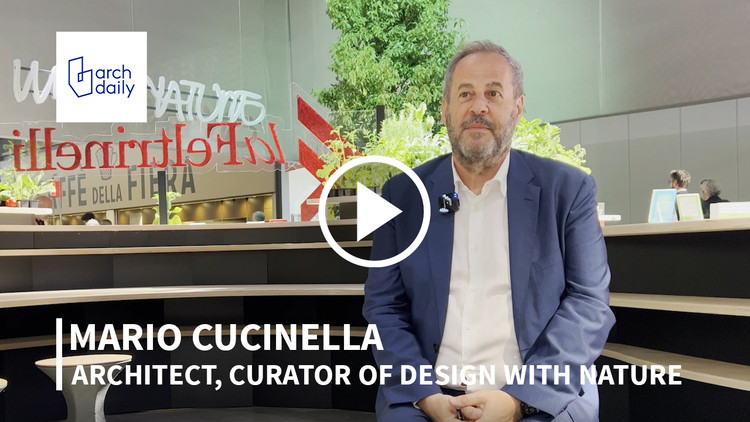
As part of the DAAily Bar Live Talks, ArchDaily's Founder and Editor-in-Chief David Basulto had the opportunity to talk with Mario Cucinella, founder of MC A - Mario Cucinella Architects and curator of “Design with Nature” for Salone del Mobile 2022, about his work and his recent projects.

“Design with Nature”: DAAily Bar Live Talk with Mario Cucinella - Image 1 of 4“Design with Nature”: DAAily Bar Live Talk with Mario Cucinella - Image 2 of 4“Design with Nature”: DAAily Bar Live Talk with Mario Cucinella - Image 3 of 4“Design with Nature”: DAAily Bar Live Talk with Mario Cucinella - Image 4 of 4“Design with Nature”: DAAily Bar Live Talk with Mario Cucinella - More Images+ 5

"Architecture and Design at Large": DAAily Bar Live Talk with Carlo Ratti

During this year's Milan Design Week, Designboom, Architonic, and ArchDaily which make up DAAily platforms, created a unique, storytelling-programmed space for design and architecture enthusiasts dubbed the DAAily Bar. The space featured curated talk series and gathering spots, along with immersive art installations by renowned designers.

As part of the DAAily Bar Live Talks, ArchDaily's Founder and Editor-in-Chief David Basulto had the chance to talk with Carlo Ratti, director of MIT's Senseable Lab and founder of innovation studio Carlo Ratti Associati about this multidisciplinary approach, the blurred boundaries of the profession and his recent projects.

"Architecture and Design at Large": DAAily Bar Live Talk with Carlo Ratti  - Image 1 of 4"Architecture and Design at Large": DAAily Bar Live Talk with Carlo Ratti  - Image 2 of 4"Architecture and Design at Large": DAAily Bar Live Talk with Carlo Ratti  - Image 3 of 4"Architecture and Design at Large": DAAily Bar Live Talk with Carlo Ratti  - Image 4 of 4Architecture and Design at Large: DAAily Bar Live Talk with Carlo Ratti  - More Images+ 2

Contextual Architecture, Geospaces, and the Metaverse: An Interview with Alper Derinboğaz

Along with the thousands of designers and craftsmen that took part in this year's Milan Design Week to showcase their innovative creations, renowned architects from across the world were also present in the Italian city to share how they tackle the challenges faced by our environment and societies today.

During the week-long event, ArchDaily had the chance to speak with Alper Derinboğaz, architect and founder of Istanbul-based Salon Alper Derinboğaz, selected among ArchDaily's 2020 Young Practices, to discuss the firm's responsibility towards the environment, seeing architecture as part of the Earth within Geospace's framework, challenges facing the new generations of architects and their access to information, and experimenting with the Metaverse.

Contextual Architecture, Geospaces, and the Metaverse: An Interview with Alper Derinboğaz - Image 1 of 4Contextual Architecture, Geospaces, and the Metaverse: An Interview with Alper Derinboğaz - Image 2 of 4Contextual Architecture, Geospaces, and the Metaverse: An Interview with Alper Derinboğaz - Image 3 of 4Contextual Architecture, Geospaces, and the Metaverse: An Interview with Alper Derinboğaz - Image 4 of 4Contextual Architecture, Geospaces, and the Metaverse: An Interview with Alper Derinboğaz - More Images+ 1

On Designing with Nature and the 2022 Salone del Mobile: In Conversation with Mario Cucinella

For its 60th and first post-pandemic edition, the Salone del Mobile.Milano was back in full force following two years of setbacks and alternations between digital and physical events. The week-long exhibition, which welcomed over 262,000 visitors from across the world, highlighted the opportunities of environmental consciousness, inviting designers to adopt and reinforce the values of sustainability in the long term, support the protection of human rights, and promote environmental responsibility through design.

One of the most anticipated installations within the Fiera was a centerpiece by Italian architect Mario Cucinella titled “Design With Nature”. The large-scale installation demonstrated the various ways people can improve their relationship with nature, inviting visitors to eat, drink, converse, and work in a piazza-inspired space. During Milan Design Week, ArchDaily had the chance to speak with the architect to discuss the concept behind his installation, the relationship between the city of Milano and Salone, and the importance of valuing our natural resources.

On Designing with Nature and the 2022 Salone del Mobile: In Conversation with Mario Cucinella  - Image 1 of 4On Designing with Nature and the 2022 Salone del Mobile: In Conversation with Mario Cucinella  - Image 2 of 4On Designing with Nature and the 2022 Salone del Mobile: In Conversation with Mario Cucinella  - Image 3 of 4On Designing with Nature and the 2022 Salone del Mobile: In Conversation with Mario Cucinella  - Image 4 of 4On Designing with Nature and the 2022 Salone del Mobile: In Conversation with Mario Cucinella  - More Images+ 11

Squire & Partners, SAWA and Buro Happold: Design, Engineering and Local Resources Come Together for the Agri-Tech Center in Cambodia

Subscriber Access | 

In these fast-paced and constantly evolving times, architecture has been adapting to new building technologies and complexities to serve today’s world needs. Teams of experts from all areas, architecture, engineering, construction, and a long list of professionals, come together to bring these solutions to our built environment. At ArchDaily we have been highlighting these actors in the architecture we curate and publish every day, but we often come across other types of projects, in which we spot different needs, and ways of building in certain places and communities, that equally require a highly qualified team, specific local techniques, and knowledge that are worth sharing. 

In this edition of the ArchDaily Professionals Video Interviews, we talked to Tim Gledstone, partner in Squire & Partners, Edward Dale-Harris founder of SAWA (Socially Active Workshop Architecture), and Matthew Duckett, Senior Structural Engineer in engineering and infrastructure firm Buro Happold. The three experts came together to design and build the community Agriculture Technology Center in Krong Samraong, Cambodia for the Green Shoots Foundation.

Squire & Partners, SAWA and Buro Happold: Design, Engineering and Local Resources Come Together for the Agri-Tech Center in Cambodia - Image 1 of 4Squire & Partners, SAWA and Buro Happold: Design, Engineering and Local Resources Come Together for the Agri-Tech Center in Cambodia - Image 2 of 4Squire & Partners, SAWA and Buro Happold: Design, Engineering and Local Resources Come Together for the Agri-Tech Center in Cambodia - Image 3 of 4Squire & Partners, SAWA and Buro Happold: Design, Engineering and Local Resources Come Together for the Agri-Tech Center in Cambodia - Image 4 of 4Squire & Partners, SAWA and Buro Happold: Design, Engineering and Local Resources Come Together for the Agri-Tech Center in Cambodia - More Images+ 4

Cities of the Future: Julia Watson on Nature-based Technologies and Radical Materials

Subscriber Access | 
Cities of the Future: Julia Watson on Nature-based Technologies and Radical Materials - Featured Image
Las Islas Flotantes is a floating island system on Lake Titicaca in Peru inhabited by the Uros, who build their entire civilization from the locally grown totora reed. Image © Enrique Castro-Mendivil

Looking ahead to the future of our built environment, a one-size-fits-all approach simply won’t do. Issues like rising sea levels, temperatures, and water scarcity in urban communities need localized solutions that take into account questions of sustainability, culture, and public health. Having investigated vernacular infrastructure across indigenous communities for her book Lo-TEK. Design by Radical Indigenism, designer Julia Watson is an expert in local, nature-based technologies that are inherently adaptable and resilient. We talk to her about the future of our cities, building materials, and her latest project for Our Time on Earth – a five year, world-touring exhibition that just opened at London's Barbican Centre to investigate how radical, collaborative ideas for the way we live can get us to a much improved place by 2040.

Cities of the Future: Julia Watson on Nature-based Technologies and Radical Materials - Image 1 of 4Cities of the Future: Julia Watson on Nature-based Technologies and Radical Materials - Image 2 of 4Cities of the Future: Julia Watson on Nature-based Technologies and Radical Materials - Image 3 of 4Cities of the Future: Julia Watson on Nature-based Technologies and Radical Materials - Image 4 of 4Cities of the Future: Julia Watson on Nature-based Technologies and Radical Materials - More Images+ 8

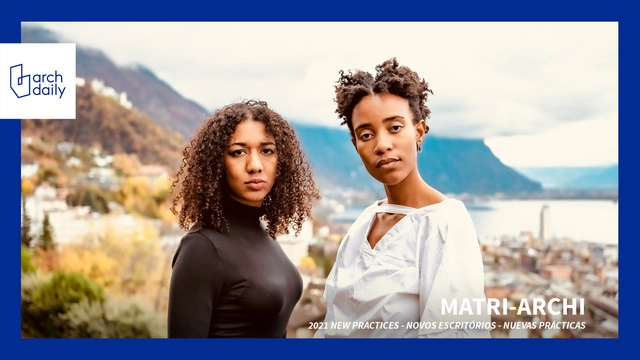
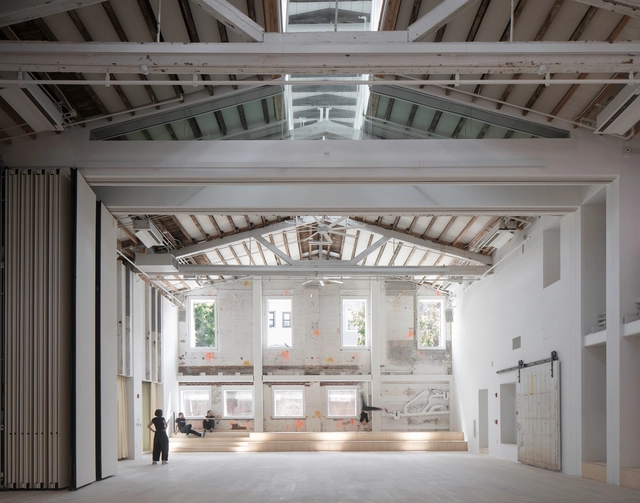
Spatial Education and the Future of African Cities: An Interview with Matri-Archi

Led by architectural designers Khensani de Klerk and Solange Mbanefo, Matri-Archi is a collective based between Switzerland and South Africa that aims to bring African women together for the development of spatial education in African cities. Through design practice, writing, podcasts, and other initiatives, Matri-Archi — one of ArchDaily's Best New Practices of 2021 — focuses on the recognition and empowerment of women in the spatial field and architectural industry.

ArchDaily had the opportunity to talk to the co-directors of the collective on hegemonic space, informal architecture, technology, local idiosyncrasies, and the future of African and global cities. Read the full interview below.

Redesigning the Road to Net Zero: How CO Adaptive Architecture is Breaking New Ground

The climate crisis has reshaped contemporary architecture. Sustainability has become a central guiding force in design, and in turn, architects are rethinking how to build today. For CO Adaptive Architecture, addressing the climate crisis begins with a process oriented practice. Together, Ruth Mandl and Bobby Johnston have created a firm that embodies how a values-based approach can tackle the most pressing issues of our time. The result is elegant and impactful architecture brought to life with poise and finesse.

Redesigning the Road to Net Zero: How CO Adaptive Architecture is Breaking New Ground - Arch Daily InterviewsRedesigning the Road to Net Zero: How CO Adaptive Architecture is Breaking New Ground - Arch Daily InterviewsRedesigning the Road to Net Zero: How CO Adaptive Architecture is Breaking New Ground - Arch Daily InterviewsRedesigning the Road to Net Zero: How CO Adaptive Architecture is Breaking New Ground - Arch Daily InterviewsRedesigning the Road to Net Zero: How CO Adaptive Architecture is Breaking New Ground - More Images+ 4

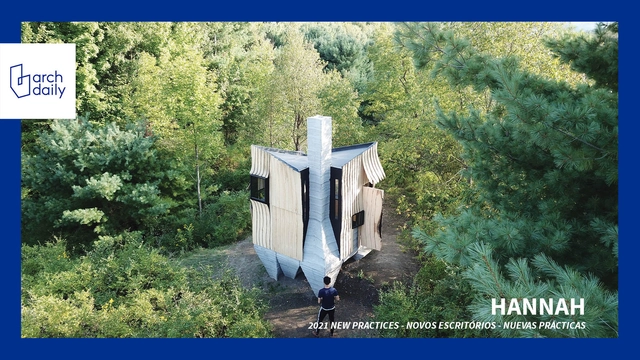
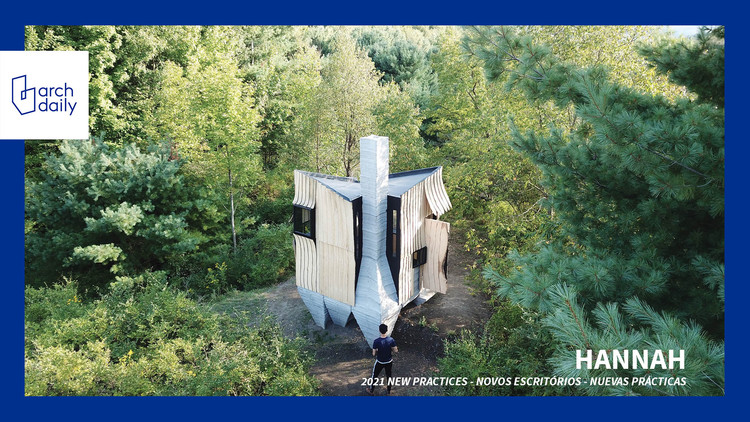
"Robotic Construction Can Help Us Design Better Buildings": An Interview with HANNAH

HANNAH Office is a US-based experimental research and design studio whose work focuses on advancing architecture and contemporary construction practices by examining the possibilities of new digital routines and fabrication technologies. Selected as one of Archdaily's Best New Practices of 2021, HANNAH Office was founded in 2012 by Leslie Lok and Sasa Zivkovic and constitutes a platform for exploring technology and material methods across a variety of scales, from furniture to urbanism in search of new design outcomes.

"Robotic Construction Can Help Us Design Better Buildings": An Interview with HANNAH - Image 1 of 4"Robotic Construction Can Help Us Design Better Buildings": An Interview with HANNAH - Image 2 of 4"Robotic Construction Can Help Us Design Better Buildings": An Interview with HANNAH - Image 3 of 4"Robotic Construction Can Help Us Design Better Buildings": An Interview with HANNAH - Image 4 of 4Robotic Construction Can Help Us Design Better Buildings: An Interview with HANNAH - More Images+ 2

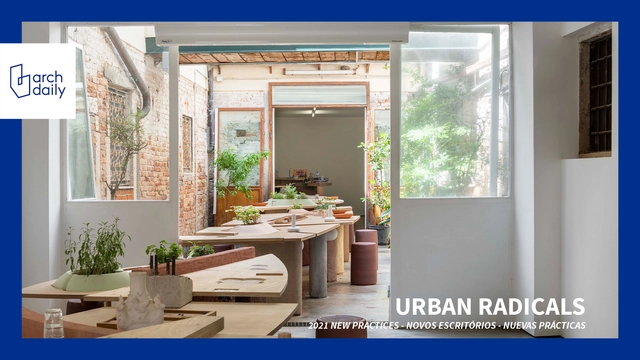
"It is Important to Give Authorship to the Public": An Interview With Urban Radicals

Urban Radicals is a design collective based in London, founded in 2019 by Era Savvides and Athanasios Varnavas. The practice operates at the intersection of multiple disciplines, exploring public space and the notion of collectivity across a variety of scales, contexts and design expressions. One of Archdaily's Best New Practices of 2021, Urban Radicals shrinks and grows organically through the projects, dissolving the boundaries between diverse fields of knowledge and circumventing traditional office structure to integrate a multiplicity of perspectives within architecture.

"It is Important to Give Authorship to the Public": An Interview With Urban Radicals - Image 1 of 4"It is Important to Give Authorship to the Public": An Interview With Urban Radicals - Image 2 of 4"It is Important to Give Authorship to the Public": An Interview With Urban Radicals - Image 3 of 4"It is Important to Give Authorship to the Public": An Interview With Urban Radicals - Image 4 of 4It is Important to Give Authorship to the Public: An Interview With Urban Radicals - More Images+ 13

Heatherwick Studio, MNLA and Arup on their Collaborative Design for New York's Little Island Park

Subscriber Access | 

In this second edition of the ArchDaily Professionals Video Interviews, ArchDaily's Managing Editor, Christele Harrouk, met with Mat Cash, Group Leader of Heatherwick Studio, Signe Nielsen, MNLA's Founding Principal, and David Farnsworth, Arup Principal, to discuss their collaborative work on one of New York City's latest green areas, Little Island Park at Pier 55.