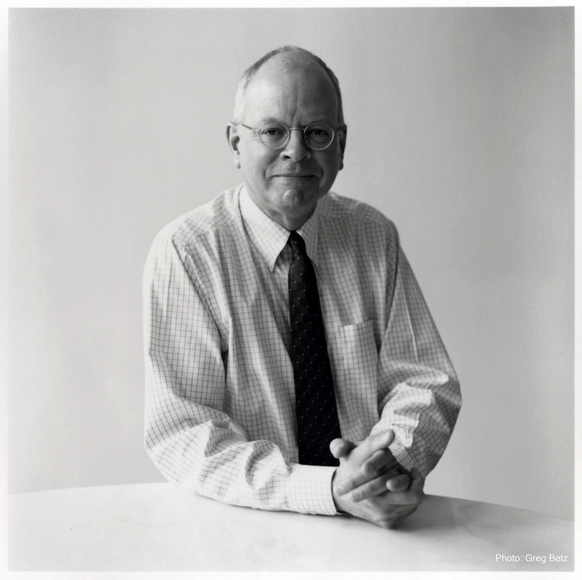
David M. Childs, the architect renowned for his significant contributions to the New York City skyline, passed away on March 26, 2025, in Pelham, N.Y., at the age of 83. His career, primarily spent at Skidmore, Owings & Merrill (SOM), was marked by a commitment to urbanistic values and a dedication to enhancing the civic good through architecture. Childs left an indelible mark on the built environment, balancing aesthetic considerations with the complex demands of large-scale urban projects.
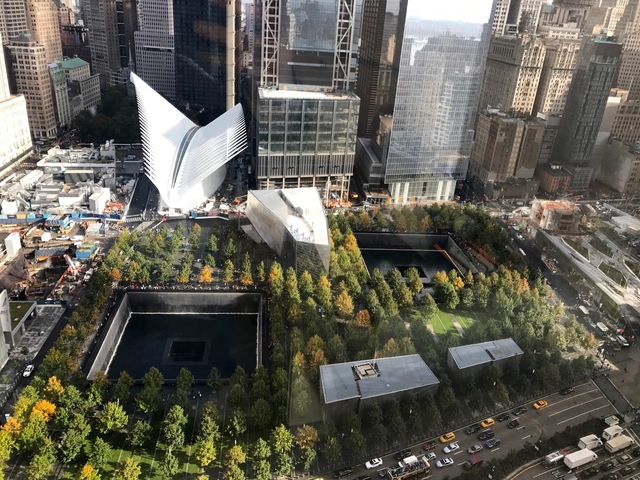
On the morning of September 11, 2001, two hijacked commercial jetliners struck the Twin Towers in Lower Manhattan, a third plane struck the Pentagon, and a fourth crashed in rural Pennsylvania. A total of 2.977 people were killed in the terrorist attacks. In the face of this unprecedented loss, the city of New York promised to rebuild Lower Manhattan as a lively neighborhood while honoring and maintaining the memory of this day. Thus began one of the largest reconstruction projects in New York City, a process that is still ongoing now, 23 years after the tragedy.
The World Trade Center site is to create a memorial honoring the thousands of people who have been affected by illnesses related to the September 11th, 2001 terror attacks in New York City. As reported by Curbed NY via The New York Post, the Memorial Glade site will honor rescue, recovery, and relief works as well as survivors and downtown residents who got sick or died from 9/11-related illnesses.
The tribute, designed by 9/11 memorial architects Michael Arad and Peter Walker, will include a path lined with six granite slabs pointed towards the sky. According to the museum, the 17.5 ton stone monoliths “are worn, but not beaten, symbolizing strength and determination through adversity.” The pieces will also incorporate steel fragments from the World Trade Center.
https://www.archdaily.com/910788/world-trade-center-site-to-create-memorial-to-those-affected-by-9-11-related-illnessesNiall Patrick Walsh
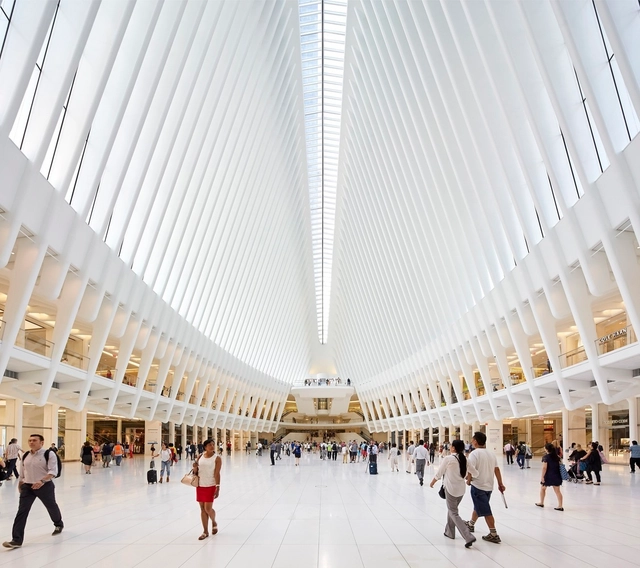
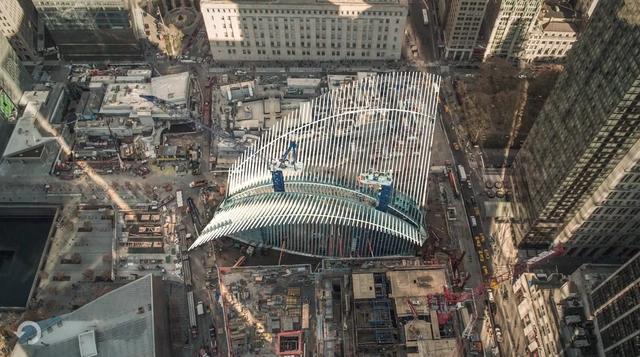
The opening of the World Trade Center Transportation Hub's Oculus will take a rain check on the 17th anniversary of 9/11, according to Steve Coleman, a spokesperson for the Port Authority. Designed by Santiago Calatrava, the 335-foot-long skylight was designed to allow the “Way of Light” to pass through the main hub of the transit hall at 10:28 a.m.—the moment that the North Tower of the WTC collapsed on September 11, 2001. Symbolizing the light that continues to shine through after the darkness of the tragedy, the Oculus opening allows light to fill the massive space as a memorial to the attacks on the twin towers.
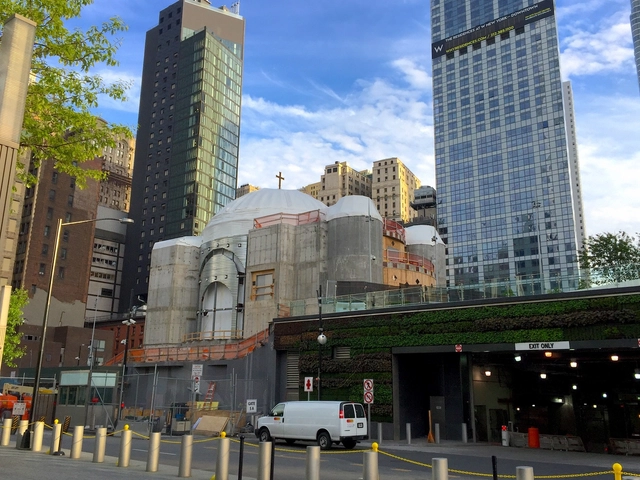
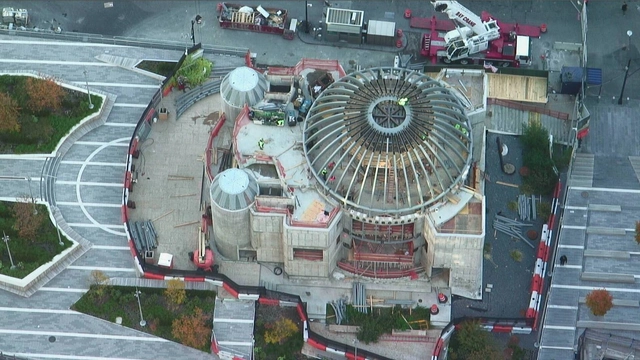
Construction on the Santiago Calatrava-designed St. Nicholas National Shrine at the World Trade Center has halted, after the church failed to make a series of payments over a several month period to contractor Skanska.
As revealed by the Pappas Post, last week the construction company distributed a letter to its subcontractors informing them that the building contract had been terminated after The Greek Orthodox Archdiocese of America defaulted on making payment. In the letter, Skanska directed subcontractors to stop all work and to remove all tools and materials from the site, or risk not being able to recover them.
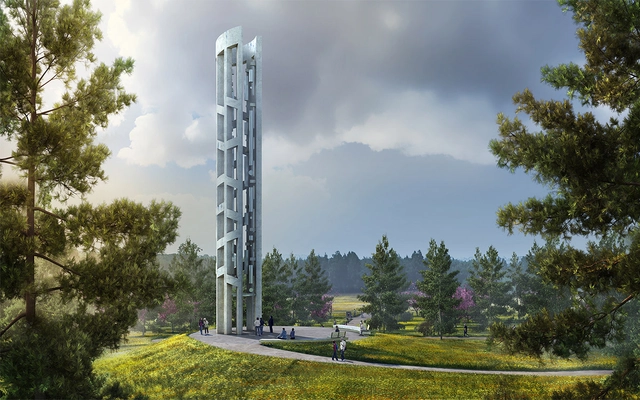
Sixteen years after the tragic events of 9/11, the final major element of the Flight 93 National Memorial has been revealed.
Located in rural in Shanksville, Pennsylvania, the memorial commemorates the 40 passengers who sacrificed their own lives to wrest control away from the hijackers of United Flight 93, preventing the plane from hitting its intended target of the United States Capitol Building.
In 2009, Paul Murdoch Architects, in collaboration with Nelson Byrd Woltz Landscape Architects and Arup Engineering, was selected to design the national memorial at the crash site. Employing a reverent masterplan that traced the airplane’s final movements, the architects designed a series of reflective elements as a solemn reminder of the day’s events. All of these elements have since been completed, with the exception of the plan’s most sensory landmark, the 93-foot-tall “Tower of Voices.”
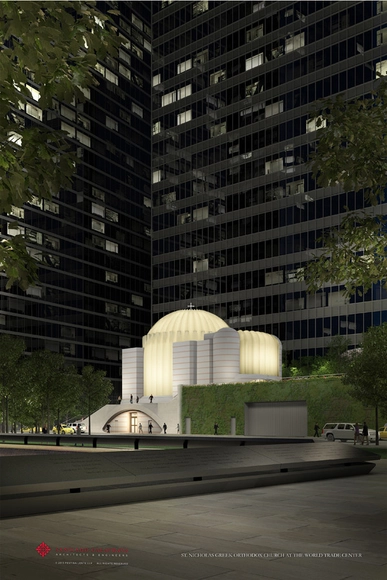
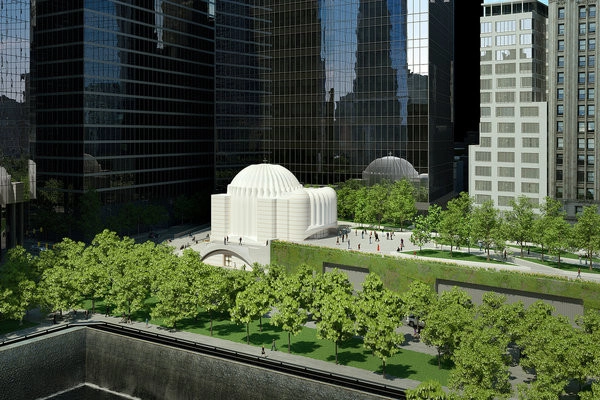
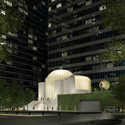
The Byzantine-styled structure was envisioned by Calatrava in 2013 as a non-denominational spiritual center to replace the original St. Nicholas Greek Orthodox Church, located at 155 Cedar Street, which was destroyed on 9/11.
On the 15th anniversary of 9/11 yesterday, the skylights at Santiago Calatrava’s Oculus at the World Trade Center opened for the first time, allowing light to fill the massive space as a memorial to the attacks on the twin towers. Following the masterplan laid out by Daniel Libeskind, Calatrava’s design used the angle of light as a guiding principle for orienting the transportation hub – so that at precisely 10:28 am each September 11th (the time of the collapse of the North Tower), a beam of light would pass through the opening in the roof and project all the way down the center of the Oculus floor.
"Throughout the architectural selection process, REX presented us with an inspired vision. Joshua [Prince-Ramus] totally blew us away with his innovative ideas about how to present cutting-edge culture, but also about how to make the PAC relate to everyone who comes to the WTC site," said PACWTC director and president Maggie Boepple.
In a film for the BBC Magazine, Spanish architect Santiago Calatrava talks through his designs for the new St. Nicholas Church - the only non-secular building on the 9/11 Memorial site. The building, which broke ground last year, has been described by Calatrava as a "tiny jewel" for lower Manhattan, comprising of a white Vermont marble shrine sat beneath a translucent central cupola that is illuminated from within. The new church, of Greek Orthodox denomination, replaces a church of the same name which was destroyed during the attacks of 9/11. It is sited close to its original location on 130 Liberty Street, overlooking the National September 11 Memorial park and museum. With the building set to open in early 2016, Calatrava discusses the key conceptual ideas and references behind its unique, controversial design.
Santiago Calatrava’s head-turning World Trade Center Transportation Hub has assumed its full form, nearly a decade after its design was revealed. In light of this, the New York Times has taken a critical look at just how the winged station’s budget soared. “Its colossal avian presence may yet guarantee the hub a place in the pantheon of civic design in New York. But it cannot escape another, more ignominious distinction as one of the most expensive and most delayed train stations ever built.” The complete report, here.
"So in some ways I think that this tragedy gave a sense of purpose to people that was very positive, and we tried to translate that feeling into this building." In this video from the Louisiana Channel, Craig Dykers of Snøhetta describes how his own experience with the events of 9/11 and the positivity of the spirit of people around him helped inspire the design process of the 9/11 Memorial Museum Pavilion.
He speaks of the journey of healing and understanding as central to the design and experience of the building itself. "As you move through these cycles, you realize one day that you are alive, and you that have to present the strength of being alive to those around you, and this building is meant to be a part of that cycle…to allow you to see yourself, at a moment in time."
Watch the video above to learn more about the challenges of designing a memorial museum fully integrated within an essentially nonexistent site.
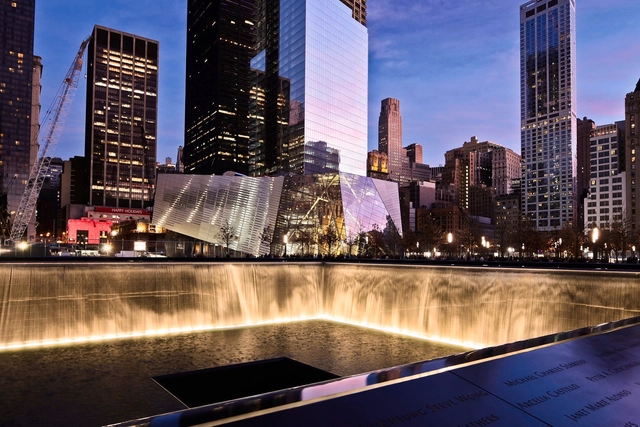
Set to open to the public on Wednesday after a highly controversial and contested journey from idea to reality, the September 11 Memorial Museum has inevitably been a talking point among critics this week. The museum by Davis Brody Bond occupies the space between the Memorial Plaza at ground level and the bedrock below, with an angular glass pavilion by Snøhetta providing an entrance from above. A long ramp, designed to recall the access ramp with which tons of twisted metal was excavated from the site, descends to the exhibits which sit within the perimeter boundaries of the twin towers' foundations, underneath the suspended volumes of Michael Arad's memorial fountains.
The content of the museum is obviously fraught with painful memories, and the entrance pavilion occupies a privileged position as the only surface level structure ground zero, in opposition to the great voids of the memorial itself. The discussion at the opening of the museum was therefore always going to center on whether the design of the museum - both its built form and the exhibitions contained - were sensitive and appropriate enough for this challenging brief. Read the critics' takes on the results after the break.
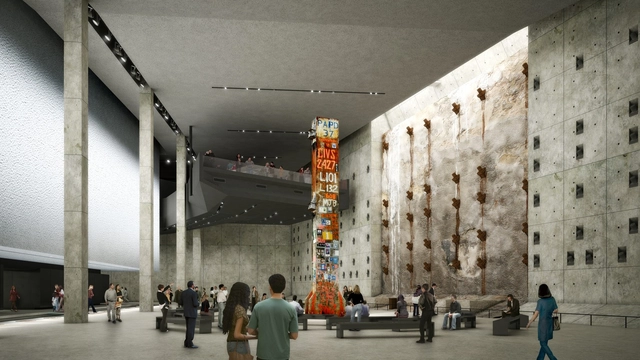
With completion in sight (May 2014), Davis Brody Bondhas released detailed information on the design of the subterranean 9/11 Memorial Museum in Manhattan. Located beneath the sculptural voids that form the 9/11 Memorial, the new museum has transformed a fixed set of geometric constraints into an emotional journey that gently descends visitors 70 feet below the ground level to the original foundations of the World Trade Center towers.
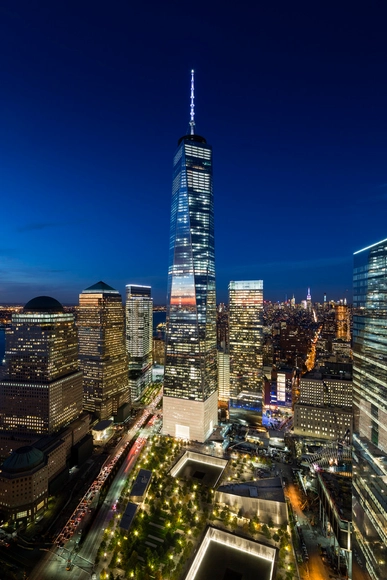
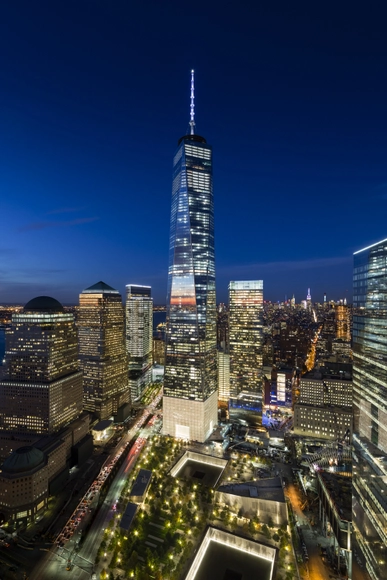
The site of 9/11 has seen significant change in the last decade, from the addition of David Childs’s redesign of the One World Trade Center to Santiago Calatrava’s PATH station. It looks like the site’s transformation is set to continue - Calatrava recently revealed images of the new St. Nicholas Greek Orthodox Church, to be rebuilt across Liberty Street from Handel Architects’ September 11 Memorial. The images, showing a distinctly Orthodox Christian design, have already begun to attract criticism in the debate over placing religious institutions around the World Trade Center.