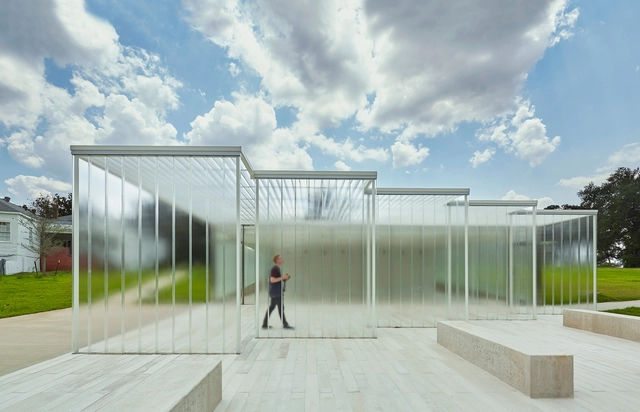
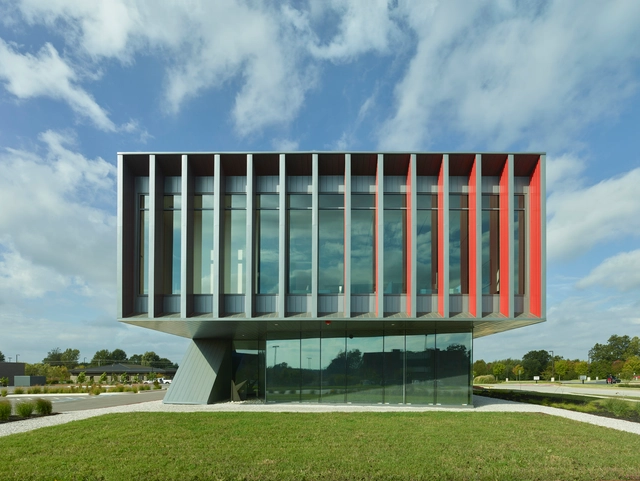
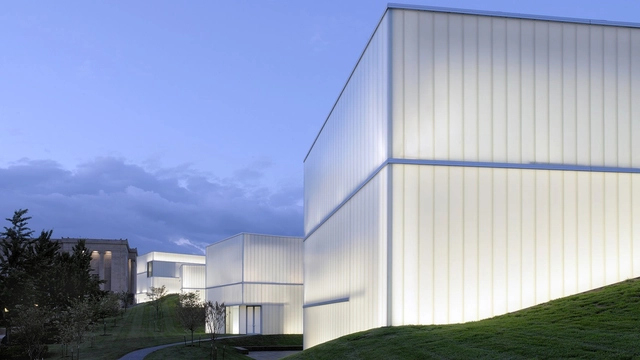
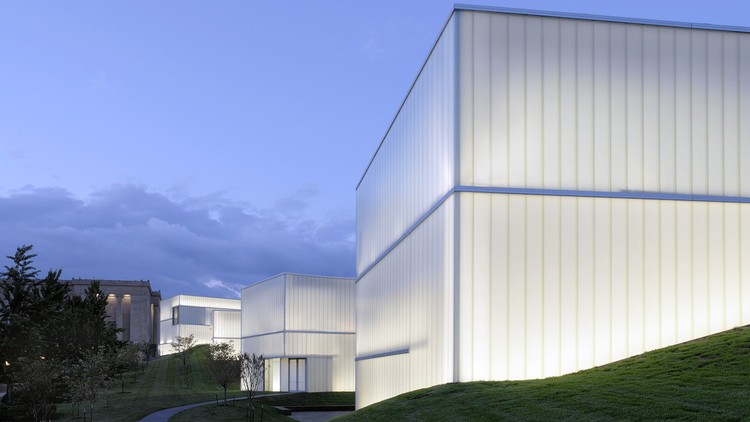
Recurrently we see how architects opt for translucent facades to create the envelopes of their buildings, promoting the entry of a large amount of natural light, while simultaneously controlling it during the day. Illuminated during the night, many of these projects can be seen in the dark, appearing as lanterns or lighthouses for their neighbors and community. Being exposed to changing conditions – day or night – to choose the right material, it's necessary to study in detail the orientation and location of the building, the pre-existing context, and the configuration of the interior spaces.
We present a system of glass panels that allow buildings with this type of façade –spanning from floor to ceiling without interruptions – with minimal frames and different colors, textures, thermal and acoustic performances.
Like food and clothing, buildings are essential. Every building, even the most rudimentary, needs a design to be constructed. Architecture is as central to building as farming is to food, and in this era of rapidly advancing technological change farming may offer us valuable lessons.
At last census count there were 233,000 architects in the United States; the 113,000 who are currently licensed represent a 3% increase from last year. In addition there’s a record number of designers who qualify for licensure: more than 5,000 this year, almost the same number as graduates with professional degrees. There is now 1-architect-for-every-2,900 people in the US. A bumper crop, right?
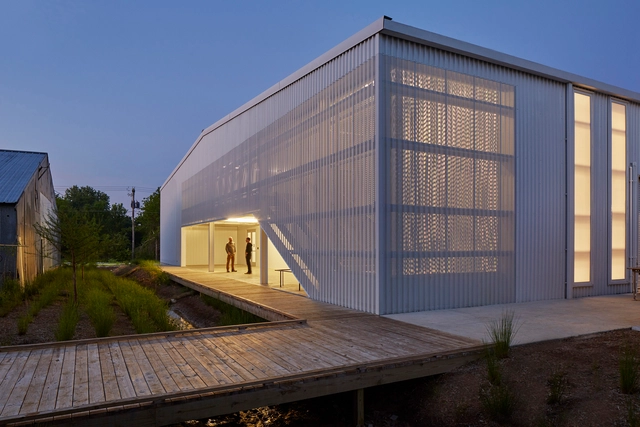
Rural Studio, a student-centered design/build program at Auburn University’s College of Architecture, Design and Construction, has announced a collaboration with the mortgage loan company Fannie Mae to support the school’s 20K Initiative. This initiative continues to contribute to the development of "beautiful, healthy and resilient houses that afford financially vulnerable homeowners the ability to live in dignity, security and well within their means."
As a means to address the shortage of affordable housing in the U.S., the research produced from this collaboration with Fannie Mae is being shared with educational institutions industry groups. Auburn University is also providing funding for the initiative through a grant to "further strengthen the collaboration with Fannie Mae, as well as support the development of additional stakeholder collaborations."
Architecture schools and the students they house have a particularly unique and interesting building-user relationship. Architecture students value the buildings of their school not only for providing the valuable work space necessary for constructing studio projects but also as an example and model of a building in use. As the buildings are the places where students first learn how to read and understand architecture, design schools become full-scale teaching tools that help new designers grasp structure, details, how materials perform and interact, and so many of the other core concepts of architecture. While the scrutiny of students and faculty can be exhaustive, architects have embraced the challenge of creating engaging works of architecture that both suit the specific needs of a school and take on the pedagogical challenge of educating students by example.
Airport design is both an art and a science: the best terminals are not only functional, but also beautiful and awe-inspiring spaces. Millions of people pass through these terminals every day, yet few understand their inner workings as well as Roger Duffy and Derek A.R. Moore—design leaders at SOM who have conceptualized some of the most ambitious aviation projects around the world, including Terminal 2 at Chhatrapati Shivaji International Airport in Mumbai. In this interview, Moore, a Director, and Duffy, a Design Partner, reflect on the complicated challenges of airport design, and how these constraints can fuel creative solutions.
https://www.archdaily.com/892303/when-it-comes-to-building-a-better-airport-it-never-pays-to-use-cheap-materialsAlexander Gutzmer, Laura Frommberg, and Stefan Eiselin
Often as architects we neglect how the buildings we design will develop once we hand them over to the elements. We spend so much time understanding how people will use the building that we may forget how it will be used and battered by the weather. It is an inevitable and uncertain process that raises the question of when is a building actually complete; when the final piece of furniture is moved in, when the final roof tile is placed or when it has spent years out in the open letting nature take its course?
Rather than detracting from the building, natural forces can add to the material’s integrity, softening its stark, characterless initial appearance. This continuation of the building process is an important one to consider in order to create a structure that will only grow in beauty over time. To help you achieve an ever-growing building, we have collated six different materials below that age with grace.
The Architectural League of New York has announced the recipients of its 2018 Emerging Voices awards, spotlighting individuals and firms “with distinct design voices and the potential to influence the disciplines of architecture, landscape design, and urbanism.”
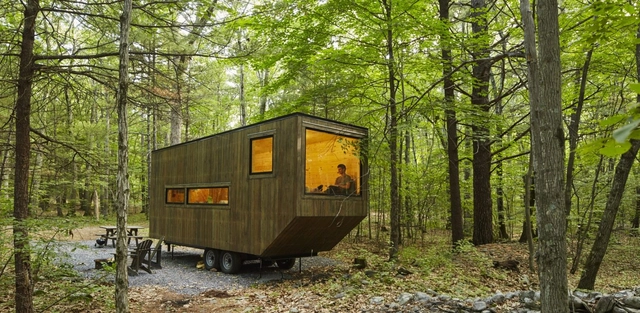
The tiny house movement is taking the housing market by storm, with small homes appearing all over rural and urban areas across the world. They are an affordable and eco-conscious solution to the narrowing housing supply and can offer mobility to an increasing population of young professionals. Tiny houses come in many forms and sizes—from micro-apartments and office spaces, to cabins on wheels and trailers. Similarly, the financing models vary, depending on function, local building codes, size requirements and whether they’re made as commercial products or private housing solutions.
The best option is to design and build the house yourself, using savings instead of worrying about interest rates and debt. Some tiny house manufacturers offer in-house payment solutions to their customers. Other options are RV loans, peer-to-peer lending and crowdfunding. We assembled a list of 5 beautiful tiny houses built for different purposes.
https://www.archdaily.com/886620/5-very-different-ways-to-finance-the-construction-of-tiny-housesLidija Grozdanic for Archipreneur.com
The American Institute of Architects (AIA) has named James Stewart Polshek, FAIA, as the recipient of the 2018 AIA Gold Medal. Lauded by the AIA for his “unparalleled vision and leadership,” Polshek has enjoyed fruitful professional and academic careers as a founding partner of James Stewart Polshek Architect (later Polshek Partnership and currently Ennead Architects) and a former dean of Columbia University’s Graduate School of Architecture, Planning and Preservation.
Honoring “an individual or pair of architects whose significant body of work has had a lasting influence on the theory and practice of architecture,” the AIA Gold Medal is often considered the highest honor awarded in the United States for architecture.
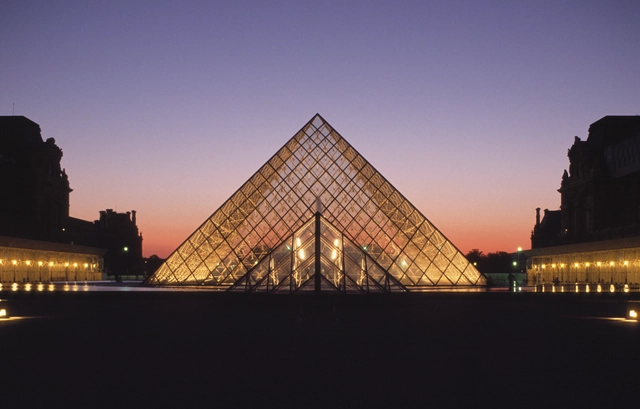
Although the Louvre pyramid, often recognized as his masterwork, created a luminous icon for presenting culture, IM Pei’s early museums were characterized by the harsh shadows of brutalism. Project by project, the Chinese-American master developed a sophisticated, open architectural language. Pei’s holistic approach for welcoming museum visitors comprises powerful symbols which utilize sunlight to its fullest during the daytime, while employing the magical glow of illumination in the evening.
Whereas most assessments of the Louvre have praised the achievements of the luminous pyramid as seen above the ground, the actual design challenge laid underground, in offering visitors a successful underground space. Later, Pei transferred his language to multiple other museum projects, where light was always a key factor in defining museum experiences. In a year of celebratory events such as “Rethinking Pei: A Centenary Symposium,” which begins tomorrow at the Harvard Graduate School of Design, an examination of Pei’s use of light in museums can contribute an important cultural emphasis.
The American Institute of Architects (AIA) has named the fourteen projects selected as recipients of the 2017 Housing Awards. Now in its 17th year, the AIA’s Housing Awards program was established to recognize "the best in housing design and promote the importance of good housing as a necessity of life." Projects are awarded in four categories: One/Two Family Custom Housing, One/Two Family Production Housing, Multifamily Housing and Special Housing.
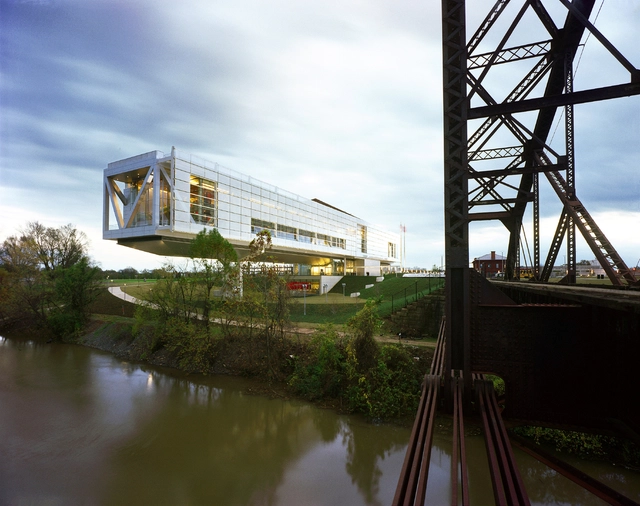
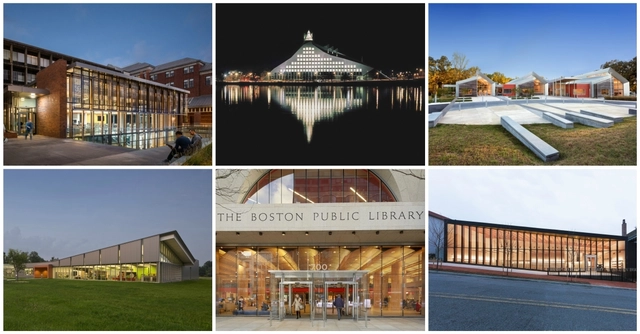
The American Institute of Architects (AIA) and the American Library Association (ALA) have selected eight projects as recipients of the 2017 AIA/ALA Library Building Awards. Founded to “encourage and recognize excellence in the architectural design of libraries,” the award draws attention to the changing role of libraries in society, and how exemplary community spaces can change to reflect the needs of their surrounding residents.
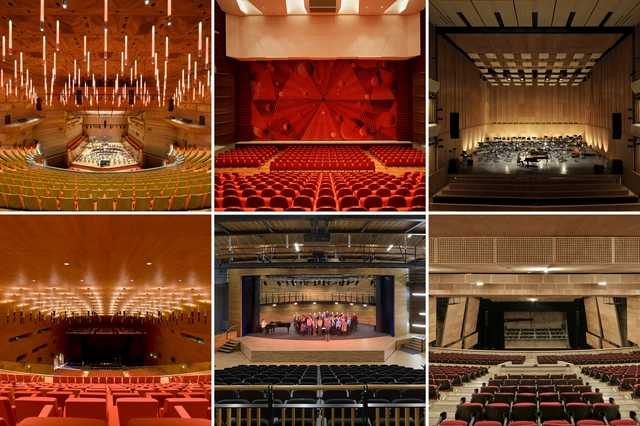
Seeing the space of an auditorium in section is a key tool in allowing us to approach a design's of acoustics, accessibility, and lighting. These components are what make the design of an auditorium a complex task, requiring detailed and specific studies.
There are a number of ways to design an auditorium that offers multiple responses to these challenges. For this reason, we have selected a number of sections from different auditoriums that can help you understand how other architects have solved the challenge.
Check out the 30 auditorium sections below, they are sure to inspire you!
This is Emerging Voices' 35th year running, with the competition organized by League Program Director Anne Rieselbach and reviewed by an esteemed jury.
"The 2017 Voices personify the versatility of contemporary practice. Many firms take on multiple roles of designer, developer, and/or builder to address pressing issues in housing, institutional design, and the public realm. They embrace material experimentation, challenging sites, and an economy of means within budgetary constraints to create exemplary architecture," said Rieselbach.





.jpg?1531354161)


.jpg?1531865940)