Climate change has been one of the most pressing topics of this year, and for a good reason. Its effects are visible not only in natural habitats but also in urban environments. The construction industry has an important role to play in this dynamic. Throughout the year, events such as COP27 emphasized the importance of striving to achieve net carbon zero and the challenges faced by developing countries affected by increasingly devastating natural disasters. Possible directions for development include actions at varying stages and scales, from optimizing green spaces for urban heat control to employing local and innovative building materials to minimize the carbon footprint or passing laws that help create more sustainable urban and natural environments.
This article represents a roundup of articles published on ArchDaily during the course of 2022 with themes related to climate change and architecture’s potential to make a difference. It breaks down the topic into four main questions: What Are Cities Doing to Mitigate Urban Heat? How to Tackle Rising Sea Levels? What Was COP27 and Why Does It Matter? Can Building Materials Play a Role in Achieving These Goals? The last section presents an overview of new legislation approved during 2022 as a way of understanding how state and local governments are imposing this need for change.
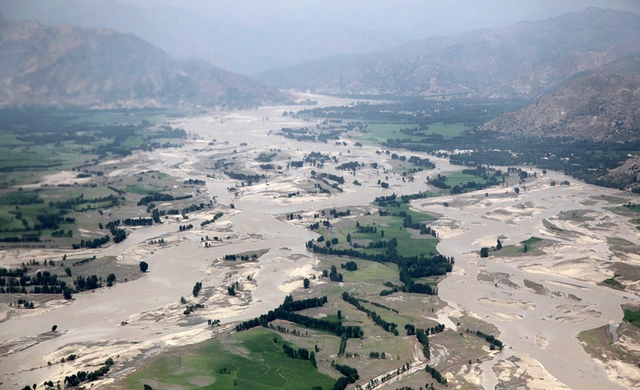
Record monsoon rains, in part due to melting glaciers in Pakistan’s northern mountains, have brought devastating floods that have covered over a third of the country’s surface. According to BBC and UN estimates, around 33 million Pakistani, one in seven people, have been affected by the floods, as more than 500,000 houses have been destroyed or severely damaged. Flood waters have also swept away an estimated 700,000 heads of livestock and damaged over 3.6 million acres of crops. The Sindh province is the hardest hit, receiving 464% more rain than the 30-year average.
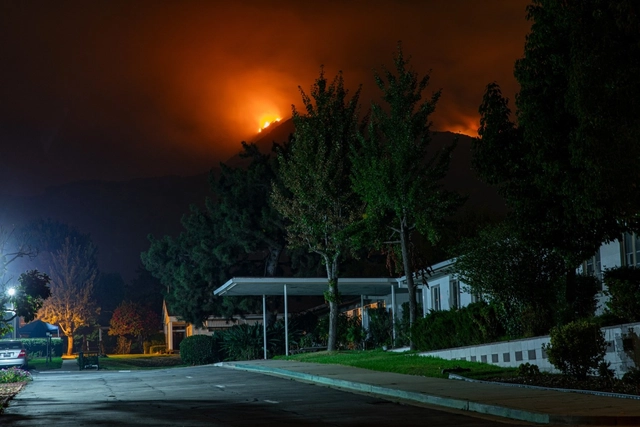
This August, as hundreds of wildfires darkened the sky above my home in Corte Madera, California, thousands of miles away in Florida, my family braced for wind and flooding as two hurricanes barreled towards the Gulf of Mexico. We all hunkered down, anxiously, as climate change-fueled disasters wreaked havoc. For weeks, the air quality in California was too hazardous for us to open our windows or go outside. In Pensacola, the Gulf storm surge was several feet deep around my family’s home and the powerful winds downed mature oak trees in their yard.
Over the past few months, Quintana Roo's coast has been overtaken by an invasion of seaweed that has put the locals to work cleaning up the beaches as the weeds wash ashore. The work is an exhausting day-to-day ordeal and while the cause of the invasion is still unknown, many point to the changes in climate impacting the Atlantic Ocean.
Currently, over 60 tons of seaweed has been gathered from the coast and locals are already putting the plants to good use as raw materials for biodigestors, cosmetics, plastics, fertilizers, and pharmaceuticals. However, another use for seaweed has recently come to the public's attention.
You wouldn’t think it looking at Mexico City today—a densely populated metropolis, where empty space is hard to come by—but decades earlier, following a devastating earthquake on September 19, 1985, more than 400 buildings collapsed, leaving a collection of open wounds spread over the cityscape.
Exactly thirty-two years later, the anniversary of that disaster was ominously commemorated with an emergency evacuation drill. Then, in one of those odd occurrences in which reality proves to be stranger than fiction, a sudden jolt scarcely two hours after the drill led to what would be yet another of the deadliest earthquakes in the city’s history. Buildings once again collapsed, leaving a rising-by-the-hour death toll that eventually reached 361, as well as swarms of bewildered citizens wandering the streets, frantically attempting to reach their loved ones through the weakened cell phone reception. “We’d just evacuated for the drill,” people said, like a collective mantra. “How could this happen again?”
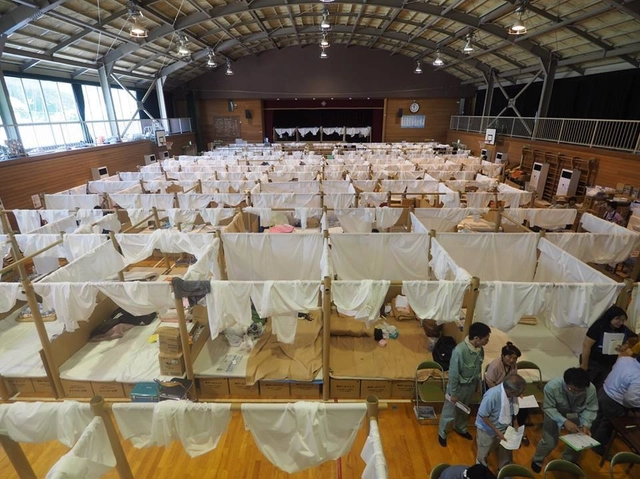
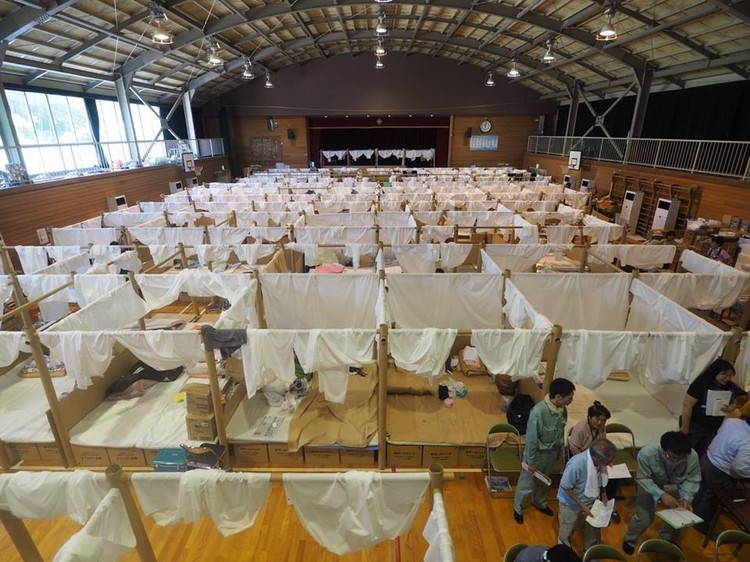
Ban, along with members of the VAN and student volunteers, is constructing a partition system in evacuation centers made from paper tubes and cloth curtains. The temporary structures intend to offer privacy for flooding victims, forming a modular unit of 2 meters by 2 meters.
Eight sites from the World Monuments Fund’s 2018 World Monuments Watch list have been awarded $1 million in funding from American Express to support much-needed preservation and restoration initiatives. The sites were selected based on their vulnerability to specific threats like natural disasters, climate change or social forces like urbanization that have left them neglected.
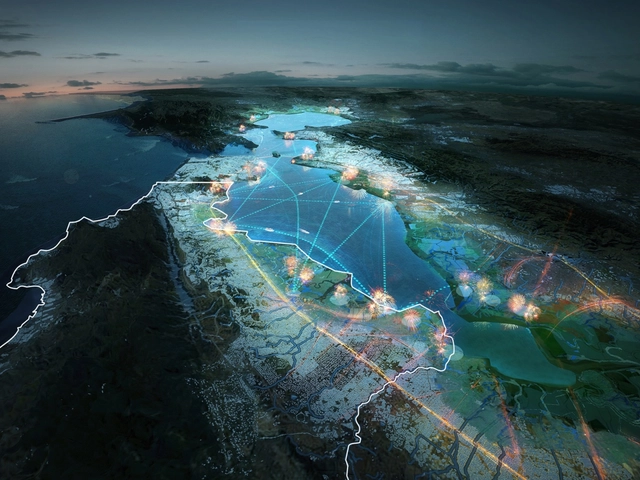
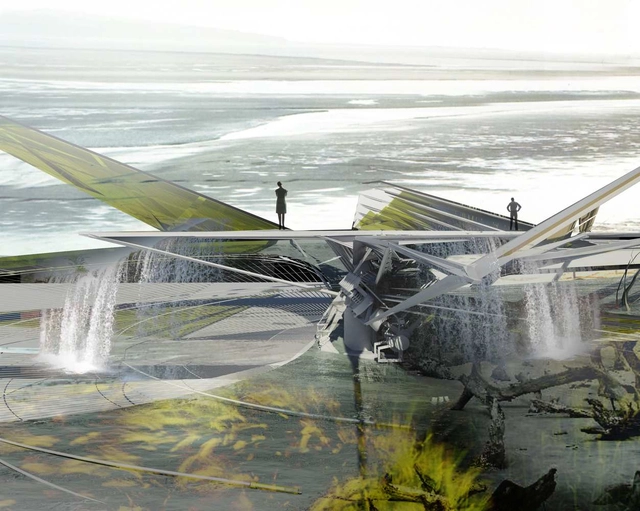
Following recent natural disasters including the Northern California wildfires, the HASSELL + team have been inspired to reimagine the San Francisco Bay Area as a vibrant community hub, equipped to provide temporary facilities in an emergency. As part of the competition Resilient by Design, the ten teams were asked to provide solutions for the waterfront through site-specific conceptual design and collaborative research projects.
The four hurricanes that slammed into heavily populated areas from the Caribbean to Texas this summer are inching toward a half-trillion-dollar price tag in damages—to say nothing of the work and wages missed by shutting down entire cities. Buildings are the most visible marker of a place’s resilience after a disaster strikes. Surveying the catastrophic damage forces a difficult question: How can it be rebuilt better?
If you live in a hurricane zone, how can you construct a home which can withstand and survive some the strongest winds on Earth? In this film, presented by The Verge's "Home of the Future" series in collaboration with Curbed, designs drawn up by North Carolina-based prefabricated home builder Deltec show a house specifically able to deal with extremely hostile weather conditions. This film demonstrates how it fared against Hurricane Harvey.
https://www.archdaily.com/883581/how-to-build-a-home-in-a-hurricane-zoneAD Editorial Team
Christian Weber, a 20-plus year veteran of the Burning Man festival has learned a few tricks on the Playa. Shelter from the harsh Black Rock Desert winds, heat, dust and cold nights are attributes of an experienced camp. “Every year we unload our camp out of the container and use our container as our kitchen. It literally has fold-down tables [and] air conditioning… and when we’re all done, we throw it back in the container and it’s ready to go for next year.”
Frank Lloyd Wright’s most famous house, Fallingwater, was the recipient of minor damage after heavy rainfall caused the creek that gives the house its name, Bear Run, to flood last weekend.
According to Fallingwater director Lynda Waggoner, a fallen log picked up by the overflow rammed into the stone wall of the lower plunge pool, breaking off the wall’s capstone and dislodging one of the home’s signature sculpture pieces, the Jacques Lipchitz’s “Mother and Child.” The cast bronze sculpture was selected for Fallingwater by Wright, and installed soon after its completion in 1939.
https://www.archdaily.com/876326/frank-lloyd-wrights-fallingwater-damaged-from-floodingAD Editorial Team
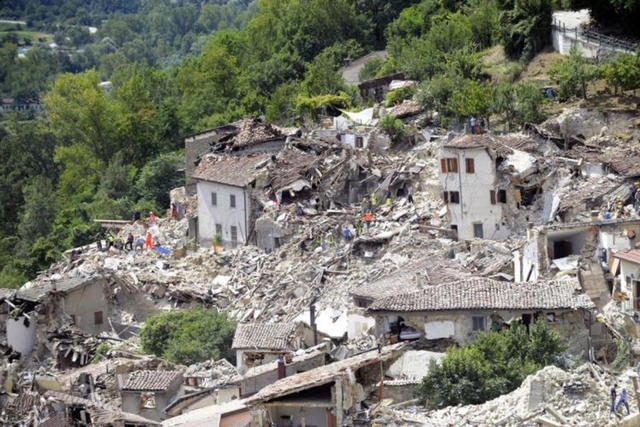
Italian Prime Minister Matteo Renzi has asked architect Renzo Piano to lead in the reconstruction of the central Italian towns devastated by last week’s magnitude 6.2 earthquake that claimed the lives of at least 290 people. Renzi announced a national action plan for recovery and risk prevention on Monday after meeting with Piano to discuss strategies for housing the over 3,000 displaced survivors and rebuilding the historic towns in a manner that would mitigate damage caused by future seismic activity.
“We have to act quickly, with the utmost urgency,” said Piano in a telephone interview with The Guardian. “Anti-seismic requirements must be inserted in the laws of the country to make our homes safe, just as it’s compulsory for a car to have brakes that work.”
After yesterday’s devastating magnitude 6.2 earthquake in central Italy, art historians fear that numerous historic Italian buildings and their contents may be permanently lost. The affected region is dotted with hilltowns containing beautiful churches, monuments and museums, many of which have been rendered completely unrecognizable.
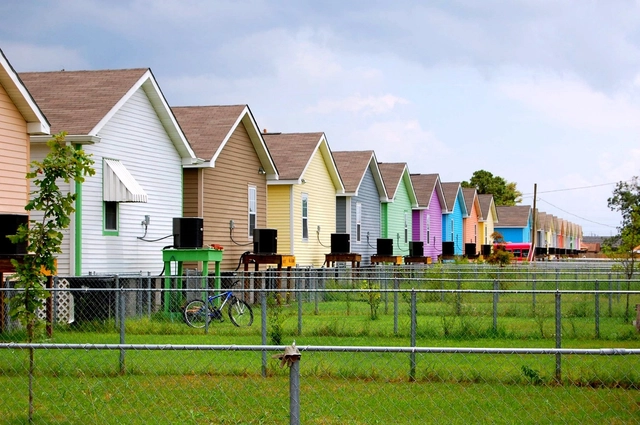
The damage caused by Hurricane Katrina in 2005 can never be forgotten, but 10 years after the rebuilding of New Orleans started in 2006, a new architecture has emerged with cutting-edge designs being widely celebrated in the media. The Make It Right foundation (founded after the disaster to help with structural recovery) commissioned first-class architects such as Morphosis, Shigeru Ban, and David Adjaye to design safe and sustainable houses for New Orleans’ Lower 9th Ward. But Richard Campanella and Cassidy Rosen worry that this vision is detached from reality.
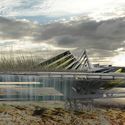
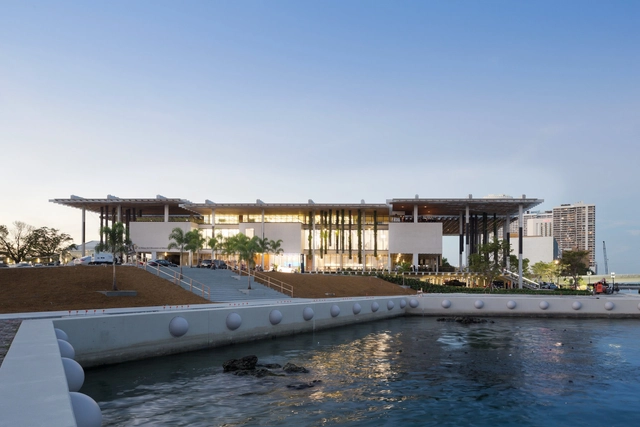
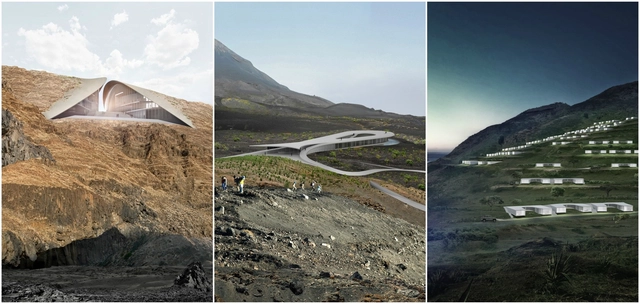
The 2016 Venice Biennale has highlighted that dealing with natural disasters may become one of the main preoccupations of architecture in the future. But nature has its destructive ways, and volcanic eruptions are among the most extreme case in point. On the Island of Fogo (Cape Verde), the Natural Park Venue designed by OTO – and elected Best Building of the Year 2015 by Archdaily readers – was destroyed by molten lava flow only one year after its opening in 2013. The building, which combined a cultural center and administrative activities, helped to activate the economy in the island’s most remote area. Following the disaster, Adrian Kasperski, a student at Krakow University, devoted his master’s thesis to the redevelopment of this area, by proposing the expansion of the existing roads and hiking trails and designing facilities to improve alternative tourism offerings.
Whether from political unrest or natural disaster, refugee crises around the world seem to fill the headlines of late. These events inspired interdisciplinary designer Abeer Seikaly’s conceptual emergency shelter, entitled “Weaving A Home,” which received a Lexus Design Award in 2013. The collapsible structural fabric shelter can adapt to various climates, while also providing the comforts of contemporary life such as heat, running water, and electricity.




















.jpg?1510247252)


.jpg?1450044828&format=webp&width=640&height=580)
.jpg?1450044946 "Courtesy of Abeer Seikaly")
.jpg?1450045021 "Courtesy of Abeer Seikaly")
.jpg?1450044961 "Courtesy of Abeer Seikaly")
.jpg?1450044809 "Courtesy of Abeer Seikaly")
.jpg?1450044828)