Clinging to Familiarity in the Metaverse: Are We More Likely to Accept Architecture When it Looks Familiar?

Subscriber Access | 

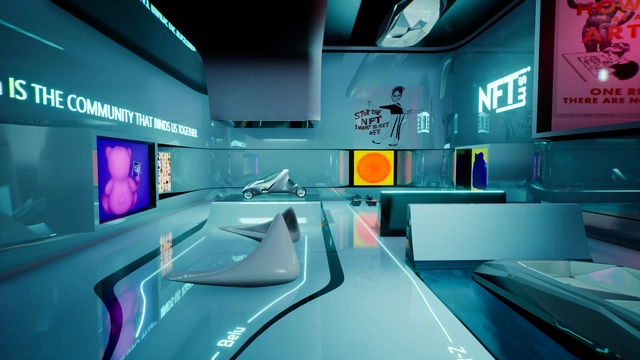
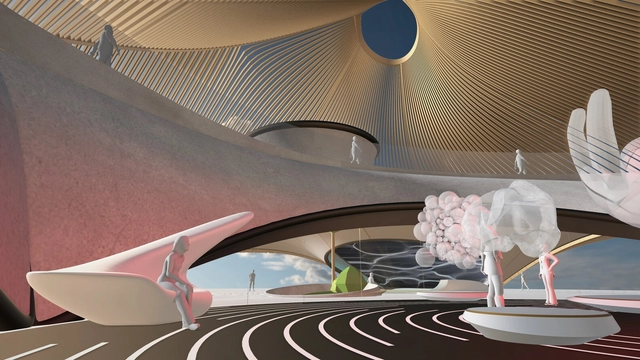
We live in a world where the experienced, remembered, and imagined, as well as different moments in space and time concerning the past, present, and future are inseparably blended. As of recent, we are being offered various mediums to gain access to other planes of existence, utilizing immersive technologies like virtual and augmented reality (VR and AR), creating a pathway to the metaverse in which we are transported to spaces that are capable of feeling more ‘real’ than anything we presently experience.
First-Ever NFT Office Building is Sold in New York City

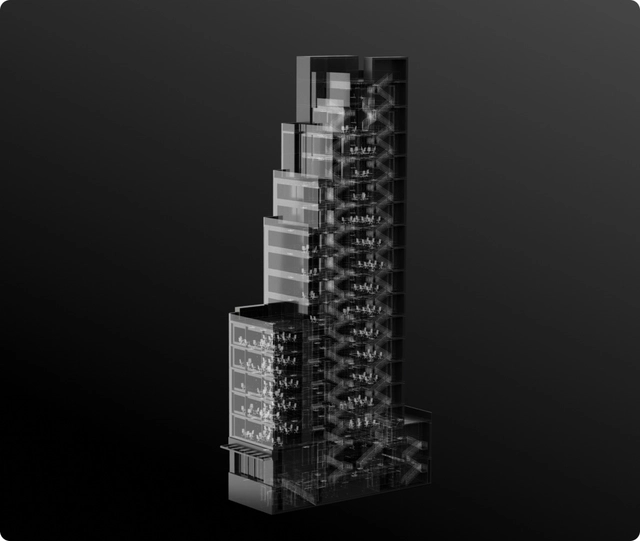
A developer in NYC purchased the first-ever non-fungible token (NFT) Office building in New York City. "Located" at 44 West 37th Street, the 4700 square meters NFT serves as an immutable digital asset that points to transforming how we design, build, operate, and monetize our spaces with only "one-click". The 16-story building was created by spatial intelligence company Integrated Projects and questions the function of architecture in Real Estate and the Metaverse.

MetaMundo’s 3D NFT Villa Opens Questions about the Function of Architecture in the Metaverse

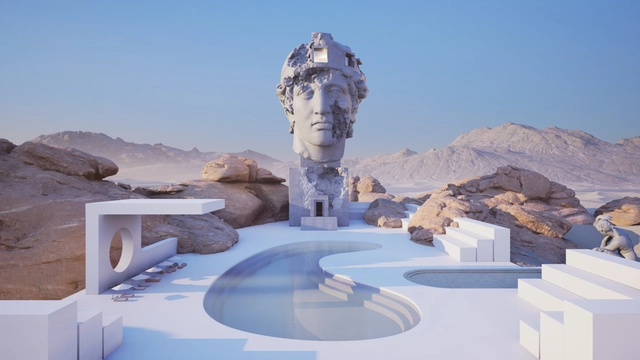
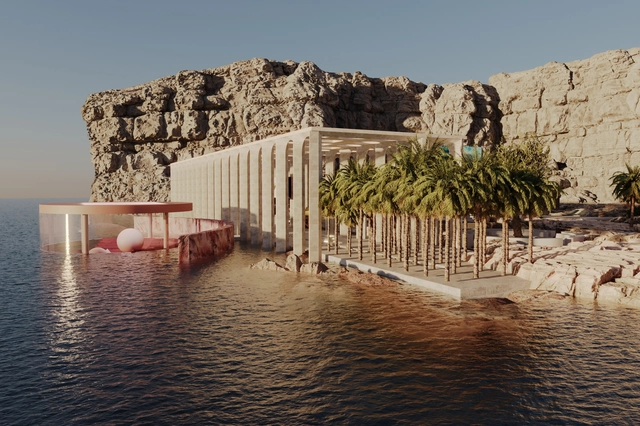
MetaMundo has launched its second three-dimensional NFT, an ocean-adjacent villa, complete with an NFT gallery, meditation pavilions, and entertaining areas. The structure was designed by American architect and hybrid-creative Luis Fernandez to become an immersive space for meeting, playing, and relaxing. Through this project, the architect aims to explore the changing paradigm of building in the metaverse. As laws of physics become irrelevant and materials are reduced to surface images, he asks the question what will architecture mean for the metaverse, how will we experience it and how will we use it?

Can Public Space be Created in the Metaverse?

Subscriber Access | 

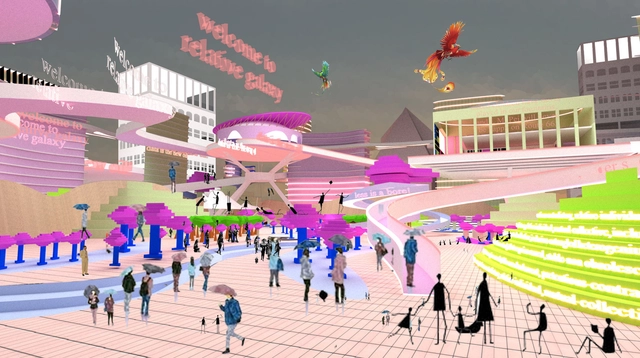
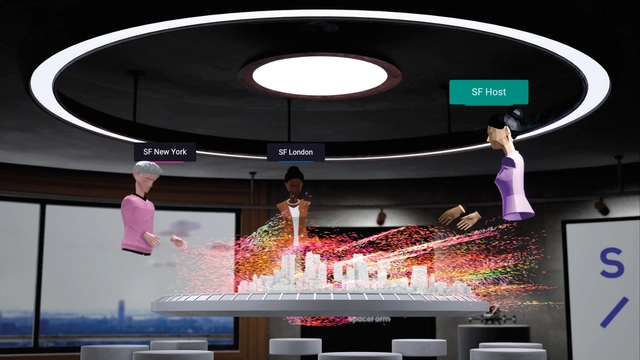
The metaverse promises to revolutionize our way of life. By integrating immersive technologies like virtual and augmented reality (VR and AR), it hopes to add another layer to the way we experience everyday life. It is suggested that the metaverse will create virtual spaces where people can meet and share experiences regardless of geographical constraints. The possibilities seem endless: exchanging knowledge, encouraging professional collaboration, developing and democratizing art, education, culture, and even enabling political engagement. Social interactions are at the core of the idea of a metaverse. This raises the question: how can the new, virtual spaces acquire the properties of public spaces?

Gluon Preserves the Now-Dismantled Nakagin Capsule Tower Building in the Metaverse

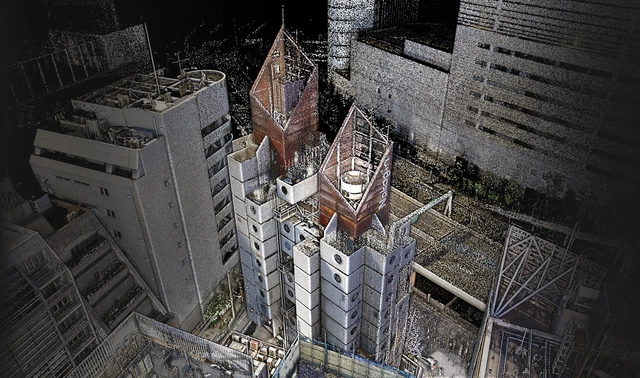
Japanese digital consultancy Gluon plans to preserve the Nakagin Capsule Tower Building in Tokyo, one of the most representative examples of Japanese Metabolism by Kisho Kurokawa. The “3D Digital Archive Project” is using a combination of measurement techniques to record the iconic building in three dimensions and recreate it in the metaverse. The tower is currently being demolished due to the structure's precarious state and incompatibility with current seismic standards, as well as the general state of decay and lack of maintenance.

Rojkind Arquitectos Designs Tequila Distillery in the Metaverse

Subscriber Access | 

As part of an initiative for Tequila José Cuervo, Rojkind Arquitectos presents its new and first project of the metaverse under the name "Metadestilería" (Metadistillery) which is based on a design exercise that responds to the function of objects with respect to human needs within specific contexts with the challenge of creating unique experiences through objects and architecture.

Daniel Arsham and Andrés Reisinger Among Acclaimed Designers of Newly-Launched Metaverse Real Estate Development

The Alexander Team and metaverse real estate development firm Everyrealm, have announced the launch of "The Row", a private, members-only metaverse real estate community featuring architecture designed by world-renowned artists. The Row will be launched on the metaverse world-building platform Mona, and will feature limited-edition series of 30 3D architectural landmarks, each sold as a 1-of-1 non-fungible token (NFT) designed by artists including Daniel Arsham, Misha Kahn, Andrés Reisinger, Alexis Christodoulou, Six N. Five, and Hard.

Contextual Architecture, Geospaces, and the Metaverse: An Interview with Alper Derinboğaz

Along with the thousands of designers and craftsmen that took part in this year's Milan Design Week to showcase their innovative creations, renowned architects from across the world were also present in the Italian city to share how they tackle the challenges faced by our environment and societies today.

Is Metaverse Really the End of Barriers for Architects?

Subscriber Access | 

Everybody talks about Metaverse, but hardly anyone agrees on what it is. For the moment, it is still enigmatic, however, it seems like its ambiguity is its strength. Not a day goes by without a new article or a video on this subject, trying to convince people that Metaverse will inevitably become a part of our daily lives soon. Architects and designers are essential parties to the ongoing discussion as it is a spatial innovation that requires the Internet to be redesigned as a 3D environment.

Democratizing Reality: Designing for VR, AR and the Metaverse

Architecture shapes our lives every day, but how can it be decentralized? At the core of efforts to design extended reality (XR) environments is a desire to make these projects more human and more relatable. As technologists, architects, and users themselves develop new tools for the metaverse, as well as augmented and virtual spaces, new projects are increasingly democratized and open source. At the same time, the design process is being reimagined.

What Can Metaverse Planners Learn from Italo Calvino’s Invisible Cities

Subscriber Access | 

We are still at the dawn of the Metaverse, the next wave of the Internet. The current “mainstream” Metaverse platforms serve as experimental containers to host the wildest dreams of virtual worlds where we are supposed to unleash the imagination. However, from a spatial design perspective, they have so far been lame and ordinary. Without the constraints in the physical world, how do we draft the urban blueprints in the metaverse? I believe metaverse planners can find inspiration from Italo Calvino’s Invisible Cities, in which he revealed a poetic and mathematical approach to “urban planning” in the imaginary worlds.

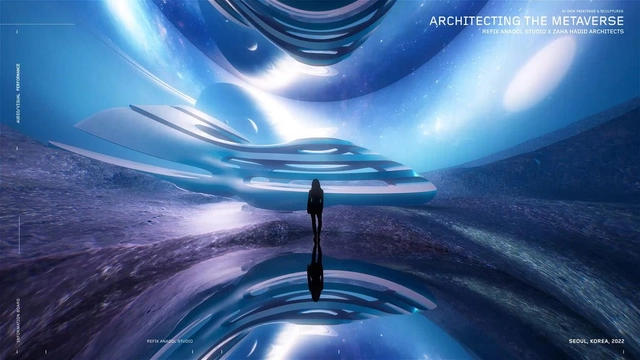
ZHA Inaugurates Design Museum in Seoul with Meta-Technology Exhibition

Dongdaemun Design Plaza (DDP) has collaborated with Zaha Hadid Architects (ZHA) for the 'Meta-Horizons: The Future Now' exhibition in Seoul, Korea. Designed by ZHA to promote the instigation and exchange of new ideas and to showcase innovative technologies and media, the inaugural exhibition of DDP’s new Design Museum explores ZHA’s work across multiple fields, from digital technology to artificial intelligence and virtual reality, featuring the firm's recent designs, process, and research that incorporates immersive technologies and new fabrication techniques. The exhibition will be on display from 26 May - 18 September 2022.

Towards a Virtual Architecture: The Winter House by Andrés Reisinger and Alba de la Fuente

The digitisation of architecture and design projects has been going on for some time now and has increased even more, largely due to the global pandemic. To hear talk of the metaverse, the NFT or the digital twins seems to be commonplace at this time, when the digital economy is booming and where architects and designers who seek to move from the physical world to the virtual world are beginning to proliferate. But will virtuality be the future of architectural visualisation?

Transformation Generated by the Intersection of Virtual and Reality

As Antoine Picon describes in Architecture and the Virtual Towards a new Materiality? : "An architectural project is indeed a virtual object. It is all the more virtual that it anticipates not a single built realization but an entire range of them. …Whereas the architect used to manipulate static forms, he can now play with geometric flows. Surface and volumes topological deformations acquire a kind of evidence that traditional means of representation did not allow.”

The Architecture of Virtual Environments: Designing for the Metaverse

For the past couple of years, the metaverse has been gaining prominence, prompting architects to consider its implications for our relationship with the physical environment and how can architecture contribute to this new virtual space. Architecture in the metaverse is no longer a fringe subject, having been embraced by established firms. "The metaverse is where much of the architectural action and innovation will be happening in the coming period," says Patrick Schumacher. Unbound from restraints such as physics, material properties and construction costs, the metaverse unlocked a new realm of architectural expression. The following looks at some of the various ways the profession engages with the expanding field of digital environments.

Metaverse: A Fertile Ground for Architects?

Subscriber Access | 

Metaverse is the name used to name an immersive, collective and hyper-realistic virtual environment, where people will be able to live together using 3D customized avatars.

Metaverse and NFT Opportunities for Architects

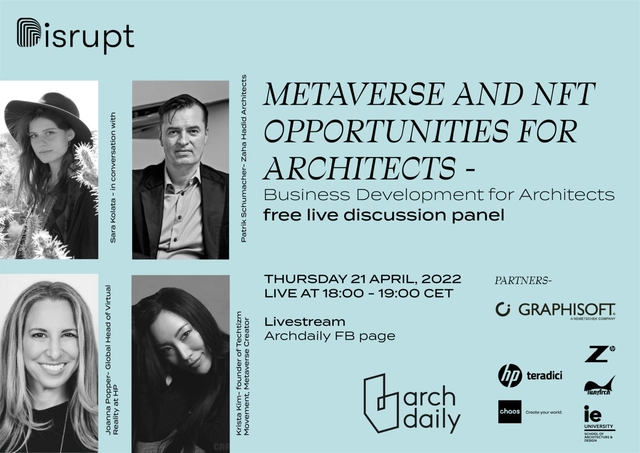
This week for the final Archdaily roundtable host Sara Kolata is being joined by Zaha Hadid Architects Principal Patrik Schumacher, Founder of the Techism Movement Krista Kim and an award-winning Hollywood and Silicon Valley media executive Joanna Popper to discuss ways Architects can benefit and profit from new digital opportunities in the Metaverse.

To sign up for full training offered by top architecture practices on the topic of Business of Architecture go to Disrupt Symposium Website: https://www.disruptsymposium.com/

Digital realms quickly become more and more real as people adopt Blockchain technology for finance and the creation of trust-based ledgers that remove

The Metaverse as Opportunity for Architects: An Interview with Patrik Schumacher

Subscriber Access | 

As the world of Architecture finds itself on the edge over the recent Metaverse and NFT hype, Zaha Hadid Architects is at the forefront of innovation showing us exactly how to utilize Web 3 and its socio-economic opportunities for architects, globally.